Narayankaji Shrestha Criticizes Balen Shah Government's Performance

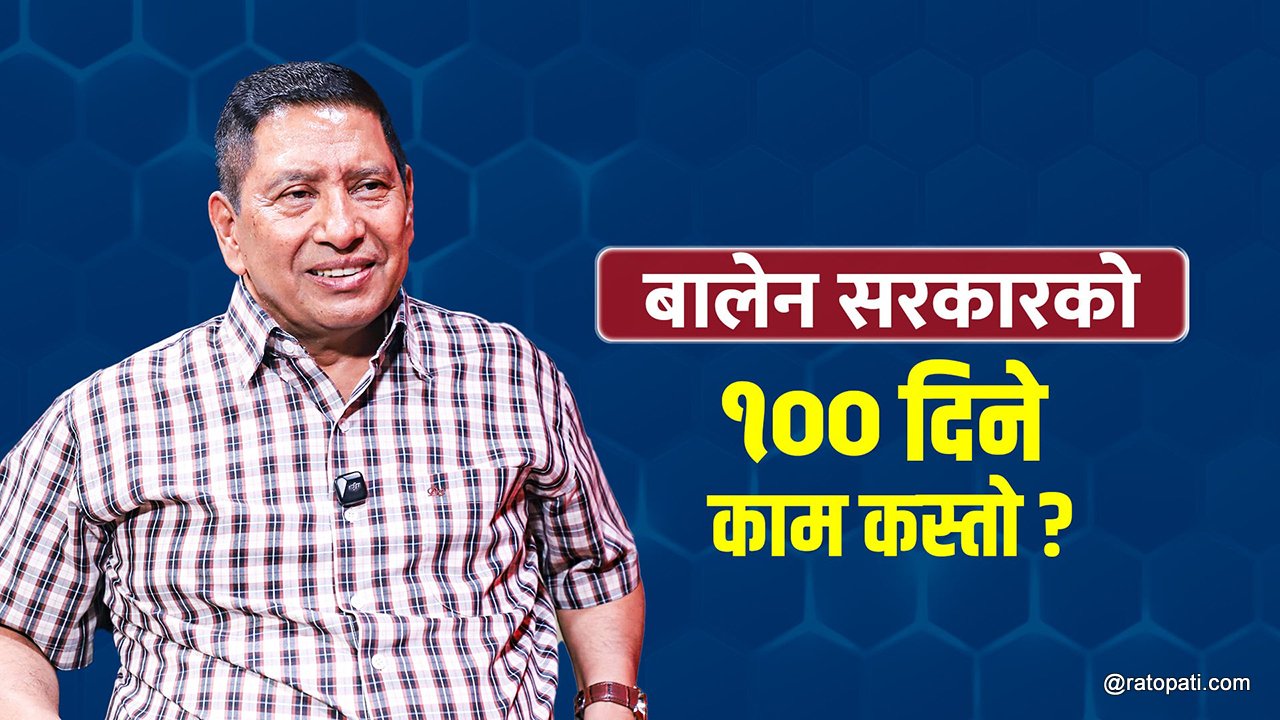
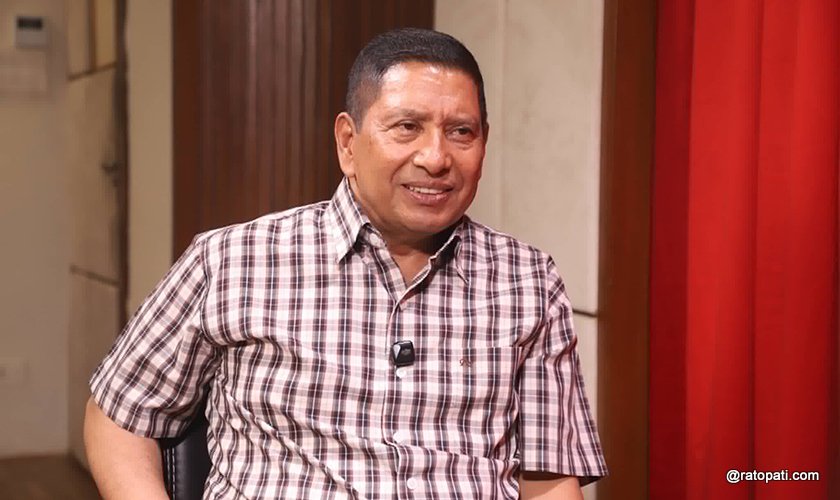
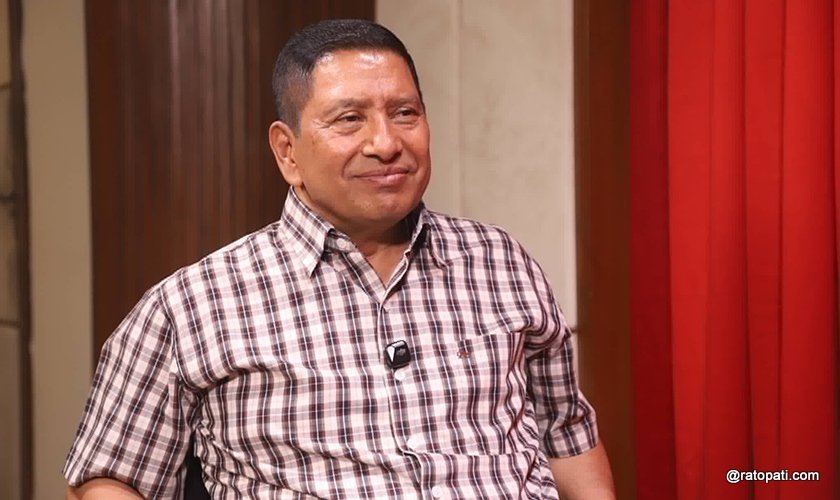
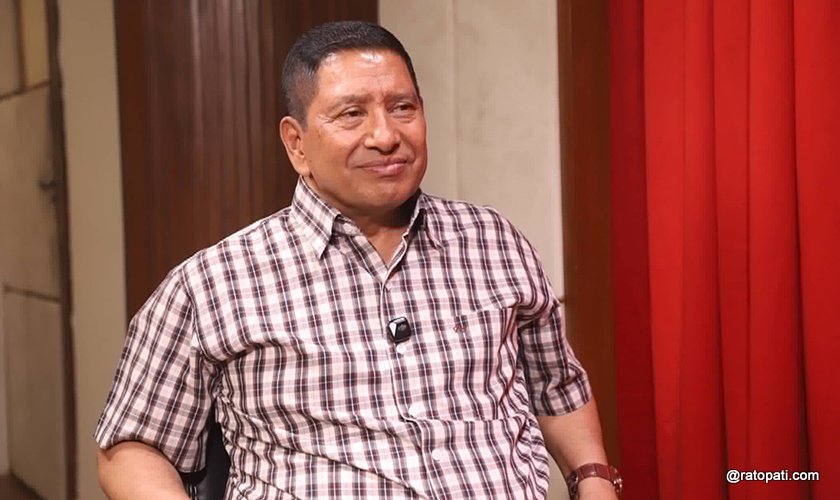
Kathmandu. Although the government led by Balendra Shah (Balen) has shown good technical improvements, Nepali Communist Party leader Narayan Kaji Shrestha sees it as entangled in the fundamental issues of good governance and improving people's living standards. In a conversation with Ratopati's 'Warpar', he commented that the current government has not lived up to public expectations and its own commitments.
He also expressed his views on the unity between communist parties. He feels that the public will no longer believe just because KP Sharma Oli and Prachanda unite.
A conversation was held with leader Shrestha focusing on the current government's 100 days, national independence, Nepal's diplomatic dignity, the role of the army, and the future of the communist movement. Here is the edited excerpt of the interview (detailed video can be watched and listened to):
Are you watching the current World Cup football?
I don't have much interest in football, and I haven't watched much of it. I will watch the final.
The 100 days of the government led by Balendra Shah (Balen) have been completed. The government is celebrating its achievements. How do you evaluate this period? Was the government's honeymoon period successful?
In a parliamentary system, the first 100 days after the formation of a government are considered a 'honeymoon period', and there is a global practice of conducting a preliminary review of the government's work during this period. This is not written in law or the constitution, but it is a practice. As far as the 100 days of this government are concerned, we had great hopes from this government. In 2074 BS, the public gave us (NCP) an unprecedented majority, but we realize that we could not utilize it properly. We wanted this government, which received such a mandate, to make a leap forward in good governance and prosperity, so that the people would not be deceived.
Overall, this government does not seem to have given the country the right direction. There have certainly been some small positive improvements. For example, the Prime Minister himself has not been rushing to every small foundation stone laying, inauguration, award distribution, and book launch. This is a good thing, which we have been saying for a long time. Similarly, an effort has been made to maintain a protocol of dignity in meeting foreign diplomats. There has been some check on the tendency to meet the Prime Minister directly, bypassing the Ministry of Foreign Affairs. The decision to reduce the number of ministries is also welcome, but apart from these few technical improvements, the government is entangled in the fundamental issues of good governance and improving people's living standards.
You mentioned good governance, but the government claims to have improved passport and license distribution?
Good governance is not just about advertising. Whatever the government claims about licenses, the public should be asked about its extent. The idea of delivering passports to homes sounds good, but its effectiveness in practice remains to be seen. Speaking of good governance, what kind of good governance is it for ministers to take the authority to appoint five advisors equivalent to secretaries? We had made a rule that not even a single advisor could be appointed. This is about indulging in the state's resources.
Another main issue is the investigation of assets. New powers should say, 'We are new, we are clean, investigate our assets first,' but they have made rules so that their assets are not subject to investigation. The public needs to be clarified about the gold bars seen in asset declarations and their opaque sources. The tendency to invest in 'idle' gold rather than productive investment is a symptom of comprador capitalism.
The Prime Minister's recent statement on national independence and borders has garnered significant attention. What is your opinion on his implication that Nepal has also encroached on India's land?
The Prime Minister's statement on this matter is 100% wrong, immature, and anti-national. In Nepal's political history, no Prime Minister has ever said that Nepal has encroached on India's territory. India itself has not officially claimed this.
Regarding the border issue, the technical committee between Nepal and India has completed 98% of the work. The remaining 2% is the dispute over the Susta and Kalapani areas. Our parliament has unanimously passed a map stating that Limpiyadhura, Lipulek, and Kalapani are an integral part of Nepal. In such a situation, for the chief executive of the country to say, 'We have also encroached on India's land' weakens our diplomatic stance.
Some are trying to defend this by linking it to cross-border holding, i.e., cultivation across the border. What is the matter?
The issue of people on this side cultivating on that side and people on that side cultivating on this side due to river course changes is a technical problem, but the Prime Minister linked it to border encroachment and tried to portray Nepal as guilty, which is an extremely serious mistake.
You have called the current political power 'right-wing populism'. There is an argument that this endangers democracy. How so?
Currently, a trend is visible worldwide, which we call 'elected authoritarianism'. Some forces rise by capitalizing on public dissatisfaction and frustration, and they have no respect for the rule of law and democratic processes. They attack institutional democracy with populist slogans.
What has the government done in Nepal that makes you suspect democracy is in danger?
In Nepal, there are talks of banning student organizations and trade unions. Ending party politics in educational institutions is correct, but banning the fundamental right to form organizations is the beginning of authoritarianism. Not allowing unnecessary interference with employees is good governance, but snatching away their right to speak for their welfare is wrong.
Another frightening thing is the mob of 'blind devotees'. A crowd of blind supporters who divide society and believe that whatever their leader does is right will gradually lead the country towards fascism. Mussolini and Hitler also rose in this manner. Violating the rule of law and thinking 'I am the state' weakens democracy.
How do you view the relationship between the army and the current government? Are we heading towards the Pakistani model?
I don't want to say much about the army. Because the Nepali army should be an institution that all citizens consider a center of common trust, but some incidents have raised questions recently. Which law allows the army to be used to remove squatters' settlements in the capital? Does it fall within the army's scope to ask for records and details of squatters?
Using the army in civil matters, especially to suppress the public, is fatal to democracy. The army is for national security and sovereignty, not for internal administration and civil disputes. If we entangle the army in minor internal matters and use it for political purposes, where will that lead us? The army itself must review its dignity and scope of work. The army should earn the trust of the people, not create fear.
Why has the communist movement, which has struggled for 70-80 years, become so weak now? Are new forces displacing you?
Not accepting that the communist movement has weakened is not being a communist. Communists must accept objective reality. This situation has arisen due to our weaknesses. We struggled greatly for national independence and democracy, but when we came to power, we could not preserve our ideological and cultural character.
Our party and leaders became 'bourgeoisified'. We got caught in the cycle of comprador capitalism. The connection with the people was broken, and we became focused only on positions and prestige. This is the decline of our movement, but it does not mean the communist movement is over. The agenda of socialism is still relevant in Nepal's context.
You talked about transformation and restructuring, but within the party, the chairman expresses dissatisfaction saying, 'I made the minister, and now they want to remove me?' How is reform possible in such a situation?
Lively debate within the party is a good thing. Comrade Prachanda saying 'correct me or remove me' is a dialectical expression. He has repeatedly said that he will step down after the next general convention. Leadership change alone is not a big deal; changing the character of the party is the main thing.
Do you see the communist movement in Nepal improving?
For this, I have proposed 5 fundamental points. First - Ideological clarity: Implementing Marxism and socialism in practice, not just in slogans. Second - Organizational democracy: Establishing rules, procedures, and collectivism within the party and ending factionalism. Third - Purification: Launching a ruthless campaign against corruption and fairly evaluating party workers. Fourth - Public relations: Re-establishing strong ties with laborers, farmers, and oppressed classes, and fifth - Use of technology: Embracing modern science and technology to connect with the new generation.
Is there a possibility of reunification between UML and NCP again?
In the current situation, unity as a continuation of the status quo is not possible and would not mean anything. The public will not believe just because KP Oli and Prachanda unite. First, both parties must transform themselves. Unity should only happen after ideological and cultural transformation. For now, functional unity and cooperation can occur, but fundamental reforms are necessary for real unity.
What would you like to say to the general public and your cadres?
The country is currently in a transitional phase. The wave of populism may provide temporary enjoyment, but it will not solve the country's fundamental problems. We communists must accept our mistakes and dedicate ourselves to serving the people. It is not enough to recite historical sagas; we must connect with the problems of the people in the present. If we correct ourselves and move forward, the future of the communist movement is still bright.
Video/Photo: Manoj Khadka, Ayush Dhami/Ratopati
This specific news has been automatically translated by AI. As a result, there may be some inaccuracies or language errors.

_cvUCBlwFTZ.jpg)