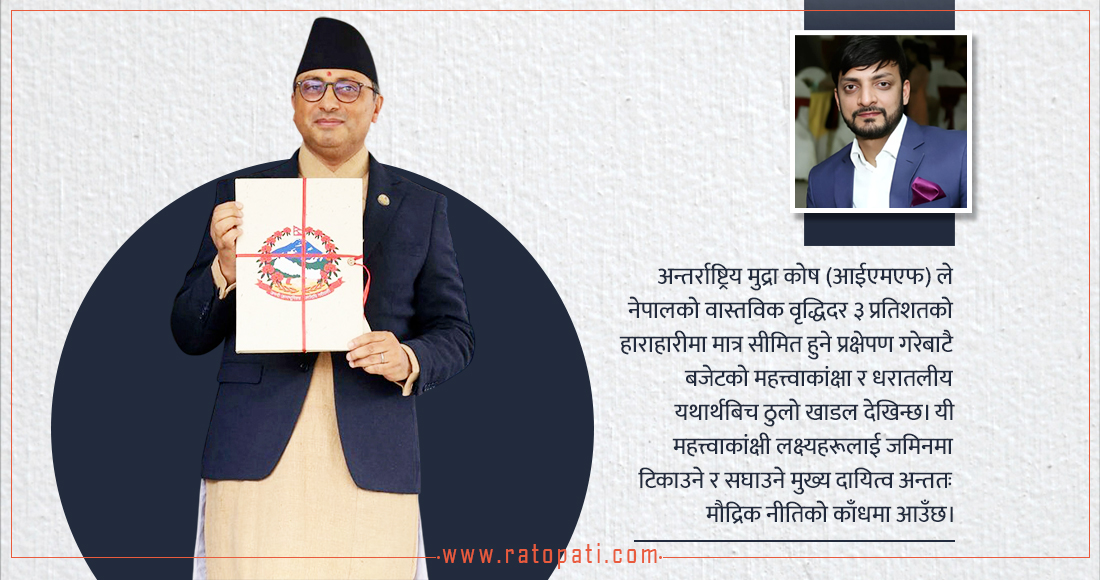
Prime Minister Balen Shah Raises Border Dispute Issue in Parliament

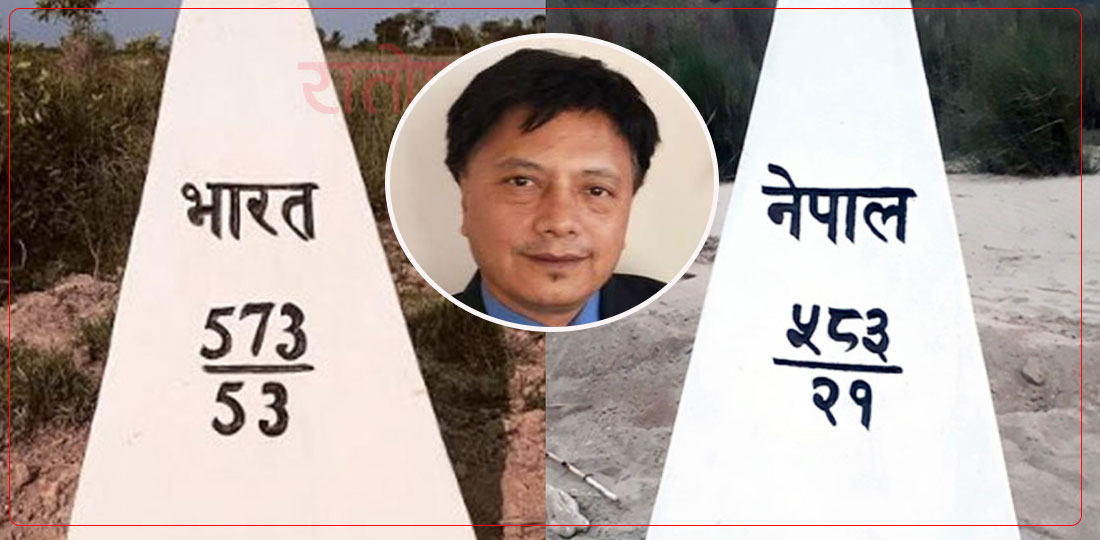
1. There are various border disputes between powerful nations of the world and smaller nations. Such disputes are not only between two parties, but sometimes a third or fourth party may also be involved, which further complicates the border dispute.
The land dispute in our society's home and courtyard can be considered a small example of this. Elders in the villages say, “If any brother has been wronged in the division of family property and land between brothers, he should file a case in the court, and only then will the other brother be legally compelled to present details and evidence of all the property and land he has hidden and not disclosed. The real situation will automatically become clear through this process.”
Prime Minister Balen Shah of Nepal seems to have adopted this very strategy. Therefore, by speaking in parliament himself about the possibility that Nepal may have encroached on India's land in various places, he has brought the issue of borders to the center of further study and debate.
2. In the past, there was a visit of a Prime Minister of Nepal to India. It is said that he called his close journalists and said, “I do not feel comfortable raising border disputes and other sensitive issues directly with the Prime Minister of India. Therefore, before going on the visit, raise these issues vigorously in the media so that it is easy for me to discuss them there.”
Is it possible that Balen Shah has also adopted a similar strategy and raised this issue before the chairman of Rastriya Swatantra Party's visit to India?
Whatever the case, after this incident, various treaties and agreements made by old parties with India in the past have once again become a subject of public debate. This may have put some pressure on India on one hand, and on the other hand, it has given the new generation an opportunity to understand history.
3. Let's listen and read Prime Minister Balen Shah's statements regarding the border ten times. He had said, "You might find one thing surprising. I also came to know only recently after becoming Prime Minister. India has not only encroached on Nepal's land, but Nepal has also encroached on India's land (he did not say border) in many places. And I came to know this only recently. Therefore, both countries should study and we have encroached, they have encroached, and we are thinking of resolving it by sitting down as friends."
When discussing border disputes, the words land, territory, and border are often used interchangeably. However, these words have different meanings. Land is a defined area of property, territory is a general area of land, and border is the dividing line separating two land areas or nations. Therefore, the expressions “land was encroached upon” and “border was encroached upon” do not convey the same meaning.
Similarly, “encroach” is mainly an emotional and colloquial word. In legal or diplomatic language, words like encroachment, occupation, acquisition, intrusion, border violation, or claim are considered more relevant.
The greatest strength of any head of government is their honesty and courage to speak the truth to the public. Now, the statements made by him regarding the border need to be analyzed by experts from various fields.
Linguists should speak about the nature and meaning of the language used. Law students and legal experts should analyze whether the statement was legal or not. Experts in public address, voice, and body language should evaluate it, and psychologists should give their opinions on the intention and psychological aspects of his statement.
Also, former judges and constitutional experts should also speak—are treaties and agreements made against the country's interests in the past more fatal, or is it treasonous to publicly reveal the truth understood by the Prime Minister in parliament?
In this difficult time, the public wants to hear impartial and factual voices by analyzing Prime Minister Balen Shah's statements from these experts.
4. In the past, various commissions comprising border experts had classified and studied the lands in the border areas based on various criteria such as encroachment, occupation, and right to use. However, the governments could not resolve these issues. If the real situation and facts had been clearly explained to the public at that time, there would not have been so much controversy when the Prime Minister raised the border issue in parliament today. It would be in the national interest to have a serious debate on the facts and questions raised by Balen Shah personally or as Prime Minister, rather than on them.
However, instead of refuting those facts and questions with evidence, some border experts are arguing that “this weakens Nepal's claim over Lipulekh.” It is unfortunate that those who have failed to show a clear strategy and achievements in reclaiming land claimed by Nepal for decades are trying to label a person who discusses truth and reality as a traitor.
5. The geopolitical situation at present is very complex, with instability, war, and humanitarian crises seen in various parts of the world. Humanitarian sensitivities are raising serious questions in Gaza and Ukraine. In such a situation, Nepal needs to think seriously about whether nationalism can be preserved by engaging in confrontational politics with its neighbor India, where millions of Nepalis reside, or whether national interests are secured through the centuries-old relationship of daughter-in-law and in-laws, religious and cultural intimacy, goodwill, and mutual respect. The group of extremist and hollow nationalists incited Zelensky, leading to Ukraine's current situation. We must all be aware that Nepal does not face the same situation.
6. The living standards of the people living in the border areas are difficult. They are terrified by various criminal activities in the area and are sometimes victims of the behavior of border security agencies. For their livelihood, they use the land, trade, customs, and social relations of both countries.
If various vested interest groups within the country, without showing any sensitivity to this, display extreme nationalism by abusing a friendly nation from Maitighar Mandala and social media, it can create a difficult situation for the people in the border areas. What happens if they are incited to say “this is Indian land”, or if an agitation starts saying “we do not want to live in Nepal”? What happens if the security forces have to use force against their own citizens in the border area? Who will take responsibility for the consequences in such a situation? Will those who display extreme nationalism at Maitighar Mandala be ready to face the consequences and risks on the border?
7. After Prime Minister Balen Shah spoke in parliament, expressions like "I will topple the government today, tomorrow, drag it to the streets, cut it, kill it" have started to be seen and heard from social media to media interview rooms. In some places, scenes of Balen's effigy being burned are also visible.
In the current political system, the process of toppling the government is limited to constitutional procedures. In the current situation where the organized power and financial base for movements and public gatherings of major parties are weakening, changing the government through street protests does not seem easy or possible.
It is rumored that some individuals who provided financial support for movements and public gatherings in the past are now within the legal framework. The places of residence along the riverbanks of the Kathmandu Valley, where slum dwellers were used by homeowners to gather crowds during protests and to house workers brought from outside for the movement, no longer exist.
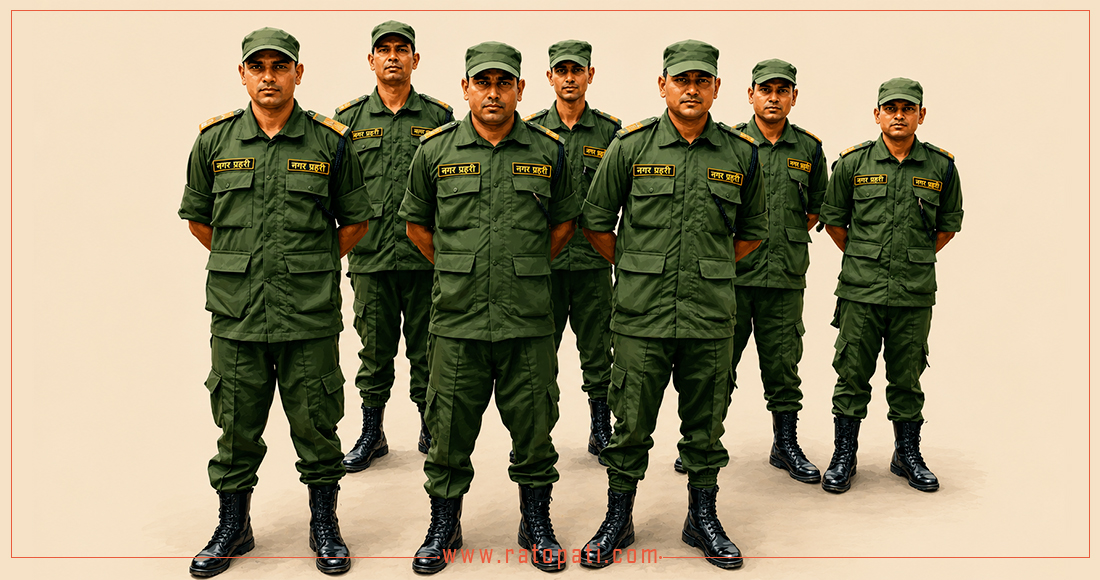
With the security agencies also deployed with high morale according to security procedures, the possibility of the government falling through street protests based solely on the strength of cadres, without public support, appears weak.
Ultimately, border disputes are resolved neither by social media slogans nor by displays of extreme nationalism. The solution to sensitive issues like borders must be sought by focusing on facts, evidence, historical reality, diplomatic initiatives, mutual understanding, and national interests.
In a democracy, any expression or opinion should be evaluated not on the basis of emotional excitement, but on the basis of facts, law, and national interest. True nationalism is not about creating unnecessary conflict with neighbors, but about seeking wise, practical, and respectful solutions that protect Nepal's sovereignty, national interests, and the future of its people. Otherwise, extreme and hollow nationalism can displace rational debate, confuse public opinion, and increase the risk of pushing the country in the wrong direction. Let everyone pay attention to this.
This specific news has been automatically translated by AI. As a result, there may be some inaccuracies or language errors.