Uprendra Yadav Comments on Government's First 100 Days

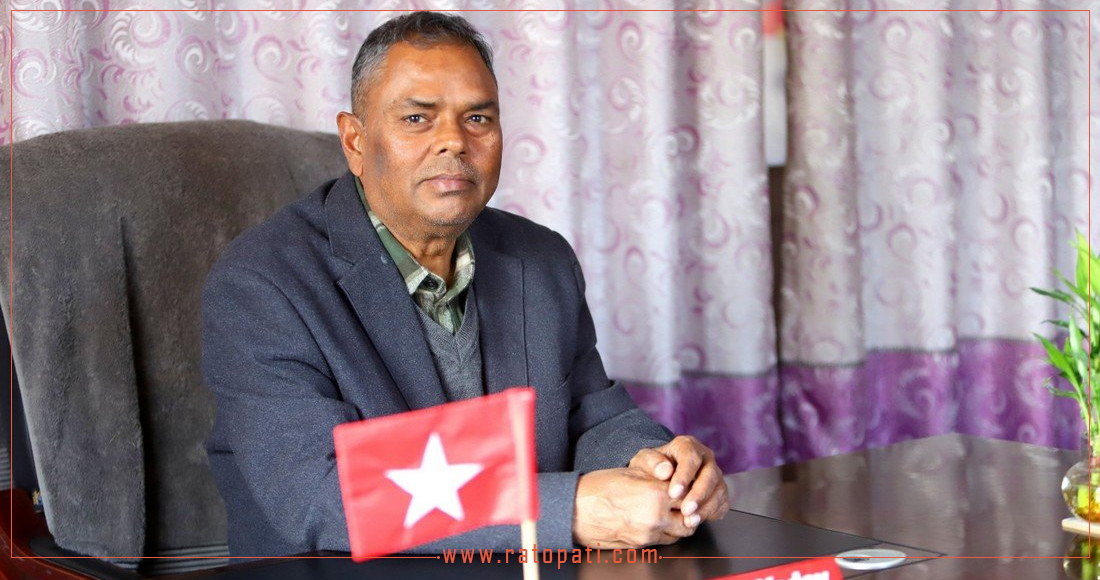
Kathmandu. Janata Samajwadi Party Nepal Chairman Upendra Yadav has interpreted the first 100 days of the government led by Prime Minister Balen Shah as an initial phase of efforts for good governance and institutional reform, commenting that the government's real test will now depend on its implementation and the results obtained from it.
Commenting on the review of the government's hundred-day work and commenting on it, Chairman Yadav, through the social media Facebook on Sunday, mentioned that the first 100 days of the government have been focused on efforts to improve good governance, control corruption, administrative restructuring, and make state mechanisms effective. According to him, he has taken the government's priority on improving the governance system and institutional change rather than large welfare programs as a positive step.
However, stating that it would be hasty to conclude whether the government is successful or unsuccessful at this time, Chairman Yadav said that the government's long-term evaluation should be based on how effectively the policies, reforms, and decisions put forward by the government are implemented and what changes they bring to the daily lives of the citizens.
Yadav, who has also served as a former Deputy Prime Minister, mentioned that learning from Nepal's past is even more necessary now, commenting that the same weaknesses have been repeated repeatedly in history. He recalled that with the peaceful end of the monarchy, Nepal transformed into an inclusive, secular, federal democratic republic, and at that time, there was great hope among the people for the creation of a 'New Nepal'. However, his conclusion is that the expectations and achievements of the common people have not been fully met.
Mentioning that Nepal has still not been completely freed from a long political transition, he said that the citizens who stood in favor of change are now the most disappointed. His analysis is that serious challenges still remain in the areas of education, health, food security, strengthening of democratic institutions, corruption control, good governance, employment, economic management, and political stability.
Mentioning that ideological clarity, commitment to principles, and political accountability in political parties are weakening, Yadav pointed out institutional weaknesses in Nepal as the main challenge today. Despite this, he also expressed confidence that sustainable transformation towards good governance, inclusive development, equality, social justice, progress, and prosperity is possible.
Yadav said that ending past discrimination, inequality, and injustice and strengthening inclusive democracy, equal opportunities, social justice, and participatory development is the main national need today. He opined that Nepal's democracy can become more strong, just, and prosperous only if the dignified participation, rights, and empowerment of Madhesi, Indigenous/Janjati, Dalit, women, Tharu, Muslim, Other Backward Classes (OBC), minorities, and socially, economically, and politically backward communities are ensured.
This specific news has been automatically translated by AI. As a result, there may be some inaccuracies or language errors.