105th Anniversary of CPC and the China Miracle

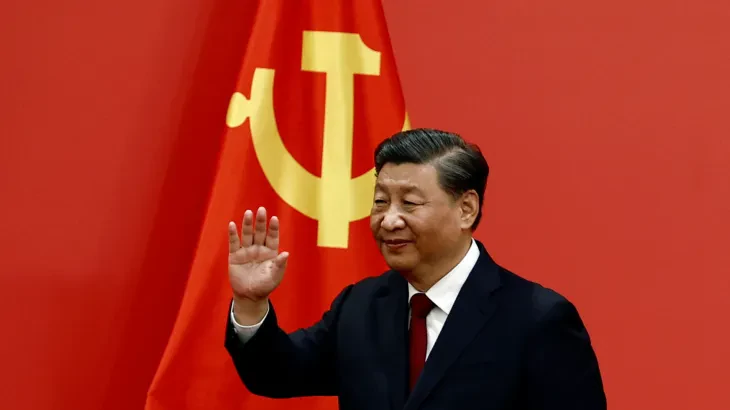
July 1, 2026 marks the 105th anniversary of the Communist Party of China (CPC). Established in 1921, the party has led China from the historic revolution to the current economic revolution, guiding the country through several major milestones, namely resistance against foreign invasion, declaration of the People's Republic of China in 1949, the endorsement of reform and opening up and the miraculous developments of recent decades.
In his address on 105th anniversary of the CPC, Chinese President Xi Jinping said this morning that the CPC remains committed to seeking truth and always adheres to the right direction. “It is deeply rooted in the people and always boasts a solid foundation. The CPC courageously rises to its historic missions and always keeps a strategic initiative in hand. The CPC follows the development trend and always remains at the forefront of the times,” Xi added. The remarks speak the gravity what the CPC is aspiring for.
The CPC is run on collective leadership. The party's top leadership structure is based on a clear hierarchy: the CPC Central Committee elects its Politburo and the Politburo's Standing Committee, which is the top decision-making body. The existing Standing Committee has seven members under General Secretary Xi Jinping.
When the People's Republic of China was declared in 1949, the country's per capita GDP stood at an estimated $23, and life expectancy was just 35 years. In 1978s, the CPC announced its reform and opening up policy, integrating the stability of government planning with the energy of private enterprise, which became a turning point that set the stage for everything that followed.
Coming to the power in 1949, the CPC has transformed the country from a largely agrarian state into an industrial and technological superpower. Its major achievements include the complete eradication of poverty, unparalleled infrastructure development and the modernization of the economy through long-term planning. China is now the country with the largest industrial output in the world, trading with almost all countries globally, and has cemented its position as a manufacturing powerhouse and a global leader in many critical technologies. Industrialization and the inflow of foreign investment were accompanied by other interventions -- cooperative structures, commercialization of agriculture and rural tourism -- that yielded strong results in lifting people out of abject poverty. Both horizontal and vertical approaches were applied to uproot poverty and share its benefits with needy communities.
A fascinating fact is that even members of a cooperative see their share increased according to cultural performance, an imitable tool to end poverty. At the same time, local governments provided significant funds for the protection of local heritage, both natural and cultural, to draw in more visitors from domestic and international markets. Officials have also put measures in place for accountability and assurance of fund utilization, reflecting a "zero tolerance" policy on corruption. The rapid rise of the middle class has added further momentum to the poverty alleviation drive, since it is this segment that consumes high-end goods, creates jobs, spends on a more sophisticated lifestyle, and keeps the economy dynamic and robust. These all achievements were made under the strong leadership of the CPC.
China's social security network is exemplary: the country has built the world's largest basic healthcare and pension system, bringing most of its citizens under this umbrella. By 2025, life expectancy had risen to 79 years, per capita GDP had grown more than 600-fold to $13,953, and aggregate GDP had reached $19.6 trillion, making China the world's second-largest economy and its largest trading entity. This transformation is described as one of the greatest episodes of economic development in human history.
China's confidence in a development path distinct from the Western model has helped the nation make miraculous progress in science and technology, promote innovation, and strengthen research and development; the achievements that helped it realize its first centenary goal. This has all been made possible by the strong, disciplined, and result-oriented organization of the CPC.
On the eve of this 105th anniversary, data released by the Organization Department of the CPC Central Committee stated that party membership had crossed 100 million by the end of 2025, which is 1.1 million more than the previous year. This makes the CPC one of the largest political organizations in the world.
China has now embarked on the journey toward its second centenary goal: developing into a great modern socialist society that is prosperous, strong, democratic and culturally advanced country by the middle of this century with the target of becoming "moderately prosperous in all respects," or a developed nation, by 2049, the centenary of the People's Republic.
The changing global context, however, demands peace and development. The world order and global economy are undergoing unprecedented changes at a time when people's ability to cope with critical challenges has weakened compared with earlier decades. Many developing and least-developed countries are facing multiple challenges of their own and a rise in extreme weather events, and are in need of cooperation and help from other nations. Against this backdrop, global and regional cooperation to tackle emerging challenges and ensure people's well-being has become all the more necessary. For this, China’s development initiative forwarded by President Xi Jinping would offer some hope for several countries that are expecting cooperation to fill their development gaps.
As neighbouring countrymen, Nepali political enthusiasts have closely observed China's development path, the CPC, and its leadership -- understandably so, given that China has overcome numerous challenges over the decades to sustain a development trajectory many regard as a miracle for humanity in the 21st century. Among the five priorities of BRI cooperation; policy coordination, infrastructure connectivity, unimpeded trade, financial integration, and closer people-to-people ties, infrastructure connectivity demands particular attention in the context of Nepal-China relations, given Nepal's aspiration to benefit from China's economic rise.
From the sufferings of foreign domination to becoming the world's second-largest economy in 2025, the Communist Party of China's 105-year journey stands as one of the most remarkable stories of national transformation in modern history. As China now looks toward its second centenary goal, the discipline of its governance, its success in eradicating poverty, and its steady long-term planning offer instructive lessons for developing nations charting their own paths forward. For Nepal, deepening ties with its northern neighbour -- particularly through projects under the Belt and Road Cooperation -- offers a real chance to share in this momentum.
Subedi is a Senior Journalist