Nepal's Justice System Fails Innocents, Senior Advocate Dr. Surendra Bhandari Argues
Kathmandu. The universally accepted principle of criminal justice is 'Let a hundred criminals go free, but not a single innocent person be punished'.
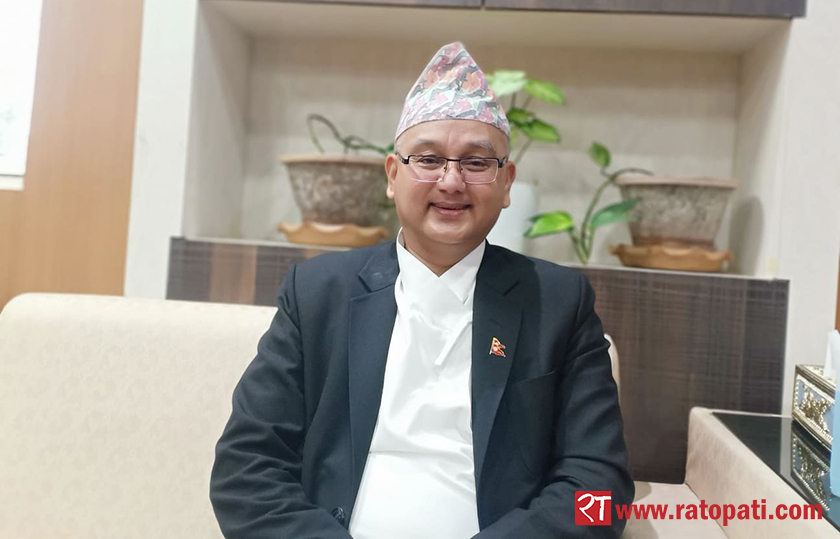
However, in the context of Nepal, many innocent individuals are forced to languish in jail for decades due to malicious investigations and weak prosecution by the state. When individuals convicted by district and high courts are proven innocent by the Supreme Court after years, their energetic time of life and social prestige are already lost. Does a 'clean chit' verdict alone compensate for the injustice done to these individuals? Where is the accountability of the investigating officers and prosecutors who send the innocent to jail? This is an edited excerpt of a conversation with senior advocate Dr. Surendra Bhandari for Ratopati, focusing on these serious questions and the criminal justice system:
Even though convicted by the lower courts and sent to jail, individuals are released after being declared innocent by the Supreme Court. Should the innocent not receive compensation?
–Being convicted by district and high courts and then acquitted by the Supreme Court affects a person's family life and social prestige. In such a situation, our legal system does not have very clear provisions. We also do not have such a practice.
However, after the Muluki Criminal Code, 2074, came into effect, there are some provisions in its sections 98 and 99. Section 98 has a provision stating 'False complaints should not be made'. It states that if a false complaint is made, the complainant will receive half the punishment that could have been imposed for that case.
However, this provision does not apply to cases where the government is the plaintiff. If it is a government-plaintiff case, even if a false complaint is made, the complainant will not receive any punishment. However, it is stated that if the victim suffers any loss or damage due to such an offense, they shall be compensated for it by the 'offender'.
An offender is a person who has been punished. A person who is acquitted and released is not a punished person. There is no concept of a punished person receiving compensation.
Similarly, Section 99 has a provision for 'Malicious investigation or prosecution should not be done', and if such an investigation or prosecution is done, there is a provision for compensation. In both these sections, the provision of receiving compensation 'from the offender' implies the person who maliciously investigated or prosecuted and the person who filed a false complaint, if found guilty. Therefore, the liability to provide compensation is not on the state but on such an individual.
When provisions for compensation are made, judges may develop a wrong mindset: 'If we acquit this person, the state will have to pay money, so let's keep them imprisoned instead.'
This creates a situation where the state does not bear responsibility, and individuals do. However, the use of sections 98 and 99 is seen to be very limited. Since the state investigates and prosecutes serious crimes, the ultimate responsibility and liability for compensation should lie with the state, and such individuals should face departmental action.
In serious crimes like these, since individuals cannot prove the case and it would be risky for them, the prosecution is also done by the government and the state. The state also proves the evidence. Based on the 'adversarial system' we have adopted and practiced, if there was a provision that the state itself should provide compensation, it would offer some relief, but such a provision is not in this law.
- The Supreme Court had also issued a directive order in the case of Madan Kumar Shrestha to make laws related to compensation. However, the state has not shown interest in this so far. Negligence is still seen in investigation and prosecution, what could be the solution?
–Compared to other organs and bodies of the state, the judiciary has done many good things. With a few exceptions, the general public is confident that justice can be obtained from the judiciary. That decision is also an important part of this. Therefore, it is necessary to make laws in accordance with the order of the Supreme Court. However, we must not forget a few factors. Firstly, if investigating individuals have to pay compensation personally, no one will be ready to investigate. Because if the case is overturned for any reason tomorrow, the investigating individuals will have to pay compensation personally. When the person performing the state's duty is brought under the purview of action, they should only be brought under action if malicious prosecution is clearly evident.
There is a need for a change in the mindset of judges. Even now, judges do not show the courage to properly implement the due process of law.
Secondly, when making provisions for compensation, judges may develop a wrong mindset: 'If we acquit this person, the state will have to pay money, so let's keep them imprisoned instead.' This is even more dangerous. Judges should consider themselves 'guardians of justice, not representatives or administrators of the state.'
The realistic approach to how judges understand and analyze cases is important. It matters whether judges dispense justice considering themselves as representatives of the state or as protectors of citizens' rights and justice. In some cases, we legal practitioners feel that judges dispense justice by considering themselves as representatives of the state, and in such situations, we feel that justice has largely died.
- What is the solution to this? Once compensation is to be paid by the state, a certain mindset will develop among judges. But is it permissible for a judge to convict someone even when they know the person is innocent?
–To solve this kind of problem, there is a danger that when judges make decisions, they might think, 'No, what the district or high court did was wrong, let's overturn it, let's acquit this person.' If they think that by acquitting, they will have to go into compensation and the state will bear the burden, the tendency to convict may increase. If that mindset prevails, the person seeking justice may be deprived of it.
Firstly, there is an urgent need for a change in the mindset of judges. Even now, judges do not show the courage to properly implement the due process of law. In writ petitions filed by individuals stating that criminal proceedings cannot be initiated against them and the state cannot arrest them, orders are given not to arrest them in matters of civil liability, which is meaningless in itself.
If a judge works with the mindset that 'the state is convicting this person, I must stand by them, I am the protector of that victim, of that accused person, no one should be convicted outside of the law, facts, and evidence, and not all accusations and charges made by the state are true,' then the victim will get justice, and if proven innocent, compensation will be received.
In a civilized society, if I make a mistake, prosecute someone, and that person suffers due to the state, and it is determined that this person is innocent, it is the duty and responsibility of the state to provide compensation.
Only through the implementation of the due process of law can an individual's life and liberty be protected. In this regard, anticipatory bail is an important link. However, such practice is very limited. This kind of practice was seen for the first time in the case of Durga Prasai. Such practices need to materialize, which will prevent individuals from having to stay in jail for a long time and then claim compensation if they are ultimately found innocent.
- In other countries around the world, when a court sentence leads to imprisonment due to wrongful prosecution, and the person is later found innocent, the state provides significant compensation. What is preventing Nepal from enacting such laws?
–Look at Japan, for example. I was teaching there at the time. A Nepali person had a case in Japan. He was sentenced to life imprisonment. However, after DNA testing, the Nepali person was found innocent and acquitted. After being found innocent, Japan provided compensation to that Nepali person. At that time, the Japanese government sought my opinion on the matter of compensation. I gave my suggestions regarding Nepal's law.
In a civilized society, if I make a mistake, prosecute someone, and that person suffers due to the state, and it is determined that this person is innocent, it is the duty and responsibility of the state to provide compensation. We are not an uncivilized society, are we? We are also a civilized state. However, we have not yet reached that level of rule of law and fairness.
- The Supreme Court has already issued a verdict stating that compensation should be provided if someone has been in jail for a long time. Doesn't this verdict imply that the innocent should receive justice and compensation?
–Therefore, the first option is to establish an institution where a victim can file a petition stating, 'I was maliciously prosecuted, and I should receive compensation,' and if that body deems it necessary to provide compensation, the government should create a system.
Another provision is that when judges acquit someone, they should order the body responsible for providing compensation to do so. Then, that body will provide it.
Currently, as soon as someone is accused, the police themselves publicize their name to the media.
The third provision is that the state itself should study and research such matters and provide compensation, but the state does not seem to be paying attention to this.
Therefore, among these three options, the best option I see is for the judges who make the decisions to write in the verdict itself, 'Injustice has been done in this case, this person can receive compensation up to this extent,' based on a case-to-case basis. It would be good if a body is created through legislation to implement this and provide compensation based on the verdict of the Supreme Court or the final court.
- After a person is proven innocent, what role should the state play in reintegrating them into society?
–That person's entire social, economic, ideological, and personal life is ruined. After such accusations are made, it becomes difficult for that person to live. Fortunately, they are alive.
Now, in this context, what the state can do is provide restitution and compensation to the innocent person and arrange employment for them in state bodies. If that happens, society will understand that this person was wronged, and their past reputation may be restored.
Currently, as soon as someone is accused, the police themselves publicize their name to the media. A person has a right to privacy; doesn't doing so before being convicted by a court harm them?
In this, two things need to be considered. The way the prosecuting body or the state publicizes it is itself malicious. It is defamation of that person. In such a situation, a case can be filed against the state and those individuals. However, filing a lawsuit is not the solution. The state must be cautious and protect the individual's dignity. They should not be publicized. That is important. Not all problems should be solved by filing lawsuits. The state itself must be in the right place. Publicizing should be completely stopped.
Secondly, media trials are very prevalent in this country. The media convicts a person, and exposes a person's private matters. They turn public matters into private ones and private matters into public ones. This kind of media trial also needs to be stopped urgently.
- How can prosecutors and investigators conduct prosecutions and investigations in a way that eliminates the current problems?
We need to look at who the prosecutors are. Many are not trained and do not have knowledge of the law. Not all individuals in the police prosecution branch have studied law. Truly, the prosecution branch should have individuals who have studied law and understand the law. They should be trained. How to prosecute, how not to? What is human rights, what is not? What is the rule of law, what is not? The state does not seem to play a role in making them trained and responsible in all these matters.
- Before registering a case in court, shouldn't the government attorney's office also review it? Can the government attorney's office review the accuracy of the investigations?
–The government attorney's office should review it, and the court should also review it. The current criminal code has such provisions. Even when the court extends the deadline, it should consider whether this case can proceed, whether it is a correct prosecution, whether there is evidence, whether the person should be investigated in custody or outside custody. If it is a case that cannot proceed, permission to file the case should not be granted. It's not just about compensation. Prosecution itself moves forward because of the court. The issue of compensation arises due to incorrect prosecution. If incorrect prosecution can be stopped at the beginning, there is no need to reach the stage of compensation. Individuals do not have to spend long periods in jail unnecessarily.
If the court, at the time of granting permission, seriously considers the rights of the individual, is cautious and vigilant, and acts within the due process and protects the constitutional fundamental rights, and if such an enabling environment is created, many problems will be solved. Otherwise, the police and government attorneys will take any case to court, it will be filed, and people will have to stay in jail for a long time, their entire lives will be ruined, their children's lives will be ruined, and eventually, the person will end up on the streets. Then a family is destroyed. Responsible judges should sit with the intention of delivering justice, or do they sit on the seat of justice just to earn a living?
A judge who is just working for a living cannot deliver justice. It is the duty of a judge to be committed to providing the justice guaranteed by the constitution and law to my citizens.
This specific news has been automatically translated by AI. As a result, there may be some inaccuracies or language errors.