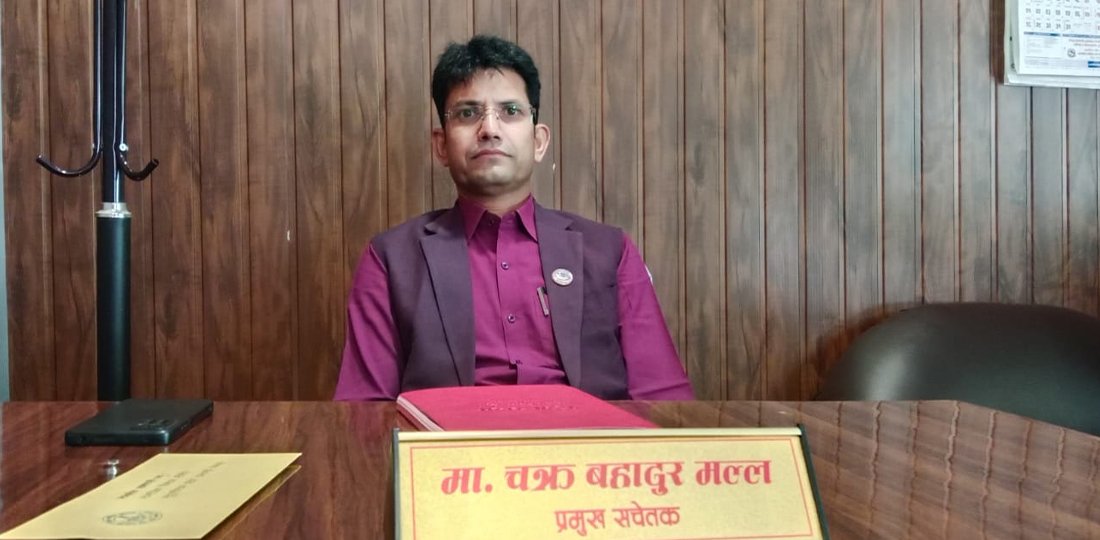
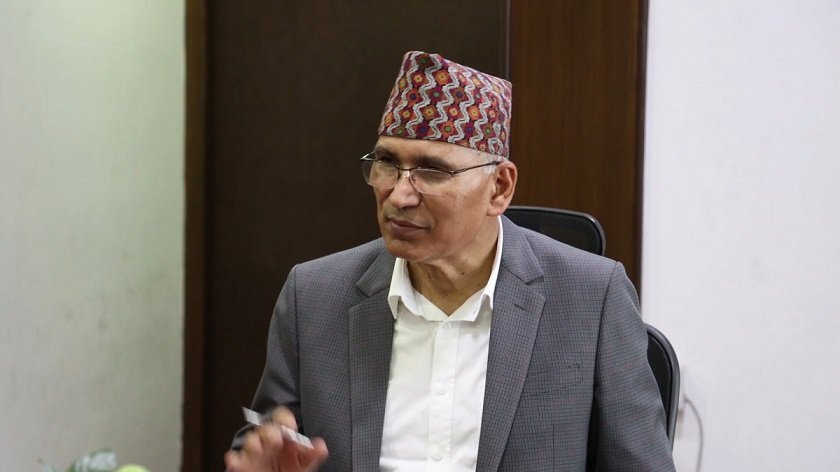
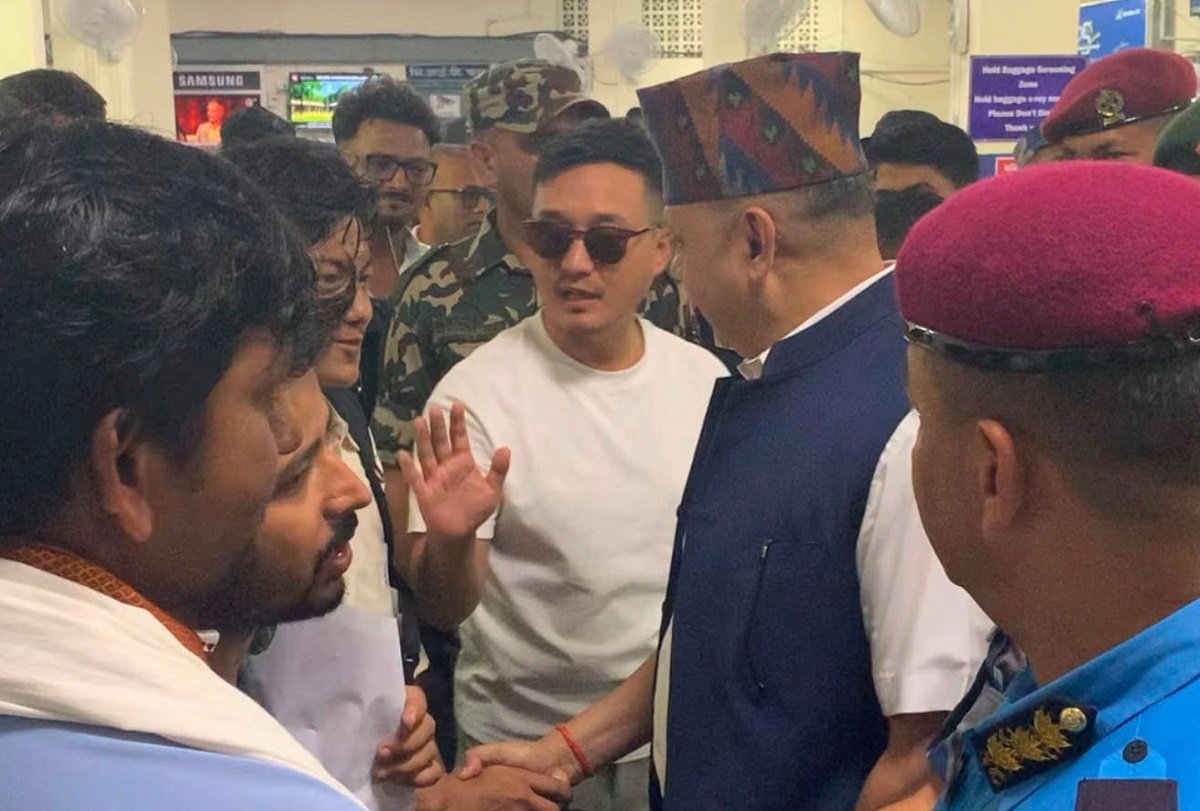
Lawyer Swagat Nepal Expresses Dissatisfaction with District Court's Verdict on Fake Bhutanese Refugee Case

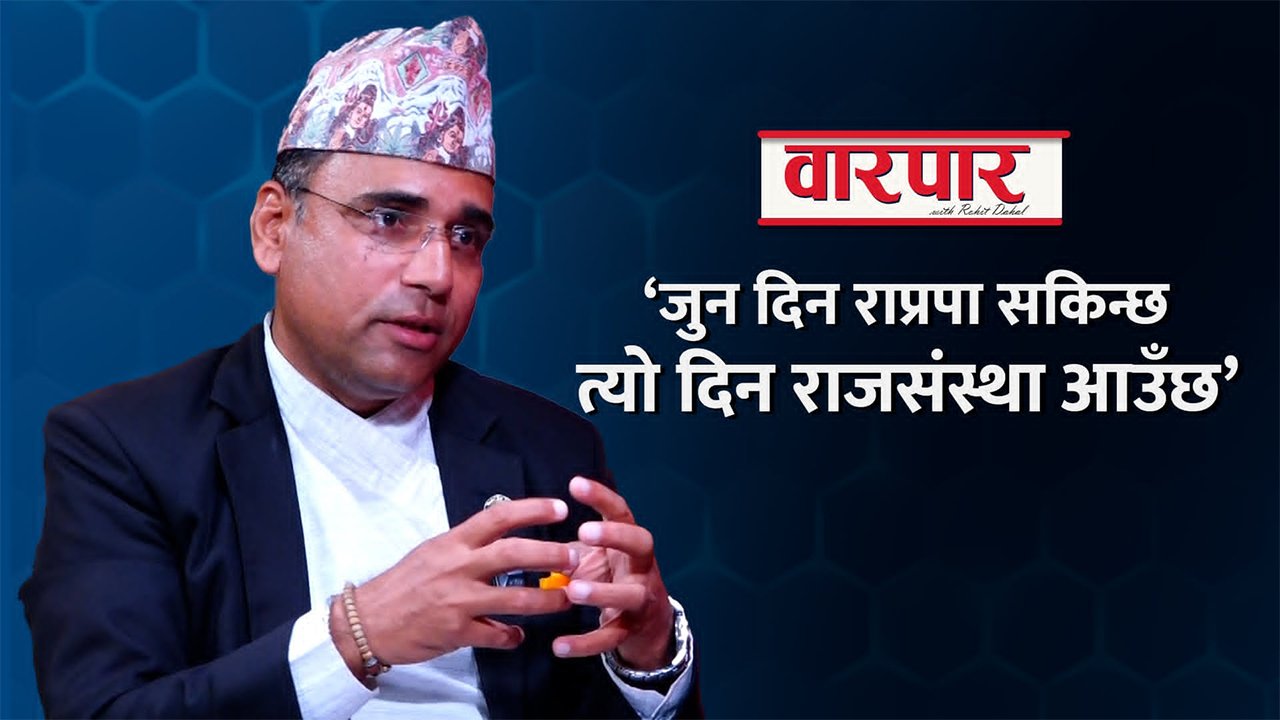
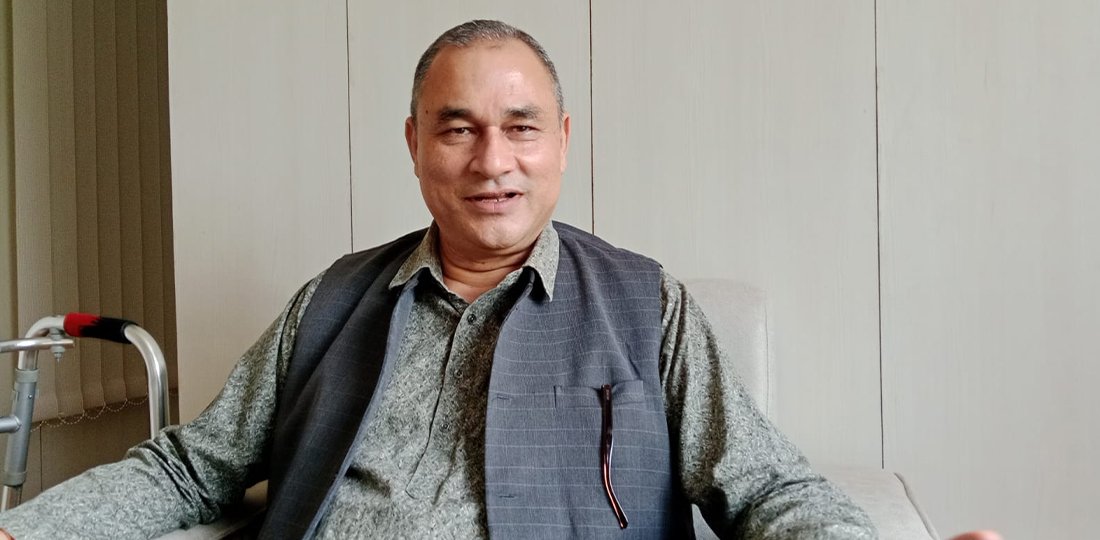
Kathmandu. Swagat Nepal is known as a lawyer, political analyst, activist, journalist, and writer. Nepal, one of the initiators of the recently much-discussed 'Fake Bhutanese Refugee Case,' does not appear satisfied with the Kathmandu District Court's verdict. He claims that top leaders of major political parties were acquitted despite evidence, and the court adopted a double standard.
Furthermore, his views on the current government's style of functioning, the tendencies of new and old parties, citizenship policy, geopolitical influence, and the necessity of a monarchy in Nepal are quite sharp and clear. Presented here is an edited excerpt of the conversation with lawyer Swagat Nepal for Rato Pati's 'Warpar' by Rohit Dahal, focusing on these contemporary and serious issues:
How do you view the Kathmandu District Court's verdict in the fake Bhutanese refugee case? You yourself raised this issue, but you don't seem satisfied with the court's verdict?
Nepalis have been sold as laborers in Dubai, Qatar, Arab, and Malaysia, and now they are being sold as Bhutanese refugees. The tendency to feed oneself by selling youth and citizens has become dominant in this country. Remittances bring something, but what comes into the country after selling its own citizens as refugees?
We have submitted a diary to the court that kept accounts of selling people as refugees. How much for Arzu, how much for Prem Rai, how much for Rajesh Bajracharya, how much for KP Oli – the diary clearly states that this much has been given, and this much is remaining. We have submitted a pen drive with photos, videos, diaries, and audio of telephone conversations showing money being unloaded in sacks in front of the Mahakalsthan temple in Lalitpur at night, unloaded into another vehicle, and taken to the houses of various individuals. However, the judge does not even look at the evidence.
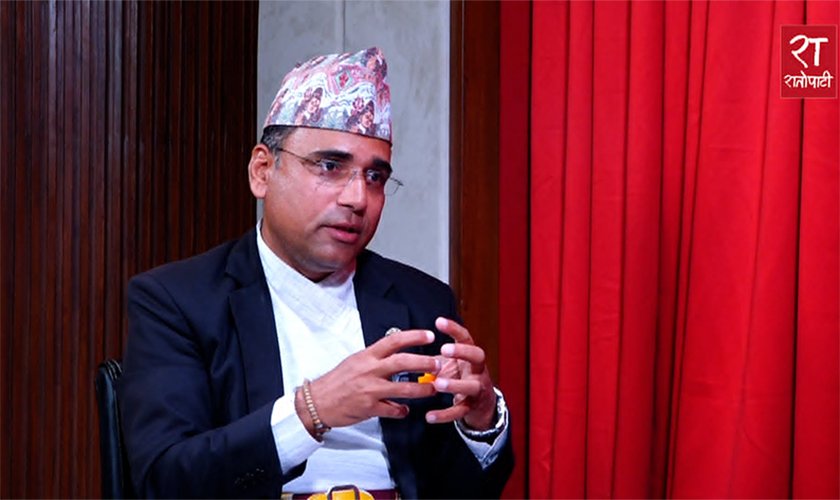
When asked to examine this evidence, the response is, 'They have not even been made defendants, so how can we examine it?' Judges who summon, take statements from, and send ordinary people like you and me to jail just because their names are mentioned, have issued orders that these big leaders cannot even be touched.
So, does the evidence you submitted clearly show that the big leaders have received money?
It clearly shows. The diary contains details like how much money has been received, how much has been paid, and how much is remaining. There is a video of money being unloaded. Does such evidence not need to be examined? Is it permissible to summon ordinary people with a summons, send the police to find them, and send them to jail, but not these leaders?
A summary verdict has been issued, and the full verdict is yet to come. The verdict does not say anything about the principal amount. One aspect cannot be completely omitted. The involvement of Balkrishna Khand's wife Manju Khand, Arzu Rana, Rajesh Bajracharya, and the current Chief of the Commission for the Investigation of Abuse of Authority, among others, is clearly visible, but they have been acquitted.
In a case involving such high-profile individuals (serving ministers, secretaries), did you not feel fear or receive threats while arguing the case?
Many threats were received. At that time, this matter was also reported in many media outlets. Some said, 'Please do not appear for the hearing.' There were even activities in the courtroom where ministers pulled me aside and said, 'Please don't speak.' However, this is our professional duty; just as you face threats in journalism, such things are common in our profession.
From the outside, former Home Minister Balkrishna Khand and Top Bahadur Rayamajhi have been declared guilty. But Rayamajhi was not in a government position at that time; how just is it to consider him guilty?
This is very strange. According to the law, for 'organized crime,' a group or organization must have been formed to commit a criminal act. I had presented in the argument that UNHCR had stopped the process of sending Bhutanese refugees to third countries from Nepal in 2016. Despite that letter, the then Home Minister formed a committee with the CDOs and Assistant CDOs of Jhapa and called for re-registration. Legally, that committee itself was a criminal organization.
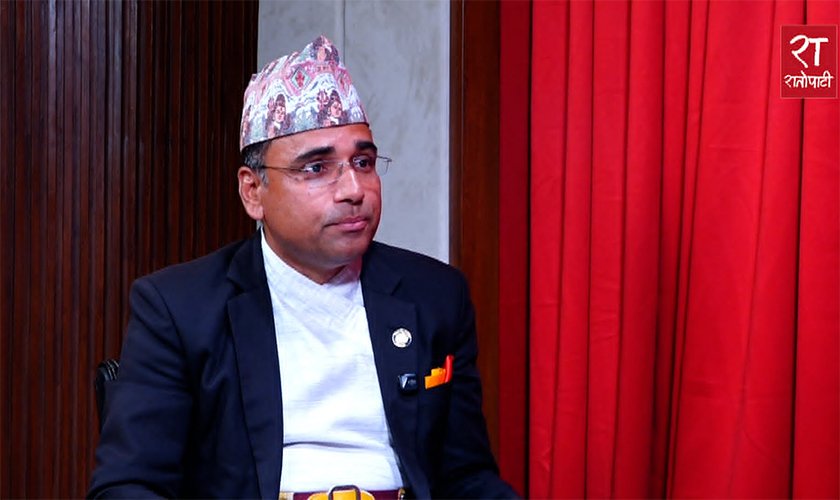
The person who formed a committee to proceed with work that international agencies had declared illegal, despite receiving a letter stating so, is the main planner. But the court presented the person who formed the criminal organization as an 'accomplice.' How can the main person be an accomplice? Therefore, this verdict is flawed. However, we accept the verdict but will challenge it logically and intellectually in the higher court.
Is the current government trying to conduct further investigation into this case? What possibilities do you see?
The summary verdict of the court includes a statement – 'As it appears that further evidence may emerge after the charge sheet, it will be considered at that time.' This allows the current government to proceed with further investigation. This is one positive aspect of this verdict.
But the question arises – why did the government lawyers at that time not make the people who should have been made accused? There is a legal provision for imprisonment of 3 months to 6 months if police investigation officers and government lawyers do not make those who should be made accused, or make those who should not be made accused and file false cases. I had urged the judge in the argument to make a historic decision and issue a directive order for action against the investigation officers and government lawyers who made mistakes in prosecution, which the court could have done.
How do you view the emergence of the new government and new leadership (including Balen Shah, Ravi Lamichhane)? How strictly have they adhered to the constitution and laws?
We have read in the constitution that a person who is not a member of parliament cannot become prime minister. But in the past, Sushila Karki was made prime minister, which was a step outside the constitution. It was called the 'doctrine of necessity.'
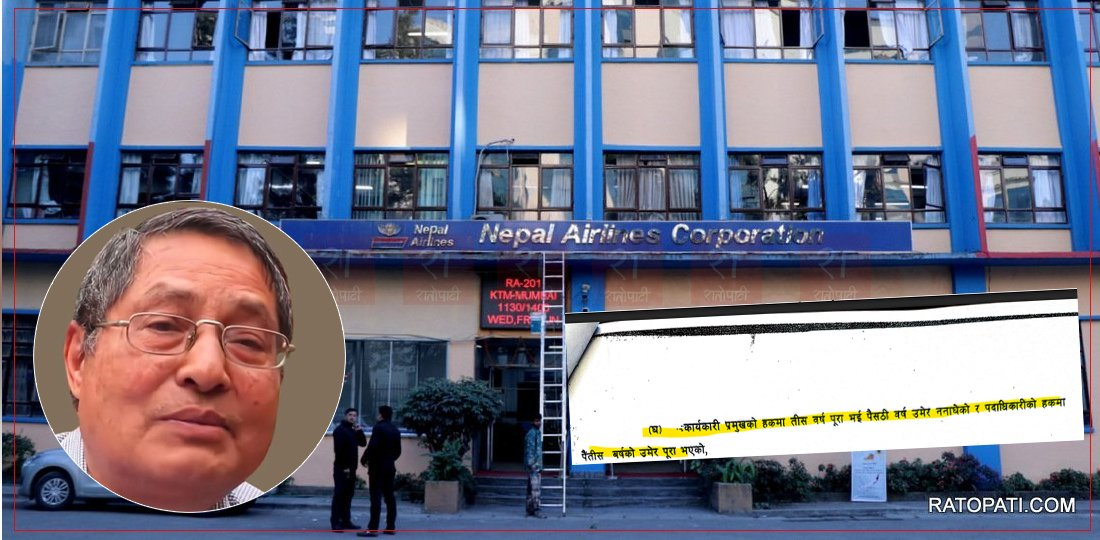
Currently, many actions are being taken outside the constitution and laws. For example, a person around 80 years old was appointed to Nepal Airlines Corporation. The law clearly states that one should not be above 65 years of age. Are we not fighting against 'gerontocracy'? Then why are elderly people being appointed? If they say, 'We have come according to the spirit of the movement, we do not follow the constitution,' then it falls under the 'Grand Nom Theory.' But on one hand, talking about epochal change, and on the other hand, continuing the same old system is a conspiracy.
How do you evaluate the first 100 days of the current government (including the Balen/Ravi factor)? Why has no change been felt even with new faces?
Apart from the citizenship policy, the government's other matters could be given 99 out of 100 marks, but due to that citizenship policy, even the 99 becomes zero. The 'homework' given by foreigners has been completed in this government's 100-point agenda. That is – 'faceless citizenship.'
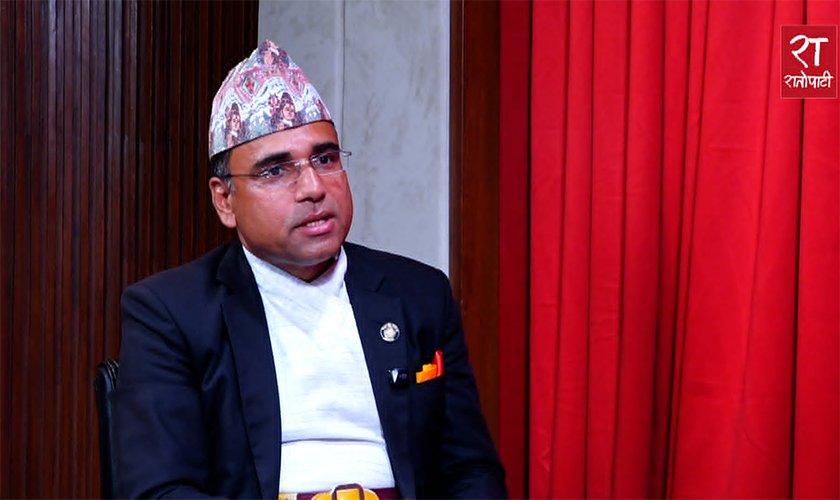
There is no system in any country in the world where citizenship and passports are delivered to homes just by sending documents via email, without even being present at the office. But with the objective of making Nepal 'Fiji,' a scheme is being devised to distribute citizenship freely to foreigners for the first time. This involves distributing citizenship to about 600,000 people from the north and many times more from the south. This is extremely dangerous.
Is your clear accusation that this government is distributing citizenship to foreigners?
Absolutely. This is a straightforward matter. As long as this government does not come up with a clear stance on the issue of citizenship, this will remain a frightening issue. The citizenship bill that Bidya Bhandari blocked yesterday is now being implemented through a roundabout way. In a country with our geopolitical sensitivity, citizenship should be granted only by blood relation. But here, a game is being played to destroy the country by distributing citizenship to foreigners.
How do you characterize the state's treatment of the rich and the poor?
In this country, large businessmen are exempted from billions in taxes by forming tax settlement commissions and collecting taxes in lakhs. I have already published a list of those who received tax exemptions worth about 2 trillion rupees. If the government collects that, it will not need to borrow from foreign countries. But if a poor farmer's buffalo dies after falling off a cliff after taking a loan, their loan is not waived. The state's policy is to protect the corrupt and kill the poor.
Just because a minister wore a 'daura-suruwal' yesterday and wears a t-shirt today does not mean it is a new change. What the leaders of the parties did yesterday, those who call themselves new are also doing the same today. If you are not a person from the ruling party, your work will be obstructed. Even when an application is filed with the CIAA with evidence that a person from another ward has submitted forged documents to the court, the CIAA remains silent.
How do you analyze the future political journey and potential conflicts between Balen Shah and Ravi Lamichhane?
Even the people in Balen's cabinet do not know what Balenji is thinking. A narrative is being created on social media that Balen himself will be the prime minister in five years. Seeing this, Ravi-ji, who has already turned 53, must surely feel a sting. It is out of the question that Ravi-ji will sit idly by while 36/37-year-old Balen moves forward.
Looking at the current government's budget and programs, the Ravi factor appears to be dominant in many aspects. Terms like 'Mahendra Highway' that appeared in the 100-point program have disappeared from the budget. This shows that Balen does not have sole agreement on all decisions. The possibility of political conflict between them in the future is clear.
You have been openly advocating for the monarchy. How likely do you see the return of the monarchy in the current democratic republic?
My clear conclusion is that if the monarchy is not reinstated in Nepal, Nepal as a country will be deleted from the world map. There is no third option; either the monarchy will be reinstated, or Nepal will be deleted.
Wherever the monarchy has ended, those countries have eventually been erased from the world map or have been fragmented. Currently, China is trying to stop the 'Free Tibet Movement' while America is promoting it. Foreigners wanted 'monarchy' not to be written in Nepal's constitution, and they succeeded. Now they are succeeding in imposing a citizenship policy that will destroy Nepal. Therefore, the monarchy has become indispensable for the survival of the country, and its necessity is being increasingly confirmed.
Video/Photo: Manoj Khadka, Ayush Dhami/Rato Pati
This specific news has been automatically translated by AI. As a result, there may be some inaccuracies or language errors.