Upendra Yadav Critiques Government Performance and Political Landscape

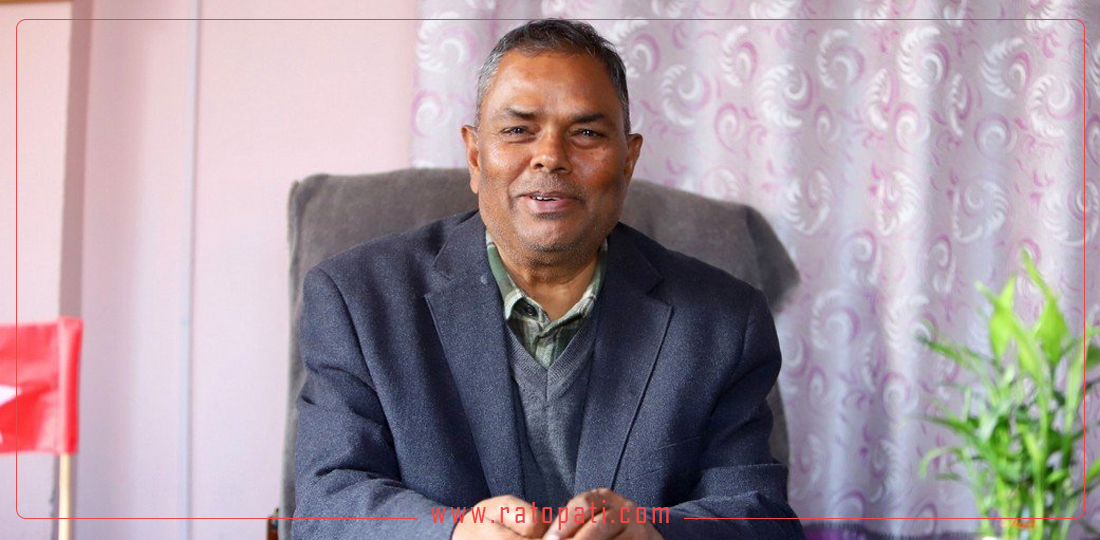
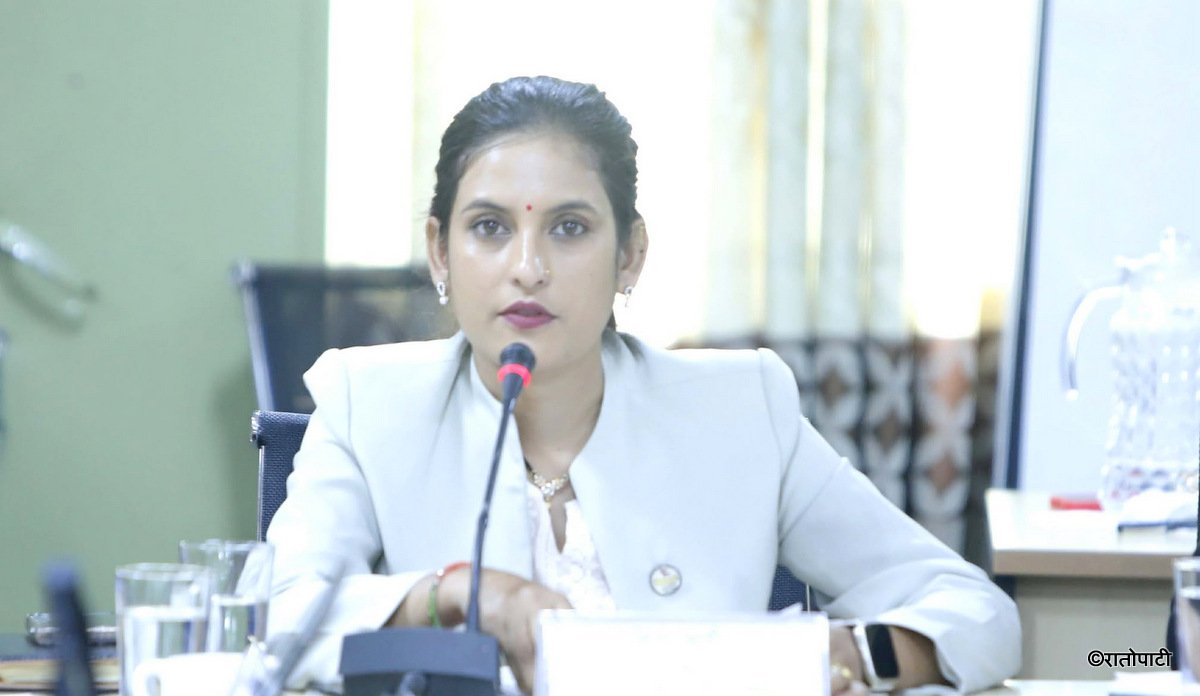
Kathmandu. The government led by Balendra Shah has claimed to have established good governance for a day. Some of the government's recent activities have not been liked by the citizens. The proposal to abolish the provincial assembly, the eviction of the squatter settlements, the self-immolation of Ganesh Nepali, and various types of taxes have made the public weary, and the government is facing criticism from all sides. Why has such a situation arisen so soon after the formation of the government? Where did the planning go wrong, how is this government functioning, and what will the parties do next? Regarding these issues, Ratopati interviewed the chairman of the Janata Samajwadi Party Nepal, Upendra Yadav. How do you evaluate the period of 4 months since the election ended? The election held on Falgun 21st was in a very complex situation. In a way, it was a 'coup'. The powers that came from outside the constitution, having overthrown the power elected by the people, are ruling. The election was held with the support of external powers. The election was held under the supervision and control of the center of power. The security agencies of Nepal played a big role in it. The result that came after the election was unexpected, unimaginable. Nevertheless, it came in the name of the people. It has to be accepted. Now, whoever has received the mandate should work for the people and the country. They should fulfill their responsibilities themselves, and we will fulfill our responsibilities from the outside. However, even after 4 months, no significant work has started in any sector of the country. This period has been held captive by confusion, uncertainty, and immaturity. There has been no change in the economy; it has worsened. Agriculture has been further devastated. Poor people are suffering. The government that came with the promise of providing free education and health has instead imposed taxes on health and education. The border has similar problems. Farmers are not getting fertilizers. There are no positive signs in any sector. Therefore, the coming days are not good for the country. Industries and factories are where they were. Democratic values and institutions are weakening. We feel that constitutional bodies, which should be strong, are now very weak. However, some efforts to bring good governance are visible. Similarly, no initiative has been taken to institutionalize the federal republic. Instead, actions are being taken to weaken it. The biggest achievement of past movements is federalism and subsequent inclusivity. But look at the various appointments made by the current government; none are inclusive. There is no sign of Madhesis, Dalits, or indigenous nationalities. In other words, the country is again starting to be dominated by a single caste, a single language, a single culture, and a single way of life. This raises concerns about whether inclusivity, federalism, and the republic will be destroyed. Why are you remaining silent even when you know so many serious things? Political parties are currently engaged in self-reflection. The parties also had their own shortcomings that led to this day. On the other hand, parties are also waiting to see the work of those who came through the election. Another concern of the parties is that an even worse situation might arise. Leaders are worried that the democracy brought through so much struggle might not even remain. Now the time has come for political parties to make the public aware to strengthen democratic institutions. The parties leading the government should also be made aware. If there are shortcomings, they should be corrected. As you said, given the way this government was formed, are the coming days not so good? The coming days are challenging, and currently unclear. Nepal has already lost its credibility in the international arena. Neighbors are looking at us with distrust and suspicion. Centers of power are looking for their own interests in Nepal. As a result, Nepal's national interests are weakening. Poor people are suffering. The government that came with the promise of providing free education and health has instead imposed taxes on health and education. The border has similar problems. Farmers are not getting fertilizers. There are no positive signs in any sector. Therefore, the coming days are not good for the country. You mentioned in a program you attended that Prime Minister Balen Shah said, 'Can we expect in 35 days what couldn't be done in 35 years?' Is it fair to accuse the current government of not being able to do in three months what you couldn't do? We need to look at how the beginning is. To build a road, one must start digging. But that is not visible now. Only when the construction of something begins can it be completed. Here, even the beginning has not been made. If it wasn't started in 35 years, it doesn't mean we shouldn't start now. Instead, they should say, 'We will do the work that wasn't done in 35 years, we have started this and this work.' But to say that nothing has happened in Nepal in 35 years, as the Prime Minister said, is wrong. Nepal has changed significantly in 35 years. This can be known from the report published by the Ministry of Finance. Remarkable work has been done in 35 years. Saying that nothing has happened is wrong. Therefore, one should accept what has been done and move forward by doing what one can do. But the government says that our initial work has started with good governance, and after improving that, we will do the remaining work? Good governance has not been felt by the people. Corruption is happening in new ways now. During the tenure of the current government, there was a problem with BYD. The government did not even deem it appropriate to investigate it. Ministers and MPs have been found to have disproportionate assets. Where did it come from, and how? That is also not being investigated. There are many such things that the current government is covering up. Investigating the assets of former MPs, ministers, and high-ranking individuals, but not the current MPs and ministers, is this not a cover-up? Therefore, good governance should be for everyone. But the public who gave the government votes to reach this point are not speaking up, and the public also says the government is doing the right thing? The public does not always make the right decision. The masses can be influenced in many ways to make decisions in their favor. The masses are most influenced by mobile phones now. Mobile algorithms and digital media have muddled people's minds. What will be the outcome of decisions made under their influence? Moreover, even if the public makes a decision, it doesn't mean it's final. The ruling class is the same. Congress, Communist, Rastriya Swatantra Party – only the names are different. The character is the same. Think of their faces, think of their class, think of their ideology – it's all the same. RSP announced the abolition of the provincial assembly today, while Congress and Communists have been weakening the provincial assembly since the beginning. Congress and Communists are not speaking about strengthening federalism. Therefore, the decision made by the public once is not final forever. The decision can change tomorrow. Let's talk about Nepal itself; the public voted for a non-party system in a referendum. The same public that voted for a non-party system later overthrew both the non-party system and the monarchy. Therefore, people should not think that they have given their decision, and now they can do whatever they want. Just as the public made a decision under influence yesterday, when they understand that yesterday's decision was wrong, the public will correct it. And when that correction happens, there can be great upheaval in the country again. As you mentioned earlier, a bigger challenge is coming in the country. What will happen now? The country is becoming economically devastated. Chaos is spreading in the country, and the public is living in fear, dread, and terror. External powers are increasing their interference. So, is stability and peace possible in such a situation? The country is economically devastated, the public is distressed, fearful, and external interference is increasing. The ground is being prepared for that. What kind of external interference? It is all visible. It is something everyone has experienced. Who set Singha Durbar on fire? Who were there at the time of the fire? There is a big invisible force. Have you seen 'TOB' written? What is 'TOB'? Tibetan Original Blood. Is that Nepali? It's foreign. Are they the only ones, or were there others behind them? This needs to be understood. If that was visible, imagine what the invisible might be like. And isn't that interference? That interference continues. It has become even stronger now. The geopolitical indication you mentioned, does the current government lack the capacity to control it? If the state or government wants, anything is possible. The country must be saved from geopolitical influence. The grip of geopolitics can be very bad. Gradually, no one knows how it tightens. Due to foreign interference, the country becomes so hollow from within that no one knows when it will collapse. Nepal must be saved from such interference. But no meaningful effort seems to be made. The government must first build good relations with its neighbors. It must win the trust and mutual trust of its neighbors. It should not allow external powers to act against its interests or the interests of its neighbors, or in a way that makes its neighbors suspicious. But isn't the ground for this prepared during the tenure of past governments? Isn't it said that the preparation has been going on for a long time, and you provided the place for that preparation? Big events require big preparations and long preparation times. Madan Bhandari's murder was political; it didn't happen in a day. The annihilation of King Birendra's dynasty at Narayanhiti did not happen like that; it is also mysterious. And the burning of Singha Durbar is also mysterious. Madan Bhandari's murder, the annihilation of Birendra's family did not happen suddenly. The burning of Singha Durbar and the Supreme Court did not happen suddenly. It is wrong to say that the old political parties made mistakes, and therefore all this had to be done. But wasn't the full extent of this during your government's tenure? Perhaps, they were in the background. The parties in government at that time might not have been vigilant. But the government at that time was so unstable that there was no time to properly observe, understand, and investigate. Governments used to fall in 6 months, 3 months. Parties were busy breaking, forming, and ruining governments. In 34 years of multi-party system, 30 governments were formed. In one instance, 14 governments were formed in 10 years. The inability of parties to provide political stability was a major weakness, and others took advantage of it. That is why the movements of Bhadra 23 and 24 happened, and the current change occurred. But the current parties cannot absolve themselves by saying that all this happened because of the old parties. Rastriya Swatantra Party brought the idea of abolishing the provincial assembly through its general convention, but aren't the current activities of old parties like Congress and UML in the provinces helping RSP? Was Congress or Communist ever in favor of the federal system? RSP brought the proposal for provincial abolition later. Congress and Communists have weakened federalism without even bringing a proposal. Those parties wrote a weak and ambiguous federal system into the constitution. Aren't you also responsible for this? We were fighting on the streets for federalism and the republic. We did not sign this constitution. We were shot at and a weak form of inclusivity, a weak and ambiguous federal republic was brought about. Congress and Communists did this work. Congress and Communists weakened the provinces. Even after the constitution was promulgated, the government was led by Congress and Communists for 10 years. But they did not allow federalism to be implemented, nor police adjustment, nor did the center make laws. Therefore, Congress and Communists also want to end federalism, and RSP also wants to end federalism. The ruling class is the same. Congress, Communist, Rastriya Swatantra Party – only the names are different. The character is the same. Think of their faces, think of their class, think of their ideology – it's all the same. RSP announced the abolition of the provincial assembly today, while Congress and Communists have been weakening the provincial assembly since the beginning. Congress and Communists are not speaking about strengthening federalism. So, who will speak now? We are speaking. The public is speaking. Federalism and the republic are the future of Nepal. Strengthening federalism, expanding inclusivity, and institutionalizing democracy are the needs of today. If we go against this, the country can fall into great conflict. The country can get stuck in internal conflict for years. Ethnic conflicts can arise in the country. Regional conflicts can arise. A federal system without provincial assemblies is not federalism. In a federal system, strong provincial assemblies and strong provincial governments are needed. You said you are fighting for federalism and the republic, but after the election, you have become so weak that it is difficult to even stand up. How will you fight like this? We were not contesting any elections when we brought about the Federal Republic of Nepal. We did not have an organization either. But with the support of the people, we brought about a federal democratic republic and inclusivity from the streets. Therefore, to struggle, one does not need to be in parliament or win an election; one needs the public by their side. One needs the streets. Winning an election is not necessary for the fight for rights. We are not in favor of overthrowing this government right now. We want the government to do good work and should be given the opportunity to do so. The government should still be provided with an environment to work, an opportunity to work, and cooperation so that the government can do good work. But if the government keeps saying that while the public remains oppressed and their problems are not heard, we must stand with the public. We certainly lost the election, but we have not lost in politics; our agenda has not lost, our ideology has not lost, our issues have not lost. The public is with us. The public is returning. The public is being intoxicated by social media algorithms. This is called mind control, and it is a great power of international imperialists – the algorithm. Using it, the public, the intellectual class, and the leaders here are controlled. Its effect lasts for some time. As its influence wanes, the public will return. The public is a 'living nation.' Their patience is not long. The public is slowly waking up. We are working towards that. For this, will your parties form any front or alliance, or will you go alone? We will go with those we can unite with. If no one is ready, we will go alone. If no one supports us, like 'walk alone, walk alone,' we will move forward alone. Congress, UML, Maoists have not reformed yet. They are still under an illusion. They believe that the current government will fall, and then it will be our turn. I have not seen them learn from past mistakes and try to correct them. Now the public has given up hope from Congress and Communists. We are not in favor of overthrowing this government right now. We want the government to do good work and should be given the opportunity to do so. The government should still be provided with an environment to work, an opportunity to work, and cooperation so that the government can do good work. But if the government keeps saying that while the public remains oppressed and their problems are not heard, we must stand with the public.
This specific news has been automatically translated by AI. As a result, there may be some inaccuracies or language errors.
_ru38mhx7yl.jpg)