Bagmati Province Politics Stirred by Central Power Sharing Deal

Hetauda. With the power-sharing deal between the Nepali Congress and CPN-UML finalized at the central level, the politics of Bagmati Province has also become somewhat turbulent. With the Congress not being in the power equation, the UML ministers were preparing to separate from the government.
However, on Thursday, as the UML ministers were preparing to leave the government, their resignations were suddenly put on hold. The ministers who had gone with their resignations returned to their ministries. In that situation, the possibility of a change in the Bagmati Province government has been averted for a few days.
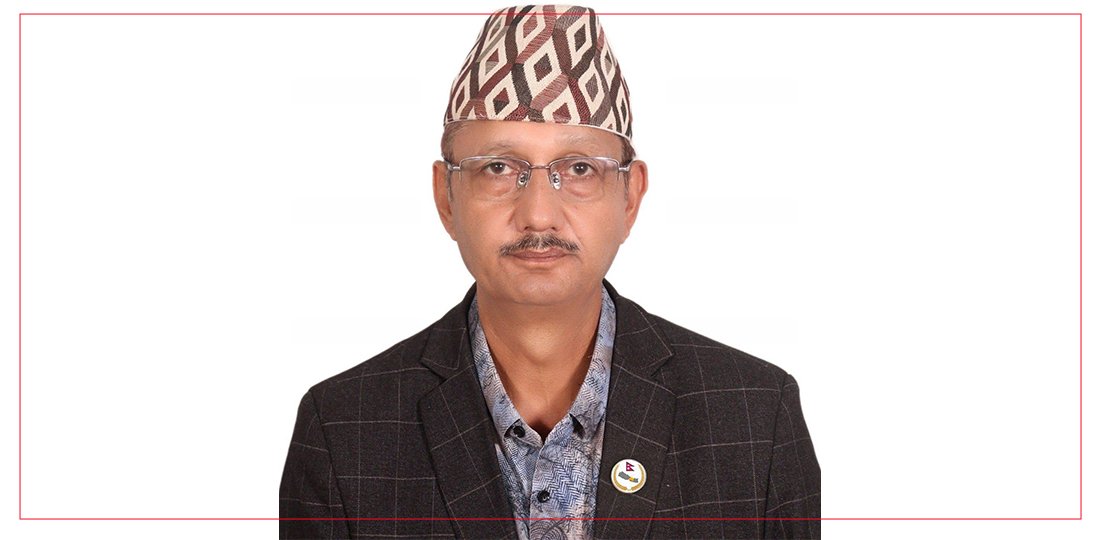
A brief conversation with Keshav Prasad Pokharel, a member of the Bagmati Provincial Assembly from CPN-UML, on the latest political developments, the changes in the power equation, and the effectiveness of federalism:
There seems to be a sudden lull in the discussion about UML leaving the government in Bagmati, what is the real story?
There were some misunderstandings regarding the alliance with the Nepali Congress in Bagmati Province. After the Congress signaled that it would not be in the alliance, its impact was seen in other provinces as well. It was natural for the political influence of Sudurpashchim and Karnali provinces to be felt here too. However, CPN-UML is still in a 'wait and see' strategy.
Our clear stance is that cooperation between forces that believe in democracy and republicanism should be further strengthened. We presented a model of good alliance culture during the budget-making process, which led to the easy passage of the budget. In the current situation, we are still in favor of Congress reconsidering its decision and this alliance remaining intact.
There were reports that ministers were carrying resignations in their pockets, why did it stop?
Mentally, all the ministers were ready to resign. Some colleagues were even sitting with their resignation letters. The cabinet meeting has also concluded. The Chief Minister had called the cabinet, and if he expressed his desire to resign, that process would have moved forward. However, as clear instructions had not yet come from the party center and we were awaiting the official decision of the Congress, we exercised a little patience at the last moment.
UML still wants the cooperation with Congress not to be broken. Our policy is not to rush at the provincial level until a concrete decision comes from the center.
Has the animosity between UML and Congress increased in Bagmati?
In the case of Bagmati Province, there is no animosity between UML and Congress. Our relationship is cordial. Even when talking about a change in power, we were clear that according to the previous agreement, UML would lead after Congress. The Chief Minister is also not in favor of clinging to power. He has clearly stated that he is ready to abide by whatever the top leaders of the party decide. Therefore, the problem here has arisen not from local issues but from the political equation of other provinces and the influence of the center.
There is about a year left in this term. How necessary was it to change the government at such a time?
Objectively, there was no immediate need for a government change. However, such steps may have to be taken for political stability and sometimes to balance internal party dynamics. In a coalition culture, it's not enough for one party to want it; the sentiments of all partners must be understood. It is also a natural process to change some faces to further accelerate the government's work. However, we wished that such a message should not go to the public abruptly. We also do not fully understand why Congress suddenly tried to withdraw its support.
There are complaints that the provincial government has not been able to provide justice in service delivery to the citizens?
I have a slightly different opinion on this matter. It is not that the provincial government has done no work, but it is true that the work has not been enough to meet public expectations. Many of our positive works were not properly publicized, which made it seem like no work was done. The government that will be formed next must address social needs through new policies and programs. If the implementation of the previous budget can be made effective, it will send a good message; we still have a lot of work to do in the areas of infrastructure and services.
Bagmati Province has taken a historic and bold step by reducing the number of ministries to 8. This has been done with the objective of reducing administrative expenses and increasing capital expenditure. This was also a common resolution of the Provincial Assembly. This is a big effort made towards good governance by restructuring the bodies. It is unfortunate that such reformative work remains in the shadows, but we will move forward on this roadmap.
Questions are being raised about the provincial structure and federalism itself, how do you view this?
The role of the central government has become the main problem in the implementation of federalism. According to the principle of devolution of power and separation of powers, the center has not wanted to transfer power downwards. Due to this, federalism has not been institutionalized. However, from a development perspective, provinces have done more work than the center and local levels. The central government should not just give slogans of good governance but should correct the past shortcomings to institutionalize federalism. Instead of saying that the provincial structure is expensive, the work done by it should be evaluated.
Old parties are accused of turning power into a musical chair?
There is some truth to this accusation, and we must take it seriously. The last election has dealt a big blow to the old parties. This is a message from the public that we need to strengthen internal democracy and focus on good governance. Parties need to rise above personality-centric politics and move forward with a common voice. When no one has a majority, changes in equations are a compulsion of parliamentary mathematics, but this must be linked to good governance in a way that citizens can feel.
In Bagmati, there have been repeated instances of taking votes of confidence and changing governments, what will be the impact of this?
The main reason for this instability is the difference in personalities and working styles. On the other hand, this situation has arisen because the center has tried to control the provinces instead of facilitating them. Repeated changes in government do not send a good message to the public. However, the government that will be formed now must work towards good governance without deviating from the province's roadmap. In the remaining one year, we must prioritize enacting the remaining laws and effectively monitoring the work done.
Finally, what will the new government give to the people?
We have drawn a clear roadmap for the government that will be formed now. First, to make extensive cuts in administrative expenses, second, to improve and effectively implement capital expenditure, and third, to monitor the work we have done and deliver its results to the public. If we move forward with these tasks mandatorily, the public will feel the relevance and presence of the provincial government. We all, both sides and opposition, must move forward together to achieve collective goals.
This specific news has been automatically translated by AI. As a result, there may be some inaccuracies or language errors.