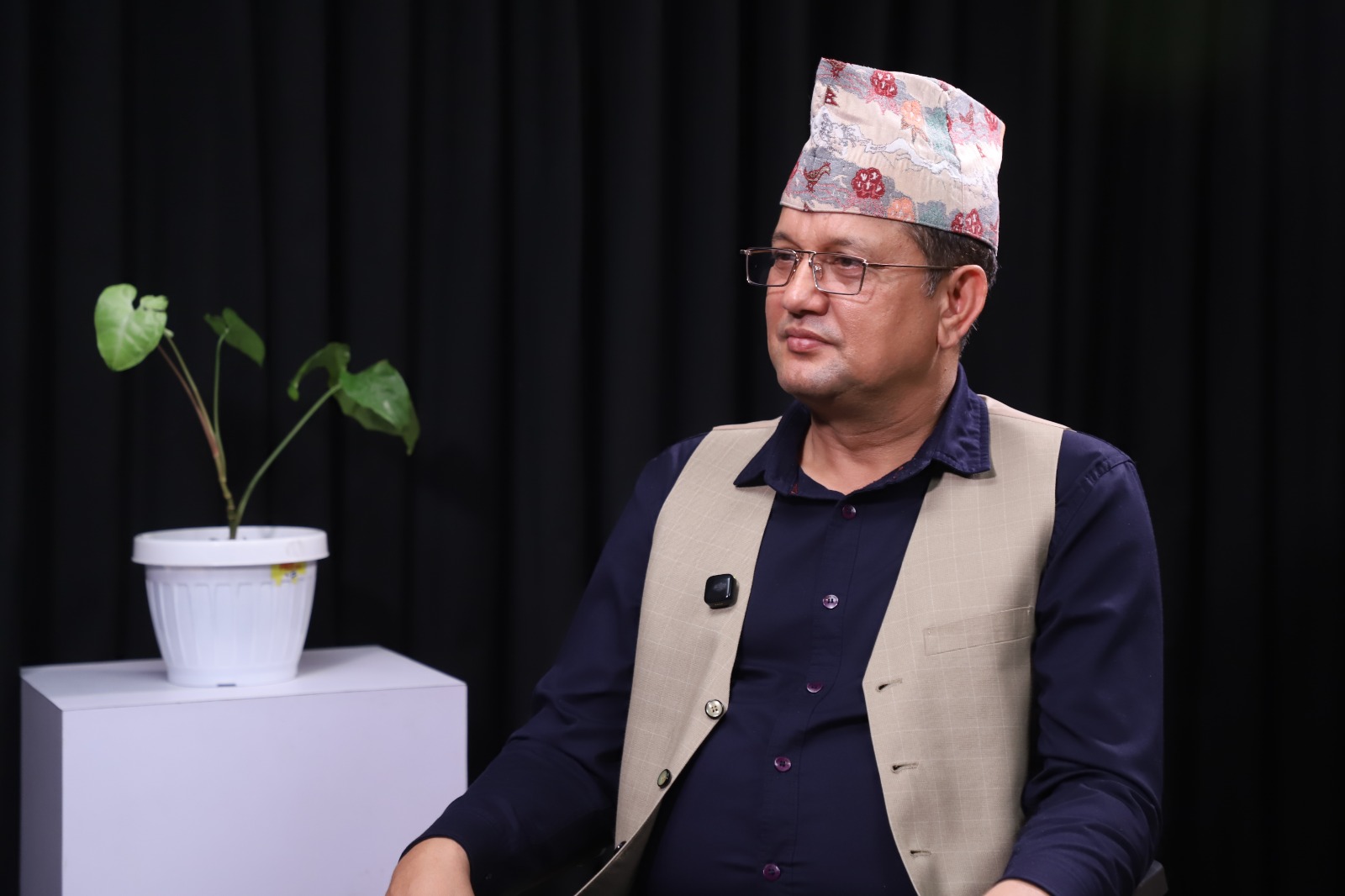
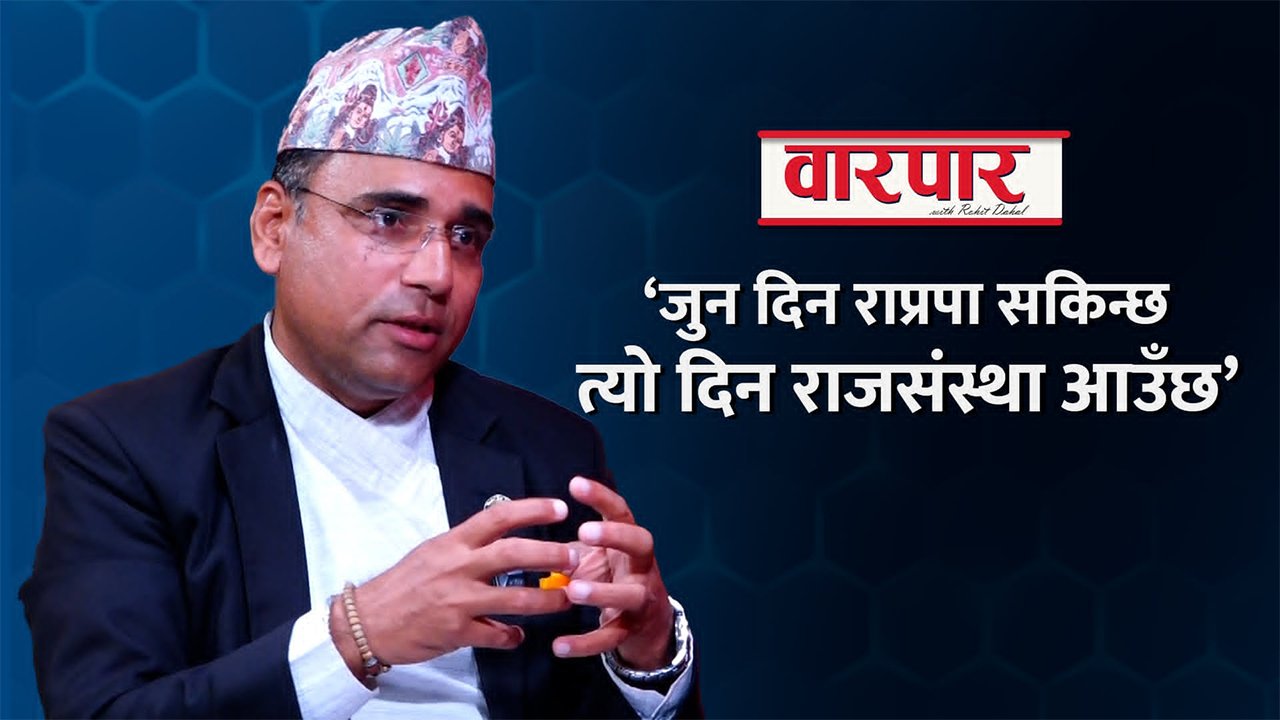
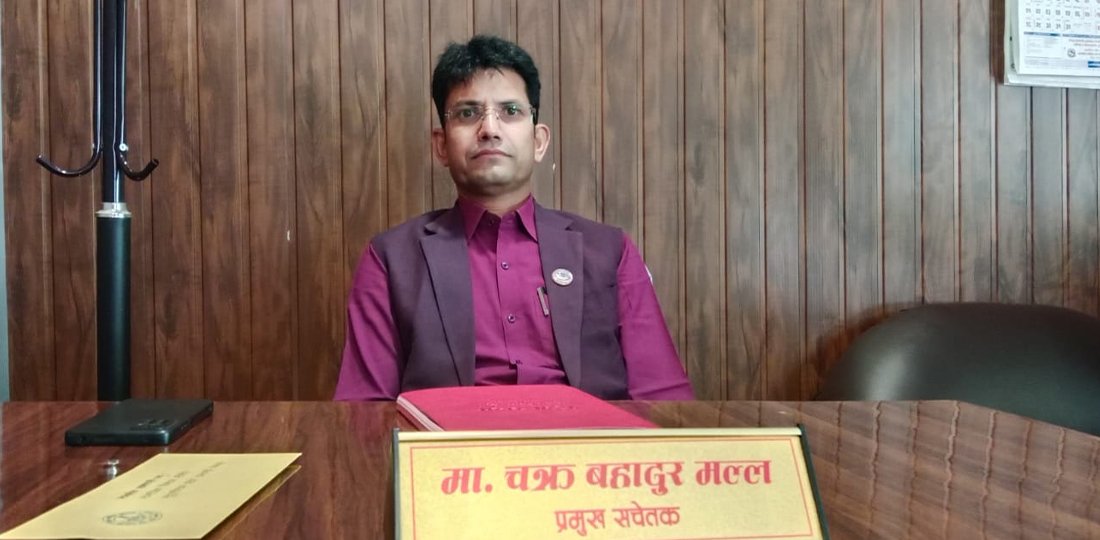
Demographer Prof. Dr. Yogendra Bahadur Gurung Discusses Population Dynamics

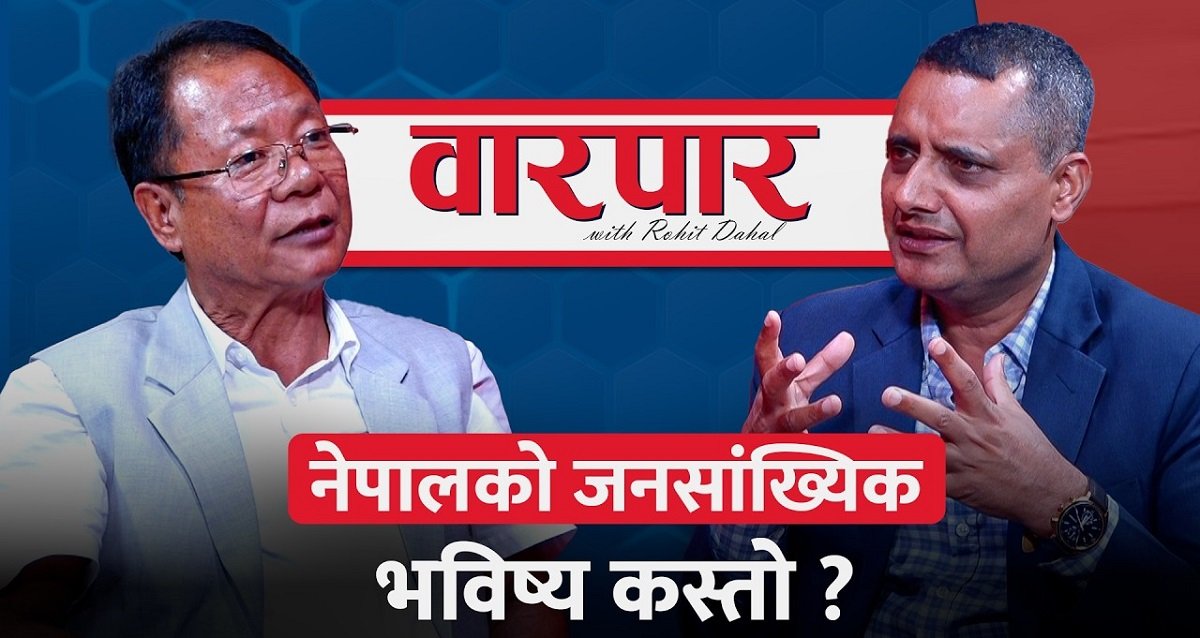
Kathmandu. The world's population has reached eight and a half billion, while Nepal's population is around three crore. At one time, the narrative that the population was too large and needed to be controlled was prevalent. But recently, the population growth rate has decreased, and concerns have arisen that this could put the country in crisis. Especially, rapid migration from the Himalayas and hills, the exodus of youth, and declining fertility rates have raised many questions about Nepal's demographic future.
Is a population of three crore a burden for Nepal? Is it possible to stop the exodus of youth? Is the state only looking at the population as a number of voters? Focusing on these issues, Rohit Dahal interviewed Prof. Dr. Yogendra Bahadur Gurung for RatoPati's 'Warpar'. (Detailed video can be watched and listened to):
At one time, there were talks of controlling population because it was too large, but now we hear that the population is too small and needs to be increased. In reality, is a population of three crore too much or too little for Nepal?
There are different perspectives on population. In reality, there is no such thing as too much, too little, or just right population. The narrative of too much or too little arose because Edwin Cannon proposed the Optimum Population Theory in 1924. He argued that every country should have an ideal population that balances productivity and development. Later, Malthus introduced the theory that population grows geometrically while food production grows only arithmetically, leading to a global wave of 'population control'. In Nepal's case, we have heard since childhood that the population is too large, which was the understanding of Western countries. But now, concerns have started to arise that the population is too small on our ground. In my understanding, whether the population is too much or too little is linked to the country's situation.
If we were to open thousands of industries in the country, this population of three crore would not be enough. But currently, due to the lack of sectors to increase productivity, even this population feels excessive, and people are migrating abroad. Therefore, population itself is not a problem; its necessity is determined by the state's capacity and stage.
Recently, there has been a trend where educated and affluent families are not having children, while the population is increasing among the lower strata. How can this be viewed in conjunction with awareness?
This is linked to both awareness and financial calculations. Educated and knowledgeable people calculate the time, investment, and cost required to raise a child into a capable citizen when they have one child. On the other hand, those who have no guarantee for the future tend to have more children. But this awareness is changing now.
We could not utilize this youth power. Remittances have come in partially, but that is not the proper utilization of human resources. The state never thought about how to provide employment to this 65 percent youth power within the country and utilize their skills.
Let me give an example – a semi-literate person working as a laborer in the Gulf does not want to have many children upon returning. This is because they have gained practical knowledge of how much labor is required to earn money abroad and how much it costs to educate children here. Therefore, awareness is not just about a college degree but also about life experiences. The decline in fertility rate is a natural process.
Any demographic theory states that once fertility and mortality rates decline, they do not return to their previous state. Therefore, the time has come to focus on quality rather than quantity.
Nepal is said to be in a position to benefit from demographic dividends. But have we been able to utilize it?
Nepal is currently in a period of great opportunity for demographic dividends, or the 'Demographic Window of Opportunity'. About 65 percent of our total population is in the 15 to 64 age group, which is the productive force. But sadly, we have already lost about 15-20 years of this opportunity. Wealthy countries around the world have developed on the strength of this youth power.
We could not utilize this youth power. Remittances have come in partially, but that is not the proper utilization of human resources. The state never thought about how to provide employment to this 65 percent youth power within the country and utilize their skills.
Children under 15 constitute 28 percent, and the Gen Z group is 31 percent. While plans for education, health, and employment should be made considering this group, our politics is stuck only in counting 'voters'. As long as the state views people merely as numbers, demographic dividends cannot be achieved.
Politicians make the easy argument that people came to the city because roads were built. But humans are conscious beings; they seek an 'ecosystem', not just roads. People don't settle in a corner of a mountain just by building a house, a school, and a hospital. They need society, a market, and opportunities.
There is also an accusation that our education policy forces youth to migrate abroad? There are complaints that universities and teachers/professors do not teach according to interest. The state has a major weakness in its education policy. Some countries in the world invest up to 35 percent in education, but ours is only around 10 percent. We should have invested at least 25 percent. We have handed over education to business and the private sector, the consequences of which we will face for the next 50 years.
Institutions like Tribhuvan University need 'radical renovation'. Not just the syllabus, but its entire structure needs to be changed. Here, students want to get degrees without attending college, and when the state tries to increase fees in universities, politics and protests occur.
But the same people pay lakhs to educate their siblings in private colleges. As long as education is seen as a means to get a certificate and go abroad, migration will not stop. If Nepal is to become an 'education hub', then American and Indian students can also come to study here, as is happening to some extent in MBBS now.
The Himalayas and hills are emptying, and people are concentrating in cities or the Terai. Even when the state provides roads, electricity, and water, why don't people stay in the villages?
Politicians make the easy argument that people came to the city because roads were built. But humans are conscious beings; they seek an 'ecosystem', not just roads. People don't settle in a corner of a mountain just by building a house, a school, and a hospital. They need society, a market, and opportunities. They need a place to sell what they produce.
We have centralized rights and facilities. If one has to come to Kathmandu to get a passport, fight a case, or demand rights, why would people stay in the village? We have built international airports in Bhairahawa and Pokhara, but one still has to come to Kathmandu to get a visa stamp.
As long as real rights and facilities do not reach the provinces and local levels, migration will not stop. People go wherever they find more opportunities and security. This is human nature; it should not be stopped but managed.
The trend of skilled and educated youth going to Western countries and unskilled laborers going to the Gulf seems to be creating a crisis of brain drain and labor shortage in Nepal. What is the solution?
Migration cannot be stopped by trying to stop it. No country in the world has been able to hold its citizens captive. What we need to do is manage migration. If there are employment opportunities and better income than in the Gulf here, why would people go?
We need to plan by looking at the population structure of the next 10-20 years. As the birth rate continues to decline, we will need fewer but high-quality schools and universities. The number of current local units can also be reconsidered. The state must operate according to population mobility and patterns.
When skilled manpower leaves, it should not just be called 'brain drain'; their remittances and knowledge can be utilized. If Nepal makes a leap in development tomorrow, those who have gone abroad may return. And if there is a shortage of labor here, foreign workers may also come to work.
Even now, some of our industries employ Indian workers. This is part of the global market. Like Malaysia and Korea, we can also make policies to bring in foreign workers for a specific period, but there is no need to grant citizenship.
It is said that there are too many local units in Nepal, schools have no students, and universities are in a state of needing mergers. Do we need to make major structural changes?
Yes, structural change is now mandatory. Schools with no students must be merged. Opening high schools and colleges in places without people in the hills is not enough. It is even easier for the state – it is cheaper to provide roads, electricity, and services when scattered houses in villages are brought to integrated settlements or cities.
We need to plan by looking at the population structure of the next 10-20 years. As the birth rate continues to decline, we will need fewer but high-quality schools and universities. The number of current local units can also be reconsidered. The state must operate according to population mobility and patterns.
What is the main thing to be concerned about regarding Nepal's demographic situation?
Whether the population is too large or too small is not the subject of concern. The main concern is our inability to make policies according to the population's structure, age group, and their needs. The state has 7 percent elderly citizens; where is the plan for their health and security? There are 65 percent youth; where is the plan for their employment and skills?
We need to focus on how to make the existing population 'capable' and 'prosperous' rather than increasing the numbers. There are not only negative aspects but also positive aspects regarding population. If we can make proper use of the remaining time of this demographic dividend, Nepal's future is bright. The state must start viewing people as 'capital', not just 'voters'.
This specific news has been automatically translated by AI. As a result, there may be some inaccuracies or language errors.