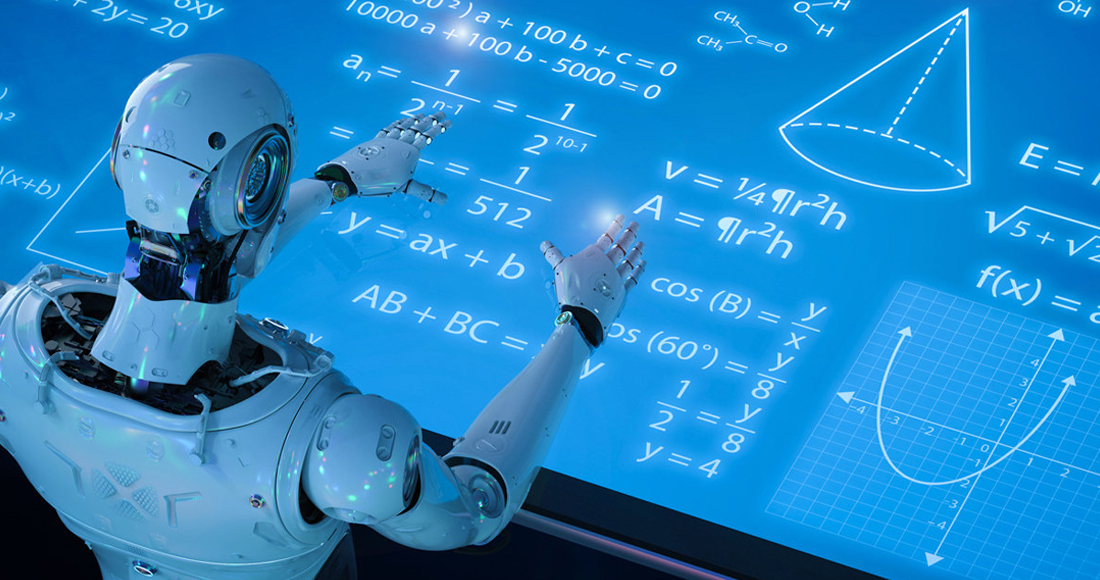
ChatGPT-5 and AGI: Will it replace Coders and PHD scholars?
The latest leap toward AGI forces us to rethink what it means to work, create, and think.

It is undeniable that artificial intelligence has profoundly transformed our daily lives, seamlessly integrating into diverse territories, from empowering students with academic support to enabling professionals to advance complex research and address pressing real-world challenges. Proponents of the AI industry argue that AI’s emergence in the coding and research realm isn’t a harbinger of human redundancy but rather an evolution towards a collaborative synergy between human ingenuity and machine efficiency. But will these technologies substitute the rudimentary middle-class careers and lead us to a complete job apocalypse?
On Thursday, August 7, 2025, OpenAI unveiled the fifth generation of the artificial intelligence technology behind ChatGPT. This update is being closely observed to determine whether generative AI continues to advance swiftly or is beginning to plateau. GPT-5 follows more than two years after the launch of GPT-4 in March 2023, marking the end of a phase characterized by significant commercial investment, widespread excitement, and growing concerns about AI’s capabilities.
OpenAI CEO Sam Altman described the new model as a “significant step along our path to AGI”, but mostly focused on its usability to the 700 million people, he says use ChatGPT each week. This recent launch of ChatGPT-5 exhibits remarkable improvements in understanding context, generating human-like cognitive responses, and performing complex tasks across various domains. Building on vast datasets and sophisticated algorithms, it pushes the boundaries of what AI can achieve today. This revolutionary technology is said to go beyond typical AI limitations and push the boundaries towards achieving artificial general intelligence (AGI), which is the ability for machines to comprehend and perform tasks at a level equivalent to human intelligence. As AI systems like ChatGPT-5 continue to demonstrate remarkable coding capabilities, a pressing question emerges: Are human programmers on the path to obsolescence?
Chatgpt-5 on Coding and Research:
Early reviewers have described GPT-5 as a significant leap in managing complex workflows and analysis, outperforming earlier models like GPT-4 in head-to-head comparisons. A key draw of GPT-5 is its exceptional ability in software creation, offering what OpenAI refers to as “software-on-demand.” The system can independently generate, debug, and refine code in multiple languages, from Python to JavaScript with little human oversight. According to an analysis, this stems from a unified architecture that combines advanced reasoning with agent-like planning, enables the AI to handle multi-step projects such as building complete applications directly from plain-language instructions. In academics, GPT-5 can digest vast quantities of data, summarize scholarly literature, and suggest new research directions at unprecedented speed. For researchers facing information overload, it acts as both a filter and an accelerator. It basically scrutinizes the data provided and mentions the notable outcomes in seconds due to its highly advanced knowledge on plethora of fields matching the shrewdness of a professional in a particular field.
Yet these same strengths raise unsettling questions. If AI can write clean, production-ready code in seconds, what happens to entry-level programming jobs? If AI can generate research papers, what does that mean for academic originality? And in both fields, who is accountable for errors, biases, or ethical missteps in AI-generated work?
The Impact on Communities:
The opportunities before Nepal are immense, but so are the risks. Our growing tech hubs, Kathmandu, Lalitpur, Butwal, and beyond, stand at a crossroads. With the right strategy, AI could catapult us into the global arena, enabling us to deliver world-class, AI-powered solutions. But let’s be clear: this technology will not be kind to mediocrity.
Average coders and research assistants, those whose work can be easily automated, will find themselves replaced, not by AI alone, but by people who know how to wield it effectively. As Nvidia’s CEO bluntly put it, “Jobs will not be taken by AI, but by people who use AI.” The AI revolution will not eliminate talent; it will filter it, pushing aside those who cannot adapt and rewarding those who can integrate AI into their workflow with skill and vision.
For coding, this means that the repetitive, entry-level tasks that once served as a training ground for young developers will increasingly be handled by machines. Mediocre programmers who merely write boilerplate code will become obsolete. Only those who can design complex systems, guide AI-generated outputs, and ensure security and ethical compliance will remain indispensable.
The same fate awaits research assistants who simply compile literature or summarize existing knowledge. AI can already do that faster and often better. What it cannot do is frame new questions, interpret ambiguous data, or bring cultural and ethical nuance to scientific work. Researchers who fail to move beyond basic data handling will be left behind.
The danger is not just job loss; it is intellectual dependency. If we rely on AI to do our thinking for us, we risk becoming passive consumers of technology rather than its shapers. Countries with strong AI literacy programs are already preparing their workforce for this shift, ensuring that human intelligence remains in control. Without similar investment in Nepal’s education system, we may find ourselves holding powerful tools we do not fully understand and being overtaken by those who do.
The digital divide further adds insult to injury. Urban centers are beginning to benefit from high-speed internet and AI access, while rural communities remain disconnected. Unless we close this gap, AI will widen existing inequalities, creating a small elite of AI professionals and leaving the rest struggling to compete.
Conclusion:
AI will gradually demolish the roles of average coders and low-level research assistants. But this is not the end of human work; it is a forced evolution. The survivors in this new landscape will be those who can think critically, solve complex problems, and work in partnership with AI to create something truly original.
For Nepal, the choice is stark. We can cling to outdated skills and watch opportunities slip away, or we can reimagine education to prioritize AI mastery, interdisciplinary problem-solving, and ethical leadership. In this new world, mediocrity will not survive, but excellence will thrive.
Hence, ChatGPT-5 and the road to AGI are neither purely a threat nor a guaranteed blessing. They are a mirror, reflecting both our potential and our vulnerabilities. For Nepal and the world, the real question is not “Will AI replace us?” but “How will we choose to work with it?” because the future is forced towards evolution and there’s no means to stop it.
So, if we embrace AI as a collaborator while safeguarding human creativity and responsibility, we can amplify innovation in ways unimaginable a decade ago. But if we become complacent, outsourcing not just our labor but our thinking, we risk becoming spectators in a world we should be shaping.
The future will belong to those who can harness AI with wisdom, ensuring it expands human potential rather than diminishing it. That is the challenge and the opportunity before us.
Note:This is a compact version; if it needs to be more lengthy, please inform through mail or contact mentioned in the email.
Simon Bhattarai is a recent high school graduate from Kathmandu, Nepal, with a strong interest in AI,ML and emerging technological innovations. He writes to explore how innovation can shape Nepal's future and recent global trends.