Citizens Have the Right to Record Police in Public Spaces
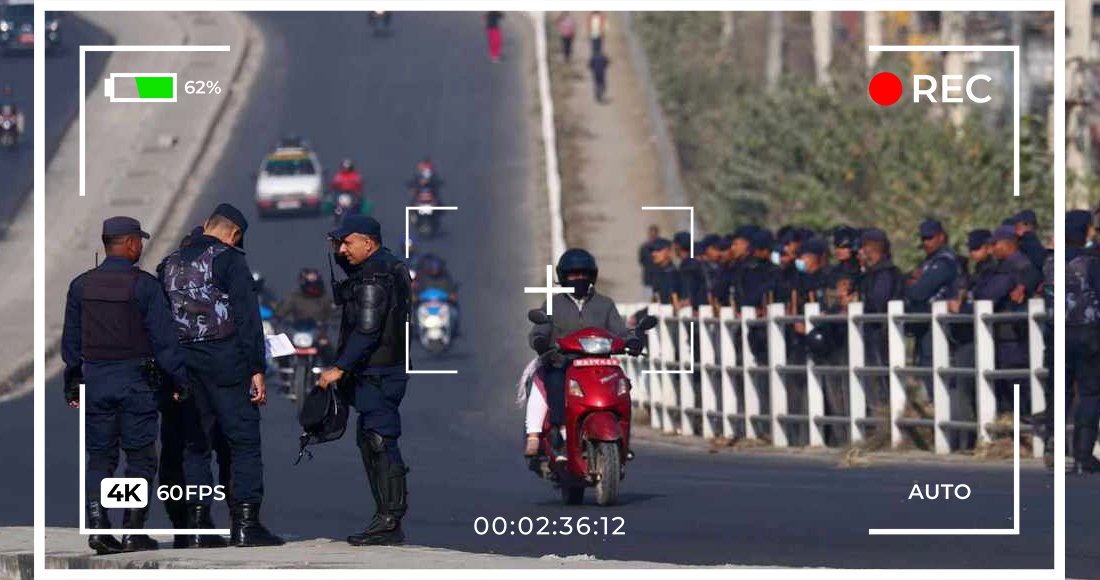
The question that is repeatedly raised and becomes a subject of controversy in Nepal today is this. When citizens try to record video or audio of police performing their duties or carrying out their actions in a public place, they are often told by the police to 'do not record', 'turn off the mobile', or in some cases, attempts are made to snatch the mobile or erase the recording. Such incidents raise a serious legal question – do citizens actually have the right to record police's public actions? If so, what is its legal basis? And if the police themselves try to stop such recording or destroy evidence, what are the legal consequences? There is still widespread confusion in Nepali society regarding this issue. On one hand, citizens hesitate to exercise their constitutional rights, while on the other hand, there are instances where some police personnel use powers not granted by law to prevent citizens from recording, intimidate them, or attempt to confiscate recorded material.
In such a situation, it is extremely important to clearly understand what the law says. There can be no dispute that the police are a state body holding public office. The actions they carry out in public places using public authority are also a matter of public accountability and transparency in a democratic governance system. Therefore, citizens recording the public actions of the police is not just the use of technology; it is a constitutional and legal question directly related to freedom of expression, right to information, right to collect evidence, good governance, and public accountability.
This article analyzes the question of whether citizens have the right to record the public actions of the police in light of the Constitution of Nepal, prevailing laws, and fundamental principles established by the Supreme Court. It also discusses in detail what legal obligations and responsibilities arise if any police officer illegally prevents a citizen from recording, snatches their mobile, erases recordings, destroys evidence, or creates undue pressure on citizens. The purpose of this article is not to create conflict between the police and citizens; rather, it is to promote a transparent, accountable, and law-based relationship between the police and citizens by clarifying the rights granted by law and the limits that state bodies must adhere to. The police should also realize that the citizen's camera is not an enemy of democracy, but a basis for accountability.
- Constitutional and Legal Basis for the Citizen's Right to Record the Police
A comprehensive study of the Constitution of Nepal, prevailing laws, and fundamental principles of democratic governance reveals no clear legal provision prohibiting citizens from recording the actions of police performing their public duties in public places. Rather, through a holistic interpretation of the freedom of expression, right to information, public accountability, and right to collect evidence guaranteed by the constitution, such recording is established as a constitutionally valid right.
Article 17(2)(a) of the Constitution of Nepal guarantees every citizen the right to freedom of thought and expression. In a modern democratic society, freedom of expression is not limited to the right to express opinions; it also includes the freedom to gather information on matters of public concern, document facts, and make the obtained information public. Video or audio recording of police actions in public places is also a means of exercising this freedom of expression in practice.
In this context, the constitutional practice of the United States of America is noteworthy. There, the right to record the police in public places is recognized as an integral part of the freedom of expression and freedom of the press guaranteed under the First Amendment. American courts have clarified that the citizen's right to gather information about government activities is a fundamental element of democratic governance.
Specifically, in the case of Glick v. Cunneff, the court stated that there is no difference in terms of constitutional rights between a citizen recording a video of police making an arrest in a public place and a journalist collecting news, explaining that gathering information about the activities of government officials is a fundamental constitutional right of a democratic governance system. Although this decision is not directly binding precedent in Nepal, the theoretical interpretation made in it can be relevant as a guiding principle in accordance with the spirit of Article 126(1) of the Constitution of Nepal. It also provides important comparative guidance for understanding the modern constitutional interpretation of freedom of expression.
Article 27 of the Constitution of Nepal guarantees every citizen the right to information. As the police are a public body exercising public authority, their performance is also a matter of public interest. If the police's actions are unlawful, arbitrary, or an abuse of authority, documenting facts about them, filing complaints with the relevant bodies, or presenting them for public debate are matters directly related to the concept of the right to information and public accountability.
A study of the prevailing laws also does not reveal any clear prohibitive provision that requires citizens to obtain prior permission to record police's public actions or that completely prohibits such recording. For example, Section 295 of the Muluki Criminal Code, 2074 (2017) deals with taking a photograph of a person without their consent or altering the form of a photograph. However, this provision does not mention anywhere that prior permission is mandatory for video recording of police performing public duties in public places, or that such recording is prohibited. Criminal laws are always interpreted on strict principles. That is, for an act to be considered a crime, there must be a clear prohibition in the law; freedom of a citizen cannot be restricted based on assumption or extended interpretation.
Similarly, the Right to Privacy Act, 2075 (2018) also does not seem to have provisions that make prior permission mandatory for recording police performing their legal duties in public places, or that completely prohibit such recording. A balance must be struck between the right to personal privacy and public accountability. Public officials, while exercising their authority in public, cannot claim privacy in the same way as private individuals.
Furthermore, the legal provisions of the Nepal Police Act stipulate that the police can only exercise the rights explicitly granted by the Act. That is, every action of the police must have a legal basis. However, no law in Nepal appears to grant the police the right to stop citizens from video recording, snatch their mobile phones, demand prior permission, or erase recorded material. Therefore, such actions cannot be considered valid administrative powers unless explicitly authorized by law.
Considering the overall study of the Constitution of Nepal, prevailing laws discussed, principles of criminal law interpretation, and comparative constitutional practice, it can be concluded that citizens recording video or audio of police performing their public duties in public places is an exercise of constitutionally protected rights. However, like other constitutional rights, this right must also be exercised within reasonable legal limits – such as not directly obstructing police work, not illegally interfering with investigations, and not violating the legal rights of other individuals.
- Why is the Police, as a Public Official, Subject to Public Scrutiny?
The fundamental principle of democratic governance is that the exercise of public power must be under public accountability. Every public official exercising authority on behalf of the state is accountable not only to the law but also to the citizens. The Nepal Police is an important organ of the state's security apparatus, responsible for protecting the lives, liberty, property, and public peace and security of citizens by exercising powers granted by the constitution, the Nepal Police Act, and other prevailing laws. Therefore, the power exercised by the police is not personal power but public power delegated by the state through law.
When the police perform their duties in public places, they exercise powers that directly affect the fundamental rights of citizens. For example, arresting, detaining, using force, checking vehicles, imposing fines, investigating, or enforcing public order are all examples of the exercise of public authority. In a democratic society, the exercise of such powers automatically becomes a subject of public scrutiny, because where state power is exercised, transparency and accountability are also mandatory. In a democracy, the police are not above the citizens; they are a public institution subject to the law. Therefore, citizens observing, monitoring, documenting, or, if necessary, recording video or audio of police actions in public places is a natural practice of democratic accountability.
Such scrutiny does not unnecessarily interfere with police work; rather, it encourages lawful and professional conduct. In fact, public scrutiny also protects honest police officers, as video or audio recordings can provide objective evidence of actual events. This is why in many democratic countries, the practice of citizens documenting the performance of government officials in public places is accepted as an integral part of democratic accountability. A person holding public office cannot expect privacy like a private individual while performing their public responsibilities. Especially, the activities of the police performing their duties in accordance with the law in public streets, squares, government offices, or other public places are matters of public concern.
The Constitution of Nepal also aims to make the governance system transparent, accountable, and responsive to the public. Citizen monitoring is essential to make the constitutional values of good governance, rule of law, transparency, and accountability effective. Citizens recording video or audio of police's public actions is a practical means of this citizen monitoring. It does not target any police officer personally; rather, it aims to document whether state power is being exercised in accordance with the law.
However, the right to public scrutiny is not unlimited. When citizens record, they must not directly obstruct the lawful work of the police, illegally interfere with investigations, compromise the security of the crime scene, or violate the legal rights of other individuals. Similarly, the police cannot stop citizens from recording, snatch their mobile phones, erase videos, or use force merely on the grounds that they are being recorded, unless there is a clear legal basis and imperative necessity for such actions. Therefore, in a democratic governance system, the police, being public officials, cannot be exempt from public scrutiny. Rather, public scrutiny, transparency, and documentation increase public trust in the police, control the abuse of power, and further strengthen the rule of law.
- Principles Established by the Supreme Court:
As of now, there is no published decision from the Supreme Court of Nepal that directly provides a detailed interpretation on the issue of citizens' right to record police performing their duties in public places. However, a comprehensive study of the principles established by the Supreme Court in various cases concerning the rule of law, the authority of public bodies, administrative law, and the exercise of state power suggests that citizens have the right to document the actions of the police in public places.
Article 128(4) of the Constitution of Nepal stipulates that the interpretations and principles of law established by the Supreme Court are binding on all. The purpose of this constitutional provision is to maintain the rule of law, legal certainty, and judicial uniformity. Therefore, it is the constitutional duty of all state bodies, officials, and individuals to adhere to the principles established by the Supreme Court. A detailed interpretation of this provision indicates that willful disregard or neglect of binding principles established by the Supreme Court is contrary to judicial discipline and the rule of law.
Comparative jurisprudence also gives special importance to this principle. For example, in India, the Supreme Court has, in appropriate circumstances, considered willful disobedience of binding laws or principles established by it as contempt of court. This clarifies how important the implementation of legal principles established by the Supreme Court is for democratic governance and judicial administration. In various decisions, the Supreme Court has consistently emphasized the principle that every state body and official must exercise their authority only within the powers granted by law and in accordance with the law. The core essence of the rule of law is that governance should be conducted according to law, not according to the will of individuals. Therefore, any act done by a public official using power not granted by law, or any decision made without following due process of law, can be subject to legal scrutiny.
Connecting this principle to the current issue, it is observed that no prevailing law in Nepal clearly grants the police the right to stop citizens from recording police activities in public places. In such a situation, if any police officer stops a citizen from video recording, attempts to snatch their mobile, or forces them to erase recorded material merely based on their own will or internal directives, such an act may be questioned as the exercise of power based on individual will rather than the rule of law.
Furthermore, according to the established principle of administrative law, no public body or official can exercise a power unless it is explicitly granted by law through legislation. Any act done without the authority of law can be considered an error of jurisdiction. Since the police are also a public body operating under administrative law, every power they exercise must be based on a clear legal foundation. As no law in Nepal appears to grant the police the right to stop citizens' video recording, demand prior permission, seize mobile phones, or erase recorded material, the validity of such actions may raise serious legal questions.
Another important principle established by the Supreme Court is particularly relevant in this context. The court has clearly explained that natural persons have the freedom to do anything unless prohibited by law; however, bodies or officials created by law can only act within the limits of the powers explicitly granted by law. Any act that exceeds the scope of the powers granted by law cannot gain legal recognition. In light of this principle, citizens, being natural persons, have the freedom to video or audio record the public actions of the police in public places unless explicitly prohibited by law. Conversely, the police, being bodies created by law, cannot stop citizens from recording, snatch their mobile phones, erase videos, or mandate prior permission beyond the powers granted by law, unless such authority is explicitly granted by any law.
Therefore, even though the Supreme Court has not directly ruled on the 'right to record the police', a comprehensive study of the principles established by the Supreme Court regarding the rule of law, administrative law, limits of jurisdiction, and the distinction between natural persons and bodies created by law indicates that there is no clear legal basis to prevent citizens from documenting the actions of the police performing their public duties in public places. Rather, if the police interfere with such recording without justification, the validity of such interference itself may be subject to legal scrutiny. If any police officer, without a clear legal basis, snatches a citizen's mobile phone, erases video or audio recordings, prevents recording, or attempts to destroy evidence, the validity of such actions may raise serious legal questions. Such actions may be subject to judicial review on the grounds of violating citizens' constitutional rights, the rule of law, and the principles of legal limits for public officials. In such a situation, the affected citizen has the right to file a complaint with the relevant body, demand departmental action, and, if necessary, seek constitutional or other available legal remedies, including compensation.
Therefore, the police must act only within the limits of their authority and in accordance with the law, and citizens should also not unnecessarily obstruct the lawful work of the police while exercising their rights. In a democratic governance system, the conduct of both the police and citizens must be guided by law, not by personal will.
- Do Citizens Have the Right to Record the Police?
A comprehensive analysis of the overall constitutional system, prevailing laws, principles of administrative law, and the recognition of the rule of law established by the Supreme Court indicates that citizens have the right to record the public actions of the police. Interpreting the freedom of expression, right to information, transparency, and public accountability rights guaranteed by the Constitution of Nepal, documenting the actions of state bodies in public places also falls within the practical exercise of these rights. As the police are public officials, their actions in public places using public authority are not private activities but matters of public concern. Therefore, recording such actions on video or audio can be understood as falling within the scope of citizens' freedom of expression and right to information.
A study of the prevailing laws also does not reveal any clear prohibitive provision that requires citizens to obtain prior permission to record police actions in public places or that completely prohibits such recording. Criminal law and privacy laws also do not provide a basis for completely protecting the actions of public officials performing their duties in public places under the umbrella of personal privacy. Therefore, according to the jurisprudential principle that freedom is accepted in the absence of a clear prohibition by law, such recording can be accepted as a valid practice.
In light of the principles of the rule of law, limits of jurisdiction, and the principle that administrative bodies must exercise only the powers granted by law, as established by the Supreme Court, no public body or official can exercise powers not explicitly granted by law. Since no prevailing law in Nepal appears to grant the police the right to stop citizens' video or audio recording, snatch their mobile phones, or erase recordings, such interference is likely to be an exercise of power without legal basis. In this context, the fundamental principle that citizens, being natural persons, are free to act unless explicitly prohibited by law, while public officials like the police, being bodies created by law, can only act within the limits of the powers granted by law, is particularly applicable.
Based on this principle, the citizen's act of recording gains validity, while any illegal interference with it may be subject to legal scrutiny. However, this right is not absolute. When citizens record, they must not directly obstruct the lawful work of the police, interfere with investigations, or violate the legal rights of other individuals. Similarly, the police cannot stop citizens, snatch their mobile phones, or erase videos merely because they are being recorded.
Therefore, in conclusion, in light of the existing constitution and legal system of Nepal, it is clearly evident that citizens have the right to record the public duties of the police in public places. However, this right is of a nature that must be exercised responsibly, within legal limits, and in balance with the obligation to maintain public order. Since citizen monitoring and state accountability are complementary concepts in a democratic governance system, such recording can be accepted as an important tool for democratic transparency.
(Chaudhary is a law student.)
This specific news has been automatically translated by AI. As a result, there may be some inaccuracies or language errors.