Bagmati Province Assembly Faces Slowdown in Lawmaking Amidst Political Instability

The Provincial Assembly is a place for lawmaking. The Provincial Assembly has a main role in making laws necessary for the province. The second term of the Bagmati Province Assembly is in its final year.
A lot of laws were made during the first term of the Bagmati Province Assembly. As we had just entered federalism, the provincial government needed many laws at that time. Accordingly, the Provincial Assembly prioritized lawmaking in its first term. However, lawmaking has been comparatively less in the second term.
As it is in the final year of the second term, almost all the laws necessary for the province should have been made, but the lawmaking process is very slow. Looking at the past four years, some lawmaking happened in the first year. But it is clear that the achievements in the subsequent three years have not been as expected.
After the formation of the Provincial Assembly following the 2079 elections, some important laws were made in the initial phase, which seem to have had significant meaning in the implementation of federalism. However, since then, lawmaking has gradually faded into the background.
The meetings of the Provincial Assembly seem to be focused on government formation itself. Forming a government and the process of a vote of confidence are also responsibilities of the Provincial Assembly, but the concern and worry that lawmaking should also be a priority is justified.
It is necessary to make extensive improvements to the structural weaknesses seen not only in the province's problems but also in the electoral system and governance style of Nepal's entire federal democratic republic. Due to political instability, the lawmaking process has not been encouraging even after a long time since the beginning of the second term of the Provincial Assembly.
Although a total of 99 laws were identified as necessary for the basic needs of citizens, development construction, and economic prosperity, only 51 laws have been made so far. The fact that 48 more laws are yet to be made raises questions about the legislative role of the province.
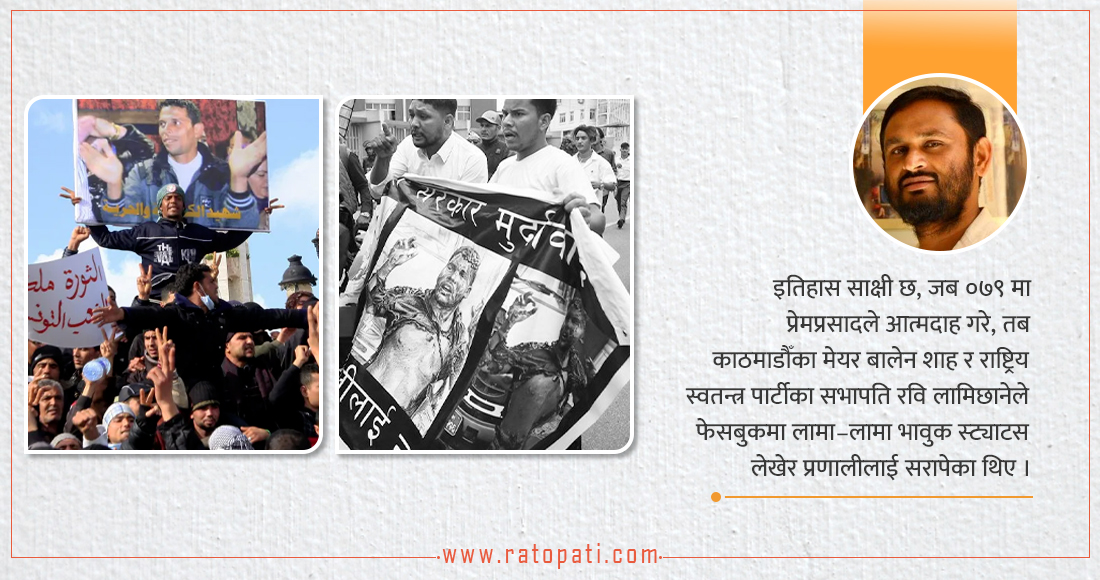
I took office on August 6 last year. The impact of the Genji movement added significant complexity to running the Provincial Assembly for a few months. From September 9, new generation protests and political upheavals occurred on the streets. Due to the internal general assemblies of the parties, the general elections, and the repeatedly changing political equations, the parliament could not dedicate sufficient time to lawmaking.
Specifically, laws related to development construction, service delivery, drinking water, and energy have not been made yet. The Provincial Assembly could not make laws due to a lack of administrative and political priority.
- Electoral System and Instability
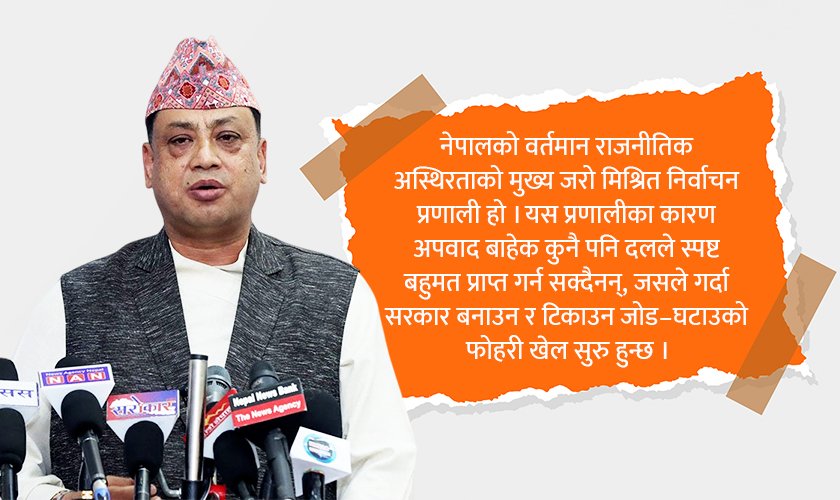
The main root of Nepal's current political instability is the mixed electoral system. Due to this system, except for exceptions, no party can secure a clear majority, which leads to the dirty game of bargaining to form and sustain governments.
Due to instability, Bagmati Province has faced the ironic situation of changing 3 chief ministers and taking a vote of confidence up to five times in a single term. This has been creating disgust towards politics and the system itself among the public. The dignity of the parliament has been tarnished by the conspiracies and internal struggles done for party interests.
To be free from this cycle of instability, a directly elected system is essential. The time has come to amend the constitution and refine the electoral system. Inclusivity and proportional representation should be ensured based on geography and clusters, but the executive selection and parliamentary elections should be direct.
For structural reforms, it is necessary to reduce the size of the Provincial Assembly. The current strength of 110 members of the Bagmati Province Assembly should be reduced to 66, and the number of ministries should also be reduced to make it efficient. To reduce the state's expenditure and increase efficiency, we have already reduced the number of ministries to 8. Now, the size of the parliament also needs to be reviewed.
The Provincial Assembly must be accountable to the people of the province. Instead of being focused on forming or toppling governments, the Provincial Assembly should play a greater role in how to take the province towards progress and how to fulfill the aspirations of the province's residents. The government should take the voices raised in the parliament as constructive suggestions to improve its working style and maintain financial discipline.
Due to the lack of party consensus and being held hostage by indecision, the Speaker's post is currently vacant in the Provincial Assembly. In the absence of the Speaker, the government is coordinating and must continue to coordinate to run the house sufficiently. In the past, due to similar shortcomings, a sufficient number of laws could not be made. Although the vacancy of the Speaker has brought some complexities to parliamentary practice, efforts are being made to reduce expenses and irregularities by running the parliament under the leadership of the Deputy Speaker. However, for parliamentary dignity, the post of Speaker must be filled soon.
In politics, tendency and character are more important than position. Winning and losing are natural in democratic practice, but the loser must also respect the majority. When I myself was defeated in the parliamentary party, I accepted it as a democratic practice and acted accordingly.
If people with undemocratic character come to power in a democratic system, the system itself weakens. Democracy is strengthened by political morality and personal character.
To save Nepal's federalism and provincial structure, patchwork reforms are no longer enough. A fundamental change in the electoral system, a reduction in the size of the parliament, and a high level of moral conduct in political parties are necessary. For which, the effective operation of the Provincial Assembly is essential.
The main task now is to fast-track the construction of the 99 laws identified by the Bagmati government and provide a sense of service delivery to the citizens. The relationship between the government and the parliament should be complementary, not interfering. This will provide a strong foundation not only for Bagmati Province but for the political stability of the entire country.
(Based on the conversation with Baniya, Chief Minister of Bagmati Province.)
This specific news has been automatically translated by AI. As a result, there may be some inaccuracies or language errors.



_6FSvCrCShE.jpg)