
Public Dissatisfaction is a Warning, Not Protest: Nepali Congress Message
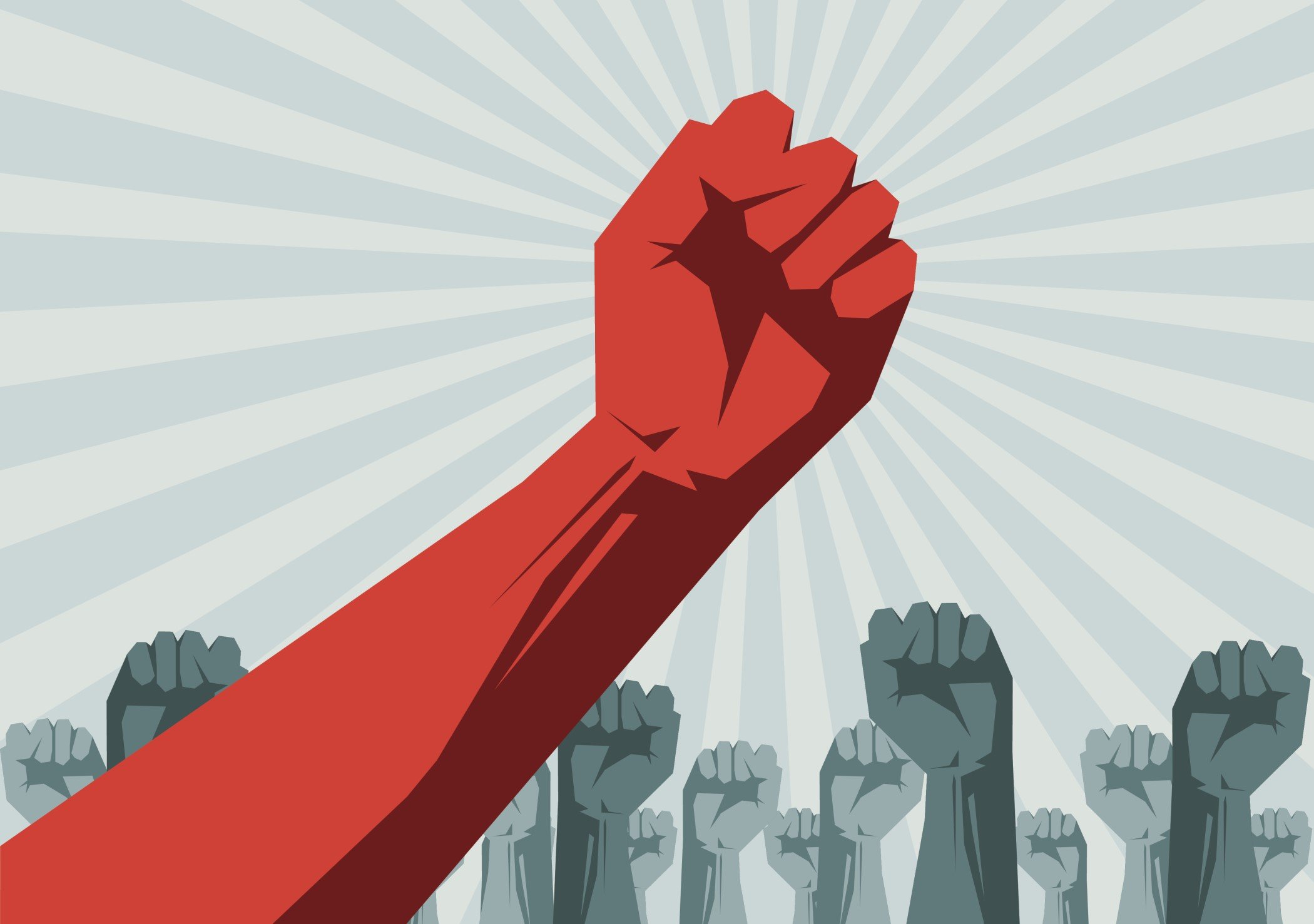
The greatest strength of democracy is the people. The people are the source of state power. The people are the carriers of change and ultimately the people elevate any political party to heights or push them to the sidelines in history. Therefore, when public dissatisfaction begins to grow, it is not enough to understand it merely as electoral arithmetic.
It is also a sign of change in the society's psychology, economy, governance system, and political culture. The growing dissatisfaction with old political parties in Nepal today is not a failure of democracy; it is proof that the people's expectations from democracy have reached new heights.
The people want to feel change not just in the political structure, but in their own lives. When that feeling could not be realized as expected, questions began to arise. Nepal's democratic movement gave citizens the right to vote, freedom of expression, freedom of the press, made inclusivity its basis, and ensured fundamental rights through the constitution. These achievements are not small achievements.
But there is another important aspect of democracy – improvement in the standard of living of the people. Democracy is not just a system of voting; it is also a system that creates opportunities to live with dignity. When educated youth cannot see a future in their own country, farmers do not get fair prices for their produce, small entrepreneurs face difficulties in expanding their businesses, and service recipients have to endure many hassles even to get basic government services, people naturally ask – 'Where is the change we expected?'
Employment comes first at the center of this question. Millions of Nepali youth struggle to find opportunities according to their qualifications even after completing higher education. For many youth, the decision to go abroad is not a dream, but a compulsion. The feeling of not getting enough opportunities, despite wanting to stay with family, work in their own country, and contribute to building their own society, has made them disappointed.
When the governance system does not appear effective as expected, people also associate its responsibility with the elected leadership. For this reason, good governance has become the focal point of political trust today.
The emigration of the country's most energetic workforce is not just an economic issue; it is also a social and national challenge. Elderly parents in villages, lonely families in cities, children who know their father's face only through a mobile screen, and emptying settlements present a painful picture of development.
In such a situation, people ask – 'If an environment for respectable employment cannot be created in one's own country, what is the real achievement of political change?'
Along with this, good governance is another major expectation of the people. Today, citizens want not just service, but respectable service. They do not want to stand in line for hours at offices, do not want to seek various recommendations for simple tasks, and do not want to be frustrated by unnecessary delays and complex procedures. In the age of modern technology, fast, transparent, and accountable service has become a citizen's right.
When the governance system does not appear effective as expected, people also associate its responsibility with the elected leadership. For this reason, good governance has become the focal point of political trust today.
The perception of corruption is another important reason for the weakening of public trust. Not every accusation is true, but in a democracy, public perception itself is a kind of political reality. If citizens experience the misuse of public resources, irregularities, or different rules being applied to influential individuals, their trust weakens.
Today, people are looking for fair implementation before strict laws. They want a governance system where rules are equal for everyone, responsibilities are clear, and public office is considered an opportunity for service, not personal gain. Once trust is weakened, rebuilding it requires a lot of time, honesty, and continuous practice.
They are looking for equality of opportunity, respect for merit, transparent competition, and result-oriented leadership. If they do not see an environment to utilize their capabilities within the country, the decision to go abroad becomes even easier.
Another major challenge for Nepal is economic inequality and the rising cost of living. When prices rise in the market, the greatest impact is on low-income families. As the prices of daily necessities increase, and income growth does not keep pace, and economic uncertainty rises, public dissatisfaction naturally increases.
Even if economic growth figures appear positive, if that growth cannot be directly felt in the lives of ordinary citizens, public trust cannot be built. Large development projects are necessary, but people also look for the feeling of development in their kitchens, their employment, and the future of their children.
Youth migration is not solely due to economic reasons; it is also a matter connected with opportunity, trust, and the future. Today's generation is connected to the world. They are closely observing opportunities, education, technology, and governance systems in other countries. Therefore, their expectations are also much higher than before.
They are looking for equality of opportunity, respect for merit, transparent competition, and result-oriented leadership. If they do not see an environment to utilize their capabilities within the country, the decision to go abroad becomes even easier. This affects not only the country's productive workforce but also its long-term national potential.
Social media and the digital age have also changed the nature of public opinion formation. Earlier, information flowed from limited sources; today, every citizen has become an information disseminator themselves. Good work spreads across the country in minutes, and weaknesses are also exposed immediately. This has increased the pressure of accountability on political leadership. Now, behavior over speeches, results over announcements, and performance over publicity will shape public opinion. Any political force that fails to understand this change can be left behind by time.
In addition, questions are also being raised about political culture among the public. They expect not just a change of government, but a change in working style. Personal accusations and counter-accusations, unnecessary conflicts, and factional disputes disappoint citizens. People are looking for solutions, not disputes.
They expect consensus on national interests, long-term policies, and a stable direction. Citizens want to see in practice that democracy does not mean constant conflict; it means the ability to resolve disagreements through dialogue.
However, an important truth must also be acknowledged here. All the challenges Nepal is facing today have not arisen solely due to one party, one government, or one person. Geographical conditions, limited economic resources, global economic fluctuations, the impact of pandemics, climate change, the attraction of the international labor market, and long-term structural problems have also affected Nepal's development journey.
Therefore, when seeking solutions, a sense of shared responsibility is needed more than blame. But shared responsibility does not mean that no one takes responsibility. Those who lead must also bear accountability. This is the fundamental principle of democracy.
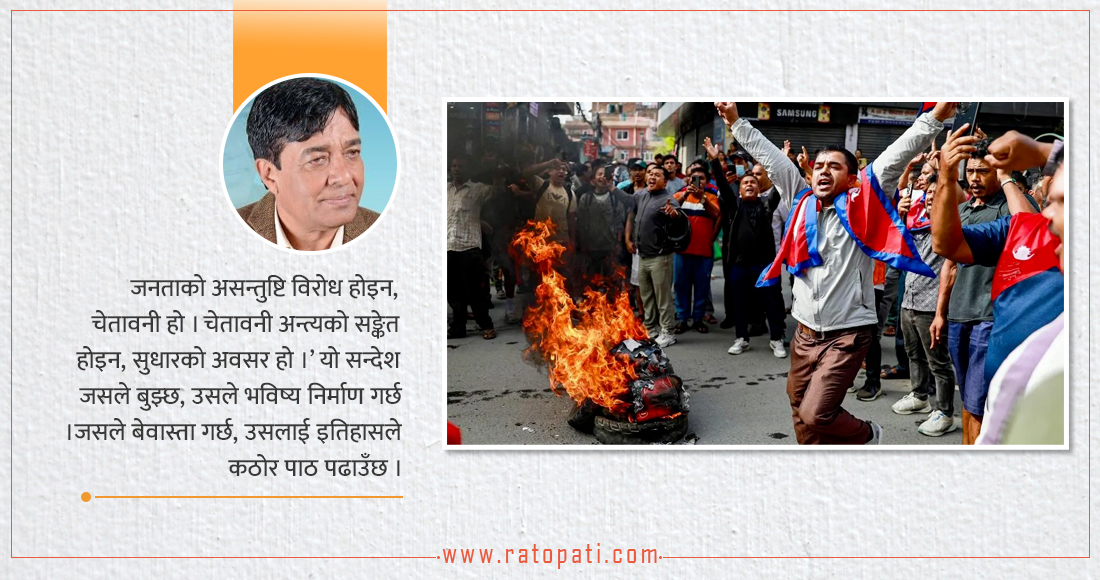
Time is giving a serious message to the Nepali Congress today – 'Public dissatisfaction is a warning, not a protest.'
This same message applies to the Nepali Congress. This party must be able to connect its glorious history with the current public expectations. The public respects history, but they also look at plans for the future. It is necessary to tell them about past struggles, but it is even more necessary to show them solutions for the present.
The public will trust again the political force that listens to their pain, admits its weaknesses, presents a clear path for reform, and implements it in practice.
In a democracy, losing public trust is the biggest crisis, but regaining that trust is not impossible. History bears witness – political forces that return honestly among the people, introspect, and prioritize service and good governance have been given opportunities by the people again.
Therefore, if the Nepali Congress can connect the sacrifices of its founders with its current policies and practices, it can rebuild public trust. People do not seek perfection; they seek integrity, accountability, and a clear commitment to change.
Time is giving a serious message to the Nepali Congress today – 'Public dissatisfaction is a warning, not a protest. A warning is not a sign of the end, but an opportunity for reform.' Whoever understands this message will build the future. Whoever ignores it will be taught a harsh lesson by history.
The Nepali Congress still has the historical opportunity to make public trust its greatest strength again. But for that, not just past glory, but honest actions in the present and a clear vision for the future are now necessary.
This specific news has been automatically translated by AI. As a result, there may be some inaccuracies or language errors.


_6FSvCrCShE.jpg)