Mathematical Sciences: Foundation for Modern Technology and Innovation

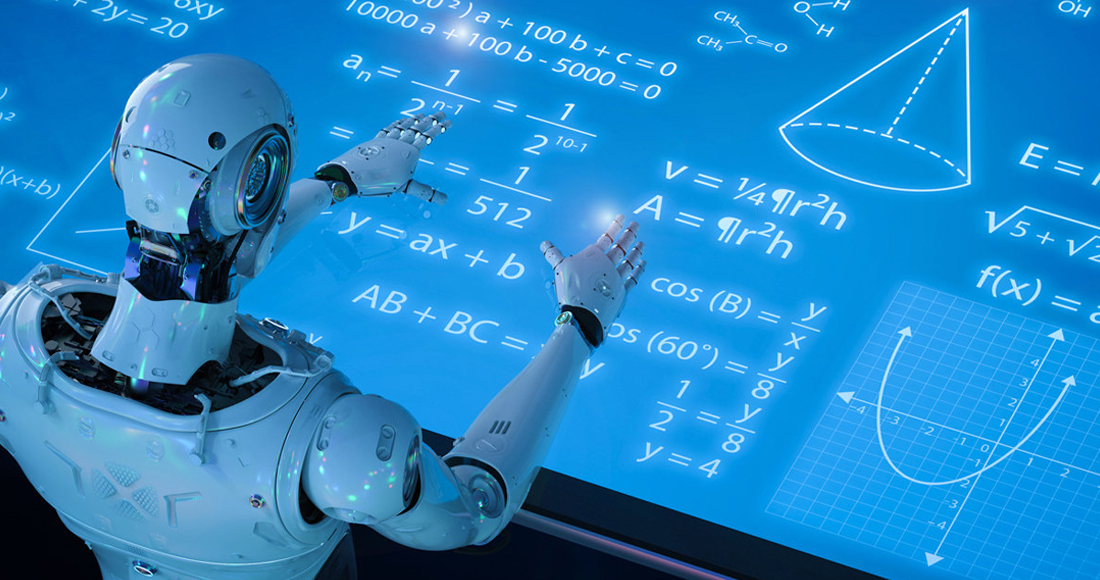
Pure mathematics is a branch focused on the development and logical proof of mathematical theories, structures, and theorems, forming the theoretical foundation of all mathematics. Applied mathematics uses these theories in mathematical modeling, analysis, and problem-solving for real-world issues in science, engineering, health, industry, economics, and other fields.
Mathematical science is a broad field of study and research encompassing pure mathematics, applied mathematics, statistics, computational mathematics, data science, actuarial science, artificial intelligence, machine learning, and other interdisciplinary areas based on mathematics. It provides a basis for analyzing, modeling, and solving complex problems in science, technology, and real life through the development and application of mathematical theories, methods, and techniques.
Theories, theorems, and mathematical structures developed in pure mathematics are the basis for applied mathematics and mathematical sciences. Most methods, algorithms, and analytical techniques used in physics, engineering, artificial intelligence, machine learning, data science, financial mathematics, mathematical modeling, scientific computation, and computational science are developed on this foundation. Therefore, sustainable development of modern science, technology, and mathematical sciences is not possible without a strong foundation in pure mathematics.
Today, mathematical science is established as a major foundation of modern science, technology, and innovation. It develops logical thinking, analytical skills, problem-solving abilities, decision-making capabilities, and research skills, accelerating the development of emerging fields such as artificial intelligence, machine learning, data science, actuarial science, scientific computation, mathematical modeling, computational simulation, and high-performance computing.
Teaching-learning processes should be made conceptual, experimental, project-based, research-oriented, and technology-friendly, developing mathematical thinking, computational skills, research capabilities, and an innovative approach in students.
Furthermore, its application is continuously expanding in geophysical modeling, air and water pollution analysis, climate change, biomathematics, fluid dynamics, fractional calculus, health, agriculture, energy, finance, industry, and policymaking. In this context, mathematics education should be developed not just as a means to pass exams, but as a foundation for scientific research, mathematical modeling, innovation, and technological development.
Teaching-learning processes should be made conceptual, experimental, project-based, research-oriented, and technology-friendly, developing mathematical thinking, computational skills, research capabilities, and an innovative approach in students. Nepal's National Education Policy, Digital Nepal Framework, and the concept of Science, Technology, Engineering, and Mathematics (STEM) education recognize mathematical science as a key foundation for building a knowledge-based economy.
Therefore, it is necessary to integrate mathematics education from school to higher education effectively with pure mathematics, applied mathematics, mathematical science, artificial intelligence, machine learning, data science, actuarial science, and mathematical modeling, making it contemporary, research-oriented, and technology-friendly. This will contribute significantly to international-level research, the development of new technologies, the production of skilled human resources, and the scientific, technological, and economic transformation of Nepal.
- Mathematics up to Class 12?
The main reasons for the failure of mathematics education up to Class 12 in Nepal to achieve expected outcomes are related to curriculum structure, textbooks, teaching-learning processes, teacher management, evaluation systems, and policy implementation. Although mathematics is a fundamental subject for science, technology, machine learning, and data science, the current school-level curriculum is not flexible and relevant enough according to students' interests, abilities, future studies, and professional needs.
Specifically, the system of providing the same type of mathematics to all students in Classes 11-12 does not seem equally suitable for everyone. Since the needs of students in science, management, humanities, and other educational streams differ, it is necessary to develop various streams of mathematics suitable for each subject and provide students with the opportunity to choose mathematics related to their studies and future careers. This will help increase interest in mathematics, improve learning outcomes, and attract students towards mathematical science, artificial intelligence, machine learning, and other technology-oriented subjects in higher education.
Another significant problem at the school level is the failure to achieve a strong foundation in basic mathematics learning from Classes 1 to 10. Weaknesses in number sense, algebraic thinking, geometry, logical analysis, problem-solving, and conceptual understanding in the early grades force students to experience mathematics as a complex and difficult subject by the time they reach higher classes.
Curriculum development and implementation lack sufficient research, subject-specific discussions, and regular revisions, making mathematics teaching still rote-based, exam-centric, and formula-driven.
The failure to identify and correct weaknesses in basic concepts in a timely manner directly affects learning at the secondary and higher secondary levels. Therefore, it is necessary to give special priority to conceptual learning, regular practice, continuous assessment, and problem-solving-based teaching from the early grades in mathematics education. The lack of effective coordination between the curriculum, learning outcomes, textbooks, teaching methods, and evaluation system is another major challenge in school-level mathematics education.
Due to insufficient research, subject-specific discussions, and regular revisions in curriculum development and implementation, mathematics teaching remains rote-based, exam-centric, and formula-driven. As a result, students have not been able to develop the expected conceptual understanding, logical thinking, problem-solving skills, mathematical modeling, and practical application skills. The use of project-based, research-oriented, experimental, and technology-friendly teaching is limited, and basic mathematical skills related to computational thinking, programming, data analysis, and artificial intelligence have not been given sufficient priority.
Furthermore, variations in textbook quality and uniformity, insufficient adherence to learning outcomes and curriculum objectives in question paper construction, and limited reliability of internal assessments have not allowed for accurate evaluation of students' actual learning. Teacher management, learning environment, institutional accountability, and social perceptions also directly impact the quality of mathematics education.
Many schools lack subject-specific, experienced, and trained mathematics teachers, and there is a lack of continuous professional development, modern teaching techniques, and training in mathematical modeling and computational methods for working teachers. Students with a weak mathematical foundation in the early grades face fear of mathematics, lack of confidence, and poor academic achievement by the time they reach higher classes. Additionally, the social perception of mathematics as an unnecessarily difficult subject and the tendency to present only low pass rates as measures of success or failure negatively impact students' psychology.
The main challenge related to the development of mathematical science in higher education is to strike a balance between theoretical knowledge and practical application.
Therefore, in school-level mathematics education, it is necessary to give high priority to building a strong mathematical foundation from the early grades, developing a contemporary and flexible curriculum, conducting various subject-specific mathematics streams, preparing quality textbooks, ensuring qualified and trained teachers, promoting student-centered and technology-friendly teaching, and implementing a transparent evaluation and effective monitoring system based on conceptual learning. Only through such structural reforms can a strong foundation for mathematics be built at the school level, enabling the production of skilled human resources required in fields like mathematical science, artificial intelligence, machine learning, data science, and innovation in higher education.
- Mathematical Science in Higher Education
The main challenge related to the development of mathematical science in higher education is to strike a balance between theoretical knowledge and practical application. In the name of pure mathematics, students often tend to memorize theorems and limit themselves to superficial knowledge, which does not adequately develop a deep understanding of mathematical principles, logical ability, and the skill to apply them.
On the other hand, focusing solely on the practical aspects without a deep understanding of basic mathematical principles in the name of applied mathematics weakens the theoretical foundation of mathematical science. Therefore, in the study of mathematical science, it is necessary to first build a strong theoretical foundation and then develop the ability to apply these principles to solve complex problems in science, technology, research, and real life.
Only through a balanced coordination between pure and applied mathematics can deep knowledge, creative thinking, research ability, and effective problem-solving skills be developed. Globally, mathematical science has been established as a fundamental pillar of modern science, technology, and innovation. Among the important aspects of mathematical science, mathematical modeling and simulation are key foundations.
Mathematical modeling represents real-world systems, processes, or phenomena through mathematical equations, rules, and relationships, clarifying their structure, interrelationships, and behavior. Similarly, simulation operates the constructed mathematical model using computer technology and numerical methods to study the system's behavior, potential outcomes, and the impact of various conditions. Systems and phenomena that are difficult, expensive, or risky to test directly in the real world can be analyzed, tested, and predicted through mathematical models and computer technology.
Priority should be given to the development of research laboratories, high-performance computing systems, scientific software, and digital research infrastructure.
Thus, mathematical modeling and simulation play a significant role in connecting mathematical theory with practical application, aiding scientific research, technological development, innovation, and evidence-based decision-making. In the era of knowledge-based economies and the Fourth Industrial Revolution, mathematical science has become a crucial foundation for higher education, scientific research, technological development, digital transformation, and evidence-based policymaking.
Therefore, it is necessary to develop the quality study, teaching, research, and innovation in pure mathematics, applied mathematics, and interdisciplinary mathematical sciences as a national priority in Nepal. To strengthen mathematical science in higher education, the curriculum should be made contemporary, research-oriented, and integrated with mathematical modeling, scientific computation, numerical methods, computational simulation, optimization, computational science, and other modern mathematical methods.
Furthermore, priority should be given to the development of research laboratories, high-performance computing systems, scientific software, and digital research infrastructure. Collaboration with national and international universities, research institutions, industries, and government agencies should be expanded by encouraging original and interdisciplinary research. The research culture should be strengthened through joint research, student and faculty exchange programs, conferences, workshops, training, and research grant programs. Additionally, the publication of research in international-quality journals, protection of intellectual property, technology transfer, and practical application of research findings should be encouraged.
Research in mathematical sciences needs to be linked to solving problems in geophysical modeling, climate change, air and water pollution, disaster risk reduction, biomathematics, health, energy, agriculture, financial systems, and industry. This will contribute significantly to evidence-based policymaking, technological development, innovation, and the achievement of sustainable development goals. Thus, strengthening mathematical science, research, and innovation in higher education will build a strong foundation for enhancing international-level research capabilities, producing highly skilled human resources, achieving scientific self-reliance, and building a knowledge-based competitive economy.
Mathematical Science and Artificial Intelligence
Artificial Intelligence (AI) is an important branch of computer science that enables computers or machines to learn, reason, make decisions, and solve problems like humans. The term 'Artificial Intelligence' was first formally used at the Dartmouth Conference in 1956.
The integration of mathematical science and artificial intelligence is achieved through the coordination of mathematical principles, data analysis, and computational technology.
AI has made remarkable progress, evolving from early rule-based systems to the development of machine learning and deep learning. Mathematical science is the fundamental scientific basis for AI, machine learning, data science, actuarial science, and modern computational technologies.
Mathematical methods such as linear algebra, calculus, probability theory, statistics, optimization, numerical analysis, differential equations, and mathematical modeling are the basis for AI algorithms, data analysis, forecasting, and decision-support systems.
The integration of mathematical science and artificial intelligence is achieved through the coordination of mathematical principles, data analysis, and computational technology. Systems developed through mathematical models, machine learning, and deep learning are capable of learning from large amounts of data, classifying, forecasting, and analyzing complex systems.
When sufficient and quality data is available, AI can provide fast results with high accuracy, while mathematical modeling enables the scientific explanation of physical laws and cause-and-effect relationships. Therefore, mathematical modeling and artificial intelligence are not competitors but complementary technologies, whose integrated use makes forecasting accuracy, reliability, and decision support more effective.
To make this integration effective, interdisciplinary curricula, research laboratories, high-performance computing infrastructure, and university-industry collaboration need to be strengthened.
The combined use of mathematical science and AI can be effectively applied in scientific research, technological development, evidence-based policymaking, and innovation in areas such as geophysical modeling, air and water pollution forecasting, climate change analysis, disaster risk reduction, biomathematics, health, agriculture, energy, financial analysis, transportation, smart cities, robotics, and industrial automation.
The establishment of the Ministry of Science, Technology, and Innovation by the Government of Nepal to establish science, technology, and innovation as a major foundation for national development, and the prioritization of policies connecting mathematical science with artificial intelligence and digital technology through the budget for the fiscal year 2083/84, are positive and visionary initiatives.
To effectively implement this policy, priority should be given to research projects in AI, machine learning, data science, mathematical modeling, scientific computation, and computational simulation, as well as research laboratories, high-performance computing infrastructure, and capacity-building programs.
Furthermore, training, workshops, conferences, and international collaborations for teachers, researchers, and students should be expanded, and the knowledge and technologies developed through research should be applied in environment, health, agriculture, energy, industry, and other national priority sectors. Thus, effective coordination between mathematical science, artificial intelligence, and innovation will contribute long-term to international-level research, the production of highly skilled human resources, scientific self-reliance, digital transformation, and the building of a knowledge-based competitive economy.
- Conclusion
Pure mathematics is the fundamental foundation of applied mathematics and overall mathematical science. The development of modern science, technology, artificial intelligence, machine learning, data science, actuarial science, mathematical modeling, scientific computation, and computational simulation is based on mathematical theories and methods.
Therefore, in the current era of knowledge-based economies, digital transformation, and the Fourth Industrial Revolution, it is imperative to develop pure, applied, and interdisciplinary mathematical sciences from school to higher education in a robust, research-oriented, and technology-friendly manner. For this, it is necessary to strengthen contemporary curricula, qualified teachers, modern evaluation systems, research infrastructure, computational facilities, and interdisciplinary collaboration, and to effectively integrate mathematical science with artificial intelligence, machine learning, data science, and other emerging technologies.
Furthermore, mathematical knowledge should be applied to health, agriculture, energy, environment, finance, industry, geophysical modeling, and other scientific fields, promoting research, innovation, technology transfer, and evidence-based policymaking.
By strengthening collaboration between the government, universities, research institutions, and industries, and promoting high-level study, teaching, research, and innovation, mathematical science will make a long-term and significant contribution to international-level research, the production of highly skilled human resources, scientific self-reliance, digital transformation, and the sustainable socio-economic development of Nepal.
(Kafle is an Associate Professor at the Central Department of Mathematics, Tribhuvan University.)
This specific news has been automatically translated by AI. As a result, there may be some inaccuracies or language errors.