Prime Minister and Finance Minister Clash Over Economic Policy

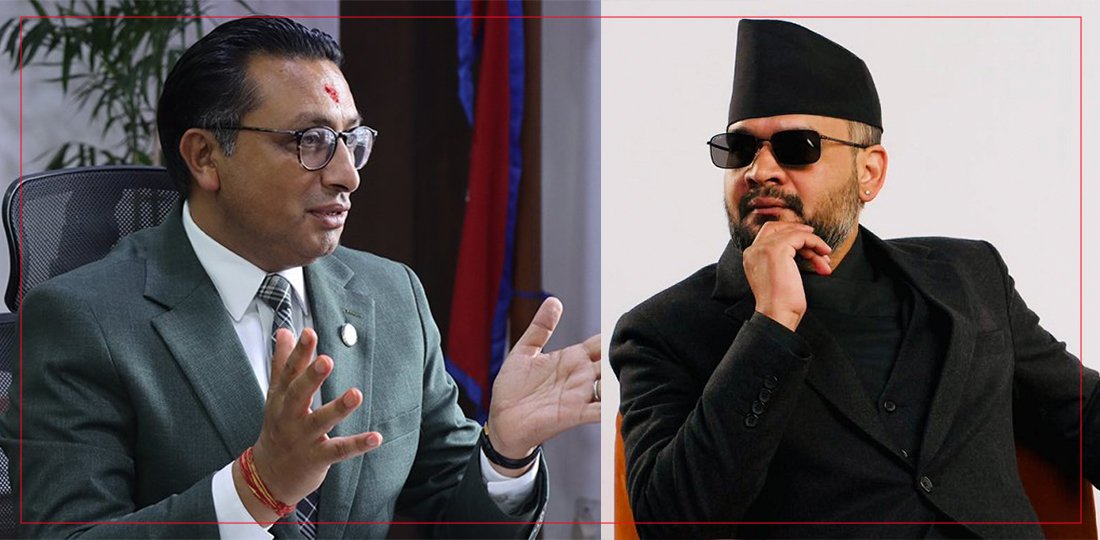
Kathmandu. The scene at the Prime Minister and Council of Ministers' Office has changed for the past two weeks.
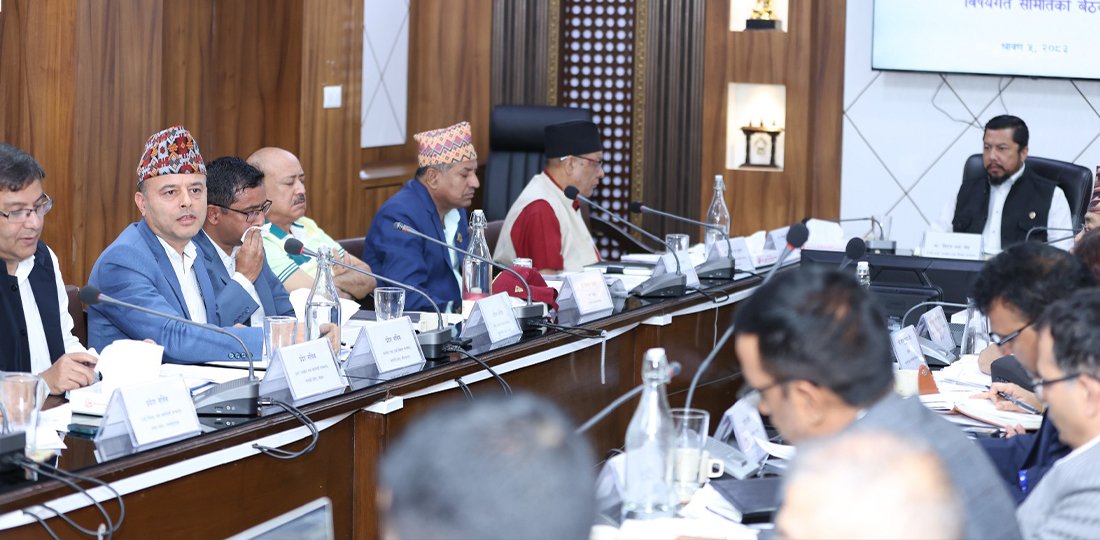
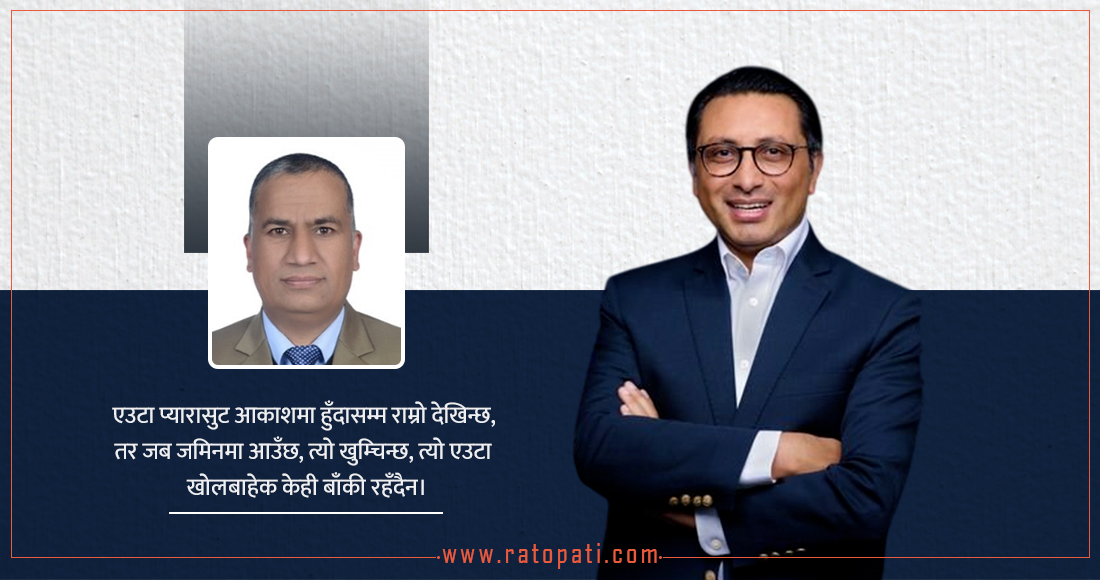
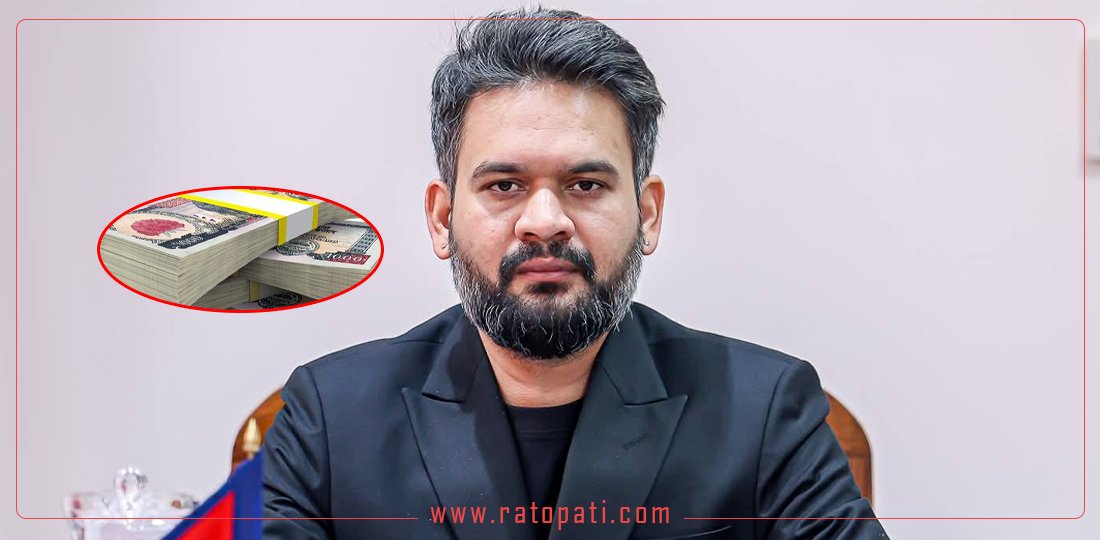
Prime Minister Balendra Shah is busy with frequent meetings with industrialists, businessmen, and investors from the private sector. However, one aspect of this busyness is quite concerning. Finance Minister Dr. Swarnim Wagle, considered a key stakeholder in the economy, was completely absent from those meetings.
The Prime Minister has held hours-long discussions with more than a dozen private sector organizations. However, questions have been raised externally about the Finance Minister's non-participation. The absence of the Finance Minister in discussions related to the private sector and the economy has sparked interest as to whether the relationship between the Prime Minister and the Finance Minister has soured.
Prime Minister Shah, who was not seen in many external meetings for the first 100 days after taking office, has been aggressively engaging in dialogue with private sector representatives in recent weeks. However, the absence of the Finance Minister, who leads the relevant ministry, in every such dialogue and discussion has led to speculation about internal conflict and power struggles within the government. However, the Prime Minister's Office has denied rumors of internal conflict and power struggles surfacing externally.
Deepa Dahal, Press and Research Advisor to Prime Minister Balendra Shah, claimed that the meetings with the private sector were solely to improve the economy and understand the situation. She stated that there was no disagreement between the Prime Minister and the Finance Minister, and that the Prime Minister wanted to understand the views and problems of the private sector regarding the country's economy.
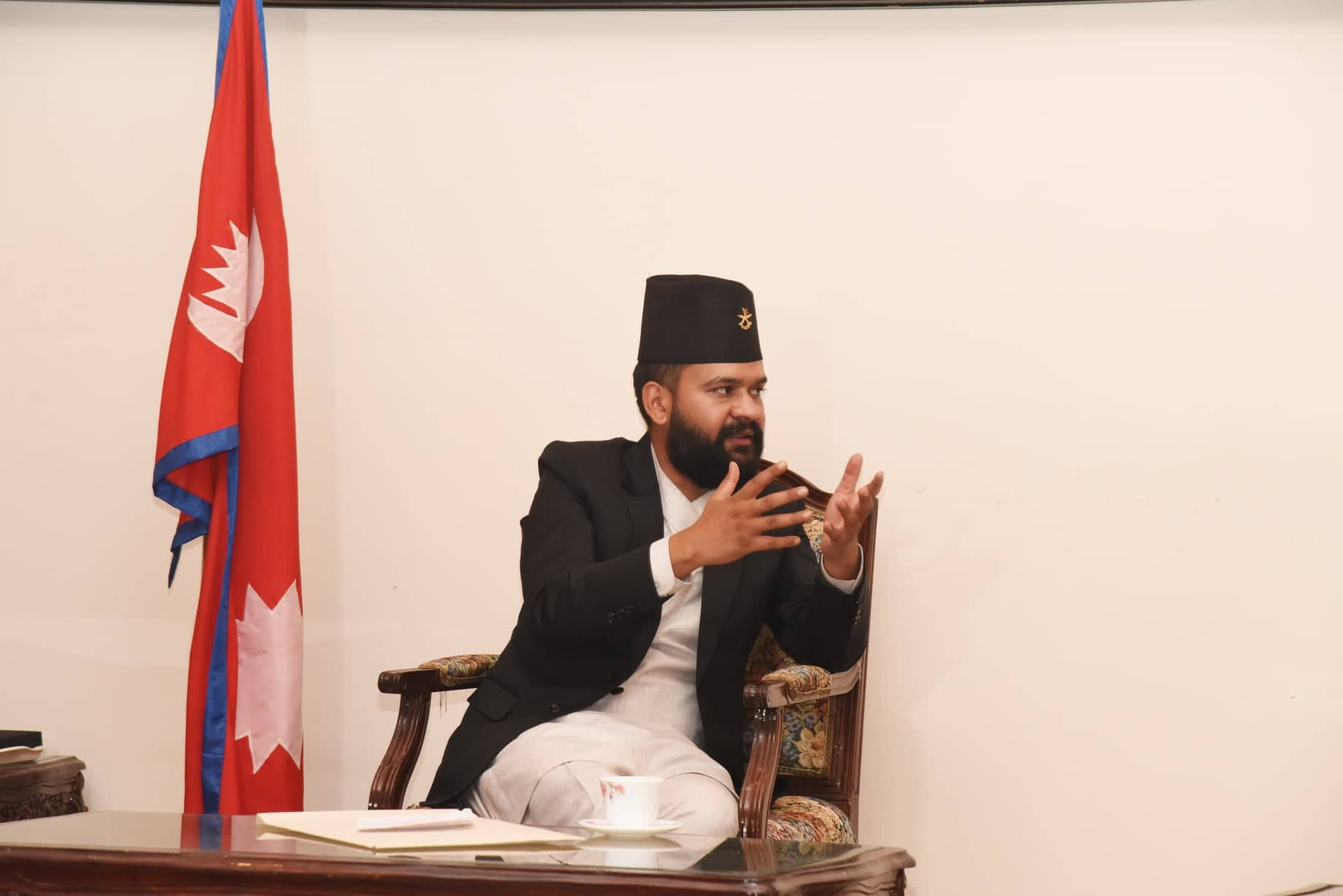
Press and Research Advisor Dahal said, 'When the Prime Minister discusses economic issues with the private sector or other ministry-related matters, no minister is included. The Prime Minister has discussed energy, industry, and other related topics, not just those under the Ministry of Finance. No ministers from relevant ministries were present. There is no reason to suspect anything in the meetings with the private sector. Every work is being done in coordination between the Finance Minister and the Prime Minister.'
Dahal mentioned that the Prime Minister is meeting to understand the problems in the country's economy and the issues faced by the private sector.
Meanwhile, the Secretariat of the Ministry of Finance has provided similar information. It stated that since the Finance Minister had already met with the private sector entities the Prime Minister is currently meeting, his participation in the Prime Minister's meetings was not considered essential.
'Discussions and coordination are happening between the Prime Minister and the Finance Minister on every issue. The Prime Minister's meetings with the private sector will further strengthen and improve the economy,' said the Finance Minister's Secretariat. 'It sends a message that the government is prioritizing the private sector. There is no issue of disagreement leading to non-participation. Nothing like that has happened.'
Prime Minister Shah held continuous discussions with more than 10 umbrella organizations and institutions from the private sector from the second week of Asar to the first week of Shrawan. In all these meetings, the Prime Minister listened to the problems of the private sector and assured solutions.
After the discussions with the Prime Minister, the unified voice of the private sector is – the meetings with the Prime Minister have been encouraging. The private sector's view is that all their problems will be resolved and there is hope.
On Asar 24, after 100 days of taking office, Prime Minister Shah had an 'icebreaker' with the private sector. The dialogue, which began with umbrella organizations of the private sector on Asar 24, reached garment industrialists by Shrawan 5.
However, Finance Minister Wagle was not seen in any of these meetings. His absence has led many to ask questions.
According to businessmen, while the Prime Minister listening to problems is positive, the meetings appear to be mere assurances due to the absence of the ministry leadership responsible for policy implementation. A businessman who participated in a meeting said, 'The Prime Minister has made commitments, but the Ministry of Finance is the one to implement them. With the Finance Minister not present at the meetings, there is some fear about the decisions being implemented.'

Notably, on Shrawan 4, during a meeting with capital market stakeholders, the Prime Minister directly summoned the Chairman of the Securities Board (SEBON) and the Chairman of the Nepal Stock Exchange (NEPSE) and sought explanations. The fact that the Prime Minister directly deals with the heads of bodies under his own purview without the Finance Minister's knowledge suggests that the Prime Minister is neglecting the Finance Minister.
When did the Prime Minister discuss with whom so far?
Asar 24: Representatives of three private sector organizations
(Federation of Nepalese Chambers of Commerce and Industry, Confederation of Nepalese Industries, and Nepal Chamber of Commerce)
Asar 25: Federation of Contractors' Associations of Nepal
Asar 26: Independent Power Producers' Association Nepal (IPPAN)
Asar 31: Hotel Association Nepal (HAN)
Asar 32: Federation of Woman Entrepreneurs' Associations of Nepal
Shrawan 1: Shoe Manufacturers' Association
Shrawan 4: Capital Market (NEPSE, SEBON, and Brokers) and Insurance
Shrawan 5: Meeting with officials of the Garment Association of Nepal.
Prime Minister's Intervention in the Finance Minister's Domain
The most interesting and controversial turn in this episode occurred on Tuesday. Prime Minister Shah announced via Facebook the removal of the 3% parity fee imposed on education and health. This provision was proposed by Finance Minister Wagle in the budget of Jestha 15 and had been passed by parliament to become law (Economic Act).
The Council of Ministers has the authority to change laws (tax rates) passed by parliament. However, there is a constitutional and administrative process for this. The tax is removed only after the Ministry of Finance proposes it, the Council of Ministers decides, and it is published in the Nepal Gazette. However, the Prime Minister announced it on Facebook.
The fact that the Prime Minister made the announcement, which should have been made by the Finance Minister, has also garnered attention. However, Deepa Dahal, Press and Research Advisor to Prime Minister Shah, stated that the announcement was made after consultation with the Finance Minister.
She said, 'The Prime Minister has stated in his Facebook status. It says 'after consultation with the Finance Minister,' and that is exactly what it is. Any decision is made through discussion and dialogue.'
She further stated that the announcement to remove the 3% parity tax imposed on private education and health was made through continuous discussion and dialogue between the Prime Minister and the Finance Minister. Sources also indicate that the decision to remove the parity tax on education and health was based on mutual understanding between Prime Minister Shah and Finance Minister Wagle. Sources informed that Finance Minister Dr. Wagle held a one-hour meeting with Prime Minister Shah at the Prime Minister's Office on Monday, leading to today's decision.
'It is not that the Prime Minister made the decision alone, bypassing the Finance Minister, as rumored outside,' the source said. 'This decision was made with mutual understanding between them.'
According to sources, the current government makes all decisions based on virtual communication rather than one-on-one meetings. According to the Finance Ministry's Secretariat, the Ministry of Finance is preparing to present this decision to the Council of Ministers.
The government is preparing to present the proposal to remove the parity fee in the upcoming cabinet meeting, publish it in the Nepal Gazette, and implement it, the Secretariat informed. The legal provision is that only the Council of Ministers can make decisions regarding imposing and withdrawing taxes.
Market Question: Why did the Prime Minister remove the tax imposed by the Finance Minister?
Prime Minister Shah is not satisfied with the direction of the budget presented by Finance Minister Wagle. Balen's understanding is that the government's popularity has decreased because Wagle did not allocate budget for Balen's plan to run government industries and because taxes were added to education and health, which directly affect the general public.
Sources claim that the Prime Minister himself announced the tax rollback to save this popularity and to keep the Finance Minister in check. The Prime Minister's Secretariat, however, claims that the decision was made in consultation with the Finance Minister. However, the Prime Minister publicly announcing a matter within the Finance Minister's jurisdiction on Facebook indicates a significant gap in their working style and trust.
Prime Minister Balendra Shah's effort to revitalize the economy through direct dialogue with the private sector is a positive aspect. However, keeping the Finance Minister, who holds the key to the economy, out of every process or creating parallel structures is assessed to negatively impact the government's performance in the long run.
This specific news has been automatically translated by AI. As a result, there may be some inaccuracies or language errors.