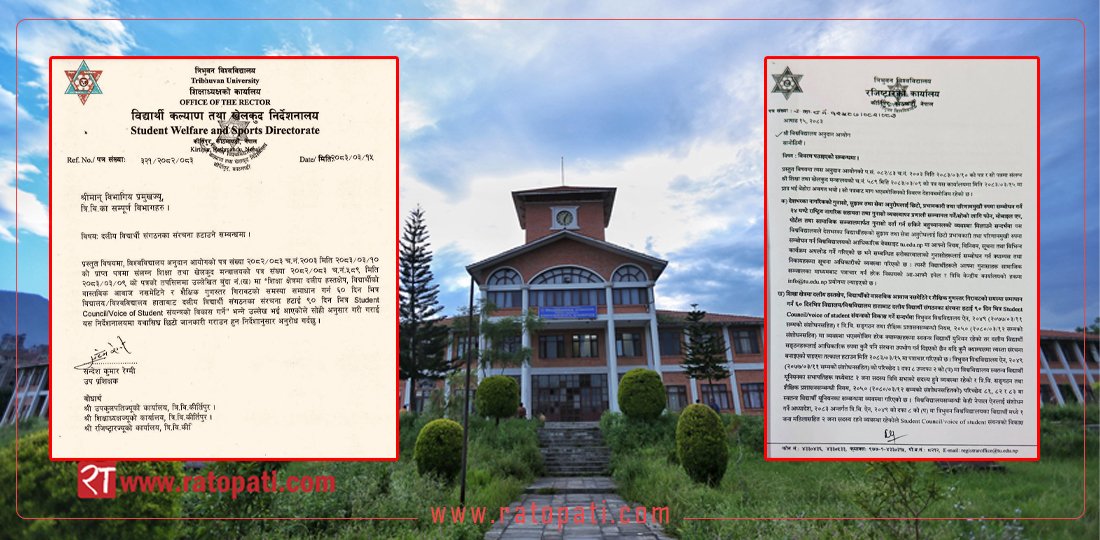
Nepal University Launches New Programs and Focuses on Student-Centric Education

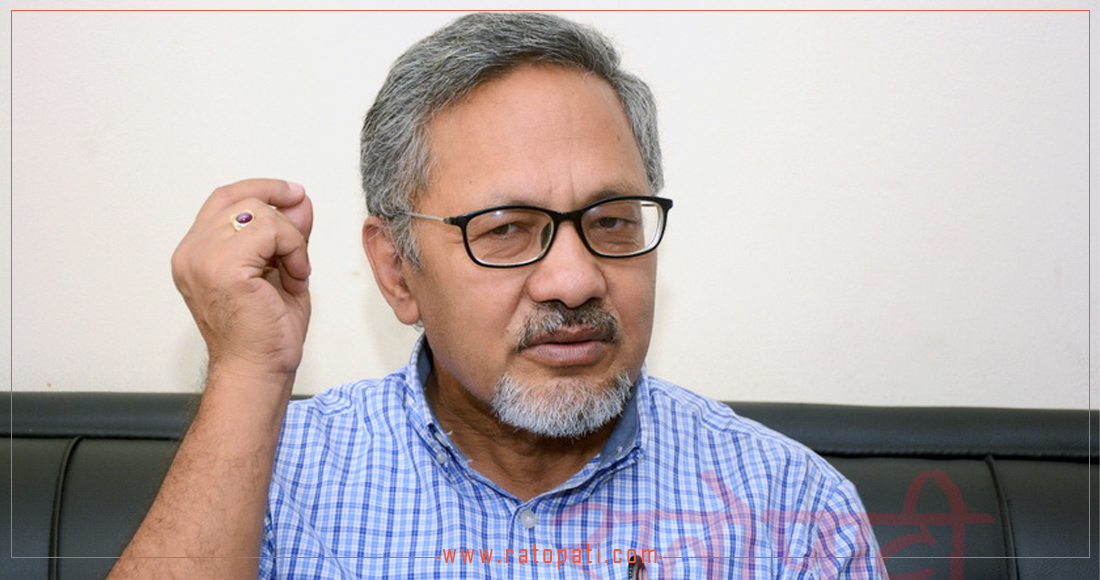
Nepal University is about to complete two years since its formal announcement. The university has started a two-year 'Public Policy' program at the postgraduate level. Admissions for the undergraduate level for the academic session 2083/084 have already begun, and undergraduate classes are also in the process of being conducted.
The university has stated that it prioritizes student-centric learning. In this context, here is a summary of the conversation with the Registrar of Nepal University, Prof. Dr. Suryaraj Acharya:
- Please tell us about the background of the establishment of Nepal University?
About seven to eight years ago, among intellectuals and social figures interested in Nepal's education, there was a discussion that Nepal's higher education faced many problems. Nepali students were going abroad, and classes in existing universities were not attracting enough students. The trend of talented students going abroad from undergraduate level became dominant, and discussions arose on how to retain them. Two to three conclusions were reached.
One, a university should not just be a degree-awarding body but a platform for intellectual practice. It should not be just a tuition center but a place for intellectual thought, learning new things, and teaching for the nation and society. A structural change was felt necessary in the current universities in terms of autonomy, quality, intellectual ecosystem, and teaching. It takes time to reform our universities to provide students with the confidence that they can receive a world-class education here. It is difficult to reform them. We felt the need for a university with autonomy, free from politicization, which could be a model for the future, defining what a classroom should be, what the curriculum should be, what textbooks should be, and recognizing that a professor is not just an employee but also part of a community that guides society with academic integrity and intellectual consciousness. This provision is now in the Nepal University Act. The Prime Minister will not be the Chancellor of Nepal University. It will be autonomous and run by a Board of Trustees.
- What is the university's curriculum like?
We have introduced innovation in the curriculum, especially drawing from the curricula of top universities worldwide. With the development of AI, there's a debate about whether university education is still necessary. AI and technological development do not make universities obsolete; they make them even more crucial, but there needs to be a significant change in what is taught, how it is taught, and what knowledge, skills, and intellectual personality students gain upon graduation. This debate is ongoing globally. We have taken this as an opportunity and concluded that only a new university can undertake this task.
I studied engineering in the 1980s generation. I was a good engineering student, but now, with the new technologies and equipment developed in engineering, the new generation learns all these things. I cannot handle all these; we need new generation manpower. With that thought, we have planned not just to add another university but to create a distinctly different one that fulfills some of the problems and gaps seen in higher education in Nepali society today and provides a level of international education to our bright students who have completed grade 12. We are working towards that.
- Please also tell us about international networks and collaborations?
Many who go abroad for Master's and PhD will return now. Because if they have completed their high school here, they are already integrated into Nepali society in some way. Their intellect can be competitive upon return. They can contribute to every sector. However, when students are sent abroad right after grade 12, they not only learn the subject matter but also understand the values, norms, society, and nation there, and they think about how to get PR, how to get citizenship, and how to live in that society. We have all seen these practical realities in our own families.
For the past seven to eight years, we have made an effort to address the needs of the country and society through in-depth discussions among enlightened individuals from social, intellectual, and professional backgrounds. If we make a collective effort, it is achievable. Not only from within the country but also a large academic community from abroad, international, foreign, and those of Nepali origin, are involved. Through all these efforts, this initiative is driven by the determination and confidence to set an example, not just a new university, but one with quality and impact, showing that 'such education is also happening in Nepal'.
- What will be the examination system here?
We talk about quality, we teach students well, and it's employable – these are basic expectations. A survey revealed that the middle class invests heavily in their children's education, whether it's spending on private schools or sending them abroad after grade 12 to Australia, Canada, America, Europe, Japan, or Korea. There are also private colleges affiliated with some foreign universities, where there is significant malpractice and high fees. Many of these affiliated colleges are not even well-known. There is no regulation, yet they have very good buildings, marketing, and publicity.
On one hand, society and families spend money on higher education, and the state also invests, but the results are not commensurate. Students get distinctions, pass BA, MA, MPhil, then learn Korean and queue up to go to Korea. Higher education in Nepal, as we are conducting it, uses the same old curriculum, the same old style, and prepares students for exams rather than teaching them. It prepares them for semester or annual exams rather than equipping them with the skills and knowledge needed to face challenges in their professional lives as intellectuals.
This is what we have been practicing in higher education for decades: preparing students for exams. Now, private colleges also display on flexes how many students got distinctions in exams, and students and parents are happy, but ultimately, regardless of the division obtained, they don't get jobs, and the degree proves useless.
- Some are accusing the current education system of not meeting market demands. How do you address this?
It's not that a university graduate in Nepal today is unemployed. There are employment opportunities in Nepal, but the supply of required jobs is lacking. Nepal University's policy is that we signed MOUs with private sector umbrella organizations like CNI and FNCCI a year and a half ago and have continuous dialogue with them. This is to understand what skills are needed by an industrial establishment when hiring. They said, 'Look, they have degrees from here, we hired them, but we have to let them go after six months because they lack the necessary skills.'
Therefore, we spent two years developing the curriculum. We looked at the best universities in the world, and some foreign professors also came. Our curriculum includes plans for internships with industries and for employment starting from the third year, one or two years before graduation.
Let me give an example: a BBA graduate might join a bank but may not know how to use Excel. An MBA graduate might lack computer skills or data entry knowledge. Now, one even needs to know AI. We are not saying that what is currently happening in universities and colleges is wrong. Our plan is to bring in new approaches, learn from global experiences, and implement what good universities elsewhere are doing. We are not just planning; we are prepared.
If you are interested in becoming a professor at Nepal University, first determine that the Vice-Chancellor, Registrar, and Dean of Nepal University do not matter if the students do not like your teaching. We will test you. If the students are not satisfied with your teaching, your job will not be renewed after three months during the probation period. With that rigor, please hire only highly qualified faculty. There's no rule that textbooks taught at Oxford University cannot be taught at Nepal University.
- So, is student-centric teaching methodology your priority?
Before starting classes, we train the faculty. How to create question papers? Our professors lack that training. Creating question papers is a science in itself, a skill. Training is necessary for this. It's not something they learn automatically, even with a PhD. Therefore, our claim that we provide quality and that our students will be competitive in the market is not just a claim. We are conscious of what needs to be done to realize that claim, what steps must be taken to achieve it. With quality education, our graduates should command the market; they should receive job offers from multiple places. We emphasize student-centric teaching methodology.
Branding Nepal University with good buildings, renowned members of the Board of Trustees, and distinguished Deans and Vice-Chancellors is not enough. The governance level and leadership also require integrity, ideals, and dedication. But the most important thing is when a university becomes successful: when its graduates, those who pass out from there, gain a minimum level of confidence, possess the necessary knowledge, expertise in their subjects, and can easily sell themselves in the market, be competitive. We have left no stone unturned in our preparations from beginning to end to achieve that.
This specific news has been automatically translated by AI. As a result, there may be some inaccuracies or language errors.
-education-and-sport_c0BHyFjlfq.jpg)

_uwZqw7sHpf.jpg)