Rastriya Swatantra Party Concludes First General Convention Amidst Questions on Election Fairness

The first general convention of the ruling party Rastriya Swatantra Party (RSP), recently concluded in Chitwan, has selected a new policy and leadership. Although elections were held for seven office bearers and 99 central members, questions have been raised about its impartiality.
In the convention, which was attended by approximately four thousand representatives, only 33 percent cast their votes by the day of the office bearer selection.
Although Chairman Rabi Lamichhane and senior leader Balendra (Balen) Shah prohibited group and panel-based competition, complaints have arisen that this was not implemented in practice.
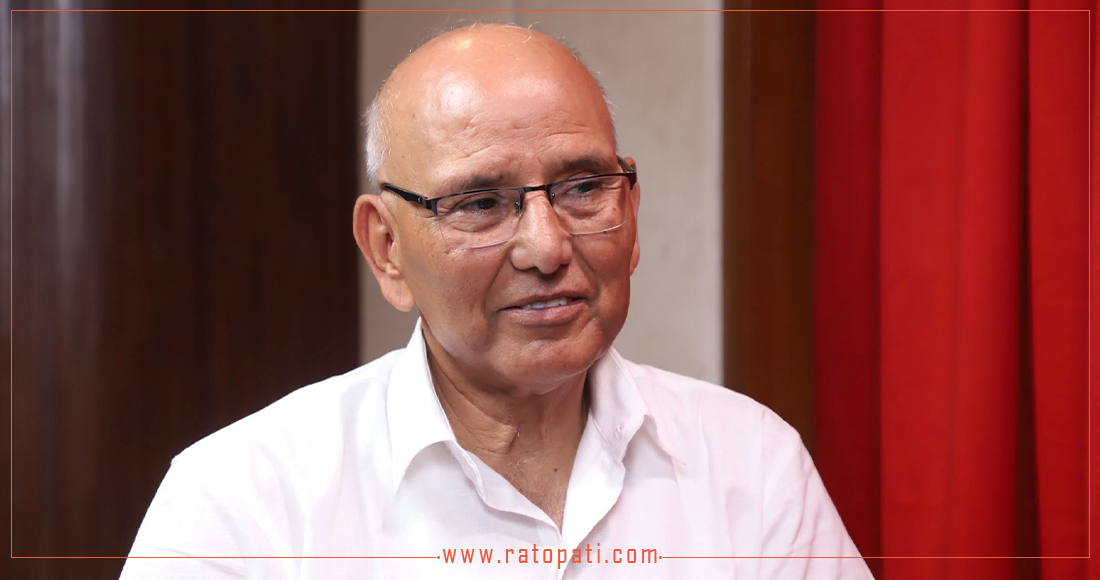
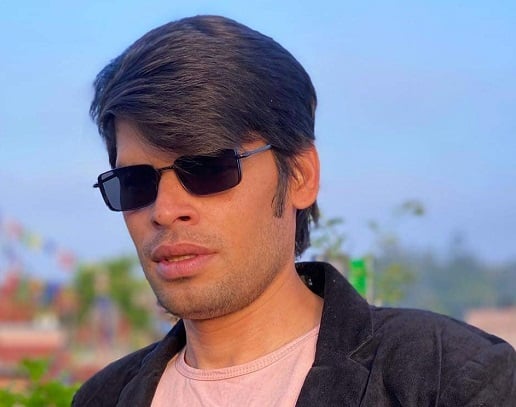
RatoPati correspondent Ganesh Pandey spoke with advocate and defeated joint general secretary candidate Yagyaman Neupane on this matter. Here is the edited excerpt of the conversation with Neupane:
- How do you view the party's Chitwan convention?
This is a convention that determines the direction not only for the party but for the entire country. Looking at Nepal's political history, it has reached a stage where it needs to be redefined. If we consider the political landscape before 2007 BS as historical, and from 2007 BS through the Janji rebellion to the current elections as the modern era, then the political journey has entered the postmodern era. In such a situation, what direction should this country take? What policies should be adopted? How should things with long-term implications for the country be managed? To ensure the development trajectory for the next 50 to 100 years is meaningful, what policies should be adopted? This convention is set to chart that path, which is why I consider it a matter connected to the fate and future of 30 million Nepalis. This convention has prepared a theoretical political manifesto to chart that path. Regarding the economy, Dr. Swarnim Wagle's report on how the economy will move forward has been presented and passed as is. Rabi Lamichhane's political report has set a roadmap providing direction.
- The closed session of a convention is an exercise where representatives debate and discuss the reports presented by the leadership, either in groups or individually, in written or unwritten form. However, there was no discussion in Rastriya Swatantra Party's closed session. You clapped, and it was over. Is this the direction?
The tendency to accept whatever the leaders bring as correct is not right. However, if what the leaders bring is indeed correct, then there's no reason to object. Regarding the political manifesto and other reports presented, when all present members were asked who was in favor, 100 percent of the members passed it without any amendment or need for additions, and no one raised their hand to state a dissenting opinion. Therefore, we must understand it as a clause-by-clause discussion.
- So, out of the four thousand representatives, at least one should have offered some suggestion?
During the process of preparing the political manifesto of a political party, through conventions at local, district, and provincial levels, we had incorporated certain elements into the discussions. We had coordinated those elements. We even sought opinions and suggestions from some colleagues. Their opinions and suggestions were presented through various departments. We have various departments within the party that act as a shadow, closely observing all ministries and state institutions, for the overall development and prosperity of this nation. Since this political manifesto was prepared in coordination with those bodies, it is a document of complete agreement among all members of the Rastriya Swatantra Party, hence no one expressed any dissent.
Understanding the pillars of democracy closely, we brought these matters into discussion beforehand, believing that it should not be a mere formality. As everyone reached a consensus, no one voiced opposition.
- On the day of the inauguration, Asar 7, your senior leader Balen Shah and Chairman Rabi Lamichhane stated that group or panel-based elections would not be allowed within the party. However, by the day of leadership selection, factionalism was evident through the media. Do such activities benefit or harm the party?
Factionalism and supporting each other are different things. Supporting each other, agreeing with each other, are matters of personal influence. Let's not misunderstand this. I also lost the election for joint general secretary. However, I am not prepared to say today that I lost due to factionalism. Because supporting each other, saying 'this is right,' suggesting 'vote for this person' does not fall under the definition of factionalism. Regardless of whether it is good or bad, you must vote for this person; this is my stance. This is from top to bottom. However, it did not divide into two factions based on who was under whom.
- Chairman Lamichhane attempted to reach a consensus for the general secretary position throughout the night of the 11th but failed. The next afternoon, some competitors came to the media center and said, 'We have united, and our support is for so-and-so.' What does this mean?
They said their support was for our Bipin Kumar Acharya. We have provisions for support and proposers in the form itself. Having provisions in the form means I support so-and-so. There were 21 supporters and one proposer. Some might have said it verbally in the media, while others might not have reached the media. But I also had 21 people supporting me. That is the procedure. That procedure cannot be called factionalism. It is a system. If we give the shape of factionalism to the system, then trusting someone, giving a vote of confidence, these are different things. If we have to say that filling out the form to be eligible for candidacy is wrong, then saying 'we support so-and-so' is not the definition of factionalism. Factionalism implies a specific line from this to that. Here, no line was visible; it was line-less. Saying 'I like so-and-so, so I've stepped aside' cannot be considered within the definition of factionalism.
- Many capable individuals contested for office bearer positions. If the party wins regardless of who wins, what would have been wrong with allowing the competition?
Everyone in the party is capable; it's not that they aren't. Regarding the general secretary position, Manish Jha also had 21 people supporting him to register his nomination. Those 21 people were his supporters, and there was one proposer. Those 21 people might not have spoken to the media, or even if they did, they are his supporters. What needs to be understood from this is that this is a democratic process of trusting each other, rather than factional politics.
- Some have even said that factionalism has started in the party and the chairman should take action. If players enter the field through the same process, wouldn't it be better to let them compete?
Saying that someone trusts someone else cannot be politically wrong. Perhaps it would have been better if it hadn't happened. Perhaps it would have been better if they hadn't done it. Due to that, Manish might have faced injustice. The public mandate he would have received might have decreased. However, just because one person says, 'vote for so-and-so, I trust them,' it doesn't mean those present must vote for them. Therefore, look at the individual voters; they are also leaders, and those contesting are also leaders. It is up to the leaders to exercise their discretion in voting. Therefore, just because someone says, 'I trust so-and-so,' it doesn't mean they must be trusted based on that trust. This needs to be understood in this way.
- If all 10 had competed independently, it would be considered a fair election. When groups are formed in the middle of the electoral field, wouldn't other competitors feel resentment?
What you're saying is correct. If all 10 had competed, the outcome might have been different. However, saying 'I won't compete' is also a right in a democracy. Withdrawing one's nomination is also a right in a democracy. Saying 'I support so-and-so, therefore I am withdrawing my candidacy' is also a democratic process. Therefore, is withdrawing a nomination within the rules of a national election? So, should we consider withdrawing a nomination within the electoral procedure as factional politics or not? I agree with you on one point: if everyone had contested, the outcome might have been different. Perhaps the result would have been different if some had withdrawn. The same could apply to your case as joint general secretary; if some had withdrawn, the result might have been different. However, we cannot say that the general secretary election was unfair just because everyone contested, but the joint general secretary election was unfair. Perhaps the results would have been different, but the actions taken within the electoral procedure must be respected. We should not interpret the outcome differently when winning versus losing.
- Some have also accused leadership pressure for supporting Bipin, haven't they?
Saying 'I won't contest' or being convinced is one aspect; that is not factional politics. Secondly, in that situation, I am also there. If you say, 'You all should unite and move forward,' I am with you. If you cannot unite, I am also with you. We wanted to give the chairman a certain authority. We told the chairman, 'This party has reached this point because of you, and we are in this party because we trust you, so please choose according to your convenience.' We made this proposal. Otherwise, you can ask the other colleagues present there. Chairman said, 'I see all of you equally. Therefore, I cannot choose anyone.' If he had to compulsorily choose Bipinji, then perhaps he would have done so when we all gave him the authority. So, let's not misunderstand this by thinking the leadership was and is only in favor of one person. This is not the case. After the results come out, we should not assess it that way. If Bipinji had received more votes than Manishji in that ballot box, would Chairman not have accepted it? He would have accepted it. Did Chairman Rabi Lamichhane tell any voter to vote for Bipin? Has anyone heard that? No. Therefore, we should not involve the chairman in such matters. Because the chairman, until the very last moment, said either reach a consensus or at least convince each other and go into the election with fewer candidates. We told him, 'You choose.' He said, 'I don't have that capability or courage; you are all equal to me, and I am not in a position to pick anyone.' After he said that, what should we understand? If we start questioning the chairman after the results come out, we will fall into internal conflict. We must learn from the politics of the old political parties. When winning and in favorable circumstances, if the result is in my favor, it's absolutely right; if it's in unfavorable circumstances, it's bias, it's factionalism, it's this and that – we shouldn't lean towards that.
- So, has this historic first general convention abolished factionalism, or did it conclude by sowing its seeds?
Savita Gautam became the Vice Chairperson. Which faction is she from? Swarnim Wagle became the Vice Chairperson. Which faction is he from? Many questions arose about Bipin. Below him, Hari Dhakal, who won the joint general secretary position. Which faction is he from? After that, another joint general secretary, Asim Shah, won. Is there any faction here? Asim and Hari won. Did they win because they were from a faction, or should I say I wasn't part of a faction? The voters could not be swayed. The voters had to return home from the election site because the election schedule was delayed and took many days. The voting members had already returned home.
- Despite all this, will this general convention play a mandatory role in keeping the party united?
It will play a mandatory role, and a message of party unity has also been conveyed. Now, there will be no talk of new or old, or belonging to this faction or that faction in this party. The entire Rastriya Swatantra Party will move forward as one solid entity and will provide a new direction.
This specific news has been automatically translated by AI. As a result, there may be some inaccuracies or language errors.