Nepali Tea Exports Resume to India After Two-Month Halt

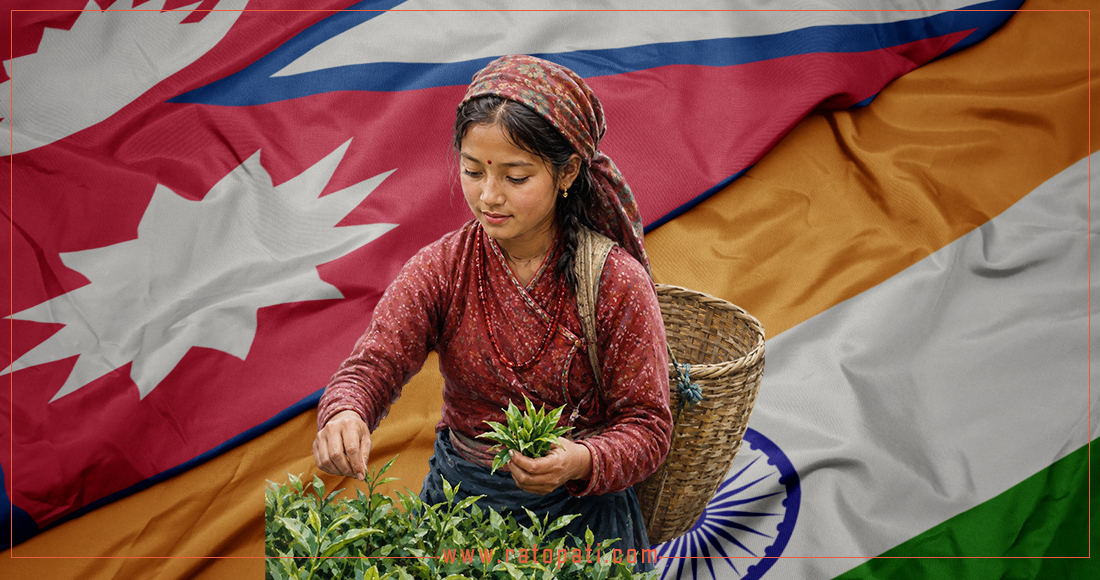
Kathmandu. Nepali tea exports to India, which had been largely stalled for the past two months due to various administrative and technical hurdles, have resumed. Trucks carrying Nepali tea have started departing for the Indian market via the Kakadvitta border crossing between Nepal and India. According to Mechi Customs Office, the long-standing stalemate ended on Tuesday when two trucks carrying tea from Ilam Tea and Summer Valley departed for India. This has brought new enthusiasm to Nepali tea producers, farmers, and businessmen who have been suffering significant financial losses for some time. Officials have stated that the path for tea exports has been cleared following diplomatic and commercial initiatives between the two countries. According to Mechi Customs Office, Kakadvitta, vehicles carrying tea have been crossing the border smoothly in recent times. Customs Officer Ishwar Kumar Humagain told RatoPati, 'Tea exports have resumed through the border crossing. There are no administrative or technical difficulties for export at present.' According to Humagain, a total of 5 trucks carrying tea have departed from Nepal to India in the last two days alone. Tea exports have started gaining momentum with two vehicles the previous day and two-three vehicles the following day. While the tea-laden vehicles are regularly crossing the border after completing customs procedures on the Nepali side, Nepal Customs does not have detailed information about the treatment they receive from the local administration or customs after crossing the Indian border. However, he stated that no unusual obstacles have been observed in exports through the border crossing. 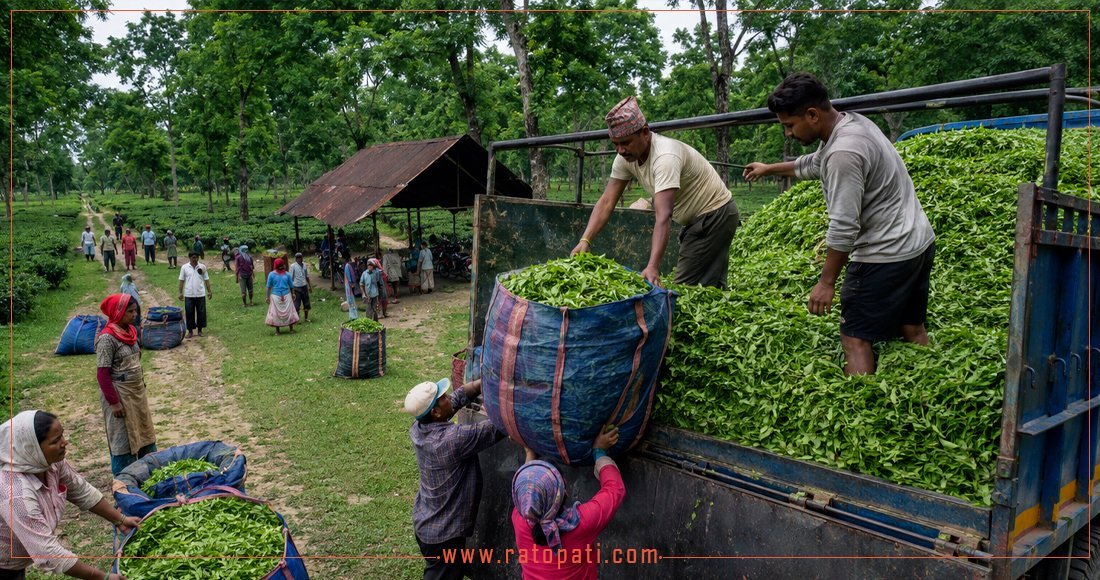
- Flexibility in Indian Policy: FSSAI's New Standards
The main reason for the smooth resumption of Nepali tea exports is the change in policy by India's Food Safety and Standards Authority (FSSAI). On June 23, FSSAI issued new regulations regarding tea imports, implementing a risk-based testing system. Under this new policy, instead of testing 100% of imported tea, only 20% of consignments will undergo random sample testing. Previously, India had implemented an impractical rule of conducting strict sample testing of every consignment imported from Nepal and collecting samples from the importer's warehouse. Due to this rule, it took a long time for laboratory test reports to arrive, and the quality of tea deteriorated, putting Nepali businessmen in a situation where they could not export. With the implementation of the new simplified policy, unnecessary delays at the border crossings have been eliminated. Due to the continuous obstruction in exports, tea industries in the eastern hilly and terai regions of Nepal were on the verge of collapse. About 99 tea industries in Jhapa and Ilam alone were forced to close. As green tea leaves started going to waste in the gardens due to lack of market, industrialists in Ilam started a protest by completely closing their factories from Asar 1, and tea industrialists in Jhapa from Asar 4. The livelihood of thousands of workers and farmers dependent on tea cultivation was in crisis, leading to increased pressure. Only after the Prime Minister's Office gave concrete assurances of diplomatic and administrative initiatives and finding a long-term solution to the problem did the industries reopen.
- Orthodox and CTC Tea: Different Market Strategies
Tea produced in Nepal is generally classified into two categories: Orthodox tea produced in the hilly regions and CTC (Crush, Tear, Curl) tea produced in the terai region. Currently, the export of Orthodox tea from the hills has fully resumed. Shiv Kumar Gupta, Senior Vice President of the Nepal Tea Producers Association and a tea exporter, informed that processed tea from the hilly regions is being exported rapidly to India. 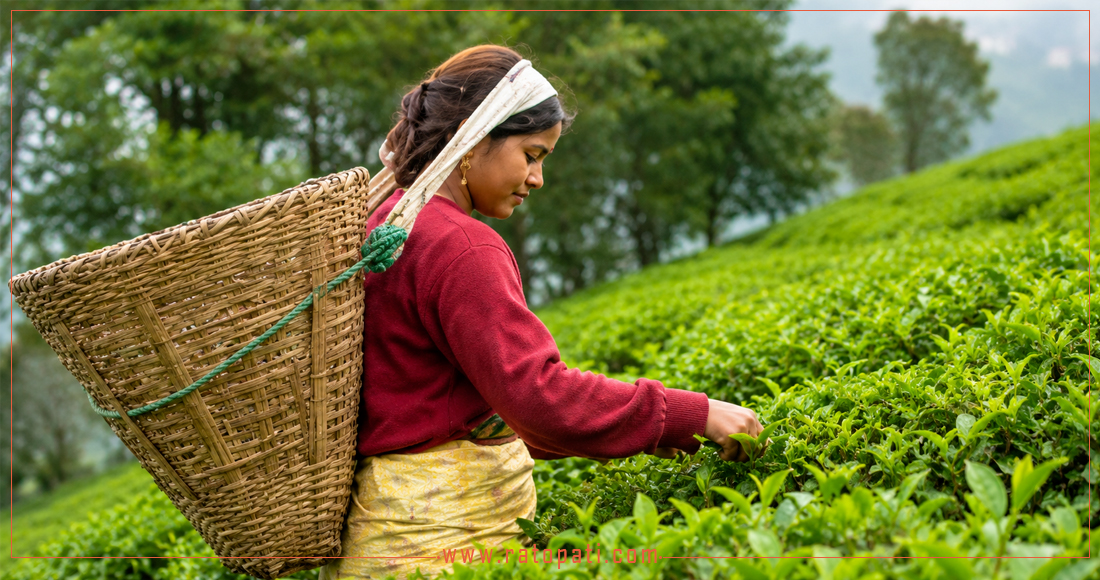
On the other hand, CTC tea from the terai has not yet crossed the border. However, according to Gupta, this is not due to any external or legal obstruction but is stalled due to a lack of commercial agreement and price. Indian importers are demanding Nepali tea, and as the process of sample exchange and price negotiation is ongoing, he clarified that terai tea will also be easily exported to India within a few days. Due to the prolonged export halt, a large stock of processed tea has accumulated in Nepali tea industries. Businessmen estimate that approximately 1.3 million kilograms of processed tea are currently stocked in various warehouses in Nepal and India. With the main season for plucking and processing tea underway, the accumulation of processed tea has frozen a large amount of capital for industrialists. According to Uttam Shrestha, operator of Taragaon Tea Estate and Siddheshwar Tea Estate, his two factories alone had 50,000 kilograms of processed tea in stock. Since the resumption of exports, 10 to 15 thousand kg of tea from his industry has already gone to India. Although tea from other industries is also being exported gradually, it is expected to take some more time for the entire stock to clear and the market to stabilize.
- Darjeeling vs. Ilam: The Competitive Battle of the Tea Market
Ilam in Nepal and Darjeeling in India are geographically connected regions. Due to similar climate, soil, and atmosphere, the characteristics of tea from both regions are similar. However, industrialists like Uttam Shrestha analyze that the main reason for the Indian side repeatedly obstructing Nepali tea is market competition and commercial interests. Darjeeling tea gardens were planted during the British rule, about 200 to 250 years ago. Due to old bushes, the productivity, taste, and quality of Darjeeling tea are gradually declining, and its manufacturing cost is very high. In contrast, Nepali tea gardens are on average only 30 to 40 years old, so the taste, aroma, and quality of tea produced from these young bushes are very high. Due to lower production costs, Nepali tea is available in the Indian market at a comparatively lower price, which the Indian Tea Board fears will directly displace Darjeeling's expensive tea. Businessmen complain that in the past, the Indian side has concocted various schemes to stop exports by accusing Nepali tea of being substandard and containing pesticides. Recounting past bitter experiences, Shrestha said that during border crossings, under the guise of pesticide testing, samples would be kept stuck in the laboratory for 15 to 20 days, and if the test failed, they would be subjected to mental stress, including the destruction of the tea. 
However, the Indian side, which imposes such strict regulations, does not impose any obstacles or pesticide testing when purchasing raw materials, i.e., green tea leaves, from Nepal. The fact that numerous questions are raised only about processed tea from Nepali industries clearly indicates the Indian Tea Board's strategy to undermine Nepali tea industries and only import raw materials cheaply from Nepal.
- Long-Term Solution Needed
Although exports have resumed due to the understanding and administrative pressure between officials of both countries, tea industrialists believe this is not a long-term solution. The fear remains that obstructions can be created at any time as soon as the policies and moods of Indian officials change. For a permanent end to this uncertainty, the Nepali government has been urged to sign a 'G-to-G' (Government-to-Government) agreement with the Indian government. With tea exports worth approximately NPR 4 billion annually from Ilam district alone, if the government takes diplomatic initiative to create an environment for direct export of Nepali tea to third countries (such as Europe, America, Japan, and Gulf countries), this amount could double. Expanding the market in third countries would end the sole dependence on India and help bring a large amount of foreign exchange into Nepal.
This specific news has been automatically translated by AI. As a result, there may be some inaccuracies or language errors.




_21867t561J.jpg)