Local Government Boundaries and Upgrades Under Discussion


The number, boundaries, and upgrades of local levels are once again in discussion. This issue has gained priority after the government introduced new criteria for altering the boundaries and upgrading local levels and concluded in the Good Governance Roadmap that the number of local levels should be reduced to around 500. However, although some local levels have recommended altering ward or settlement boundaries for their convenience, these works have been halted by the center citing technical reasons.
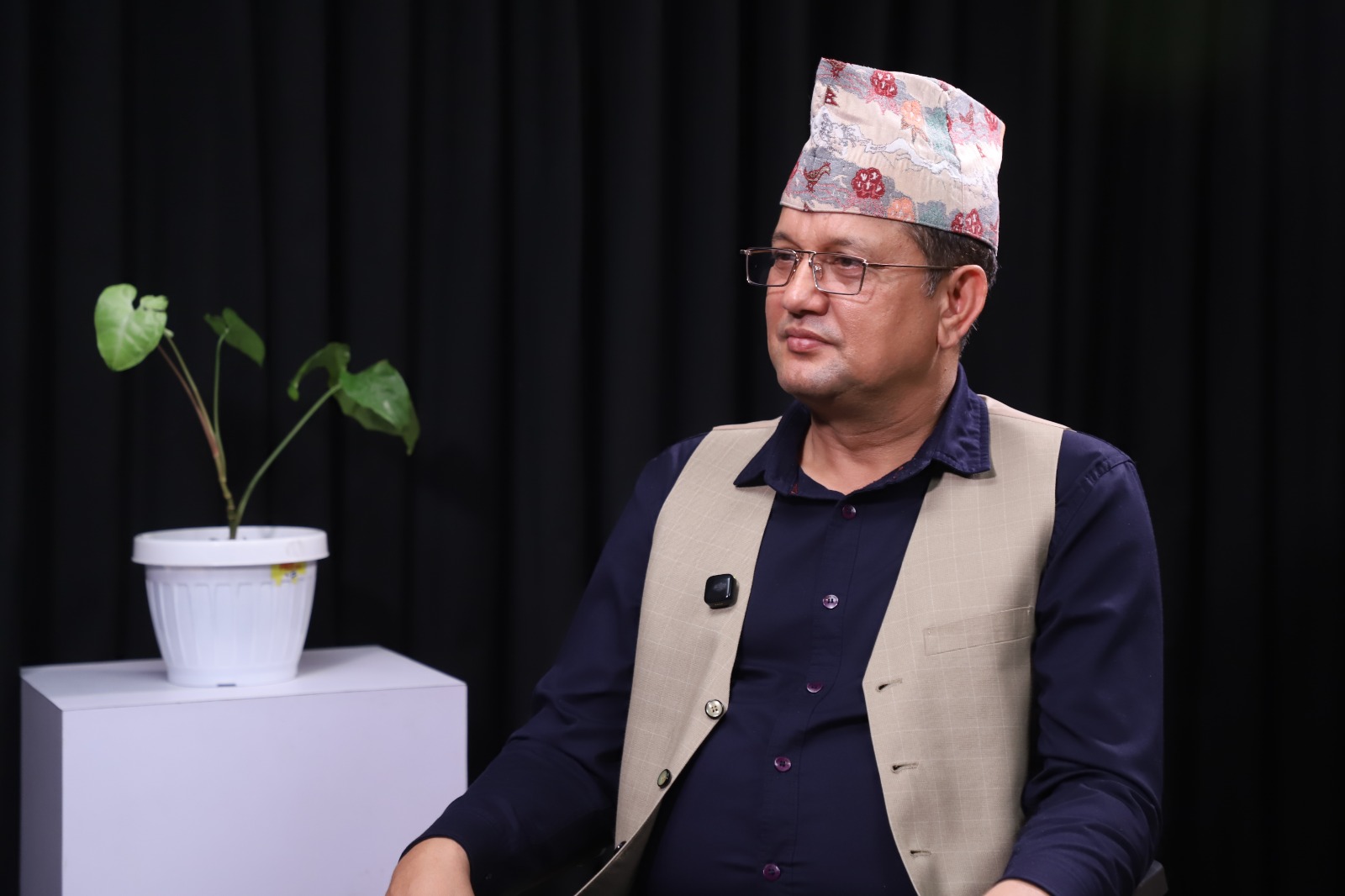
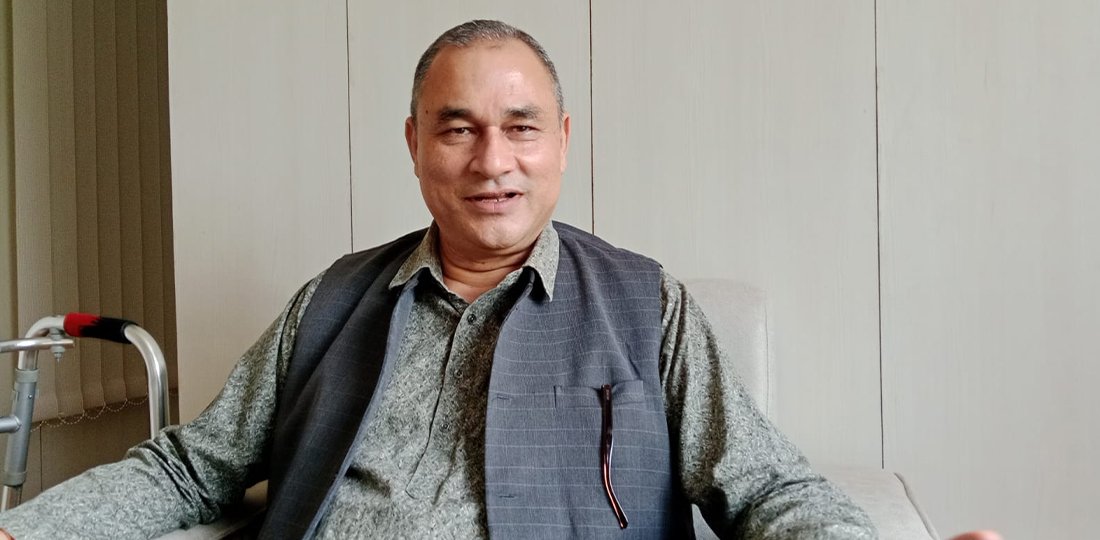
In this context, an edited excerpt of a conversation with Narulal Chaudhary, General Secretary of the Nepal Municipal Association, on how local level boundaries can be made scientific for the convenience of the public and what legal and technical challenges exist:
- The government has introduced a new draft of criteria for upgrading and altering the boundaries of local levels and has also circulated it to the local levels for suggestions. How do you view this as the General Secretary of the Municipal Association and as the head of an important local level?
We should view the draft brought by the government regarding these criteria positively. Things brought for policy reform are always positive. However, there has not been extensive interaction and discussion with everyone on the matter of criteria.
Things brought without sufficient discussion with stakeholders are not in a state to be fully implemented or to meet all conditions at present. Therefore, our understanding is that to make the structure of local levels scientific, we must proceed only after extensive discussion wherever improvements can be made.
- The Good Governance Roadmap recently introduced by the Prime Minister's Office also includes the issue of reducing the number of local levels to around 500. The arrival of these criteria is also seen as a step towards its implementation. How do you understand this?
Reducing the number of local levels actually means upgrading the structure. For example, if there are small rural municipalities, they should be merged to form municipalities, municipalities should be joined to form sub-metropolitan cities, and sub-metropolitan cities should be upgraded to metropolitan cities. In this way, the total number of local levels naturally decreases, and their size increases.
Our view is that rural municipalities that meet the criteria, have developed urban structures, and are economically capable should be upgraded to municipalities or higher levels. However, for this, all political parties at the national level must agree politically. Even if there is no complete agreement, the government can upgrade as much as possible. Municipalities that have completed the process and where it is possible should be upgraded.
- How ready are local representatives for the matter of merging several nearby urban areas for upgrading?
Merging cities like Tulsipur-Ghorahi or Butwal-Bhairahawa, which are geographically close and connected by infrastructure, to form a single large structure would not make much difference in development and resource mobilization; rather, it would be beneficial. However, how willing local representatives or local governments are to do this depends on the situation there.
In the case of our sub-metropolitan city, we are ready for it. However, we have not formally proposed it yet. This is certainly a good concept. But the environment for us to pass it from the municipal assembly and send it to the federal government has not yet been created.
- What is the reason for the environment not being created? Is it due to a lack of internal discussion, or fear of opposition from citizens at the ground level?
More than fear, the citizens' wishes are paramount. We must respect everyone's sentiments. This state belongs to all citizens, so any decision must be made by prioritizing the citizens' feelings. We, the representatives, should not impose decisions from above without taking sufficient suggestions from them. If upgrading is done without preparation, citizens might face a situation where they feel burdened by taxes, do not feel ownership in development due to large structures, and face problems.
If upgrading occurs without completing infrastructure and structures or without fully adhering to the criteria, many complications will arise. Since all these technical, economic, and social aspects must be considered, the environment for us to immediately recommend merging municipalities has not yet been created. When the time comes and citizens are ready, these matters will gradually move forward.
- When discussing boundary adjustments, files for boundary adjustments recommended by local levels are stuck at the center. What is the main problem here?
Providing services to citizens at their doorstep is the core principle of federalism. Therefore, we have sent files passed by the concerned municipal assemblies and provincial governments to the federal government long ago to alter the boundaries of settlements that appear inconvenient and unscientific.
Even after completing all the legal procedures, these recommendations have been gathering dust at the center for a long time. The federal government has not implemented them. Their argument is that an entire ward can be merged from one municipality to another, but splitting only a specific settlement within a ward creates significant technical problems in land measurement and demarcation.
However, our point is that the current wards were created by keeping the old Village Development Committees as they were. Unless a provision is made to split wards as needed and merge them into more convenient ones, boundaries will not be scientific. Without splitting wards, it is impossible to create structures convenient for the public.
- When the issue of land measurement comes up, the Ministry of Land Management is involved. What kind of discussions are being held with the ministry to resolve this technical complexity?
I had a serious discussion with the Secretary of the Ministry of Land a few days ago on this matter. They are reluctant to alter or tamper with the old records of measurements and land ownership certificates prepared since the time of the former Village Development Committees.
However, without splitting the old maps as needed, the scientific boundaries that citizens desire will never be formed. Therefore, it is extremely necessary to amend the legal provisions required to address the recommendations of the local government.
This specific news has been automatically translated by AI. As a result, there may be some inaccuracies or language errors.