Chakrapath Expansion Faces Delays Despite Agreement

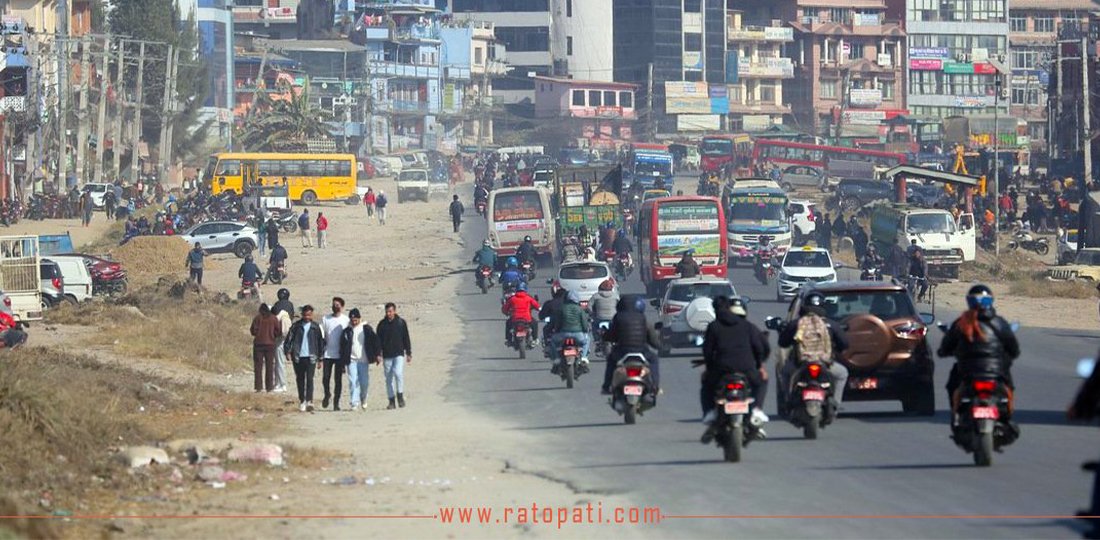
Kathmandu. Anyone traveling through the Chakrapath road section in Kathmandu these days feels the same thing: extreme chaos and hardship.
The road section from Kalanki to Basundhara, Sukedhara, and Dhobikhola currently looks not like a road, but a field of bushes and grass. In the rainy season, mud makes it difficult for vehicles to travel, and when the sun shines, dust covers the sky. For 8 years, millions of citizens have been enduring this suffering in the name of expansion.
The weeds growing on both sides of the road have started covering the main road in many places. Moreover, the risk of accidents is equally high due to the tendency to park vehicles and load/unload goods indiscriminately on the road. There are no pedestrian-friendly sidewalks anywhere, nor are there any zebra crossings. This area has become extremely challenging from a road safety perspective. The road from Kalanki to Sukedhara and Maharajgunj-Narayan Gopal Chowk looks ugly with weeds and mud.
Work Not Started Despite Agreement Two and a Half Months Ago
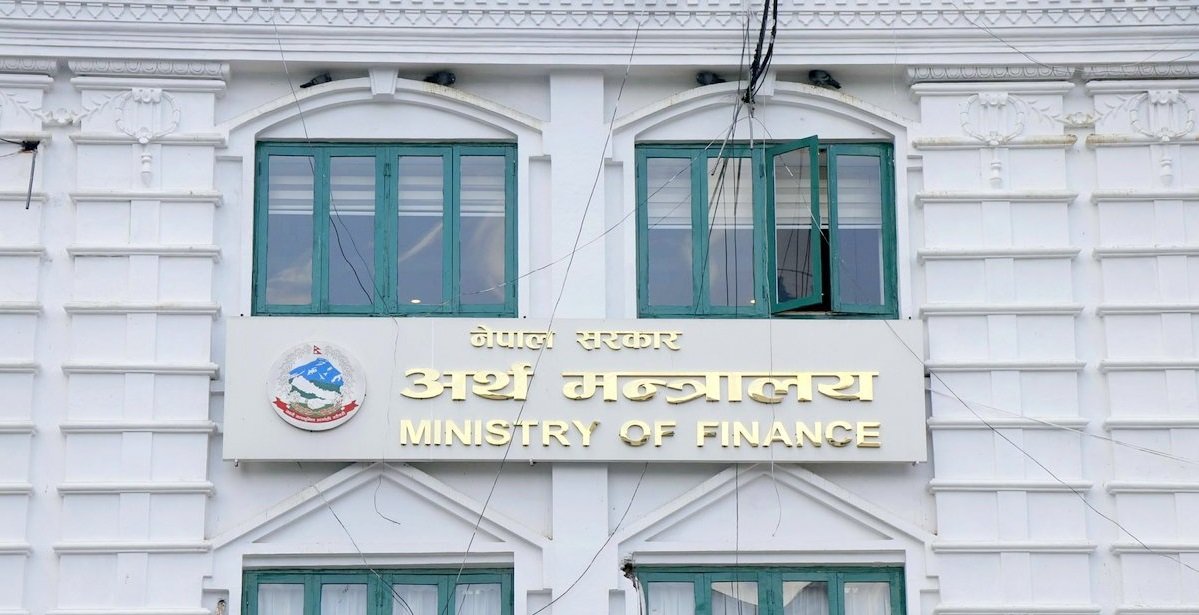
Amidst this hardship and suffering, good news came for the residents of Kathmandu on May 16. A formal agreement was reached between the Government of Nepal and the Chinese side for the construction of the second section (Kalanki-Basundhara) of the Chakrapath expansion, which had been in uncertainty for a long time. An agreement letter regarding grant assistance worth 11 billion rupees was signed on May 16, 2083, between the Minister for Physical Infrastructure and Transport, Sunil Lamsal, and the Chinese Ambassador to Nepal, Zhang Maoming.
According to the agreement, the Chinese government will provide this large sum for the construction of the 8.2-kilometer road and bridges from Kalanki to Basundhara. However, even though the agreement has been made and the preliminary design has been approved, the physical road expansion work has not yet progressed.
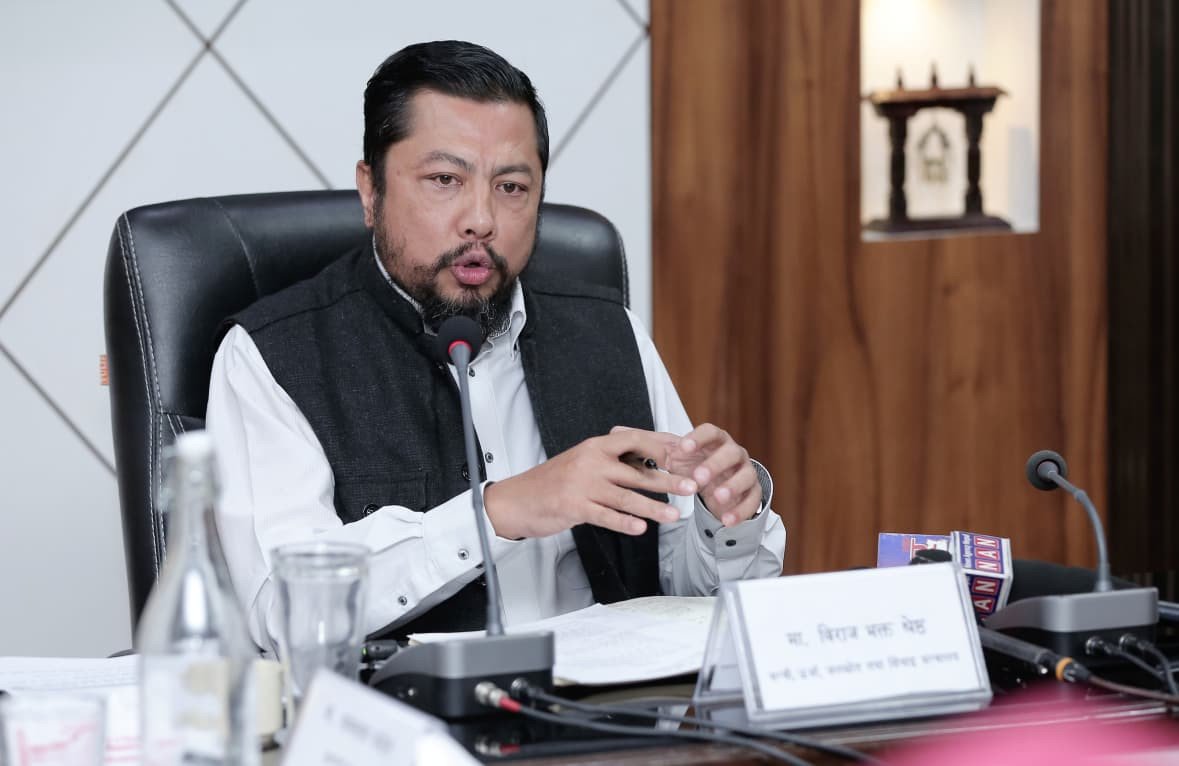
Since the main road of Chakrapath will be built with the grant assistance of the Chinese government, it is necessary to rely on the Chinese side's contracting system as per the agreement in the Letter of Exchange. According to Arjun Prasad Aryal, Deputy Director General of the Department of Roads' Aid Management and Coordination Division, technical work has progressed with the agreement. The Chinese company has prepared the preliminary design and got it approved by the Department of Roads.
Now, the detailed survey and design company will submit it to their country's ministry, and according to their own system, they will approve it and then enter the stage of contract management, according to the project. Since it is being built entirely with Chinese grant assistance, the responsibility of selecting the contractor lies entirely with the Chinese side, which is causing delays in the expansion, according to the project.
Why Did It Take 8 Years?
After the successful completion of the first section (Koteshwor-Kalanki) of Chakrapath in 2019, the second section was expected to start immediately. However, the delay of 7 years for the start of the second section is attributed to the COVID-19 pandemic, Nepal's internal administrative complexities, and political instability.
According to officials from the Department of Roads, the delay in the Chakrapath expansion is due to regular administrative processes and Nepal's internal weaknesses, rather than any specific geopolitical reasons. Nepal's unstable political environment also had a significant impact. When proposals for tax exemptions on construction materials were taken to the Council of Ministers, files became inactive due to frequent changes in government or dissolution of parliament.
Finally, the formal door for agreement with the Chinese side was opened only after the Council of Ministers' meeting on February 12, 2082, decided to provide customs and tax exemptions on construction materials.
To facilitate the Chinese side in the Chakrapath upgrading work, the Government of Nepal had established a project office in Babarmahal on January 18, 2069. Under the same project, the first section from Koteshwor to Kalanki (10.39 km), started by China in 2069, was expanded to eight lanes with a grant of approximately 5 billion rupees and handed over to Nepal on January 8, 2019.
Currently, for the second section, the Government of Nepal has fully completed its part of clearing the right of way, relocating electricity, drinking water, and telephone poles and wires, and cutting trees. Similarly, with the budget of the Government of Nepal, the service tracks on both sides from Kalanki to Swayambhu have been constructed, and the construction of service tracks in four packages from Swayambhu to Basundhara has also been completed. Although Nepal has completed its share of preparations, the main work has not progressed due to the slowness of the Chinese process.
Modern Form from Overpass to Accessible Overbridges
The design of this road, prepared by Chinese state-owned companies 'CCCC First Highway Consultants' and 'Xi'an Fangzhou Engineering Consulting Limited', is very modern. This road, with a total width of 38.5 meters, will be expanded into a grand eight lanes according to China's urban road standards.
According to the design, there will be a 2.75-meter footpath on both sides of the road. In the middle, there will be a two-way four-lane main road, and a 3-meter 'median' (green belt) will be constructed in the middle of the road for planting trees and managing electricity and internet wires.
Two main bridges will be constructed in this section: a 16-meter long bridge at Kalanki-Sauchatar and a 64-meter long bridge over the Bishnumati River. Additionally, four modern, accessible overbridges will be constructed to facilitate pedestrians crossing the road. These bridges will be built between Sitapaila-Swayambhu, Dhunge-dhara-Balaju, Balaju-Machhapokhari, and Samakhusi-Basundhara Chowk.
To further streamline traffic management, a grand 560-meter long 'overpass' will be constructed from Machhapokhari to New Buspark. The design also includes 11 intersections and 22 well-managed bus stops for the convenience of vehicles and passengers.
When Will Physical Construction Work Begin?
Although the agreement in May has raised hopes among the valley residents of getting a modern and convenient road, it appears that they will have to wait a few more months for physical construction. According to Deputy Director General Aryal, there is no immediate possibility of starting work with machinery. Since the Chinese side will take time to complete the contractor selection process, physical work on the Chakrapath is expected to begin only after the monsoon season ends (i.e., around October).
He stated that work will commence only after the Dashain and Tihar festivals. Meanwhile, the expansion work of the 700-meter road from Narayan Gopal Chowk to Chappal Karkhana has been completed. The Kathmandu Road Division has expanded this road. Similarly, expansion work is also underway from Chappal Karkhana to Dhobikhola. Beyond that, the section from Koteshwor (Chavel-Gaushala-Koteshwor) is also chaotic. There is no certainty about when the expansion will proceed.
This specific news has been automatically translated by AI. As a result, there may be some inaccuracies or language errors.