
Supreme Court Opens Middle Path for Ncell Share Transfer Case

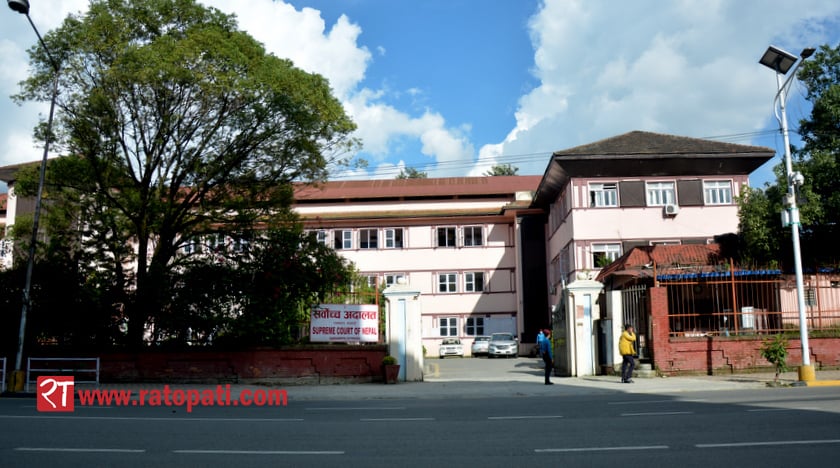
Kathmandu. The Supreme Court has opened a 'middle path' in the Ncell ownership transfer case, which has been stuck in a quagmire of policy and legal uncertainty for nearly three years.
Without directly invalidating or upholding the sale of 80 percent shares, the court has directed the regulatory body, the Nepal Telecommunications Authority, to make the final decision.
Amresh Kumar Singh had filed a writ petition in the Supreme Court demanding the cancellation of the share purchase and sale agreement itself. Hearing the writ, a joint bench of Supreme Court Justices Sapana Pradhan Malla and Tek Prasad Dhungana dismissed the writ on Poush 11, 2081 BS. Although the Supreme Court recently published the full text of the verdict, which dismissed the writ, it has clearly instructed the regulatory body to fulfill its legal responsibilities.
Following the court's full verdict, the Telecommunications Authority will now begin the process of demanding further documents from Ncell, seeking clarification, and possibly imposing a hefty fine. If Ncell pays the fine and fulfills all legal conditions, its ownership transfer will receive formal recognition. However, the 'policy stance' taken by the political leadership and bureaucracy in the meantime will likely determine the final outcome of this case.
While dismissing the writ filed by Singh, the full text of the Supreme Court's verdict makes one thing clear: the court itself did not want to completely invalidate the Ncell share sale and render a significant private sector investment a failure. However, it has not overlooked the fact that the prevailing law (the provision requiring prior approval) was violated.
The court's reference to Section 47 of the Telecommunications Act is significant. This section empowers the Authority to fine companies that violate the terms of their license. In legal circles, this is being interpreted as a loophole to 'legalize the transaction by imposing a fine'. If the Authority imposes a substantial fine on Ncell and approves this process, it will be a way out for Ncell and a source of revenue for the state.
The full text mentions that the Authority has the power under Section 15 of the Telecommunications Act to issue necessary orders or directives, under Section 28 to revoke the license itself, and under Section 47 to fine companies that violate conditions. This means the court has left open the path for the Authority to legally validate the share transaction after imposing a fine on Ncell as deemed necessary.
The court has issued clear directives to both Ncell and the Authority in its order. The full text states that a directive order has been issued in the name of the Nepal Telecommunications Authority to 'regulate, as per law, the respondent company holding a license to provide telecommunications services in Nepal, and all individuals, given that the required documents have not been submitted'. Similarly, Ncell has been instructed to operate its services transparently and lawfully, strictly adhering to the Telecommunications Act 2053 BS, Telecommunications Regulations 2054 BS, Nepal Telecommunications Authority (Share Purchase and Sale of Licensed Person) Regulations, 2076, and all conditions of the license.
Ncell's license period has only about three years remaining (until 2086 BS). According to the Telecommunications Act, after 25 years, the ownership of companies with more than 50 percent foreign investment transfers to the government. It has been analyzed that it is due to this provision that Axiata left Ncell for a pittance and Spectrlite bought it by taking a risk. Ncell has publicly stated, 'We are ready to increase Nepali participation through IPO and bring the foreign share below 50 percent.'
The court's latest verdict has given Ncell a slim chance to bargain with the government or avoid government ownership by completing the legal process.
The resolution of this case will send a message worldwide about the environment for foreign investment in Nepal. On one hand, there is a fear that allowing share transactions that violate the law will set a precedent for 'settlements' in Nepal, while on the other hand, declaring billions in investment defunct due to procedural errors could deter foreign investors.
The Supreme Court's directive to the Authority to regulate as per the law has now put the regulator's reputation at stake. The decision made by the Authority will determine not only Ncell's business future but also the future of the entire telecommunications sector and Nepal's regulatory credibility.
This specific news has been automatically translated by AI. As a result, there may be some inaccuracies or language errors.
_kE6hmvuewe.jpg)




_mKzzIyOWNL.jpg)