Rastriya Swatantra Party's Hari Dhakal Confident of Increased Victory Margin in Chitwan-1 Race


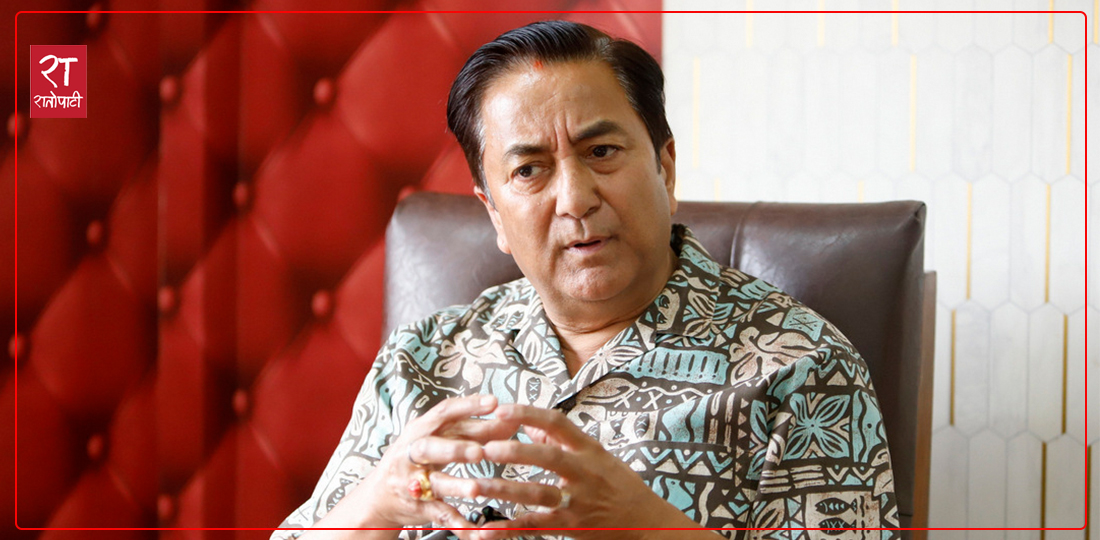
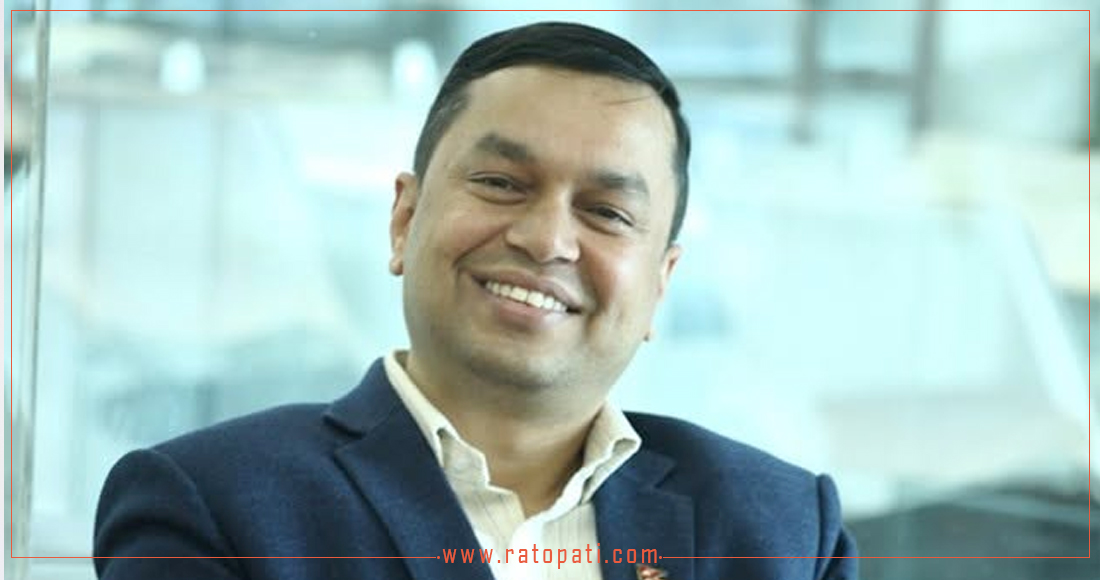
Hari Dhakal is the candidate for the Rastriya Swatantra Party (RSP) in Chitwan Constituency No. 1. Dhakal won the election in this constituency, considered the birthplace of the party, in the 2079 elections.
Dhakal, who gained prominence by raising his voice for the rights and interests of stock market investors, reached parliament, but he also faces accusations of not doing much for capital market reform and the development of his constituency during his first term.
Presented here is an edited excerpt of an interview with Dhakal, who is contesting the election for the second time, focusing on his election preparations, review of past work, the state of the stock market, and future agendas.
- You are contesting the election for the second time. What is your analysis of the outcome as you enter the electoral arena this time?
In my analysis, the margin of votes this time will be much higher than the previous time. I initially estimated a margin of 45,000 votes, but seeing the atmosphere and enthusiasm of the people in the last three to four days, I see this increasing to 52,000. I am working to maintain that margin. The general public and voters are showing me much more affection and trust than the last time.
- The votes you are seeking now, are they interest from past work or an advance for future work?
It is both. Look, our 31-month tenure was very short and challenging. We were the fourth largest party in parliament, and there were resistance efforts to surround us, prevent us from working, and destroy the party itself. But despite all those obstacles, we made honest efforts.
I made the parliament worth watching for the public. I made the voices of Eastern Chitwan resonate in the parliament just as the general citizens speak. I powerfully presented the pains of the farmers here, the tourism sector of Sauraha, the marginalized Chepang community, and the landless squatters. I succeeded in getting many demands and issues addressed. Therefore, the current votes are for the endorsement of those works and a commitment to complete the remaining tasks.
- What are the concrete achievements you can point to from your 31-month tenure?
I have worked extensively, especially in the agricultural sector. For example, let's look at the problems of honey farmers. Farmers' honey could not be collected for three years. There was a situation where 'serum' was being illegally imported from abroad, displacing Nepali honey. We succeeded in stopping that illegal serum, which allowed Nepali honey farmers to find a market.
Furthermore, when we were in the Home Ministry, it became a 'golden era' for poultry entrepreneurs. Unhealthy fish adulterated with formalin and nitrate were illegally entering Nepal from India, which was harming Nepali fish farmers. We tightened controls at the checkpoints to discourage such fish and ensured a market for domestic production.
The shortage of fertilizer has somewhat decreased compared to the past, although it has not been completely resolved. I will not lie, but there is certainly more ease. I have ensured the completion of continuously monitored projects in Eastern Chitwan that were stalled. I have opposed the discrimination and access-based tendencies in budget distribution and have brought and implemented some important budgets.
I want to clarify one thing—a budget does not belong to an individual; it belongs to the state. I did not go to cut ribbons or inaugurate places where work was done after I brought the budget. Because creating the narrative that 'this is the budget I brought' is wrong. Nevertheless, opponents are trying to create a narrative of 'What did he do?', but the conscious voters understand everything.
- You entered politics as a stock market activist. But there is an allegation that after becoming an MP, you did not focus on stock market reform and ignored the market when it fell?
This is completely false and just an election gimmick. Who spoke about the stock market 12 times in parliament during my 31-month tenure? You can check the records.
Who took the initiative for policy reform by visiting the central bank and meeting the Governor and Finance Minister? Who played a role in removing the 4-12 policy (share collateral loan limit) that worsened the market? I was the one who spoke in parliament, taking special time before the monetary policy announcement, not just last Ashoj, but also the previous year.
Moreover, the year I was elected, the government was preparing to impose a 40 percent tax on the stock market, a practice unheard of anywhere in the world. When friends were protesting on the streets against it, I was the one fighting alone inside the parliament. I am the one who forced the Ministry of Finance to reverse that decision. Even when I am not in power, I have raised my voice more than what could have been done.
- Why is there criticism of you on social media? Why is the blame for the stock market decline directed at you?
The stock market has its own cycle; it goes through bull and bear phases. I cannot make the market green or red by my will. This is not in my hands.
Lately, investors have lost confidence due to policy instability. Confidence has not returned to the market after the 4-12 policy. A stable policy is needed for this. I am advocating for margin lending arrangements through brokers. Your representative, Hari Dhakal, is continuously working to bring the stock market back to its natural rhythm and create stable policies. I am also the one who responds with facts to those who speak nonsense against the stock market inside the parliament. So, let's not be hasty; improvement is underway.
- Youth in Chitwan are forced to go abroad due to a lack of employment. What plan do you have to promote employment in your constituency?
My team has identified three main possibilities for job creation. First, the Information Technology sector. It has immense potential. We will focus on enacting and amending the necessary laws for this.
Second, tourism. Sauraha's tourism, which slowed down after Covid, needs to be revived. When tourism is promoted, employment in hotels, guiding, and local businesses increases.
Third, agriculture. Chitwan's soil is soil where gold grows. The soil here is amazing. If we can reduce production costs and ensure markets, the attraction for youth in agriculture will increase. We want to focus our work on this.
- The main job of an MP is lawmaking. If you win, in which area will you focus more on lawmaking in the next term?
My main interest and priority are in the agriculture, forest, and environment sectors. Old laws in these areas need amendment, and new laws need to be made. My team is seriously studying and preparing for this.
- Who will be your main competition in this election?
In a democracy, there is competition with everyone, but my main fight is against the irregularities and old thinking here. What someone says on social media or what the opposition accuses me of is secondary. The main thing is what the voters say.
- There is an analysis that RSP is weak in Chitwan-1 compared to other constituencies?
Voters do not consider me weak; rather, they have placed more trust in me. After voting ends at 5 PM on the 21st, and when the ballot boxes open at 9 AM on the 22nd, only the 'bell' (RSP symbol) will be seen there. Minor protests and illusions will not stop our journey to victory.
I am immersed in the soil and the sentiments of the people of Chitwan. Give us another opportunity to work, and we will transform agriculture, tourism, and youth self-employment here.
This specific news has been automatically translated by AI. As a result, there may be some inaccuracies or language errors.