
Global Security Challenges Rise Post-WWII, South Asia Unaffected

A study by Norway indicates that security challenges have increased globally for the first time since World War II. For the first time since the World War, so many conflicts and attacks on civilians are occurring. Conflicts have escalated simultaneously in 65 places worldwide. In 2025 alone, 245,000 people died due to conflict and political violence. South Asia is not immune to this.
South Asian countries are also caught in political conflicts. These countries are under the watch of Western countries. Nepal is also among them. The role of geopolitics in Nepal's recent political changes has been a recurring topic of discussion.
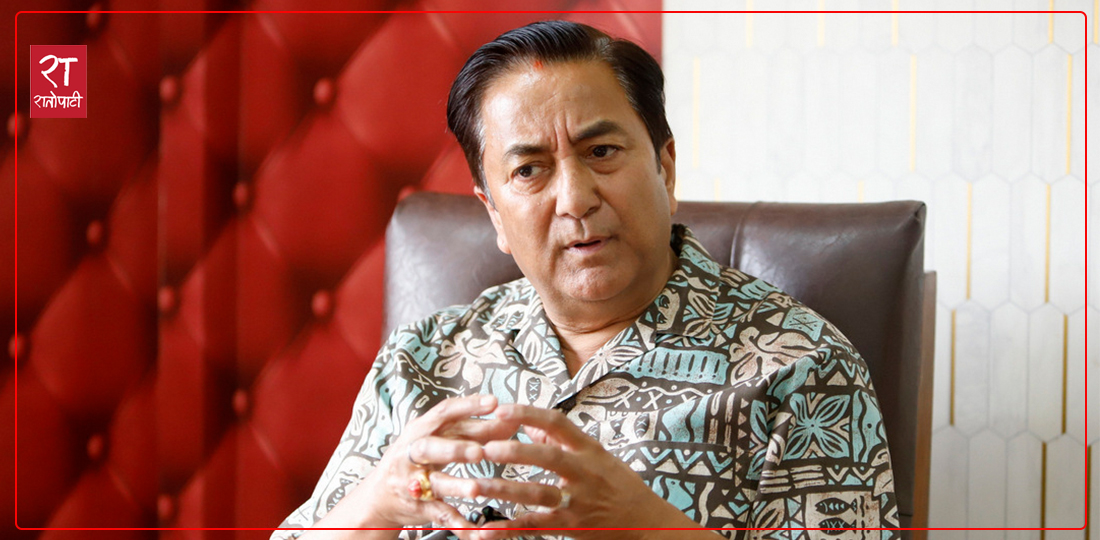
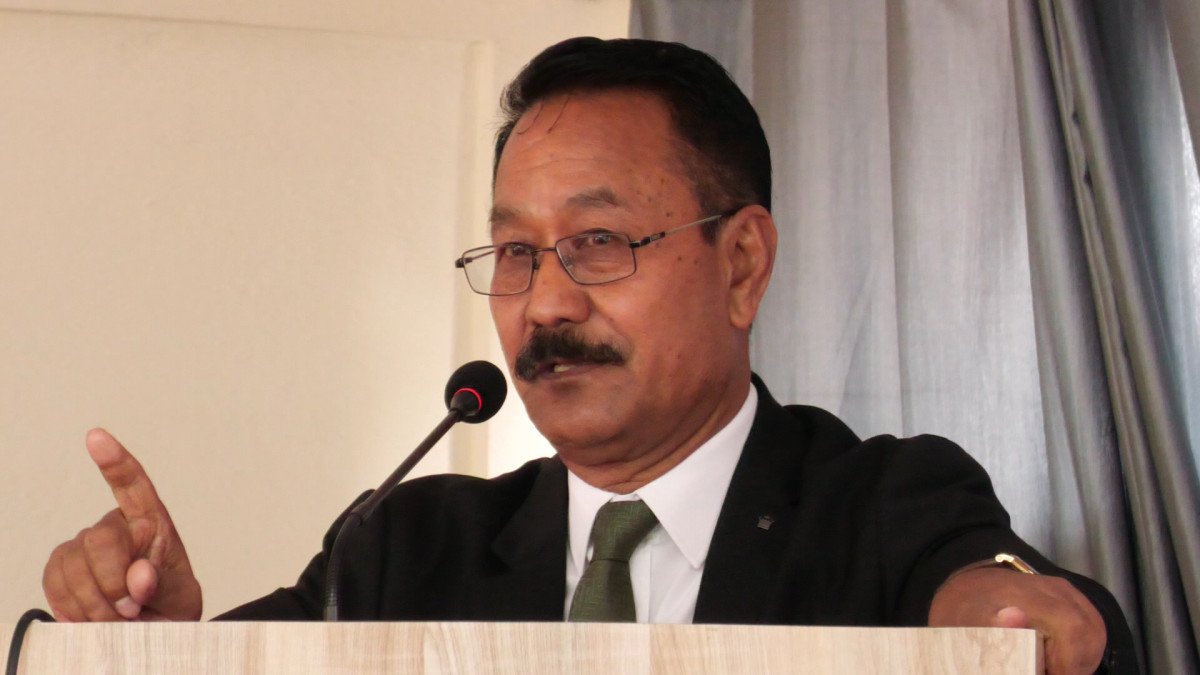
Where will the current government's steps for international relations take Nepal in the diplomatic field? What kind of relationship does Nepal have with large, powerful countries? Which country is Nepal's priority? Where is world geopolitics heading? RatoPati has discussed these issues with retired Nepali Army General Binod Basnyat, an expert in international geopolitics and security affairs. Here is the edited excerpt of the conversation:
- What could be the reason behind the biggest security challenge the world is facing now, the largest since World War II?
Even in World War II, there were the self-interests and national interests of various powerful nations. The first and second world wars occurred due to strategies that determined sides based on ideological or other interests. After World War II, the balance of power became mainly Europe-centric and moved towards dividing Europe. The victorious nations of the war moved in that direction, necessitating the establishment of international forums like the United Nations (UN). The first Cold War ended with the dissolution of the Soviet Union in 1990-91, but gradually similar competitions began to build up again.
Looking at the background of the previous Cold War, it was primarily based on ideological priorities. The world was divided into two blocs: Communism versus Capitalism or Democracy versus Communism. Later, neutral countries that wanted to protect their interests without joining any bloc formed the Non-Aligned Movement as a third bloc. At that time, China was not clearly aligned with the Soviet Union's bloc. Due to its economic development and national needs, it became associated with American interests, and economic cooperation began between them.
What does this show? National interest is always paramount, more so than ideological interests. Currently, due to economic progress, technology, and military capability, power has diversified globally. With China's extraordinary economic progress, the main competition is now seen between America and China, and the current world is moving forward on the foundation of this competition. While the center of the Cold War yesterday was Eastern Europe, today its center has become Asia, specifically the Asia-Pacific (Indo-Pacific) region, where America and China are in direct competition.
- Previously, there was a Cold War and conflict between Communists and Democrats. Is the current conflict only focused on who becomes richer or whose trade is more?
Trade and wealth can be considered minor aspects. The main issue is politics. The current race is focused on how to create an environment to establish one's dominance and bring the economy to one's side. Today, technology is as important a power as the economy, just as military strength alone was decisive in the past. Future politics and military strategy will be controlled by technology. The core of the competition lies in how to become economically prosperous and supreme.
National interest is always paramount, more so than ideological interests. Currently, due to economic progress, technology, and military capability, power has diversified globally. With China's extraordinary economic progress, the main competition is now seen between America and China, and the current world is moving forward on the foundation of this competition.
In the first Cold War, the Soviet Union was not as strong an economic competitor compared to America, but in the envisioned Cold War today, China has advanced significantly based on purchasing power parity (PPP). Although slightly behind America in terms of Gross Domestic Product (GDP), China's economic development as an emerging power has a wide-ranging impact. China's economic base is not limited to its mainland. It has also established a strong base across its borders. To win the competition in today's world, one must have a strong economy, technology, and military capability.
_gCQ7EQnoV5.jpg)
For example, we can look at the Ukraine war. Even a superpower could not conclude its military operation in a week. On the other hand, in terms of military budget and capability, America is more than seven times stronger than Iran, yet Iran is posing a tough challenge to America. This means that due to modern technology, even small or regional powers can challenge superpowers, and wars are no longer short-term.
- This conflict, which was in Europe and West Asia, now seems to have spread to South Asia. Small countries in South Asia are also getting caught in it. How is this competition of technology and strategy manifesting in South Asia?
The Indo-Pacific region, which has become a strategic center, plays a very important role from a maritime or oceanic perspective. This importance has increased due to the competition between America and China. The main player in this region is India. The direction of the competition between America and China will be determined by India's role in South Asia. Therefore, America is trying to get closer to India, while India is in favor of dealing with everyone while maintaining its strategic autonomy. Since America is a distant power, it needs India's support to compete with China.
Looking at the competition between China and America in South Asia, China mainly monitors America's presence in this region. This region is also important for China's own interests and natural resources. China faces the risk that checkpoints like the Strait of Hormuz or the Strait of Malacca could be closed in the future. Therefore, China wants to use South Asia as a bridge to reach the oceans. Due to this strategic interest, it seeks to balance its relationship with India even amidst competition. China's main interest in South Asia lies in how America's relationship with small nations or medium powers like India develops. The same rule applies to Nepal. China determines its diplomatic behavior based on how close Nepal is to America and what Nepal's relationship is with India and other countries.
- Until some time ago, India seemed to have a single dominance in South Asia, and America also used to look at the smaller countries in this region through India's eyes, but now the interest of China, Russia, and Japan has also increased here. Except for India, the smaller countries are not that strong economically and technologically, yet what is the specific interest of these powerful nations?
South Asia has immense potential in terms of population and economic growth for India. Due to democratic values, India has become an important partner for Western countries. Not only that, looking at the geography of the Indo-Pacific region, India surrounds the area from the Arabian Sea to the Bay of Bengal, increasing India's importance for maritime strategy. In the 1980s and 1990s, South Asia was understood to mean only the SAARC countries. At that time, due to the 1962 war, there was suspicion between India and China, and China's interest had not increased so much, but now we have to look at South Asia not just as South Asia but in a broader sense of Southeast Asia. This includes the area from Afghanistan and the Karakoram range to Myanmar and the Bay of Bengal, where China has become an integral part of the geopolitical and political security structure. Therefore, to analyze the security architecture of this region, we now need to consider nine countries, including China.
- Apart from India, what do these major powers want from countries like Bangladesh, Malaysia, Bhutan, Sri Lanka, and Nepal? What are their interests here?
The main interest is to bring these countries to their side. There has been a significant change between the 1990s and the current situation. In the past, Pakistan clearly stood with the American bloc due to its own interests and those of Western countries. On the other hand, after independence, India, for its security and during the time of Bangladesh's independence and Sikkim's annexation, not receiving help from Western countries, moved forward by signing a friendship treaty with the Soviet Union. The current scenario is focused on economic, technological, and natural resource control rather than ideology.
After the enmity between America and China began, China's desire is for American influence to decrease in South Asian countries, while America wants to stop China's influence. This is a direct 'conflict of interest'. When China tries to keep it as its sphere of influence, America adopts strategies to stop it.
After the enmity between America and China began, China's desire is for American influence to decrease in South Asian countries, while America wants to stop China's influence. This is a direct 'conflict of interest'. When China tries to keep it as its sphere of influence, America adopts strategies to stop it.
- Are the recent political changes in Bangladesh, the 'Gen Z' movement in Nepal, or the internal fluctuations seen in Indian politics caused by the conflicts of major countries, or how should this be understood?
This should be viewed from both internal and external perspectives. The main reason is internal. When the people's expectations cannot be met due to internal politics, misgovernance, corruption, and lack of employment in a country, extreme dissatisfaction arises. International powers (America, China, India) closely monitor these instabilities and try to steer the situation in their favor or increase their influence. In the case of Bangladesh, the youth's anger due to the quota system and lack of employment was further fueled, but it cannot be said that there was no international interest and manipulation involved.
In Nepal's context too, the frustration seen in the younger generation is a product of corruption and misgovernance, but their interest lies in how the instability here will affect American or Chinese interests in the future. External powers only intervene when our internal house is weak. Therefore, the government, political parties, and media should study this seriously.
- Can it be said that America has a hand in Nepal's youth dissatisfaction or protests?
We do not have any direct evidence of this, but in Nepal, not only America but also Western countries, China, and India have interests and presence. Because our institutional structure is not strong, external powers have found opportunities to play. There was public dissatisfaction due to politicization and corruption. While suppressing peaceful protests is one aspect, the anarchy and arson in the name of protests raise suspicions about whether there was an organized force behind it.
Until there is clear evidence, a specific country cannot be named, but external interest certainly exists. Due to our intelligence weaknesses, the state could not prepare in advance. Instead of blaming anyone now, we should focus on strengthening our institutions.
- Does China also fall within this strategic tug-of-war?
Certainly, every nation has its own interests. China desires that American influence in Nepal be zero, while America wants China's presence to be controlled. They are playing this game in West Asia and Central Asia as well. Our political, security, and diplomatic efforts should proceed with the resolve that Nepal should not become a playground for others. Governments come and go, but institutions should be permanent. If institutions are strong, the pace of diplomacy and development does not stop, just as policies continue uninterrupted in Japan despite political changes. The country is moving forward at its own pace. Nepal should also be moved forward in the same way.
- Considering this geopolitical situation, is the Balen government trying to balance and organize foreign policy and activities?
We should understand the rise of new forces like the Rastriya Swatantra Party (RSP) or Balen Shah as a political signal from the people. The reason the public mandate is attracted to the 'bell' or new faces is the belief that they will bring change against the prevailing corruption and misgovernance in the country. It may take some more time for this to establish itself as a full political force, but the leadership seems to understand this public sentiment.
_9FGvphWo6D.jpg)
Good governance is essential to give the right direction to diplomacy and the economy. I always say that politics should now be for development, good governance, and credibility, not 'ideological politics'. The current government has put forward the principle of institutional capacity, the strategy of small states, and strategic governance as its principles.
It is natural for neighboring countries to have border issues. The border dispute between Nepal and India should be resolved through dialogue. Balenji's statement in parliament, I think, was not just a protest but a strategy.
The slogan 'Nepal First, Nepali First' put forward by Prime Minister Balen is a strong strategic resolve. If this is translated into policies and programs, the country will move towards stability. The obstacles currently faced by the government can be understood in four phases. The first phase is expectation, the second phase is resistance, the third phase is confusion and uncertainty, and the fourth phase is decisive. The current government is beginning to enter the third phase. The government's activities will create confusion and uncertainty among the public. Crises may arise in the country, in which many powers will try to play. After overcoming this phase, the government will move to the decisive phase and only then succeed.
- Will this potential crisis arise due to geopolitical reasons or internal ones?
In my assessment, 90 percent will arise due to internal reasons and only 10 percent due to external reasons. However, when instability is seen internally, the entry of China, India, and Western countries becomes natural.
- Is this interest being shown through recent visits by India?
Yes, recent visits make it clear that the way forward is 'economic diplomacy'. Some people use the word 'reset' for Nepal-India relations, but this is not a reset, it is a 'revisit'. Our trade and relations have been continuous since historical times; it is only being reviewed according to the changing circumstances. The current Ministry of Foreign Affairs appears to be moving in a positive direction regarding how to move forward in South Asia with new thinking.
- Do the recent visits from Nepal signal that India is the first priority for Nepal?
Yes, this is a clear diplomatic signal that relations with India are the most important in our foreign policy. After that come China and other countries. Relations with neighbors should always be given high priority.
- Where does America stand in this?
America's role was different during the time of the World War. It is different now. Just as Mongolia adopted a third neighbor policy, small nations maintain relations with America for political gain on the world stage, but there is a possibility that America's sole dominance will weaken somewhat in the next 10-20 years. Therefore, we must consider the balance of power.
- Prime Minister Balen recently decided to meet high-level foreign diplomats collectively rather than individually. How will this affect the diplomatic field?
Every country has its own policy. Nepal is currently in the process of establishing new policies and diplomatic discipline. Such practices also exist in other countries. This should be understood as the current leadership trying to make diplomacy more disciplined and transparent.
- Whenever a new government is formed in Nepal, border disputes arise, and the subject matter shifts. Has the same happened this time?
It is natural for neighboring countries to have border issues. The border dispute between Nepal and India should be resolved through dialogue. Balenji's statement in parliament, I think, was not just a protest but a strategy. The Kalapani or Susta issue is stuck due to a lack of dialogue. It took 40 years for India and Bangladesh to resolve their border dispute. It took Norway and Russia 42 years. Resolving border issues requires patience, continuous dialogue, and discussion. If the door of negotiation is closed, only internal conflict will increase. Prime Minister Balen's statement has at least revived the need for and discussion of dialogue in both countries. His statement in parliament came strategically, which should be taken positively.
This specific news has been automatically translated by AI. As a result, there may be some inaccuracies or language errors.

-(2)_QJLjKxR87n.jpg)