
JSP Nepal Central Member Shailendra Sahu Discusses Party's Future Post-Election Setback

Madhesi parties, which have based their politics on the Terai-Madhes region, could not win even a single seat in the House of Representatives election held on February 21. The bail of some top leaders has also been forfeited.
Since 2048 BS, Madhesi-centric parties have never been in such a dire state. The central committee of JSP Nepal has already decided to go to the people. There is growing interest in how the provincial assembly and local level elections to be held in 2084 BS will be for Madhesi-centric parties.
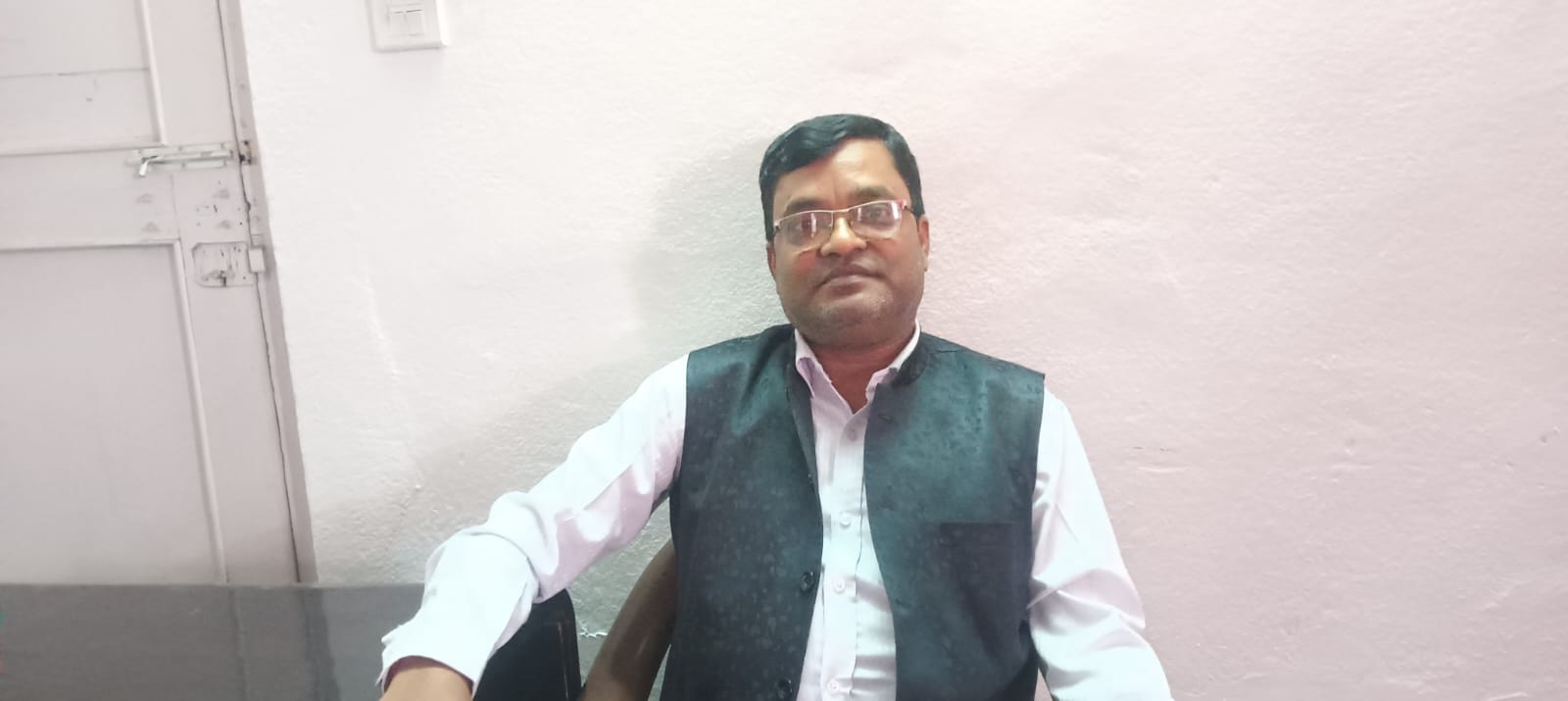
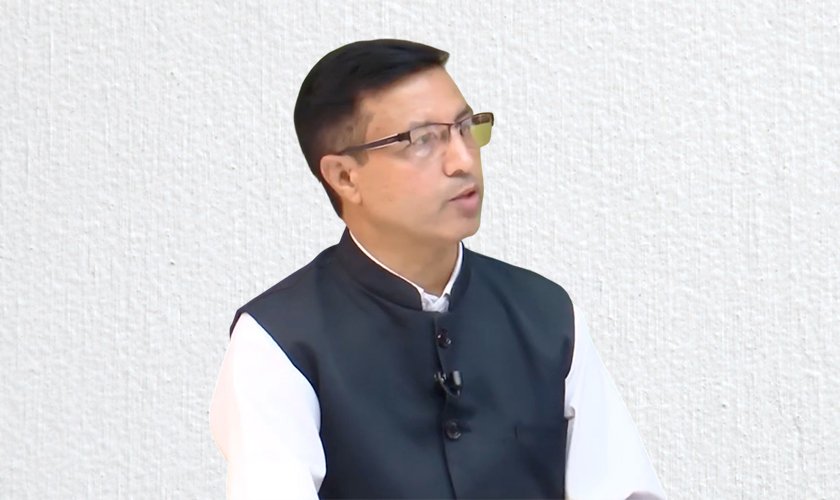
In this context, Ratopati has interviewed Shailendra Sahu, a central member of Janata Samajwadi Party Nepal. Here is the edited excerpt of the interview with Sahu:
- After the Gen Z movement, how is your party JSP Nepal moving forward?
The political situation in the country has changed after the Gen Z movement. The results of the recently concluded House of Representatives elections were unexpected for our party. In this context, we held a central committee meeting a few days ago and seriously reviewed the elections. The election results have shown the need to improve the party's past shortcomings and move forward in a new way.
Now we have moved forward with the decision to go to the people by prioritizing youth agendas.
On the other hand, although the former JSP Nepal and Lospa Nepal had technically merged, the organizational unity had not been practically completed. The central committees of both sides remain as they are. We are working to finalize this process within this month. A 5-member task force has been formed for the adjustment of provincial, national, district, and local committees. The task force will prepare a working procedure and move forward with the adjustment process.
Currently, our main focus is on organization building, training, and preparation for the upcoming provincial and local level elections.
- You reviewed the elections in the meeting, what conclusion did you draw? What was the main reason for the party's weakness in the elections?
We can look at the review of any election from two aspects – the internal aspect of the party and the external circumstances.
Many things have been said in the media and general circles about the external circumstances. Looking at the election process, the vote count, and the involvement of other forces, the issue of doubt arising over the election process itself has been raised in the review, which we cannot deny.
In addition, there are also internal reasons for the party. We have concluded that our past organizational and stylistic shortcomings are also responsible for this result.
- You mentioned external forces, why would those forces target only JSP Nepal or Madhesi-centric parties?
We had a premonition that such a result could come. The question may also arise as to why we participated in the election if the result was going to be like this. However, if we had not participated in the election, there would have been a great danger of losing the achievements of past people's movements and Madhes movements. Therefore, rather than winning or losing, we entered the election to protect those historical achievements.
Old parties have also failed to institutionalize the achievements gained by the Nepali people through various movements. The game that is being played to weaken the Madhesi parties, its underlying interest, and how it seeks to destroy the achievements will become clear to the Nepali people in the days to come.
From the initial stage, the attempt to assign the election responsibility to the army, the destruction of state property including the burning of Singha Durbar during the Gen Z movement, and the subsequent steps taken by the government made us suspect early on that the election results would not be positive.
- You might have suspected from a geo-political perspective, but you should have faith in the people! Why didn't the people believe you?
The election results were very strange. For example, in Dhanusha Constituency No. 1, the candidacy of the RPP candidate had been canceled a week before the election. Yet, the vote count showed a huge number of votes in his favor. Later, the court gave the certificate to Matrika Yadavji, but the nature of the public mandate has raised serious questions and doubts about the electoral system and results.
- So, was your party's graph falling in this year's election not natural?
Certainly, it is not natural, but while saying this, we must accept that the series of splits and mergers among Madhesi parties in the past has created a kind of disappointment among the general Madhesi public. There were also some shortcomings from our party leadership. We somehow failed to perform as per the expectations of the people while selecting proportional candidates or going into power and ministries. This caused dissatisfaction in the Madhesi community, but there was certainly no despair that the public mandate would fall to zero.
- Even after the elections, there is not much public attraction towards Madhesi-centric parties, why?
The Gen Z movement was a result of the public's anger over the mismanagement that had become rampant in terms of good governance, corruption control, Madhes issues, and youth employment due to the parties in the past. Currently, the public has voted for Rastriya Swatantra Party as an alternative to traditional forces. There is a hope among the public that Rastriya Swatantra Party will do something. Therefore, rather than saying there is no enthusiasm for us, it should be understood that the public is in a wait-and-see mode, hoping that a new force and the government will bring some change.
- So, are you also in a 'wait and see' strategy right now?
We are not in a 'wait and see' situation right now. As I said earlier, we have set our internal schedule. We will soon go to the public with our programs for organization building, cadre training, and preparation for the upcoming elections. We will present our issues to the public and interact with them. We will collect suggestions from the public for the future and move forward based on those suggestions.
- What is the basis or formula for you to return as the old powerful force in the 2084 elections?
In a democracy, the greatest power and resource are the people. Based on the self-reflection we have done, there is a need for many changes in the party. The leadership must change its style of work, and the organizational structure must also be reformed. Now, along with the agendas of rights and identity, we must move forward by prioritizing basic needs sought by the people such as good governance, employment, education, and health. By going to the public with these issues, we will definitely emerge as a strong force in the 2084 elections.
- The party has merged, but the cadres and the general Madhesi community have not felt any change, what do you say?
The structure formed now is not the full central committee. It is just a name submitted to the Election Commission for party registration. The actual central committee of the unified JSP Nepal that will be formed will ensure respectable and effective representation of youth, women, Dalits, and Janajatis. We are developing an energetic leadership system.
- But the current leadership of the party is being questioned?
It is natural to have dissatisfaction in politics. The issue of leadership change in JSP Nepal may have been raised by someone personally, but it has not been raised in our official meetings institutionally. In this critical juncture, under the leadership of Chairman Upendra Yadavji, we are engaged in reviving the party by correcting past mistakes.
- You yourself are a young leader, what is your personal opinion on the issue of leadership change?
In the current complex political situation of Madhes, being just young is not enough; there is a great need for ideological, theoretical maturity, and political experience. In the current situation, there is no alternative to our Chairman (Upendra Yadav) ji. We young people can succeed in our common mission only by strengthening him, not by weakening him. If the leadership is weakened for personal gain, it will hinder the achievement of our larger goals.
- It was said that there would be a merger with various political parties, where has that process reached?
Our old policy is to unite with forces that have similar ideas and principles. The politics of Madhes has reached this point after going through various stages of fragmentation and unification. The party has a clear decision to unite Madhesi-centric parties in the coming days. For this, the Chairman has been continuously communicating and meeting with the leaders of other parties. This process will take concrete shape in the coming days.
- In the past, there have been mergers and then splits, how can we believe that this time the parties will unite and last?
The main basis for party unification is ideological and theoretical. Although parties joined on the basis of ideology in the past, when they split, personal conflicts and the pursuit of power, rather than ideological differences, have been the main reasons. It is rare in history for Madhesi parties to split for ideological reasons. In the coming days, to manage these issues, we are preparing to create a 'collective leadership' structure. Our goal is to build a strong JSP that can lead not only Madhes but the entire country by giving due respect to all leaders joining the unification.
- In conclusion, is JSP Nepal returning as its old powerful form in 2084?
Absolutely, but for that, the leadership must make timely improvements in its behavior and style of work. Now, we will not be limited only to slogans of identity and rights, but will move forward with agendas related to good governance, development, employment, education, and health that are connected to the people's standard of living. If we can do this, we will be established as a stronger force in 2084 than before.
- Do you have full confidence that the leadership will improve its style of work and behavior?
I have full confidence. Because the leadership is well aware that if improvements are not made now, recognizing the times, the party will be pushed towards political oblivion.
This specific news has been automatically translated by AI. As a result, there may be some inaccuracies or language errors.
_Eqo5W0NMVM.jpg)