Former Finance Minister Dr. Prakash Sharan Mahat Critiques Upcoming Fiscal Year's Budget
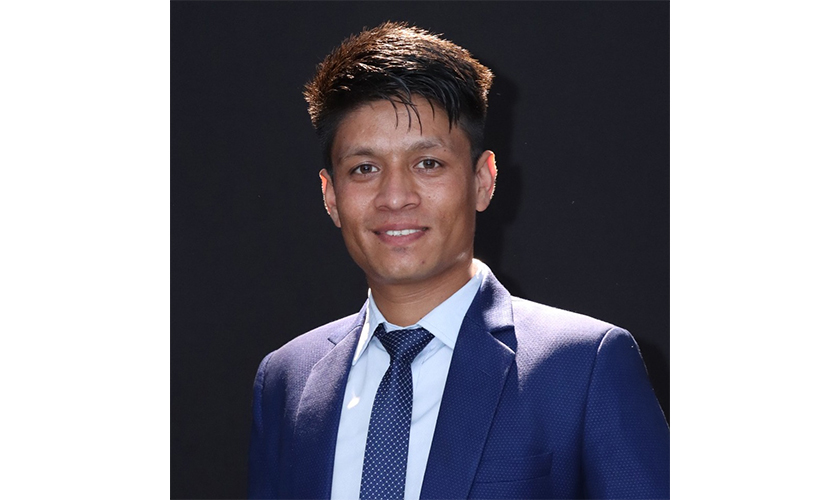
Kathmandu. On Jestha 15, Finance Minister Dr. Swarnim Wagle presented a budget of 21 kharba 24 arba for the upcoming fiscal year in a joint meeting of the federal parliament. Before the budget, Finance Minister Dr. Wagle had claimed he would bring a 'miraculous' budget.
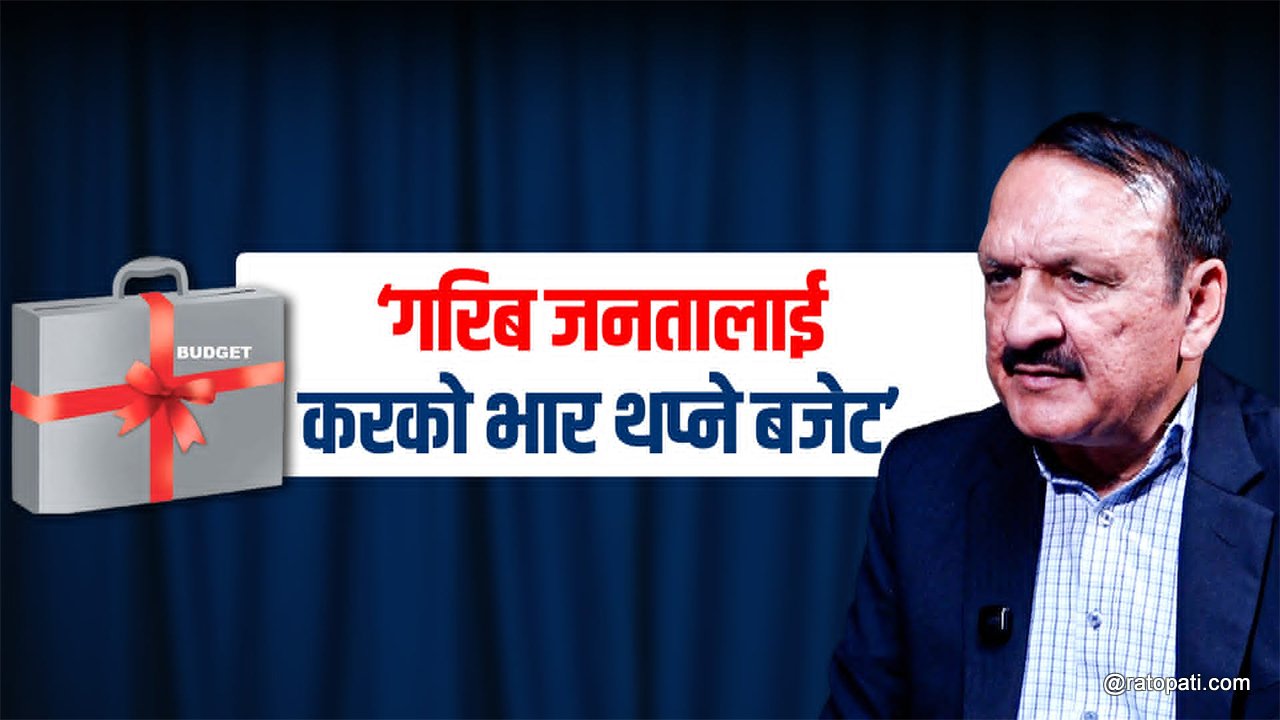
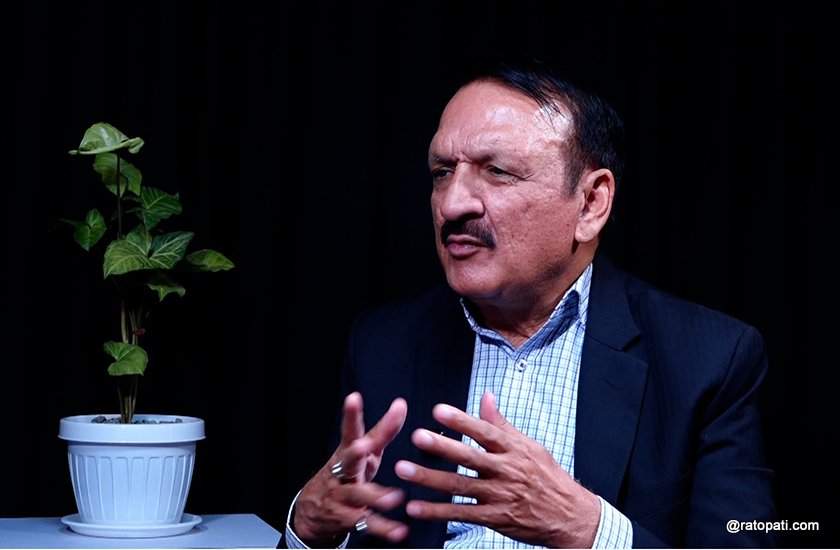
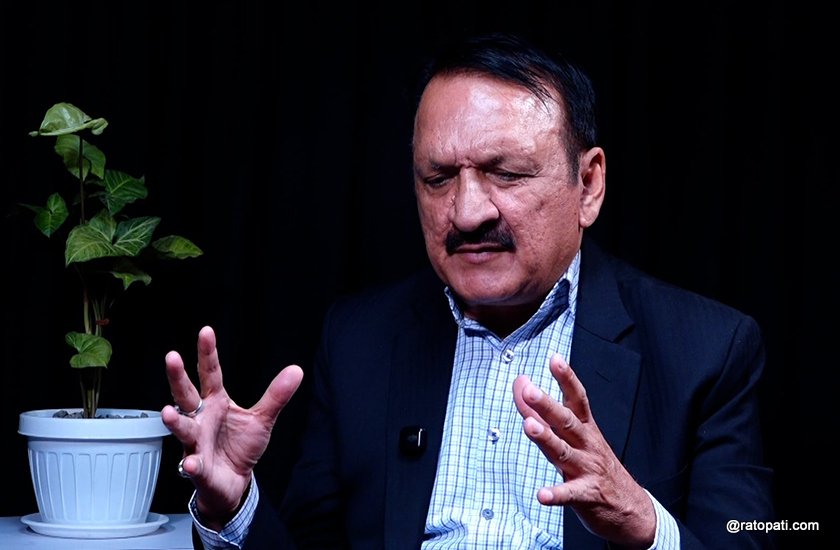
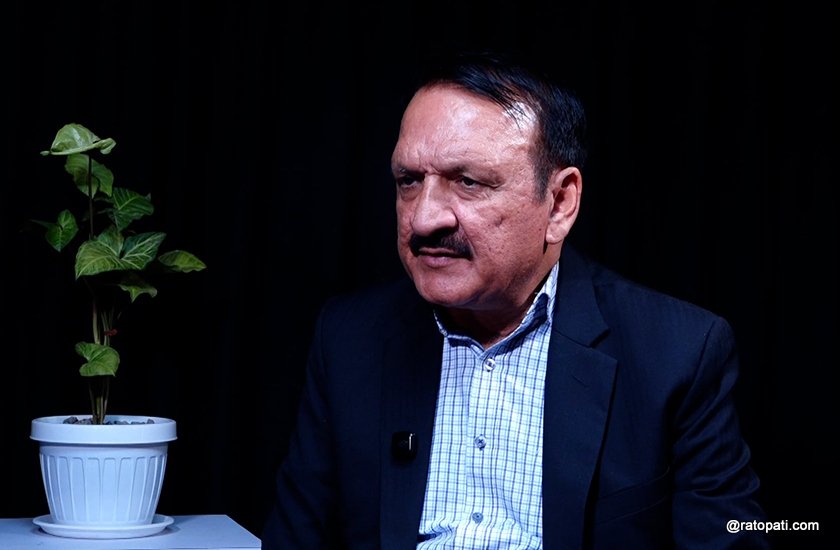
Did the budget turn out to be as 'miraculous' as the Finance Minister claimed? Can the size of the upcoming budget, revenue targets, and economic growth targets transform the country's economy? Former Finance Minister Dr. Prakash Sharan Mahat was interviewed in Ratopati's 'Economic Edit' focusing on the current government's working style, economic policies, and other issues. The following is an edited excerpt of the interview (detailed video can be watched and listened to):
The government has presented the budget for the upcoming fiscal year (2083/084). How do you view the budget presented by the government?
The budget presented by the government is of a very large size. Even though the budget is large, there is absolutely no situation where the resources to support it can be gathered. If resources are not gathered, it is impossible to achieve the allocation targets.
Generally, finance ministers face immense pressure from within the party, from parliamentarians, and from various sectors to present a large-sized budget. There is pressure to include this item, and that sector also needs budget allocation, making it difficult to manage. Therefore, a budget slightly larger than the actual revenue-generating capacity has been coming in the past as well. This time, a very unusually large budget has come.
The budget has been presented far above the ceiling of 18 kharba given by the National Planning Commission. A budget presented without ensuring resources cannot achieve its set targets.
Are you implying that the slogan of good governance and the size of the budget are not in sync?
There is a lack of coordination between the comments the Finance Minister made on the previous government's budget and the budget he himself has presented. He has set a revenue collection target of over 14 kharba. Similarly, a large target has been set for mobilizing foreign aid, but in reality, neither of these targets will be achieved. After that, the government will have to rely heavily on internal loans. Internal loans, again, have to be repaid quickly. A lot of our money is already being spent on repaying the principal and interest of past loans.
This debt cycle will only increase. Yesterday, when he was in opposition, he himself used to strongly oppose excessive reliance on foreign loans, but now he has presented a budget that exceeds the limit of not taking more than five percent of the gross domestic product in internal loans, and also takes a lot of foreign loans.
Foreign aid is not as easy to obtain as sought. Then, relying on internal loans increases the debt burden and liability. In such a situation, he has stated that he will achieve seven percent economic growth, which is not possible. This target cannot be met solely by government allocation and capital expenditure. For this, significant private sector investment is required.
However, given the current international environment, the state of inflation, and market contraction, the private sector is not in a position to make investments of that magnitude. Therefore, this budget is not based on good governance and reality.
The budget has imposed taxes on the general public using public transport. Taxes have also been increased on private hospitals. A 3 percent tax has been imposed on education under the name of equality fee. Does this budget ignore the lower and middle classes?
The government has taken a very wrong path in adjusting tax rates. By providing exemptions on income up to ten lakhs, only a limited class earning more than eighty thousand in Nepal has benefited. Overall, the tax has been reduced by ten percent, but the budget has completely failed in providing relief to the general public.
A fee has been imposed on public transport, which is a means used by the general public. Similarly, tax has been imposed on the cost of treatment in private hospitals. The government's argument is that only the wealthy go to private hospitals.
However, the reality in Nepal is that government hospitals cannot serve everyone. There are months-long waiting lists in government hospitals. Therefore, even lower and middle-class people are forced to go to private hospitals, even if it means taking loans. How fair is it to impose taxes on such patients who are forced into this situation?
Similarly, although VAT has been removed from daily consumption items like potatoes and onions, other taxes and customs duties have been imposed. Our domestic production cannot meet market demand. Lakhs of tons of apples, potatoes, and onions are imported from China and India. As long as our production costs do not become cheaper and we do not become self-reliant, increasing taxes on imported goods will directly impact the kitchens of the general consumers. Prices will rise, and the poor will be further burdened.
Like in the past, the Finance Minister has been embroiled in controversy while presenting this budget. There are also reports of corrections made to errors in tax rates. How appropriate is it to do this? How do you view it?
Adjusting tax rates is a very sensitive matter. The process of budget formulation, and especially the determination of tax rates, must be done secretly at the last moment by a very limited number of officials using sound judgment, without anyone else knowing.
However, the way tax rates were changed for electric vehicles and other items has raised serious doubts. But I am not trying to blame anyone. The issue that has come out is serious.
Regarding the errors, initially, there seemed to be no mention of cars worth twenty to thirty lakhs. Later, the policy was changed again. This action clearly shows an intention to benefit certain business houses.
Good governance means strictly adhering to the letter of the law, but the current government, with its comfortable majority, seems to be operating under the mentality that it can do whatever it wants. The government has shown a tendency to be unaccountable to parliament and the public, disregard laws, and make arbitrary decisions. This undermines democratic values and good governance.
The government has announced the dissolution of various commissions and committees. How do you view this? When you were the Finance Minister, was there a situation where you could have dissolved them, and why didn't you?
The policy of dissolving or merging unnecessary structures is inherently correct. During my tenure, I also tried to dissolve and merge about two hundred such structures. Out of these, twenty were identified and announced immediately.
However, during the implementation phase, there is extreme pressure from various vested interest groups. In a coalition government, one party agrees to one thing, while another disagrees.
Now they have announced the dissolution of some structures again. But I don't think they will be able to implement it fully. For example, let's talk about the postal service. The traditional work of the postal service is almost over. But there are thousands of employees there. It is not easy to dissolve such institutions without managing them or without strong political will.
Secondly, there is the issue of managing government property and sick industries. The government should not be in the business of trading itself. Institutions like Nepal Airlines Corporation are run by the government and are only increasing losses. The public's tax money should not be put into such loss-making institutions. The government should retain ownership of land and property while handing over the management and operation to the private sector transparently.
'Agriculture Decade' has been announced. The government claims to increase investment in agriculture to create employment and boost production. However, it is said outside that agriculture is being neglected. What do you say?
Agricultural development does not happen with slogans and announcements alone. Roads have reached villages now. Electricity is available. Access to education and health has increased. Infrastructure development is good. Ironically, there is no production in the villages. Fields are lying fallow.
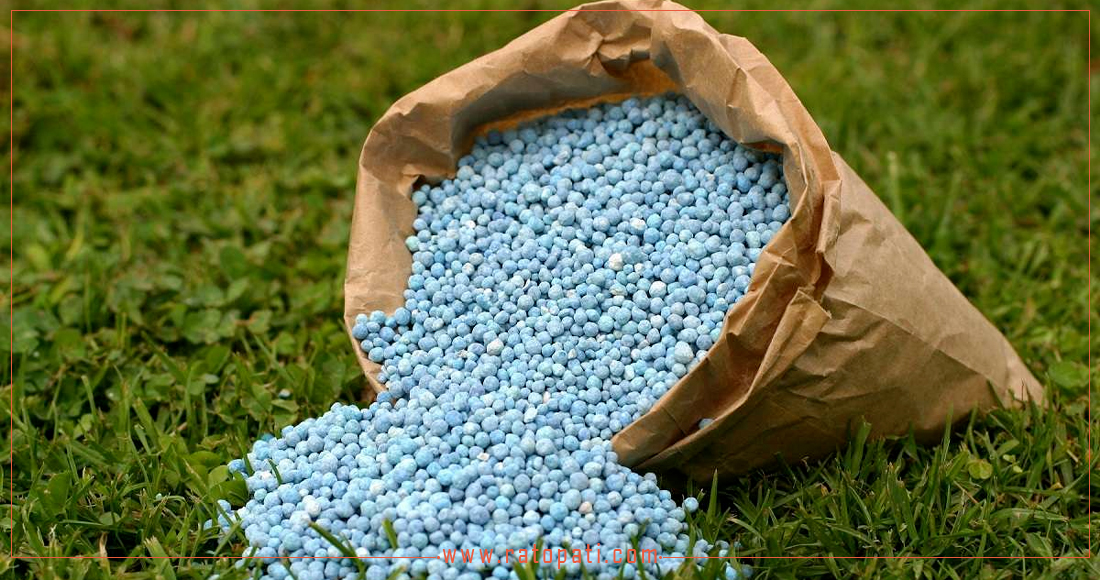
The main reason for this is that the cost of agriculture is extremely high. Our production is more expensive than imported agricultural produce. As long as we do not reduce production costs by using technology, and by ensuring proper management of fertilizers and irrigation, farmers cannot benefit, and attraction towards agriculture will not increase.
The government must strictly implement a policy of providing production-based subsidies. Those who are genuine farmers, who work in the fields and bring products to the market, should receive subsidies directly.
Middlemen who receive subsidies by manipulating paperwork must be stopped. Simply announcing an 'Agriculture Decade' is not enough. There must be realistic plans for modernizing and commercializing agriculture, which are completely absent in this budget.
Dr. Swarnim Wagle, who worked in policy-making as part of the Congress in the past, is now claiming as Finance Minister to bring a budget that will transform the economy, make a leap, and be revolutionary. As a leader of the Congress, how do you view his work?
I wish him success. If the government does good work, we don't have to oppose it just because we are in opposition. If it benefits the Nepali people and the country, we have no objection, but it is our duty to point out the shortcomings wherever they exist.
He has now moved to a new political platform. Perhaps because of that, he feels pressured to present himself differently. That's why I think he is overly enthusiastic and keeps saying 'I will do this, I will do that.' Regardless of what he calls the budget – transformative, a leap, or revolutionary – in reality, there is nothing magical about it.
From a policy perspective, this budget is merely a continuation of past policies and programs. The foundation and assurance of resources needed to truly make a leap in the economy are completely absent in this budget. Therefore, the revolution and transformation he speaks of are limited to the budget speech. In practice, no concrete foundation has been laid.
What is the state of international relations and foreign policy? What impact are the statements of the Prime Minister and ministers having?
Foreign relations are an extremely sensitive issue for Nepal. We are situated between two large neighboring nations, India and China. Besides, we have deep relations with other friendly nations, including America. We must maintain extremely balanced and prudent relations with these powerful nations. However, some statements and the working style of the current government and Prime Minister have increased the risk of disrupting this balance. We should not antagonize anyone.
We must adopt a policy of speaking less and diplomatically presenting our views, keeping our national interest at the center. However, the tendency to speak for cheap popularity has increased, which weakens Nepal's credibility in the international arena. We must engage in diplomatic dialogue clearly based on facts.
In summary, how do you evaluate the current government's budget and overall economic policy?
In summary, this budget is completely unrealistic, distribution-oriented, and incapable of implementation. An attempt has been made to mislead the public by presenting a large-sized budget without ensuring resources.
The adjustments made to tax rates have further burdened the general poor and middle-class public with inflation, while the talk of good governance remains confined to slogans. This budget has failed to boost the morale of the private sector, which is essential to make the economy dynamic. Therefore, I see no hope for any revolutionary improvement in the economy or improvement in the living standards of the people from this budget.
This specific news has been automatically translated by AI. As a result, there may be some inaccuracies or language errors.