
Madhesi Parties Face Existential Crisis After Election Defeat, Analyst Says

Kathmandu. Madhes-centric parties faced a severe defeat in the House of Representatives elections held on Falgun 21. Their very existence appears to be in crisis at the moment.
These parties seem uncertain about how to move forward. Due to this uncertainty among Madhes-centric parties, leaders and cadres are increasingly joining the Rastriya Swatantra Party. This adds to the challenge of saving the organization.
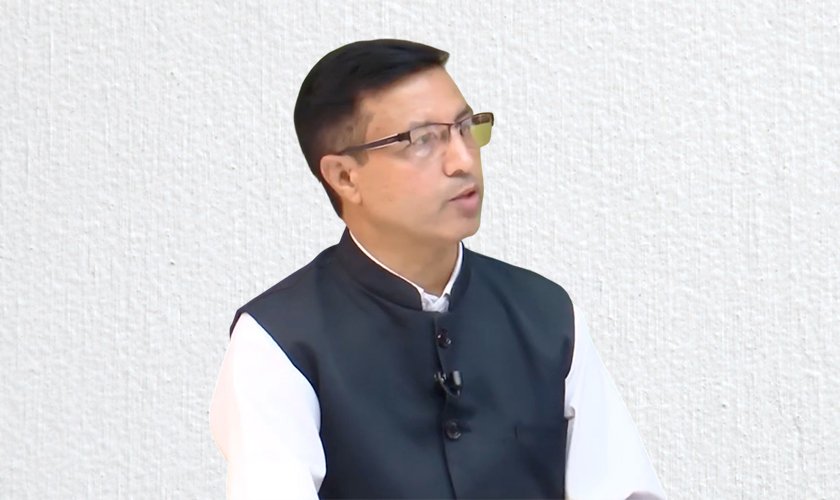
The Janata Samajwadi Party (JSP) Nepal, the largest party in the Madhes Provincial Assembly, is currently in the opposition bench. While the Nepali Congress leads the Madhes Provincial Government, the CPN (UML) and the Communist Party of Nepal are partners in the ruling coalition. Professor and Executive Director of the Center for Economic and Technical Studies, Dr. Harivansh Jha, was interviewed about the condition and future of Madhes-centric parties. The following is an edited excerpt of the conversation with Jha:
- How do you view politics after the Gen Z movement?
After the Gen Z movement, a significant change has occurred in society, instilling new hope everywhere. The situation before the Gen Z movement was somewhat different. Due to corruption and the character of leaders and political parties, the Nepali people were very distressed and disappointed. Against that backdrop, hope arose that a new light might emerge. The election results reflected this. People, rising above party affiliations, accepted the leadership of the Rastriya Swatantra Party (RSP) and Balen Shah, seeing their future in it.
- In the context of corruption and mismanagement, does it seem like the suffering people have endured so far will now end?
Yes, the election results were a manifestation of that. People chose this new path because they did not see the old ways as capable of alleviating their suffering and the extreme despair prevalent in society. They chose these new forces with the belief that they would solve our problems and usher in a new era of light.
- It has been about three months since the new government was formed. Are the people receiving the expected solutions?
With the current form of the government, a new light or sense of change has not been immediately felt. However, this is not enough time to fully evaluate and review the government's performance. At least a hundred days must be given. But, the enthusiasm and energy seen in the initial days seem to be gradually fading now.
- The old political parties seem to have been completely swept away. What could be the main reason for their downfall?
The main reason for their downfall is their failure to fulfill their responsibility to the people. Whether they are Madhesi parties or other national parties, none have demonstrated honesty, loyalty, and their duties towards the people. Instead of working for the public good, they focused on personal and party interests, leading to this situation.
The condition of Madhesi parties appears even more precarious; they couldn't even win a single seat. Is Madhes politics completely over?
I agree with you; this form of Madhes politics had to end. The people of Madhes have taught the Madhesi parties a big lesson. This is because, in practice, the character of Madhesi parties turned out to be the same as that of the major national parties. Between Mahakali and Mechi, the Madhes Province was the only province where they led the government. However, even there, no different character was seen besides the lust for power, embezzlement of resources for personal gain, and corruption. Therefore, the public mandate (verdict) in this election was very natural and inevitable, due to which they could not secure even a single seat.
- So, are Madhesi parties seen as more irresponsible and weaker than major parties like Congress, UML, or Maoist?
The fact that they did not win a single seat in the election clearly shows how low the Madhesi parties had fallen in the eyes of the public. This result is a product of extreme dissatisfaction with them.
- You worked closely with the Madhes government at one time; what does that experience tell you?
I had the opportunity to observe the working style there closely. While working there, I felt great pain seeing the working style and the irregularities. Based on that experience, I can say that there was no novelty or desire for reform in their thinking and character.
- So, what should they have actually done to deliver for the people and bring about reform?
There are two main aspects here. First, Madhesi parties had the opportunity to govern the provincial government and local levels (municipalities and rural municipalities) for a long time. They should have invested the resources they received for the benefit of ordinary and poor people, which they did not do. The second aspect is that the federal government also maintained a controlling mindset. The center did not fully implement federalism. Provinces are still dependent on the center for resources and staff. It is not certain whether a secretary who arrives today will remain the day after tomorrow.
The center did not provide the necessary support to the provinces, especially the Madhes Province, but even the budget received by the province could not be spent on time. Spending was almost zero in the initial months of the fiscal year, and there was a tendency to misuse the budget in the name of 'Asare' development in Jestha-Asar. They failed because there was no political will to work for the people and create employment.
- Can the federal government's non-cooperation also be considered a reason for the failure of Madhesi parties?
Certainly, that is a major reason, but they should have effectively spent the budget allocated to them! There was also a significant lack of planning. There is no coordination between the National Planning Commission and the Provincial Planning Commission. There is no control or coordination of the province over the local levels. Everything is chaotic. The main thing is that there was no political resolve to work for the benefit of the poor and disadvantaged.
- What is the possibility of Madhesi parties rising again?
The issues of Madhes have not yet been fully resolved. Although the people have taught the parties a lesson, a concrete roadmap for creating mass-level employment, increasing income, or reducing poverty has not yet come from the federal government or new forces. The character of provincial and local governments is also the same as before. Since discrimination and oppression are still felt in Madhes, it cannot be said that those parties will be completely wiped out as long as the issues remain alive. There is a possibility for them to reorganize again due to the issues.
- Is there a possibility of Madhesi politics reviving if all these parties merge in their current structure?
That possibility does not seem likely in the immediate future. The current leaders have become so infamous and their image has deteriorated so much that people are not in a position to trust them immediately. The Madhesi people have been most cheated by their own leaders, but if new youth emerge from the Madhesi community in the future and come as a new force, Madhes politics can be revived. It is not possible in the near future with the same old faces.
- The Madhesi parties seem very optimistic about the current Prime Minister (Balen Shah). Some even claim that he succeeded in becoming Prime Minister with their support or due to them. How should this be understood?
Everyone has their own perspective and analysis. It is good that they are optimistic, but it remains to be seen how much that hope translates into results. As for the claim that Balenji became Prime Minister because of them, it seems a bit ridiculous. If they had that much capability, why were they swept away in the election themselves? Why couldn't they win even a single seat? That is empty rhetoric.
In reality, the people, fed up with the inaction and tarnished image of the Madhesi parties, saw Balenji as a new face and an alternative. This credit does not go to the Madhesi parties.
- What do you foresee for the new force, i.e., the RSP, in the upcoming local and provincial elections?
In my estimation, the one-sided wave seen now will not persist in the upcoming elections. The popularity graph of the new force is likely to decline somewhat, and mixed results may emerge. Old parties will make some improvements, while new forces will lose some ground.
This may benefit the old parties to some extent. The great hope that arose among the people immediately after the election has been somewhat fragmented due to some immature decisions by the government, such as restricting ordinary people from bringing small items across border checkpoints and misunderstandings in slum dweller management. This has caused the government's graph to dip somewhat. It cannot be said that this situation will continue until the next election (2084 BS) because there is still a lot of time politically.
This specific news has been automatically translated by AI. As a result, there may be some inaccuracies or language errors.

_Eqo5W0NMVM.jpg)