Playwright Ashesh Malla on Literature's Power, Spirituality, and the Evolution of Nepali Theatre


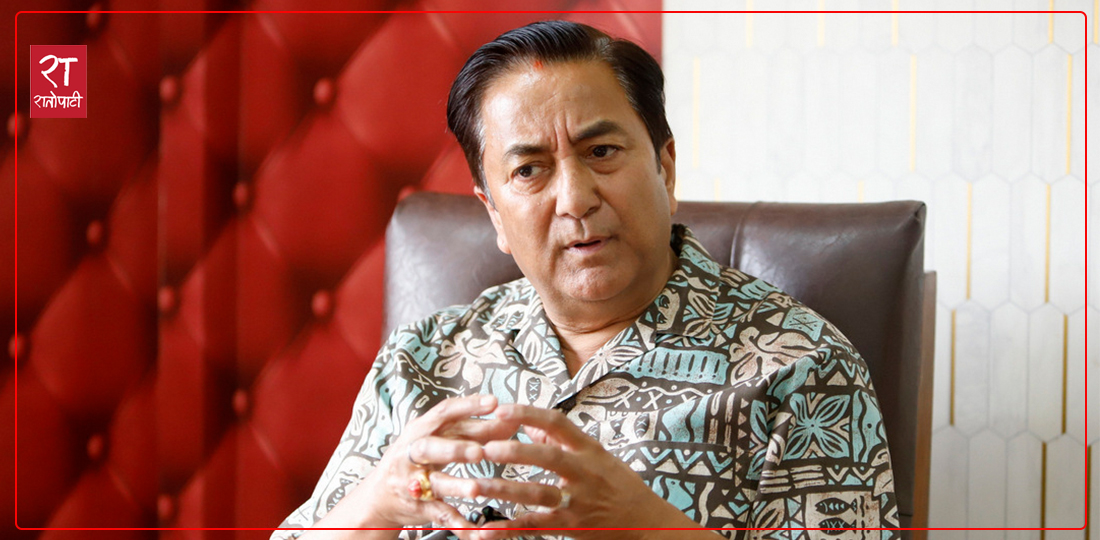
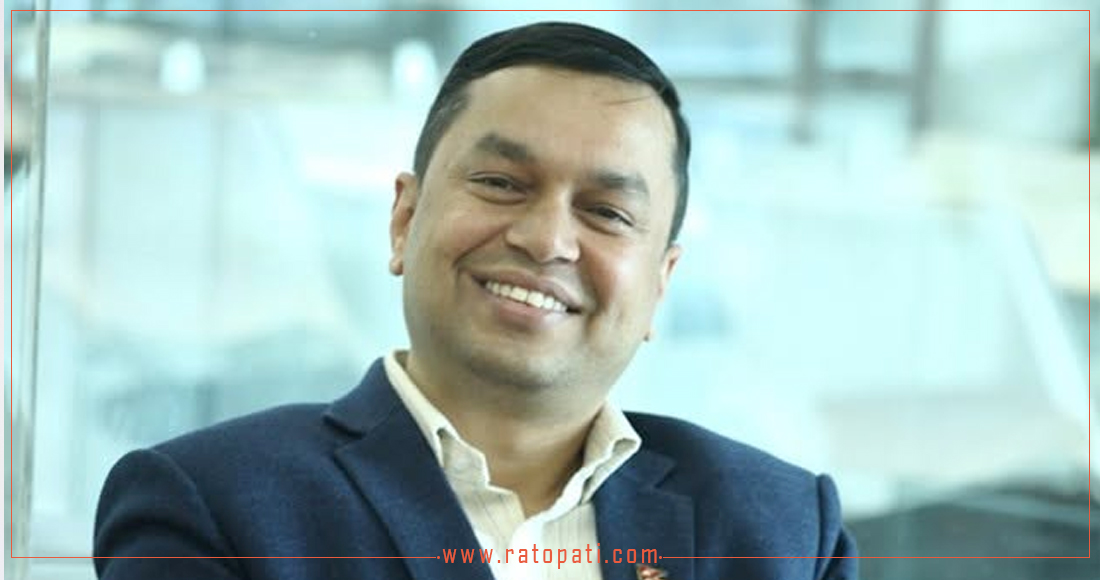
Ashesh Malla is a renowned playwright and cultural activist in Nepali theatre. He is considered one of the key figures who propelled the modern theatre movement in Nepal. He is also known as the father of Nepali street theatre. Through the Sarvanam Theatre Group, he worked to connect Nepali theatre with new styles, experimentation, and social consciousness.
Malla has authored over two dozen books and more than a hundred plays. His poetry collections include 'Agyat Pradeshharu Ma' (In Unknown Territories), 'Nirantar Nirantar' (Continuously Continuous), and 'Eklai Ekanta' (Alone Solitude). Furthermore, he has written books such as 'Tuwanlo Le Dhakeko Basti' (Settlement Covered in Smoke), 'Sadak Dekhi Sadak Samma' (From Street to Street), 'Anadikram' (Timeless Order), 'Black Sky', and 'Samakalin Nepali Natak' (Contemporary Nepali Drama). Here is an interview conducted by Rama Subedi with Malla for Ratopati's 'Kitab Ka Kura' (Talks on Books) series:
- Can books bring about social change or not?
I used to write poetry, stories, etc., since I was young. My paternal grandfather was there. Seeing me write, one day he told me, 'Hey, you are becoming a writer now? Remember one thing, as long as you are writing, it is yours. Once it is written and published, it belongs to others. If a single word of yours harms someone, you are the culprit.' So many years have passed. But every time I sit down to write something, I remember his words. I feel as if my grandfather is standing right in front of me. Therefore, books have the power to do both good and bad. Their impact is accordingly.
_FalmjqM0Bt.jpg)
The other day, a friend asked, 'I have many books at home, what should I do with them?' He even mentioned giving some specific books to libraries. But I told him not to give away all the books. He asked why. Because many books published now have a negative impact on society. I feel that if school students read such books, the effect will be even more adverse. So, I told him to only give away books that can have a positive influence.
- Many call literature a mirror of society. Has our literature been able to be a mirror of society?
Literature should never be a mirror of society. A mirror only shows one side, doesn't it? Should literature only show one side of society? Shouldn't it show the other side too? A mirror speaks only half-truths. Regarding mirrors, I will tell you an incident. One of my plays was running at the City Hall. A large crowd had come to watch the play. After watching the play, everyone was saying, 'Congratulations,' 'How wonderful.' But one young woman scolded me, 'Who gave you the right to belittle women?'
Everyone is congratulating me, and then some strange person comes and scolds me. It almost turned into an argument, 'Are you just supposed to show what is happening in society? What is your duty?' Being told that for the first time, I became very thoughtful. If literature only depicts what happens in society, then literature becomes photography. A photo captures only what is there. That woman influenced me so much that I later married her. I still have my strong critic in her. That action of hers hasn't stopped at home either.
_ZtfEjyaOy1.jpg)
- You are 71 years old. Does age change the selection of books? What is your experience?
Age might be the reason why a more spiritual consciousness has awakened in me over the past few years. Some time ago, I fell seriously ill. My child was quite young, I couldn't leave him, and my wife couldn't accompany me. I had to go to Delhi alone for a major surgery. My operation was the next day. I was in bed today, feeling very scared. No family member was with me.
Alone in a place like Delhi, with a major heart operation scheduled for tomorrow. I had taken one helper with me. Seeing how scared I was, he bought a magazine. It was a film magazine. He brought a cheap film magazine, thinking that reading serious things might increase my stress. I was reading it, and at the bottom of the magazine, there was a quotation: 'Where science ends, spirituality begins.'
I was a staunch atheist. People remember God when they are on the verge of death. That one line hit me hard. Where science ends, spirituality begins. I thought, my operation is tomorrow. The doctor performing the operation. The doctor was taught by science. He only knows what science has taught him. What if a different ailment is discovered beyond that? Science has its limits, doesn't it? Spirituality comes after those limits end. Perhaps that spirituality will save me, this thought dominated me. The operation happened. I gradually recovered. After that, I started searching for what spirituality is.
What is spirituality? Is it worship, going to the temple, or lighting incense? As I contemplated, I went through many stages of spirituality. I concluded that spirituality is when a person can break the wall of ego within themselves. It is not important which religion I belong to; what is important is how deep I am in spirituality. I talk about this consciousness in my writing too. When what I have written or presented in a play reaches the reader or the audience, if it cannot motivate the audience or reader after reading or watching it, I should not bring it out.
_ZRllUKKQQT.jpg)
- Tell us something about how you were attracted to theatre.
Here too, I will tell an incident. I used to act in plays at the age of 18-19. Friends used to say, 'Write plays, why do you only act?' Realizing that I couldn't just keep acting in others' plays, I wrote a play called 'Tuwanlo Le Dhakeko Basti' in Dhankuta around the year '31 BS (1974 AD). The play was staged in Dhankuta. Later, we came to Kathmandu with a troupe of 30-40 people, taking that same play. Coming from Dhankuta to Kathmandu back then was harder than going to New York or Paris now. We kept stopping along the way. After reaching Kathmandu, we showed the play at the Academy.
It was around the year '32 BS (1975 AD). The first day of the play, two things shook my life. First, Balkrishna Sama came to watch the play. He was the first person in Kathmandu to buy a ticket and watch my play. Second, after the play, everyone congratulated me. But Bijay Malla said, 'You have pushed Nepali theatre back by 50 years. Why are you doing such a worn-out, traditional play? Write a modern play.'
What would happen to a 19-20-year-old boy, just starting his journey in theatre, when someone as monumental as a giant of theatre said that to him? I was very disappointed after hearing his words. Seeing me disappointed, another person who was watching from behind said, 'Why are you getting disheartened? Keep writing, does it matter what he says?' Do you know who that person was? Hari Bhakta Katuwal. After performing for 25-26 days, everyone returned to Dhankuta. I stayed in Kathmandu because I was possessed by the urge to write a modern play. I am still here. I cannot say how much I have been able to write yet.
- Is there any book that played a decisive role in your journey to becoming a playwright?
Bijay Malla had told me to write modern plays. I used to spend all day reading plays at the British Library, American Library, and Indian Library. Even though I didn't understand many English books, I read them haltingly. I found Brecht's play 'The Threepenny Opera'. I read it, but I didn't quite understand it. I read it two, three times, still didn't understand. Yet, I kept reading. Finally, I grasped its presentation. I used to read four or five plays in a single day by spending the whole day at the library. In this process, Mohan Rakesh's play 'Adhe Adhure' came into my hands.
_0RiYkK1pSz.jpg)
After reading this play, I found the answers to all my searches. At that time, nobody in Kathmandu knew what Contemporary Modern Theatre was. Back then, there were only one or two plays by Balkrishna Sama and Bijay Malla in Kathmandu. When I went to watch Bijay Malla's play, I was never satisfied. He had spoken of 'modernity' to me, but I kept wondering in my mind where the modernity was in his plays.
Coincidentally, exactly at that time, a play was brought from Bombay to be staged at the City Hall. In the bottom of Gorkhapatra newspaper, there was an announcement: the play 'Adhe Adhure' is being staged; those who wish to watch should come to the Indian Embassy for a pass. I got a pass from the Indian Embassy and watched that play. I also read the book. After that, my way of thinking completely changed. Then I wrote plays like 'Hami Basanta Khojirahchhau' (We Are Searching for Spring) and 'Sadak Dekhi Sadak Samma'. 'Sadak Dekhi Sadak Samma' made me famous. Sajha Prakashan even requested to publish that play. I also received the Sajha Award. If Bijay Malla hadn't said that, perhaps I would have remained stuck in traditional forms of plays like 'Tuwanlo Le Dhakeko Basti.'
- When we talk about theatre, we mention Shakespeare, Macbeth, or Hamlet. What is such an important play in Nepali theatre?
This is all a discourse created by the English. When Britain ruled India, two things became obstacles to their complete control over all of India—culture and language. They realized that only after destroying these two could their dominance be established, so they established the English language in Indian society and, through it, increased colonial interference in Indian culture and language.
But when the British left India, I later discovered that there were playwrights like Kalidasa in India even then. After that, I started reading Sanskrit plays. These are plays written thousands of years ago. They are astonishing. The presentation style of the play 'Mudrarakshasa' surpasses even modern ones.
_jIyV8XxOqk.jpg)
- If I ask for five must-read books in Nepali literature, which books would you name?
The name 'Sumina' just came to mind. BP Koirala is a world-class writer as a litterateur. It is ironic that he did not receive the Madan Puraskar or any other award. I always remember an incident regarding this. There was a book exhibition at Tri-Chandra College at that time. King Mahendra visited the exhibition. He did not see BP's 'Sumina' anywhere. When the King asked for it, the organizers hurriedly searched for and placed the book. One can only imagine how good that book must be, as even Mahendra was impressed.
'Sumina' was written over 50 years ago. There is no better example of ethnic harmony than Sumina. The first impact of Sumina is the presentation of the female character. It is said that women are suppressed in our society. But look how strong the character of Sumina is. Furthermore, there is a tremendous blend of Hindu and Kirati traditions. Every time I watch a Hollywood movie, I feel like they should have made one based on this. If a Hollywood movie had been made on Sumina, it would have won an Oscar.
Similarly, Bhupi Sherchan's 'Ghumne Mechma Thi Andho Manche' (The Blind Man on the Revolving Chair) is also an important book. There is no other poetry collection that challenges its power. After that, I find Nayanraj Pandey's 'Ular' an amazing work. Finally, I would like to mention Dhruvachandra Gautam's 'Alikhit' (Unwritten).
- Lately, we have entered the digital age. Most of our time is spent scrolling through social media feeds. How do you view the impact of digitalization on our reading culture?
My reading has also decreased. Now, in every era, there is some revolution. When cinema originated, people said theatre would end. When television arrived, they said it was completely finished. But now, both are in their respective places. In the digital age, we have found an alternative in audio. I recently listened to the entire Mahabharata in my car. I found that listening brought it more visually than reading. Despite all this, the truth is that the book remains in its place.
_n7P6jozQjK.jpg)
The digital age has only spoiled us. In Europe, everyone still holds a book in their hands. I went to Bangladesh two years ago. I was amazed. The reading culture there is so good. Libraries on the bus! I thought Kathmandu could also be like that. But the honest truth is that no matter how much digitalization or AI comes, books will never disappear.
- Could you explain the structural difference between street theatre and theatre performed on a stage?
Both styles you mention, street and stage, are part of the theatre culture. If you go to Europe, everyone from children to the elderly treats theatre like a festival. When we dress up to go to weddings or parties, they dress up similarly to watch a play. They consider it a special festival. Tickets for a movie there cost $5, but they spend at least $100 to watch a play in a theatre. Let me share an experience with you. My son went to apply for a US visa. At the embassy, they told him, 'Looking at the marks you have scored, why should we give you a visa? You are a theatre artist, so we will give you the visa.' This reflects the respect they have for theatre.
Here, if you want to criticize, they call it 'nautanki' (dramatics). When I was doing theatre 30-40 years ago, it was hard to find female artists to act. At that time, doing theatre was equivalent to doing low-level work. The situation has changed now, but the development of theatre culture has not yet happened. It will still take time for that.
This specific news has been automatically translated by AI. As a result, there may be some inaccuracies or language errors.