RSP's Swarnim Wagle Campaigns in Tanahun-1 Amidst Intense Political Climate

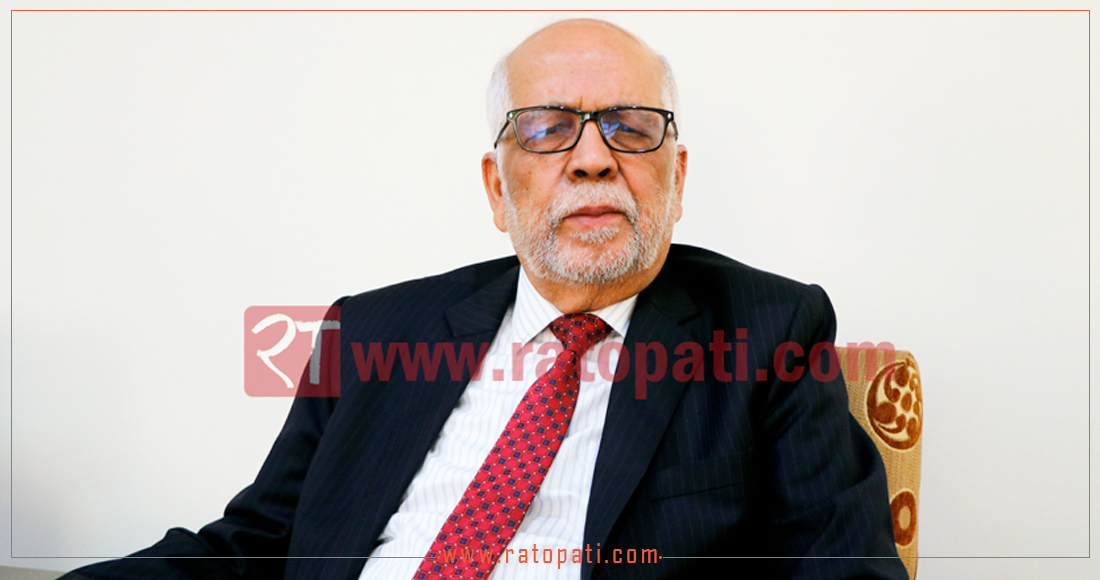
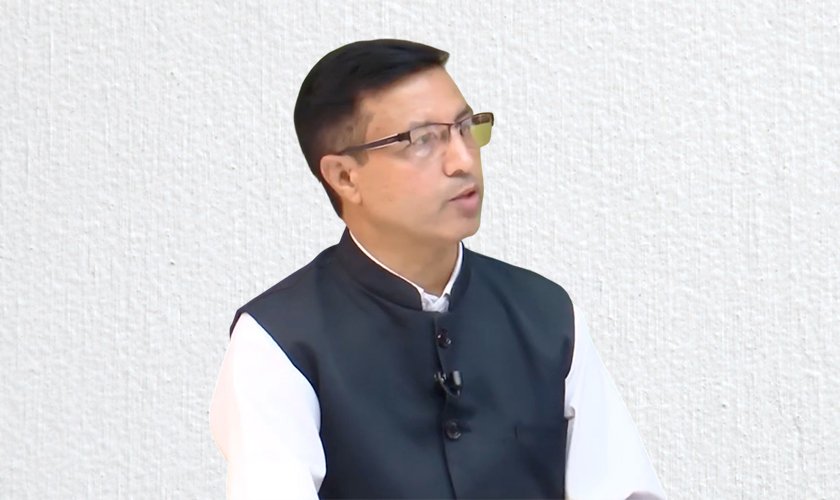
Tanahun. As the election approaches, the political atmosphere is heating up. Dr. Swarnim Wagle, Vice-Chairman of the Rastriya Swatantra Party (RSP), is a candidate in Tanahun-1 this time as well. Amidst various criticisms, viral video clips on social media, and voter grievances, Wagle is in the electoral arena with his campaign agenda. An interview focused on contemporary issues with Wagle, who is actively campaigning.
How enthusiastic are you about this second electoral journey?
This joy and enthusiasm are related to the verdict of the people. As a candidate, all I can do is give my maximum effort. I am trying to interact directly with the people, communicate, listen patiently to their interests, concerns, and grievances, and address them. It is the main duty of emerging politicians like us to instill hope for the future in politics. Therefore, I view this election not just as an election, but as a democratic festival. The affection and feedback I receive from the people when I visit their doorsteps give me extra energy.
The election date is nearing. With only a few days left, have you managed to cover all the ground realities of the constituency?
I am trying. I have just returned from touring the very remote hilly areas of the Devghat region. Our constituency has five municipalities, among which the geography of Ambukhaireni, Bandipur, and Devghat is somewhat remote and challenging. On the other hand, Bhanu and Byas municipalities are relatively more accessible. According to my strategy, I initially prioritized meeting and interacting with the people in the remote areas and have covered those regions. One round of visits and door-to-door campaigning in the accessible areas has also been completed. In the remaining last week, I will remain active, focusing on the accessible and densely populated areas.
What kind of feedback are you receiving from direct meetings with voters?
Voters are not taking this election as just an average election. I have felt a deep awareness among the general voters that the country is on the verge of a major political transformation.
_5uSRFMnM5c.jpg)
Not only this, but tens of millions of Nepali brothers and sisters living abroad are also watching this with special interest. They are sending messages to their families back home saying, 'Don't take this election lightly this time.' Voters show belief that this by-election has the potential to change the entire socio-economic course of the country. Therefore, I have found that the seriousness of this is deeply ingrained in the people, and they are enthusiastic about change.
Compared to the wave and enthusiasm surrounding you in the previous election, there is talk that it is more challenging this time as candidates from other parties are also active?
There is a big difference between the arithmetic assessments made by armchair analysts or the media from the outside and the ground reality. I have looked every voter in the eye and read their psychology. The candidate himself knows the ground situation best. As you mentioned, there are more candidates this time, and there is no large party alliance like before. Parties have entered the field to test their respective voter base. This is healthy competition in a democracy, and I view it positively.
However, the trust and confidence at the grassroots level have reassured me. As for the arithmetic of the parliament, I am fully confident that we are moving towards a majority. We believe our performance will be good rather than just making predictions.
_SKpn066qfl.jpg)
There are complaints heard from some voters that you did not return to the village or were unavailable to meet after you won last time.
Yes, such grievances have surfaced occasionally, and I have taken them naturally and tried to explain. In fact, there seems to be a lack of clarity regarding the role of a federal member of parliament. Our role is more focused on policy formulation, parliamentary sessions, and national issues. The attendance of our party's MPs in parliament is around 85 to 90 percent, which is much higher compared to MPs from other parties. Their attendance is very sporadic.
Nevertheless, the public expectation is that their representative should visit door-to-door frequently, like a Ward Chairman or Municipal Head, and be present in their joys and sorrows. I have visited here more than 110 times in this two-and-a-half-year period, but due to geographical remoteness and work commitments, I could not reach every single household. I have taken this matter seriously. I pledge to improve this in the next term by making interactions and meetings more frequent in a visible and tangible way for the people.
Another point is that the MP's role in development work is indirect, involving budget allocation and policy facilitation. However, in local politics, sometimes there is politics of exclusion. A tendency to avoid inviting elected MPs to programs or giving them less importance has been seen at the grassroots level. As a result of all these factors, some grievances have arisen, which I will address moving forward.
What are your main agendas? How do you plan to advance national and local level plans?
I have divided our agendas into two levels: national and local.
National agendas include good governance, expansion of the middle class, job creation, expansion of connectivity, and diaspora issues. We will ruthlessly tackle corruption and mismanagement. This is our primary commitment. Our goal is to uplift the common citizen to the middle class by improving education, health, nutrition, and financial access, and bring them under the umbrella of integrated social security.
We have put forward the slogan of 'Work, Work, and Work'. We have a concrete plan to create about 1.2 million new and dignified jobs by reforming policies and creating an environment for investment. We will not scatter the budget like sprinkling chaff; instead, we will work on quality road networks, internet networks, and energy networks. Under soft power, we will connect the knowledge, skills, and capital of Nepalis living abroad with national pride and identity. To bring investment to Nepal, we must first win the trust of Non-Resident Nepalis.
For the local area, I have the agenda of infrastructure, agriculture and irrigation, tourism, education and health, and a liaison desk.
The main demand here is for road networks. Therefore, connectivity and infrastructure strengthening are the first priorities. Secondly, there is immense potential for irrigation in the riverbanks of the Madi, Marsyangdi, Seti, and Kali rivers. Agriculture and animal husbandry can be commercialized here. The plan is to make this area a cultural and recreational tourism hub by incorporating tourist destinations like the land of Vedvyas, the holy Devghat Dham, Thanimai, and Bandipur.
Even when I was not an MP, I worked through the United World Schools in 15 schools using non-governmental resources. Now, I will accelerate the distribution of smart boards, open training centers in Bandipur and Bhanu, and establish schools in the style of Budhanilkantha. Tasks such as establishing a special desk to address the problems of youth from this constituency who have gone for foreign employment will be carried out in my constituency in the coming days.
_tygSZIhfM4.jpg)
Some of your clips have gone viral on social media, and some people have tried to drag you into controversy?
The people are two steps ahead of the leaders. Opponents might think that if they throw mud or make accusations, the people will believe it. But the reality is not like that. On the contrary, those who make such misleading and low-level accusations are losing credibility in the eyes of the people.
When people meet me, they themselves say, 'We know everything, this is just the opposition's tactic, propaganda. Don't be distracted at all.' Therefore, nowadays, I don't even feel the need to counter such things. The truth and facts speak for themselves. The allegations made about my integrity and personal beliefs have already been dismissed by the court of the people.
The party chairman has also presented you as a future Finance Minister. If you win and your party forms the government, is it certain that you will become the Finance Minister?
Let's not comment too much on this matter right now. First of all, I want to be overwhelmingly endorsed by the people of Tanahun. Public endorsement is my first priority; matters of subsequent responsibilities will unfold in due course.
_78ic3rc2Yd.jpg)
Do you have anything to say to the voters?
This election is a historic turning point. This is an election of generational transition. We need to change the narrative that 'politics is just this dirty' by bringing new faces, new characters, and new trends into politics. We need to instill hope in the youth that something can be done in the country by cleaning up politics and boosting the economy.
This is a big mission. Nepali brothers and sisters from Portugal to Malta and Qatar to Korea have come to vote to participate in this very mission. I will not let this enthusiasm go to waste. _QG0EXmR6Ei.jpg)
This specific news has been automatically translated by AI. As a result, there may be some inaccuracies or language errors.