Afsana Banu Represents Rastriya Swatantra Party in Parliament

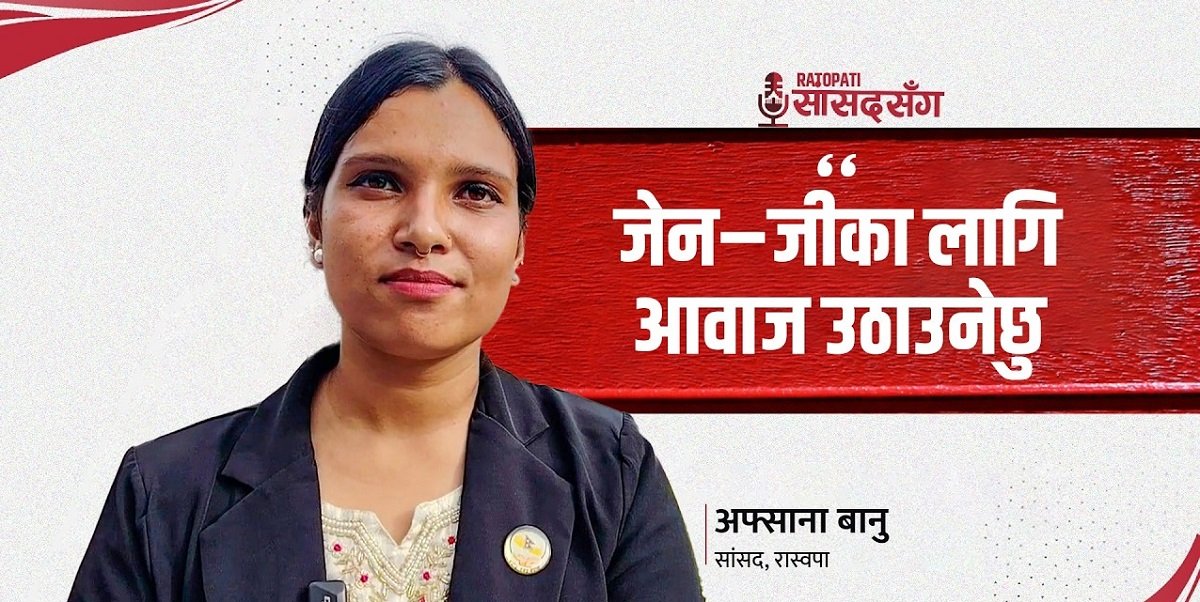
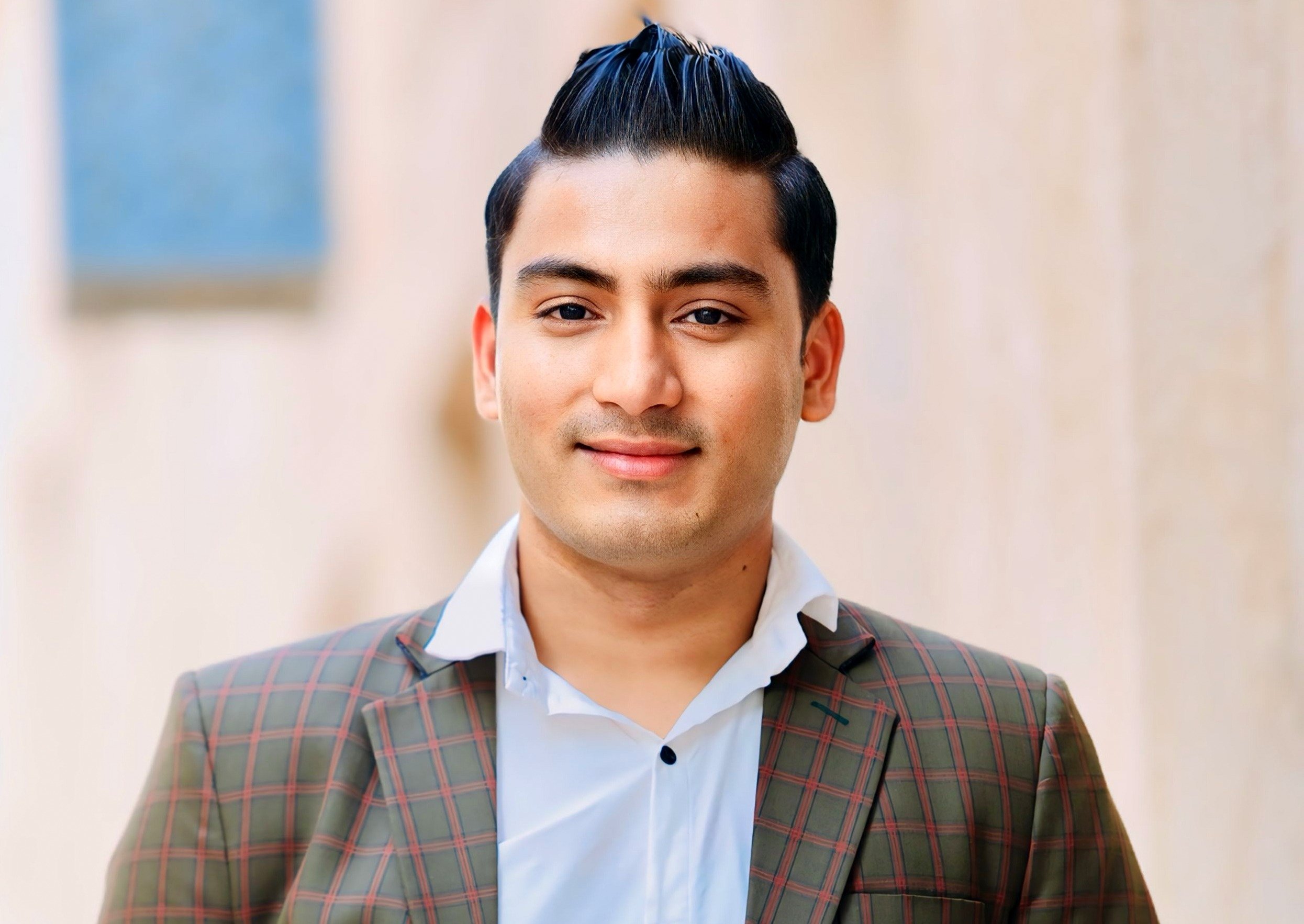
Afsana Banu is a proportional representative from the Rastriya Swatantra Party (RSP) in the House of Representatives. Banu, a member of the Federal Parliament's Law, Justice and Human Rights Committee, represents the 'Gen Z'.
She has been continuously raising her voice for the injured in the Gen Z movement and for the families of martyrs. For the 'With the MPs' column, Banu was interviewed focusing on her role in parliament and her agenda. Here is the edited excerpt of the interview with MP Banu:
How did you feel after reaching parliament?
After reaching parliament, as an MP, I feel a great sense of responsibility. This change was brought about especially by the 'Gen Z' movement. Since we ourselves participated in that movement, we feel that we should cooperate with and hold the government accountable to work according to public expectations.
After reaching parliament, you underwent various trainings. What did you learn from those trainings?
Our party (RSP) continuously organizes various orientation programs to enhance the capacity of its MPs. Recently, we were trained on how to properly use 'digital platforms'. We were taught how to avoid various types of fraud that can occur through digital means and how to use it in parliamentary practice.
Additionally, we have gained knowledge on technical aspects of parliamentary practice such as the process of making and amending laws and regulations, and how to register proposals and bills.
Did you find any difference between the two-day orientation organized by the Parliament Secretariat and the training provided by the party?
There isn't a significant difference. In both places, parliamentary practice is taught. In parliament, we practice those things practically, while in orientation, we learn them theoretically. Most of the things are the same.
Many MPs are new. What was taught about the style of speaking in parliament, attire, and decorum?
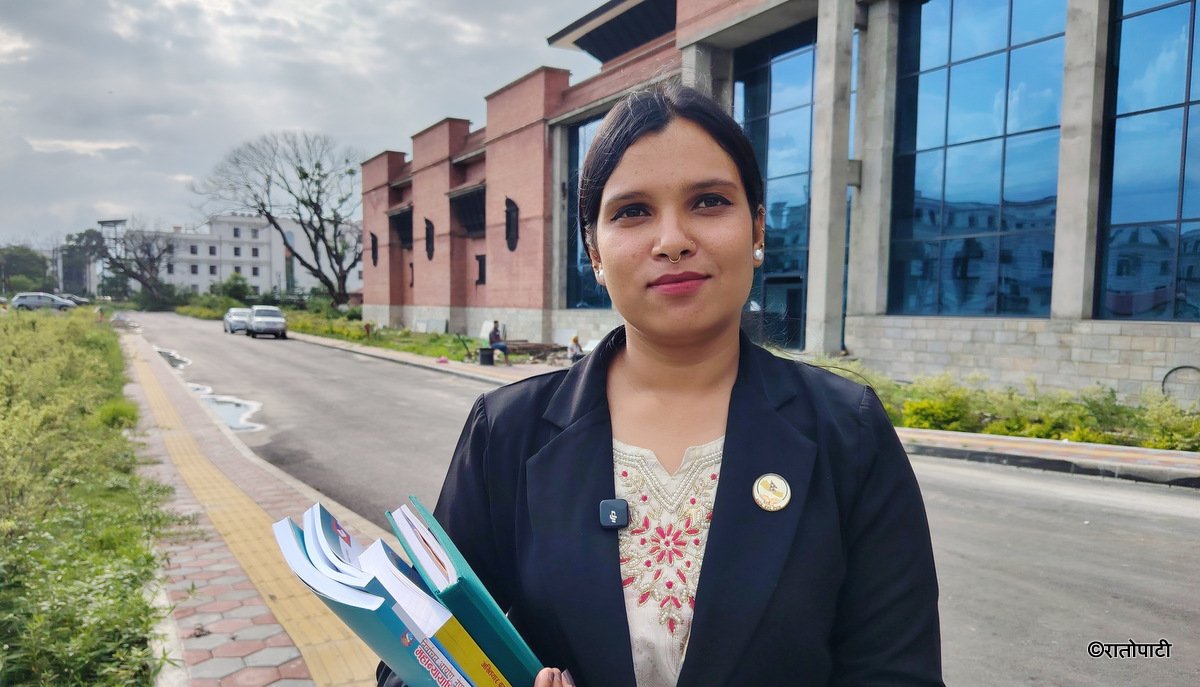
Matters related to speaking and conduct in parliament are mostly discussed and taught in the 'Business Advisory Committee'. Regarding attire, I believe that as members of a sovereign parliament, we present ourselves as representatives of Nepal even on international forums. Therefore, our attire needs to reflect originality. For men, the 'daura-suruwal' and 'dhaka topi' are mandatory, and for women, the sari and coat/blazer are mandatory, which I fully support. This is also necessary for parliamentary decorum.
How much time do you make for studies now? What are you reading?
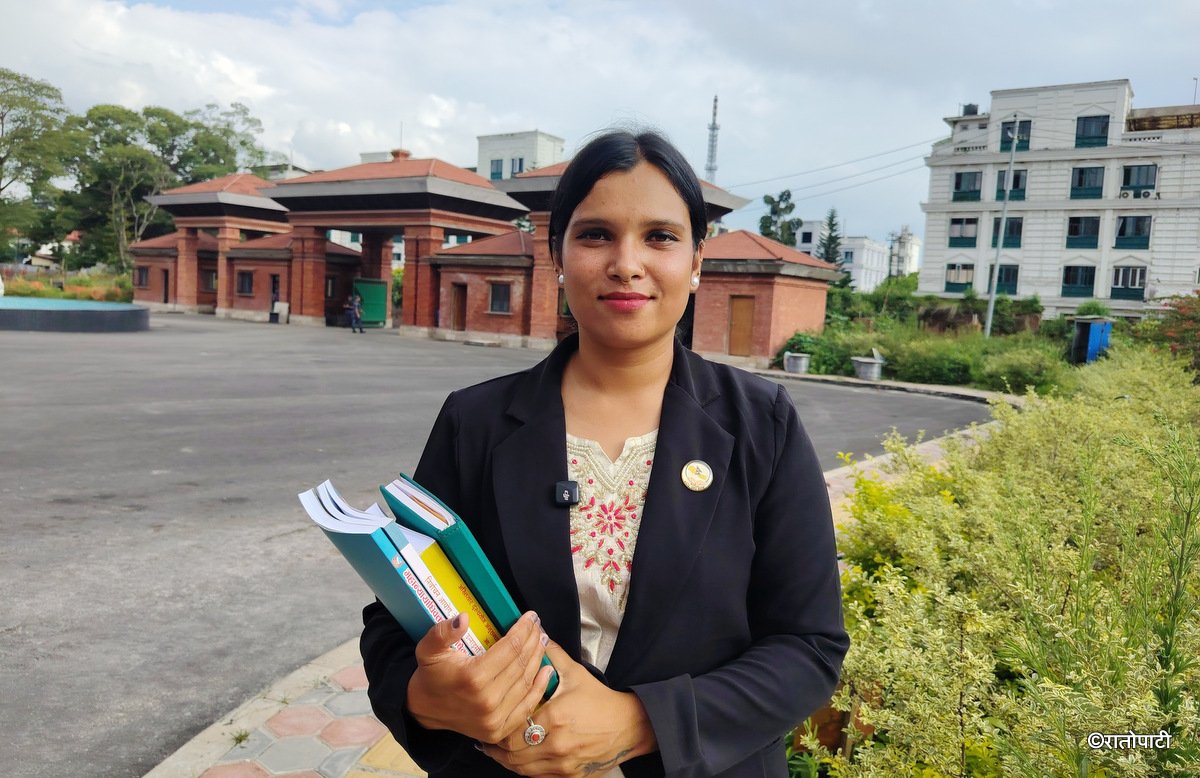
In parliament, our 'pigeonhole' (place for MPs' correspondence) always has some study material. It contains details about which bill is being processed and which act is being drafted. Recently, I received the 19th annual report of the Election Commission and the report of the Commission for the Investigation of Abuse of Authority. Since my exams are also ongoing, it is difficult to concentrate fully, but I read such books and reports whenever I get free time. It gives new ideas for work.
You yourself represent the 'Gen Z' generation. What efforts are you making to fulfill the demands and issues of this generation?
We are continuously working to address the issues of Gen Z. Previously, more than 152 colleagues had signed and prepared a mandate, in which I played an active role. Before becoming an MP and even now, my main focus has been on releasing our friends who are in jail and coordinating with them. Many young friends (some pursuing bachelor's, some master's degrees) have been in detention for the past nine months, causing great distress to them and their families.
In coordination with Sudhan Dai (Home Minister Sudhan Gurung) and Chairman Ravi Lamichhane, efforts are underway to obtain details of those arrested from all 77 districts and to facilitate their release. A court hearing was recently postponed, which is a positive result of our initiative.
Are you also in contact with the injured in the Gen Z movement and the families of martyrs?
I am in constant contact with the injured friends and the families of martyrs, but most of my time is spent communicating with the friends who are in jail. I receive many calls from prisons daily on my mobile. Their only question is—'How long do we have to stay inside even when our government is in power for the change we brought about?' I am providing them with updates and coordinating.
What might be the number of arrested and imprisoned movement activists?
There is a large book of details from all 77 districts at the Ministry of Home Affairs. According to the information I have received, about 2700 people were arrested nationwide during the movement. Of these, more than 1100 were arrested from Kathmandu alone. Some have been released on bail, while cases are still ongoing against some. Detailed information is in the ministry's records.
Throughout your tenure, what role will you play in parliament for the benefit of youth and 'Gen-Z'? Are there any main plans?
I am very clear; my first priority right now is to deliver justice to the warriors of the 'Gen Z' movement, on whose foundation this government stands. I will continuously strive to get out the friends who have been in prison for the past nine months. This is the main agenda of my tenure right now.
Finally, do you have any message for the voters and the general public?
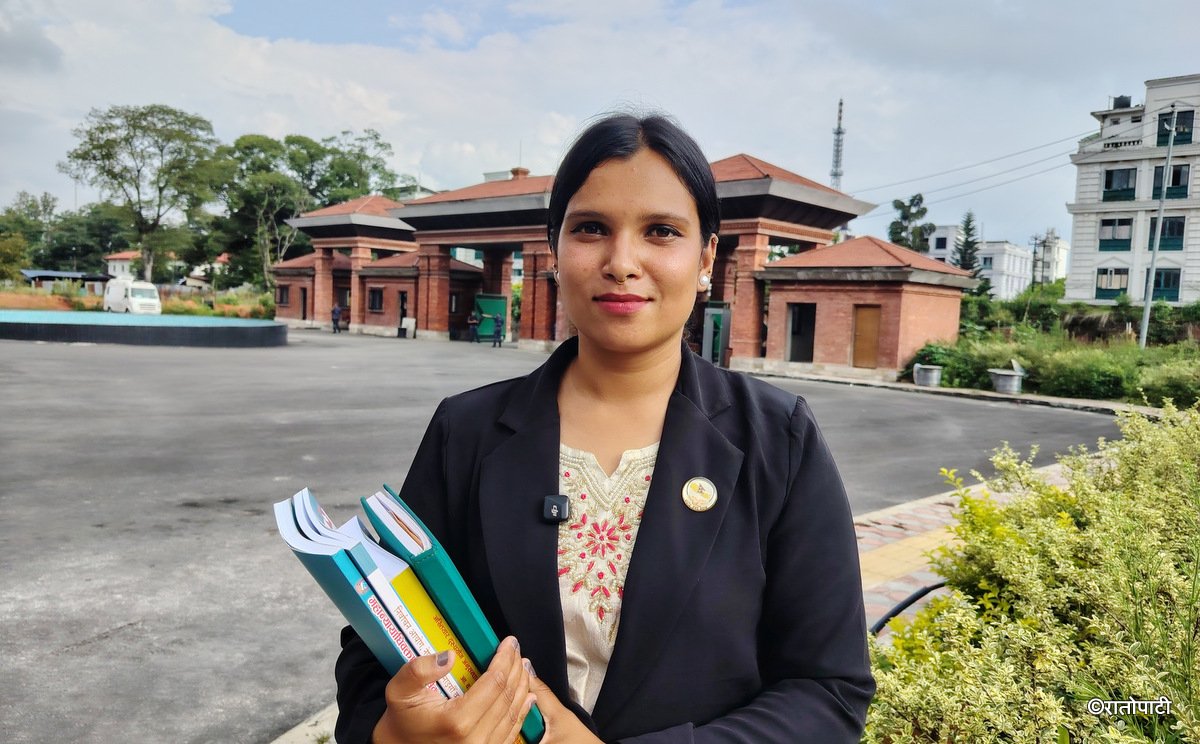
Kathmandu is my own district, so I have a special closeness with its residents. Overall, our government has just completed 100 days. We are also in the process of learning and working. While working, there may be some shortcomings or mistakes in our choice of words or other aspects, for which we apologize.
I urge everyone not to be discouraged and to be optimistic. The suicide recently chosen by 25-year-old Ganesh Nepali is a great tragedy for the state. My heart ached deeply that a youth from the generation that brought about change had to lose their life in this manner. My belief is that both the ruling and opposition parties must work together seriously to prevent such incidents from happening again.
This specific news has been automatically translated by AI. As a result, there may be some inaccuracies or language errors.

_acsSMbCX4V.jpg)