Sudurpashchim Province Assembly's Legislative Pace Lags Behind Expectations

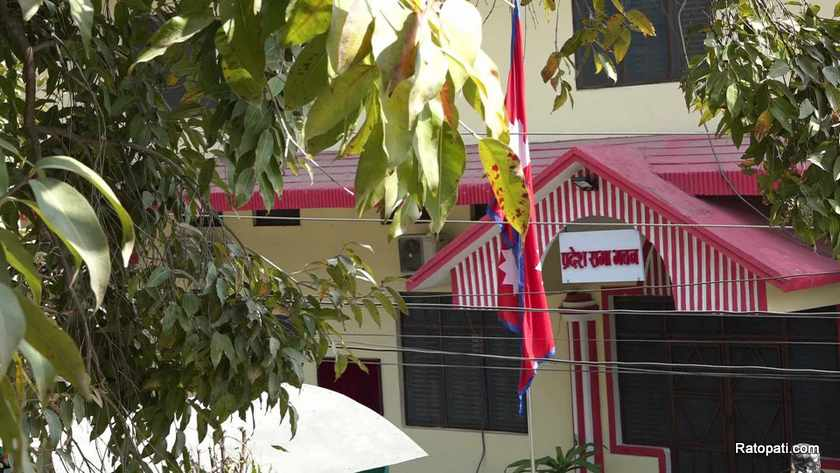
Dhangadhi. The second term of the Sudurpashchim Province Assembly is nearing its four-year mark. The pace of lawmaking, which began with the first session on Poush 15, 2079, has not progressed as expected by the end of Asar, 2083.
According to the Province Assembly Secretariat's data, 23 bills have been registered so far. Of these, 15 have been authenticated and enacted into law, while 8 bills are still under consideration in thematic committees.
According to Yuvraj Jesi, Information Officer at the Province Assembly Secretariat, most of the laws authenticated during this period are related to amendments rather than new legislation. The Local Level Service Formation and Operation Act, the Sudurpashchim Province Periodic Revenue Collection Act, and the new Province Assembly Regulations have been passed as new laws. Besides these, appropriation and finance bills related to each financial year have been passed regularly.
The data shows that the Province Assembly has prioritized regular budget and administrative processes over the creation of new laws with long-term impact, said Information Officer Jesi.
He stated that some important bills covering public interest issues have been held up in committees for a long time.
The bills currently in committee include the Tikapur Science and Technology University related bill, the Sudurpashchim Province Barghar and Bhalmansa related bill, the Dalit Empowerment Act Amendment bill, the Germicide Pesticide Management related bill, the Mass Communication related bill, the Public Health Act Amendment bill, and the Local Level related Amendment bill. These bills, directly related to the province's education, health, communication, social justice, and local governance, have not reached a conclusion for a long time.
Looking at the number of Province Assembly sessions, although continuity is seen in parliamentary activities, fluctuations are observed in activeness. The eighth session of the second term is currently underway. In the first session, 9 meetings were held; in the second, 28; in the third, 10; in the fourth, 7; in the special session, 5; in the fifth, 19; in the sixth, 24; in the seventh, 5; and in the eighth session, 17 meetings have been completed so far.
Meanwhile, the budget-making process for the fiscal year 2083/84 was not without controversy. Due to internal disputes within the ruling coalition, the budget could not be presented on time. The budget was presented through a late-night session at the last moment. Following this, opposition parties protested, expressing dissatisfaction with the process. The regular proceedings of the Province Assembly were also affected for some time due to the disruption in budget discussions. Discussions on the appropriation and finance bills are currently stalled in the Province Assembly. Only two days remain until the deadline for passing the budget.
In a federal governance system, the primary responsibility of the Province Assembly is to enact effective laws according to the province's needs. However, the pace of new lawmaking has been weaker than expected in the period nearing four years. Local analyst Ramhari Bhatta, who closely follows the provincial government's activities, stated that citizens are not receiving the direct benefits of legal reform as some important bills directly related to public life have been held up in committees for a long time.
He attributed the obstruction of the legislative process to political instability, changes in power equations, and misunderstandings among political parties.
Bhatta believes that the challenges ahead include quickly concluding the bills pending in committees, accelerating the creation of new laws, and making the Province Assembly's role effective in line with public expectations during the remaining period of the term.
This specific news has been automatically translated by AI. As a result, there may be some inaccuracies or language errors.