Tribhuvan University Exam Paper Leak Highlights Systemic Flaws
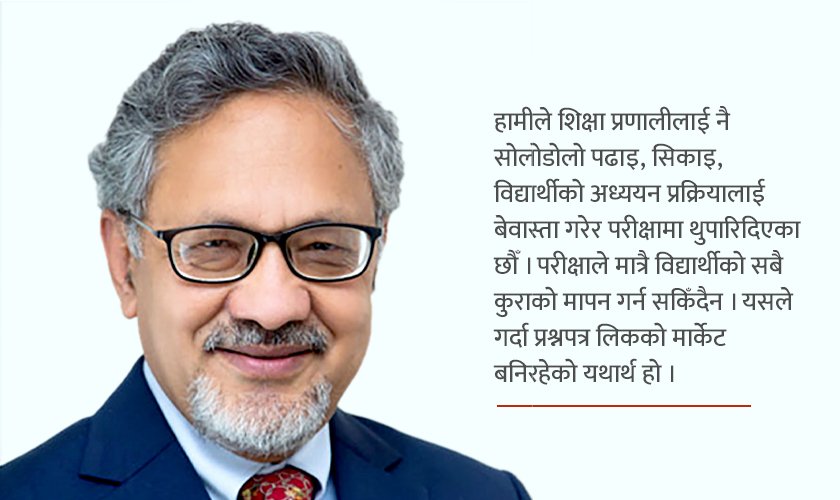
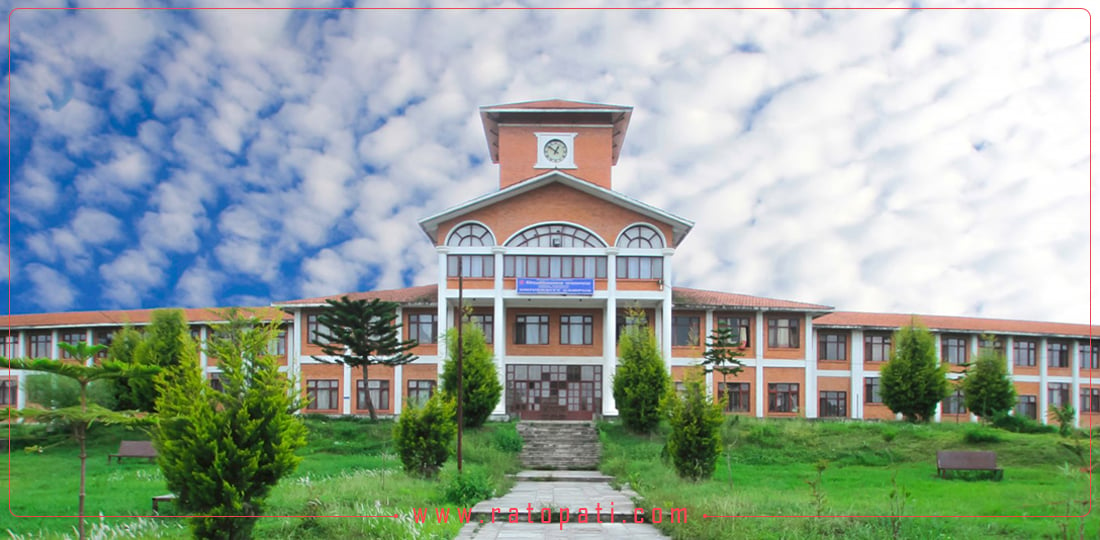
The leak of question papers in the Tribhuvan University examination is an extremely unfortunate incident. In reality, our education system is dependent on examinations and question papers.
We have completely disregarded the study and learning process of students, focusing solely on examinations. Examinations alone cannot measure all aspects of a student. This has led to the reality of a market for leaked question papers.
The leak of question papers in educational institutions is also a matter of great ethics. It is not considered good for an employee to commit an ethical lapse. Such unethical acts from educational institutions and universities are extremely sensitive issues. This demoralizes students, reduces the credibility of the overall education system and educational institutions, and has far-reaching indirect effects. This is an unfortunate matter.
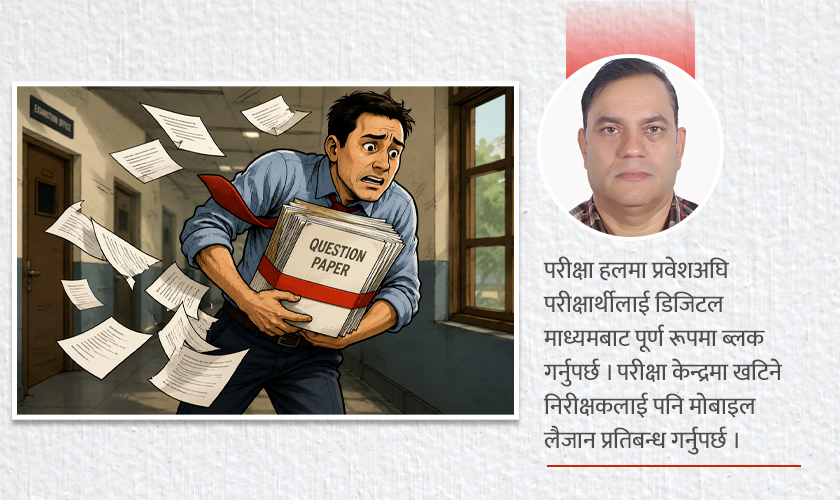
Recently, discussions about digital question papers and digital online examination systems have also begun to surface. Universities abroad have already started 'Open Book Exams', but here, the system of sending question papers to examination centers and conducting exams is still in place, which is a traditional method. The tendency to cheat leads to question paper leaks. Looking at the recent incident of question paper leaks, it seems someone might have scanned and sent the question paper during the exam.
Nepal's higher education sector is currently facing a serious crisis of credibility. Repeated incidents of question paper leaks in institutions like Tribhuvan University (TU) have shaken our entire academic world. Question papers leaking from examination halls or being printed through digital means are not just the fault of an employee or a center's technical error; they are the result of the ethical deviation and structural weaknesses of our educational institutions.
Such unethical activities in the education sector are extremely sensitive and unfortunate. They demoralize students. Capable students who study diligently throughout the year suffer, while those who get question papers two days in advance or memorize them get excellent marks. This has cast doubt on the reputation of educational institutions and the international credibility of the degrees they provide. Our current education system places the entire burden on a single final examination and question paper, which is inherently flawed. To solve this problem in the long term, work needs to be done on two main fronts.
1. Open Book and Creativity
Students should not be evaluated solely on a single end-of-year examination (giving it no more than 20-30 percent weight). A continuous assessment system should be implemented. Furthermore, question papers should not be designed to elicit rote memorized answers but should test students' own creativity, logical ability, and originality. Even if question papers are leaked or students are allowed to keep answer books with them, if questions are set in a way that directly finding/getting answers is impossible and requires presenting one's own original thoughts, the market and justification for 'leaks' will automatically disappear.
2. Digital Security and Use of Technology
Security can be tightened by using modern digital systems for the distribution and management of question papers. Digital transfer and the correct use of technology help control the physical access and misuse of question papers. The leak of question papers should not be dismissed as merely the weakness of a particular college, faculty, or individual. This is a shared problem of our entire social and educational system.
Tribhuvan University and all old and new universities should not only treat this incident as a matter of blame but learn from it. It is also necessary to use it as an opportunity for educational reform. There is no training for our university professors in Nepal on how to create question papers. This is because creating question papers is a separate science and requires distinct skills. Training is necessary for it. It is essential to connect question papers with skills and skills with production. It is observed that many of the currently produced human resources cannot find employment in the market. Along with technological and policy reforms in examinations, strict legal accountability and digital monitoring should be ensured in universities.
The manpower involved from question paper creation to distribution must be bound by ethical codes of conduct. Only by adopting practical policies that directly link the curriculum with market demand, research, and innovation can the declining reputation and international credibility of higher education be restored.
In today's era, questions should be constructed in a way that students can answer using their own creativity. The examination system should be such that preparation done through rote memorization does not yield higher marks. If excellent marks can be obtained with just two days of preparation, it is considered that the question paper itself is weak. That examination system itself is weak. If we have structural and properly conducted evaluations, these discrepancies will automatically subside.
An examination system that makes leaks irrelevant will partially solve the current problem. Therefore, we must emphasize making our question paper system an 'Open Book Exam'. The incident of question paper leaks is not just a matter of one university; such incidents are also surfacing in other universities. Especially in Nepal University, we have started training professors and teachers to prepare question papers where cheating or rote learning does not work. How to set question papers? So that cheating cannot work on those question papers. Our curriculum and examination system should be connected with the way of life. However, currently, we are focused on how to prepare for exams and how to pass, rather than teaching skills to students.
The incidents of question paper leaks should not be considered solely Tribhuvan University's problem. This is a societal problem. Instead of blaming individuals or specific faculties, this is a weakness of our society and our overall education system. Now, we all have an opportunity to learn from it.
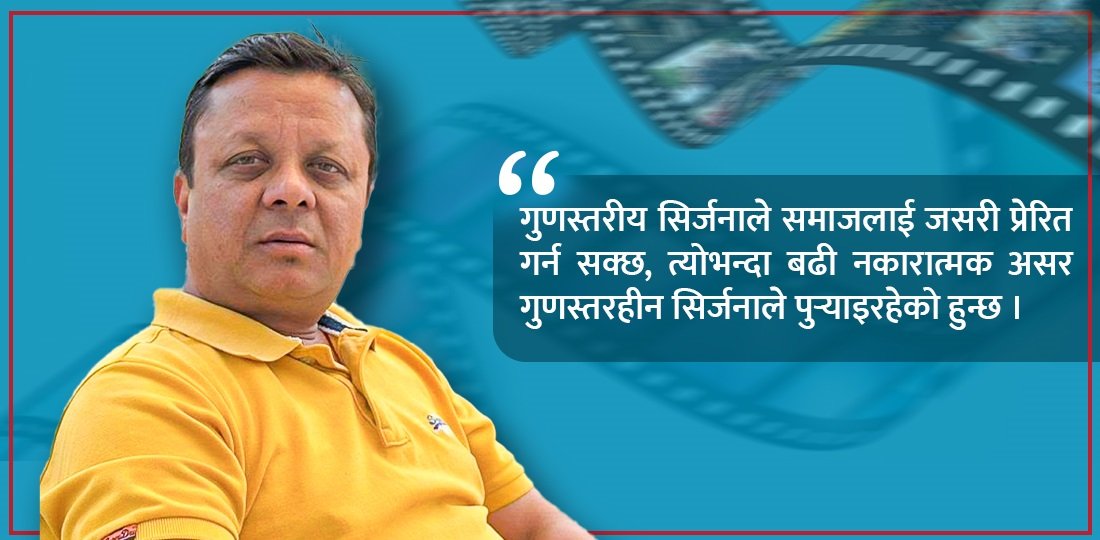
(Based on a conversation with Registrar of Nepal University, Prof. Dr. Suryaraj Acharya.)
This specific news has been automatically translated by AI. As a result, there may be some inaccuracies or language errors.