Human Trafficking Forms Evolving in Nepal, Visit Visas and Personal Labor Permits Abused

Kathmandu. The Human Trafficking Investigation Bureau has stated that the form of human trafficking in Nepal is changing and the abuse of visit visas and personal labor permits has emerged as a major challenge.
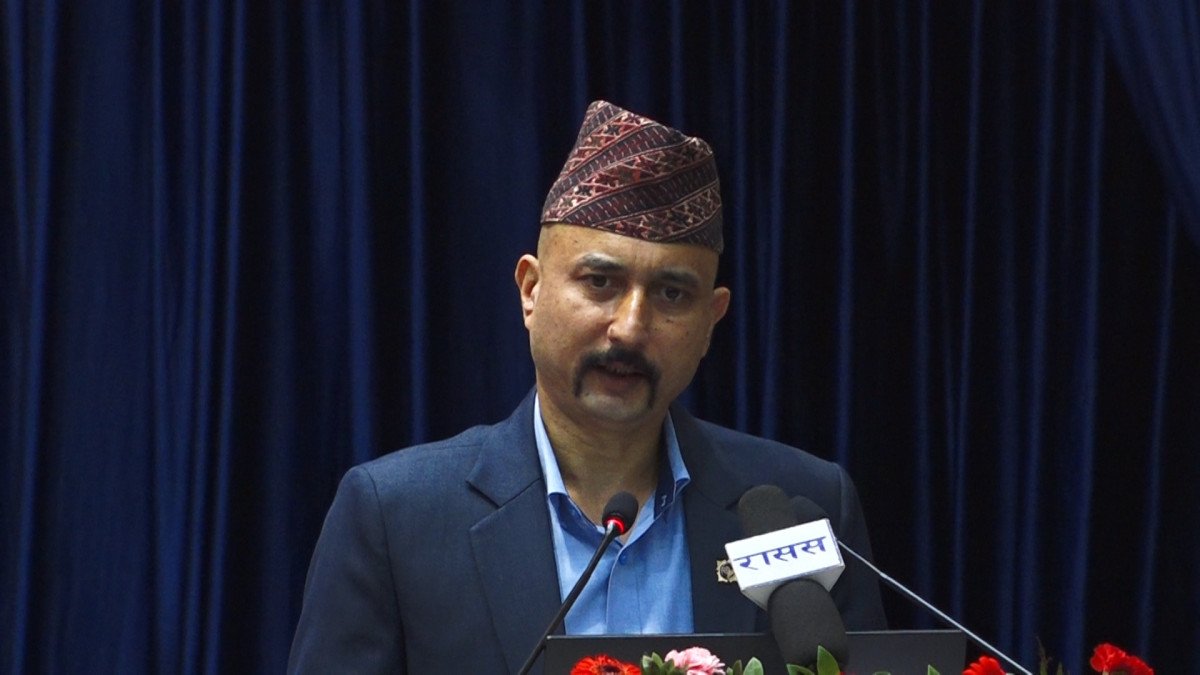
Bureau Senior Superintendent of Police Nakul Pokharel provided this information while presenting a working paper on the occasion of 'World Day Against Trafficking in Persons' on Tuesday.
Sexual and labor exploitation in entertainment sectors within Nepal such as dance bars, dohori, massage parlors, and hotels are major problems. In the last fiscal year 2082/83, among the 20 cases of internal trafficking registered at the bureau, 21 victims included 19 children. Victims are especially girls under 18 years of age and individuals from Dalit communities, with the highest number of victims being from Bagmati Province.
The nature of trafficking internationally towards India and China has also changed, according to the bureau's conclusion. According to Pokharel, 'Pyramid-style networking fraud and egg extraction from girls are happening in India.'
He added, 'In China, gangs are active in trafficking by luring with marriage.'
Recently, the risk of 'cyber slavery' and 'forced criminality' has increased in Southeast Asian countries like Cambodia, Myanmar, and Laos. Through social media, attractive salary offers are used to lure English and computer-proficient youths into illegal activities such as online scamming and cryptocurrency fraud.
'Donkey routes' used to go to Europe and America have become another big challenge. Many Nepalis get stranded and cheated while trying to enter America by risking their lives through various countries in South America. Since the establishment of the bureau, 32 such cases related to America have been registered so far.
The provision of going with personal labor permits as per Section 21 of the Foreign Employment Act, 2064, and weaknesses in immigration policy have made it easier for human traffickers. When unskilled manpower goes with personal labor permits, they fall victim to exploitation, and manpower companies are absolved of legal responsibility.
When women are taken as domestic workers by misusing visit visas in Gulf countries, they face severe labor and physical exploitation. In the last fiscal year 2082/83 alone, out of 311 applications for rescue, 286 were rescued. Among those rescued, 274 were women and 12 were men, and most were from Kuwait.
To control this problem, the bureau has suggested amending the Human Trafficking and Transportation Control Act, 2064, to clearly include egg extraction. The bureau states that victims or witnesses who retract their statements should also be held liable for punishment. Separate legislation is needed to clarify the difference between human trafficking and human smuggling.
It has been suggested that government-to-government agreements should be mandatory when sending domestic workers, personal labor permits should be given only to highly skilled manpower, and those going on visit visas should be strictly controlled. The need to expand the reach of Nepali missions in destination countries and to arrange adequate rehabilitation centers and compensation for victims has been pointed out.
Since the establishment of the bureau, a total of 1,254 cases have been registered across the country, and 2,750 people have been rescued.
This specific news has been automatically translated by AI. As a result, there may be some inaccuracies or language errors.