Local Governments Demand Control Over Natural Resources Amidst Conservation Area Disputes

The main demand of federalism in Nepal is linked to the decentralization of rights and resources. Federalism was interpreted as a campaign to take Kathmandu's power to the villages. A slogan heard frequently during the first local level elections was - 'Singha Durbar in the villages'.
Taking Singha Durbar to the villages does not mean building a large building and having representatives and employees rule. It means implementing the power held in Kathmandu at the local or ward level. This requires administrative federalism, political federalism, and financial federalism to reach the lower levels simultaneously. While political and administrative federalism have reached the local level to some extent, financial federalism, which empowers citizens, is still stuck at the federal and provincial levels.
The constitution grants local levels their own rights. Schedule 8 clearly gives local governments the authority to utilize natural resources, carry out development, and collect revenue within their areas. More than 16 local levels in the Gandaki province are deprived of experiencing this spirit of federalism even today.
Old conservation acts and laws enacted during the Panchayat and monarchical regimes, and structures like the Annapurna Conservation Area Project (ACAP) and Manaslu Conservation Area Project (MCAP) operating under them, are still in effect. It has been the second to last year of the second term since representatives were elected to local levels after the new constitution was promulgated. However, rural municipalities falling within conservation areas have not been able to function independently. Citizens are forced to endure dual governance from both the local government and the conservation area.
Today, local governments continue to receive the most complaints from the public about being governed by two levels of government. Conservation itself is not a bad thing, but restricting local autonomy, development, and citizens' rights in the name of conservation is contrary to the fundamental spirit of a federal democratic republic and the constitution.
ACAP began around 2043 BS (1986 AD). This conservation was initiated with a model of gradually handing over responsibilities to the local population. We have now reached a federal democratic republican system. Republic has not yet arrived in the conservation areas. Efforts are still being made to control local levels based on policies and directives formulated during the reign of the King and the monarchy.
The Constitution of Nepal and the Local Government Operation Act 2074 BS (2017 AD) grant local levels the exclusive right to collect and utilize revenue from gravel, sand, stones, herbs, forests, and tourism within their jurisdiction. However, ACAP prevents local governments from utilizing these resources in the name of conservation. On one hand, there is the Local Government Operation Act, and on the other, ACAP operates a parallel government by citing acts from the royal era. This forces representatives to be bound by legal constraints even when trying to be accountable to the public.
The work done by organizations like ACAP and MCAP for conservation can be praised wholeheartedly. We have no questions about that. Our main focus is on the utilization of resources and the distribution of benefits. Rural municipalities within conservation areas are rich in natural resources but are made economically weak. For example, consider Machhapuchhre Rural Municipality in Kaski; a large part of its geography falls within the conservation area. The rural municipality collects approximately 20 million rupees in internal revenue from areas outside the conservation area alone.
The rural municipality has not been able to collect a single rupee in revenue from the dozens of riverine ghats and natural resources within the conservation area. If the conservation area's ghats are brought under the local government's tender process after transparent environmental impact assessments, an annual revenue of 10 to 12 crore rupees could be collected. However, ACAP collects a very small amount through its conservation area management committees.
This is the common pain of not only Machhapuchhre but all 16 rural municipalities in Manang, Mustang, Myagdi, Lamjung, Kaski, and Gorkha. Neither has there been scientific utilization of riverine materials, nor have the local levels received the revenue they are entitled to. Local governments across the country manage tourism development, road construction, sanitation, drinking water, and trail maintenance. Even in ACAP areas, the rural municipalities are responsible for building tourist trails, clearing landslides, and constructing infrastructure. However, royalties or fees collected from tourists are only taken by the National Trust for Nature Conservation. According to Nepal Government regulations, royalties collected from natural resources and tourism should be distributed among the federal, provincial, and local levels in a 25-25-50 percent ratio. The amount currently being collected all goes to the federal government.
Machhapuchhre Rural Municipality's attempt to collect a tourism service fee of 100 rupees from domestic tourists and 200 rupees from foreign tourists entering the municipality, through a decision by its executive, was met with opposition from tourism entrepreneurs and ACAP itself. Gorkha's Chumanubri Rural Municipality has started forcibly collecting fees and appears to have generated some good internal income. Other municipalities have not had that opportunity. It is wrong that we have to build infrastructure and roads, but others take the income.
We also face major problems in development construction. Fallen trees in the villages rot away, and citizens cannot use the wood to build their homes and sheds. Without ACAP's permission, locals face legal cases even for cutting a single tree or branch.
Tourists have increased now. It's difficult to even find land to build hotels and restaurants on the hills. Wild animals destroy farmers' corn, paddy, and crops. Farmers do not receive adequate compensation for this. We face many problems daily. We have clashed with employees a lot so far. But through our experiences, we have learned that fighting and quarreling here won't work. A solution is needed at the policy level. For this, the 16 rural municipalities of Gandaki Province have united and submitted our common demands to the federal and provincial governments.
Under the coordination of Machhapuchhre Rural Municipality, we held a meeting and issued a 12-point common declaration. The main demand is that the right to collect revenue from natural resources be given to local levels in accordance with the Local Government Operation Act 2074 BS and the spirit of the constitution. Instead of extending ACAP's term repeatedly and running it like a non-governmental body, it is better to fully transfer its management to the local levels. Otherwise, conservation committees should be formed under the leadership of local representatives.
We have repeatedly urged the Prime Minister and ministers at the center. Due to frequent government changes and ministerial reshuffles, our demands have been gathering dust in ministry drawers. The new government has now come with a stable mandate. We have high expectations from this government. Municipalities are not against conservation. All are sensitive to this. Local people are the true protectors of forests and wildlife.
Policies that displace people, increase poverty, and disempower representatives in the name of conservation are no longer acceptable. If the federal government does not address the problem by amending the law, legal recourse may have to be taken. The provincial government had also prepared to file a case earlier. The federal government and the Ministry of Forests should immediately amend the directives and regulations related to ACAP. Committees should be formed in all 16 municipalities within the conservation areas under the chairmanship of local representatives, and a transparent system for revenue sharing should be arranged. If conservation and development are to go hand in hand, there is no alternative to taking local governments into confidence and empowering them. This is the common stance of all municipalities.
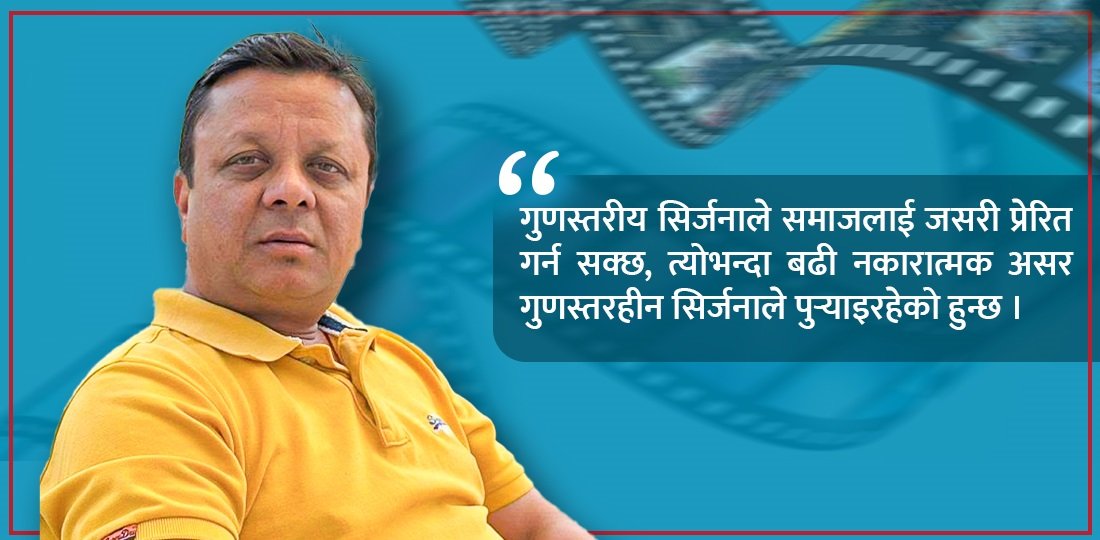
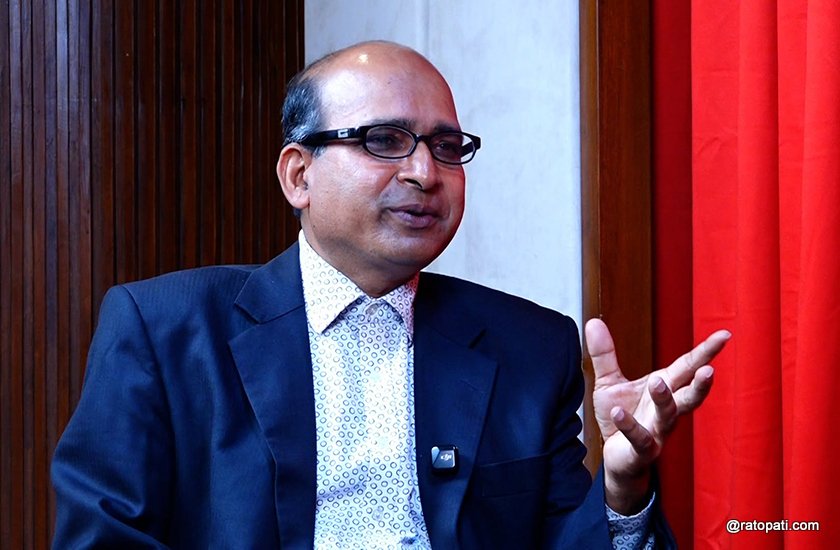
(Based on an interview with Adhikari, Joint Secretary of the National Association of Rural Municipalities, Gandaki Province, and Vice-Chairperson of Machhapuchhre Rural Municipality.)
This specific news has been automatically translated by AI. As a result, there may be some inaccuracies or language errors.