Karnali Province Political Uncertainty Amidst Center's Agreement

Surkhet. Political uncertainty has increased in Karnali Province's power equation following the agreement between CPN (UML) and Communist Party of Nepal (CPN) at the center. Karnali had already decided its future before the agreement between the two parties at the center.
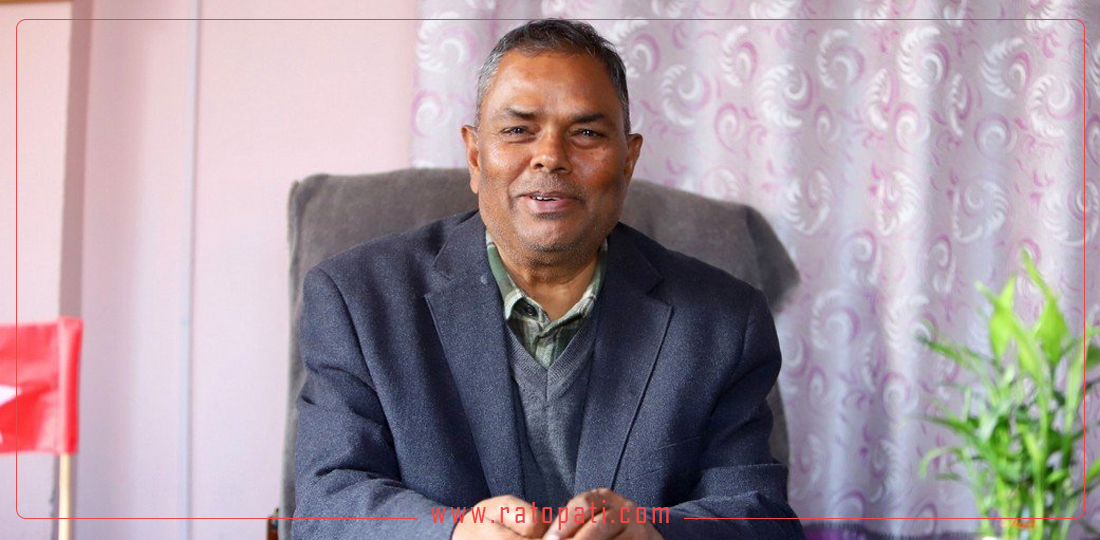
The Nepali Congress, which played a supporting role in the UML-led government, had filed a no-confidence motion against Chief Minister Yamlal Kandel in collaboration with the opposition Communist Party of Nepal (CPN). Not only that, Chief Minister Kandel announced his resignation during the provincial assembly meeting convened to discuss that very no-confidence motion.
The Communist Party of Nepal (CPN) had proposed Jeevan Bahadur Shahi, the leader of the Nepali Congress parliamentary party, as the Chief Minister. In the meantime, an agreement was reached at the central level between UML and Communist Party of Nepal (CPN) to cooperate in power, and it was also agreed that the Communist Party of Nepal (CPN) would lead the government.
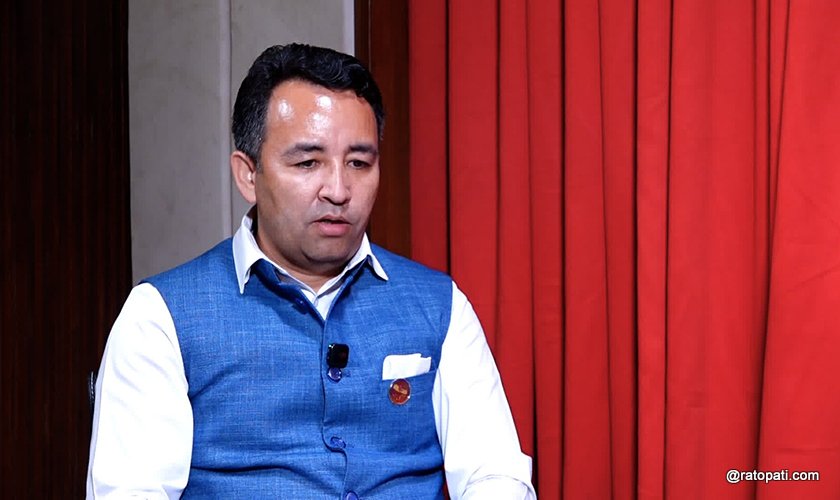
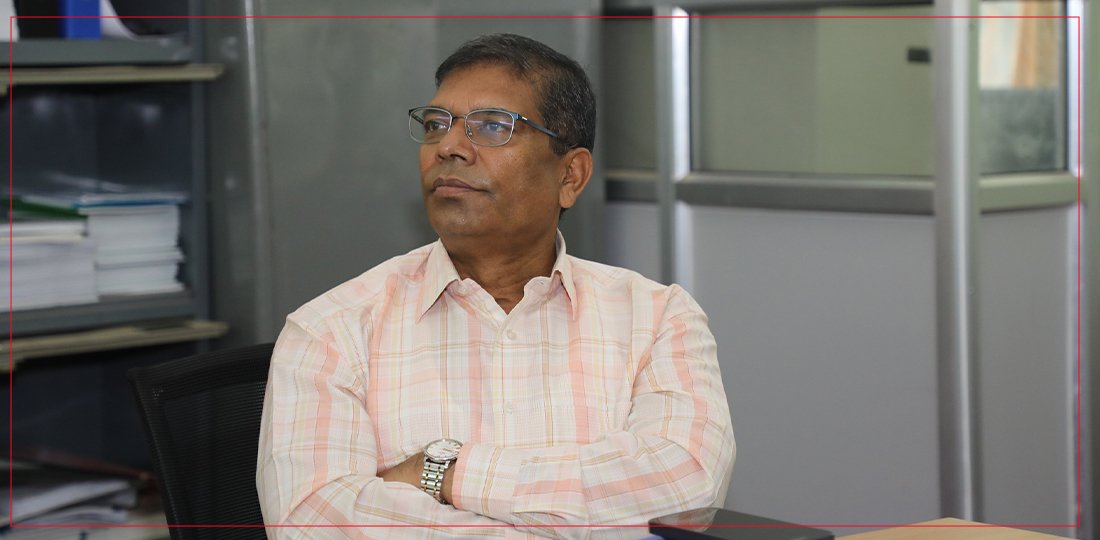
In this context, Ratopati interviewed Jeevan Bahadur Shahi, the leader of the Congress parliamentary party. Presented here is the edited excerpt of the conversation Ratopati correspondent Pank Bahadur Shahi had with Shahi:
- When the CPN proposed you as Chief Minister, a coalition was formed between UML and CPN at the center. How do you view this?
How else can I view it? They say they will unite the leftists, which is a good thing. If they intend to work together well, I have no objection. They have been together before, and they have also broken up. If they come together again and work for the prosperity of the country, I will have no complaints. If the unity of the leftists brings political stability, it is welcome.
- Has the proposed cooperation between the Nepali Congress and CPN in Karnali concluded?
Here, CPN and we have moved forward together. I have always said, what is the point of this kind of federalism if it means we have to hold an umbrella in Karnali when it rains in Kathmandu? You have all seen that the practice of federalism has reached a very complex stage. We cannot deviate from the policies and methods of the party. But the irony is that we are blamed for the frequent changes in provincial governments. When the coalition changes at the federal level, there is pressure to make changes here as well. I have been Chief Minister before. When I wanted to move up, the then leaders told me I had to stay here, and we agreed. At that time, we, along with the then Maoist and Socialist parties, fought the elections. After the elections, it was said that this government would continue for 5 years, but the coalition changed again very quickly. Who is to blame for this? The game of changing provincial governments is being played from the center. As soon as there is a change at the center, changes are made every three months, and then another change. This is certainly not a good culture.
We representatives of provincial governments have become so weak that we appear more helpless than a ward chairman. A village chairman or ward chairman, at least after winning once, can work with peace of mind for 5 years, but we have neither been able to use our own discretion nor make long-term plans. We have to operate according to whatever happens at the center. Some leaders here used to talk big about not getting political rights, economic rights, administrative rights, and not having our own police in the past, but now they themselves are sitting here saying they will make decisions based on whatever instructions come from above. The excuse of
This specific news has been automatically translated by AI. As a result, there may be some inaccuracies or language errors.