Consumer Rights Discussion in 'The Economic Edit'

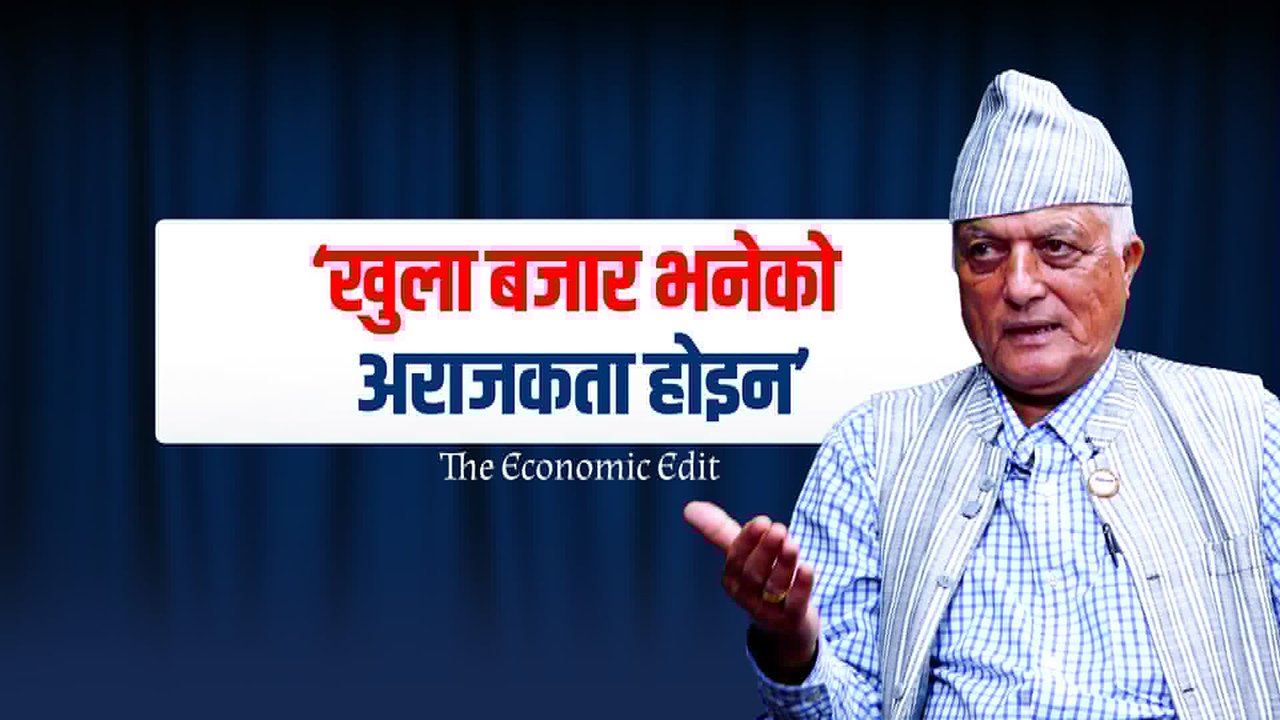
Kathmandu. Discussions on consumer rights are always at the peak in the Nepali market. As the festivals approach, consumers are always in trouble due to unnatural price hikes, sale of substandard goods, and the weak state of monitoring in the market.
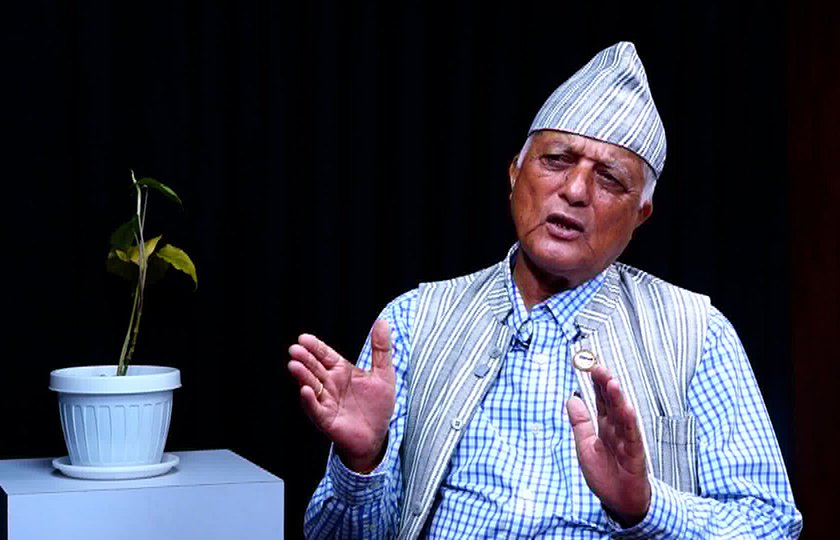
Although the Constitution of Nepal has established consumer rights as a fundamental right, its implementation in practice is very weak. Focusing on this context, here is an edited excerpt of the interview conducted with the Chairman of Consumer Awareness Campaign Nepal, Krishna Prasad Bhandari 'Marseli', in Ratopati's 'The Economic Edit' (detailed video can be watched and listened to):
What is the current state of consumer protection in Nepal? Even after laws are made, have consumers felt relief?
Looking at the history of consumer rights, it began on March 15, 1962, by American President John F. Kennedy. Later, after the United Nations directed member states to make laws for consumer welfare, the first Consumer Protection Act came into effect in Nepal in 2054 BS. In reality, consumers include everyone from laborers to the president who consumes goods and services. It is the state's responsibility to protect the life, health, and property of all.
Embracing this responsibility, Article 44 of the Constitution of Nepal has ensured consumer rights as a fundamental right. Under this, the Consumer Protection Act 2075 BS also came into effect. However, despite so many years since the act came into force, its implementation is very weak.
In developed countries, when consumers are victimized, they receive immediate compensation and the perpetrators are punished, but in our country, due to lack of manpower, technology, and willpower, consumers have not been able to receive just compensation. Efforts have been made, but they are not sufficient.
The first act came in 2054 BS, and now the 2075 BS act is in effect. In these 29 years, what changes have you observed in the market and consumer awareness?
There have certainly been some positive changes. At least now, consumers are more aware in urban areas to check the expiry date and label when buying goods. However, this awareness has not reached the villages. After the country went federal, this awareness should have reached all 6,743 wards in all 753 local levels. The Local Government Operation Act 2074 clearly gives ward chairpersons the authority to regulate and monitor the market within their area, but there are implementation problems. The act from 29 years ago also mandated displaying price lists, and the current act does too. However, price lists have not been fully implemented in the market to this day. Although some improvements are seen in labels and packaging, overall, the implementation of laws and regulations always appears weak.
What exactly does the Consumer Protection Act define as consumer rights?
Mainly, 9 rights are considered consumer rights, among which the right to consumer education, the right to information, the right to choose, the right to be heard, and the right to compensation are prominent. The constitution itself ensures the right to compensation for damages caused by substandard goods or services. Similarly, the right to live with clean food, a clean environment, and access to essential goods also fall under this. However, the problem is that it is difficult to claim compensation because consumers themselves are not aware or do not take bills.
You mentioned quality. How can a consumer identify the quality of a product? Isn't quality a relative matter? For example, cement has different grades, and gold has different karats. How to understand this?
There are government bodies for quality determination. For food items, there is the Department of Food Technology and Quality Control, and for construction materials or other goods, there is the Department of Quality and Metrology. Any industry must get its products tested by these bodies and obtain a food license or quality certificate before production.
Yes, quality is relative. Cement may have OPC or PPC grades, and gold may have 24 or 22 karats. But consumers must receive what the producer declares on their label. Selling 43-grade cement as 53-grade is a crime. Consumers can get information about the quality of goods by looking at what is written on the label. Here, the producer must be honest, and the regulatory body must regularly conduct lab tests of goods in the market.
We are in a free market economy where producers can set prices. You say that excessive fees cannot be charged, and the government has even abolished the 20 percent provision of the black market act. Doesn't this conflict with the concept of a free market?
A free market is not anarchy. In a free market, consumers have the right to choose. If one shop has good sugar, consumers can buy it by paying a slightly higher price. But there are some criteria for price determination. How much the businessman purchased it for and how much they sold it for is important. They are allowed to add their rent, transportation, and other expenses and make a reasonable profit.

The Black Market Act 2032 had set a profit limit of 20 percent. However, some sections have been removed recently, creating a misconception among businessmen that they can do whatever they want. The Consumer Protection Regulations provide for a Price Determination Committee and a Competition Protection Board.
These bodies should look into whether there is healthy competition in the market and whether the prices are unnatural. The problem of under-invoicing also causes price imbalance in the market. The government must conduct a realistic valuation of prices at the customs point.
The issue of pricing is even more complex in the service sector. For example, a bottle of water priced at 16 rupees is sold for up to 100 rupees in hotels or restaurants. How do you interpret black marketing in this regard?
This issue is often controversial. In the service sector, hospitality and convenience are added to the price. For example, if a five-star hotel provides a person to pour water, a glass, and an air-conditioned room to sit in, they can charge for the service. However, at the Jhimbu Thukali restaurant, a bottle of water was directly charged 100 rupees, where there was no additional layer of service. The Department of Commerce fined them 300,000 rupees. If the restaurant had opened the bottle and served it in a glass, it would have been considered a service. But charging many times the fixed price for a directly sealed bottle is outright fraud. Hotels can set prices on the menu according to their facilities, but it is not permissible to charge arbitrary prices for items with an MRP written on them.
What is the current structure of market monitoring? Is there a lack of coordination between local, provincial, and federal levels?
There are some complexities in the current structure. When all three levels of government monitor in their own ways, businessmen are sometimes harassed. The Department of Commerce is a federal body, but administrative officers in all 753 local levels also have the authority to monitor. The main problem is the lack of manpower and technology. Some employees sent to the Department of Commerce lack technical knowledge, nor do they have their own lab. They have to rely on the food or metrology department for research.
What we have been saying is that the responsibilities should be clearly defined: local levels should be responsible for small and local markets, provinces for manufacturing industries, and the federal government for policy-making and regulating imports and exports. Furthermore, it is necessary to form an integrated market monitoring committee at the district level under the coordination of the Chief District Officer, as the aspect of security is also linked to market monitoring.
What aspects of the Consumer Protection Act 2075 BS do you think need to be amended?
This act was brought in haste, and there was not enough discussion with many stakeholders. Firstly, it did not clearly recognize the role of the CDO. Secondly, the division of responsibilities is not clear. Thirdly, there are practical problems for businessmen as well.
For example, if a consumer wants to return a purchased item they didn't like, the businessman has already sent the VAT details. The act needs to be amended to make it easier for both businessmen and consumers in such technical matters.
The number of consumer rights activists and organizations has increased significantly recently. Has this increased effectiveness or bargaining power?
There are two sides to this. With many organizations, consumer issues are raised more, and pressure is put on the government. However, on the other hand, there are also accusations that some organizations are formed solely for bargaining. We had previously suggested that there should be only one strong umbrella organization for consumers, which the government should fund.

The way some activists are running their offices now, and their sources of income need to be regulated. Some may have taken lakhs of rupees in budget in the name of study and research, but what was the outcome? The regulatory body should also monitor these organizations.
The festival season has started with the beginning of Saun. There are major problems with price hikes and quality during this time. What are the preparations for this year?
From Saun to Mangsir is a period of high consumption in Nepal. Prices increase during this time due to new tax rates in the budget, the impact of petroleum price hikes, and shortages. However, it is meaningless for the government to start 'subsidized price shops' in Asoj. How much will the fare cost for a person from Lapsiphedi to come to central Kathmandu to buy sugar 5 rupees cheaper?
Therefore, subsidized prices should be available at the local level. The government should have a prior plan regarding which goods might be in short supply. Preparations are needed from now on regarding stock levels and how to intervene in the market. Otherwise, the monitoring done just before the festivals will only be a show.
How do you view the new taxes imposed by the government? How does it affect consumers?
A welfare state should adopt the theory of social taxation. This means taking from the rich and giving to the poor. However, a 3 percent tax is imposed on basic sectors like education and health, which is not justified. Paying 3,000 rupees in tax for 100,000 rupees of treatment is a huge burden for the poor.
On one hand, the government says it wants to reduce petroleum imports by increasing electric vehicle and electricity consumption, and on the other hand, it imposes VAT on electricity. This is not logical. The government must be honest. If smuggling at customs is stopped and good governance is established in the market, unnatural price hikes will not occur. It is good for the Home Minister himself to go to the border to send a message, but this should not be mere propaganda; it must be implemented in practice.
This specific news has been automatically translated by AI. As a result, there may be some inaccuracies or language errors.