Journalist Jagat Nepal Discusses BP Koirala's Legacy and Political Ideals

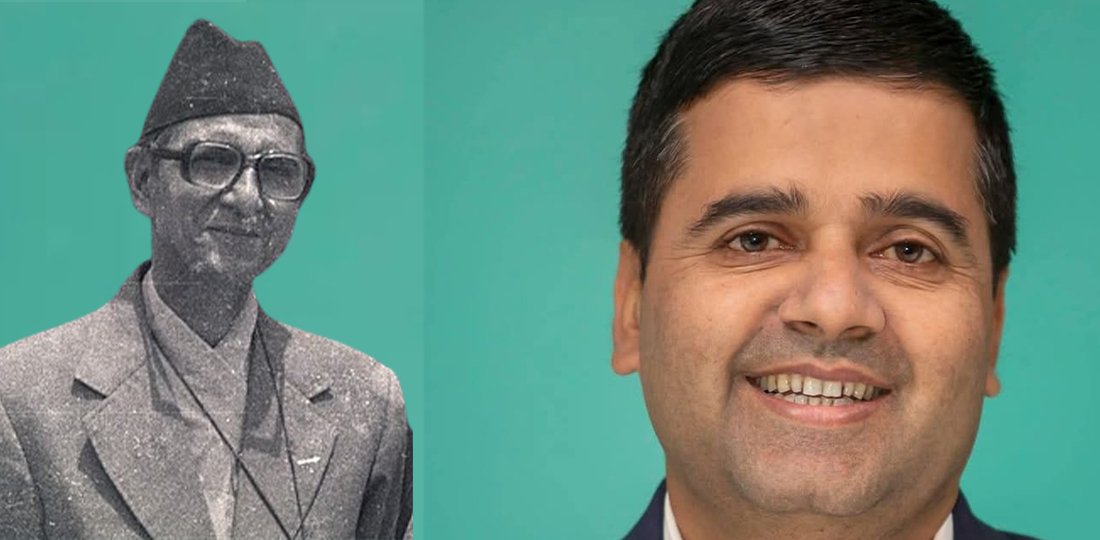
Journalist, writer, researcher, and documentary filmmaker Dr. Jagat Nepal has written books such as 'BP's Rebellion' and 'The First Parliament' about Nepal's first democratically elected Prime Minister, Bishweshwar Prasad (BP) Koirala. The documentary 'Traitorous Politician' he produced on BP was screened not only in Nepal but also abroad. He had long-term interactions with leaders, journalists, and politicians who were associated with BP, and he tape-recorded their conversations. Recently, the Parliament Secretariat published two of Jagat's books: 'Various Dimensions of the Advisory Assembly' and 'A Collection of Representative Stories from Nepal's Parliamentary History'. On the occasion of BP Koirala's 44th memorial day, here is an edited excerpt of the conversation with journalist and writer Dr. Jagat Nepal:
You wrote books like 'BP's Rebellion' and 'The First Parliament' about BP Koirala. You also made the documentary 'Traitorous Politician' on him. How do you remember him on his memorial day?
– BP Koirala is a politician and writer of Nepali politics whose contribution the Nepali people have perhaps not yet fully understood. In the last 5-7 years after leaving Kantipur, I had the opportunity to study him more deeply.
Many times more of his documents are unpublished than published, which I have seen myself. From this perspective, BP is a great man and a leader born of his time. He was a dedicated leader with an intense desire to do something for the country, who grew up with high-level studies and grooming in British India. I feel many Nepalis should read and understand him.
You reported on parliamentary affairs and the Nepali Congress for a long time. Today, there is a kind of dispute and conflict within the Nepali Congress itself. Even though formal programs are held in BP's name, do the leaders seem to have truly internalized BP's ideas and sentiments?
I see this from two perspectives. Firstly, BP's era was different. That was a time of integrity, ideals, and principles. He engaged in politics in the company of Nehru, Gandhi, and Rajendra Prasad in India. At that time, people had the sentiment of not lying and serving. But today, the times have changed. Today, people enter politics to earn and wield power. Therefore, there is a big difference between BP's time and the present time.
Not just BP, but leaders like Manmohan Adhikari, Pushpalal, and Ganesh Man Singh only gave to society. Subarna Shamsher even gave away his entire property for the country. But today, there is a competition to take from the state rather than to give to the state. Therefore, yesterday and today cannot even be compared.
Today, all parties and individuals involved in politics in Nepal consider BP Koirala as a role model, but they are not in a position to become like BP. Time has moved far ahead. Perhaps some things cannot happen even if one wants them to? Therefore, instead of saying 'this hasn't happened' on a whim, I think one needs to understand whether the appropriate environment exists for it.
BP used to tell Naresh Koirala and other youths, 'Challenge me,' 'Question me,' and engage with the younger generation. But today, if you question any Prime Minister, Minister, or leader, they get angry, they don't let you meet or speak with them; they stay away from the press and the public. Please tell us a bit more about BP telling the youth to 'challenge' him.
You have asked this question at a very interesting time. We are here at the book launch of an event for Chakrra Bastola dai. That was a time when anyone who could debate or discuss with BP was respected. At that time, strong, promising, and intellectual youths like Chakrra Bastola and Pradip Giri could debate BP on various issues. We have approximately 38 terabytes of material from interviews conducted by our team about BP Koirala preserved.

We interviewed many old personalities, most of whom have passed away. One of them is Bhairav Risal. He was in the Communist Party at that time. Because he used to criticize BP Koirala, BP always took care of Bhairav Risal, because his belief was that critics should always be kept close.
Another instance is of Madanmani Dixit. He was also from the Communist Party. BP Koirala gave Madanmani Rs 600 per month to publish the magazine 'Sameeksha' (Review), saying, 'It's not enough to just support, you need to review.' Therefore, in those days, criticism was considered a big thing in itself.
You mentioned Naresh Koirala. In 1970, Naresh Koirala went to Hong Kong as a Development Advisor for the Hong Kong government. BP was staying there after receiving treatment in America. At that time, Naresh Koirala asked, 'BP, you are about to come to power, if you come to power, what will be the role of youths like us?'
BP replied, 'Youths like you should always be in opposition to me.' But now, especially at the political level, there is intolerance. Everyone wants only their supporters to speak, and no one to speak in opposition. There is a tendency to attack those who speak in opposition, which is weakening democracy. This is also weakening discussion and pluralism.
The magazine 'Sameeksha' by litterateur and journalist Madanmani Dixit had a strong impact. BP Koirala's government used to give Rs 600 to publish 'Sameeksha'. For how long did he provide that financial support?
This is very interesting. I interviewed Madanmani Dixit when I was writing the book 'The First Parliament'. He had a column called 'Personality Search'. In the first installment, he wrote about Tankaprasad Acharya, and in the second, about BP. Madanmaniji made baseless accusations about BP. After that, BP stopped the financial support; because he said, 'I am helping you to review, not to write contrary to facts.' Madanmani had written that BP Koirala is so attractive that young women would run away seeing him. Later, Madanmani Dixit admitted to me that it was wrong, and I have the audio of that admission preserved.
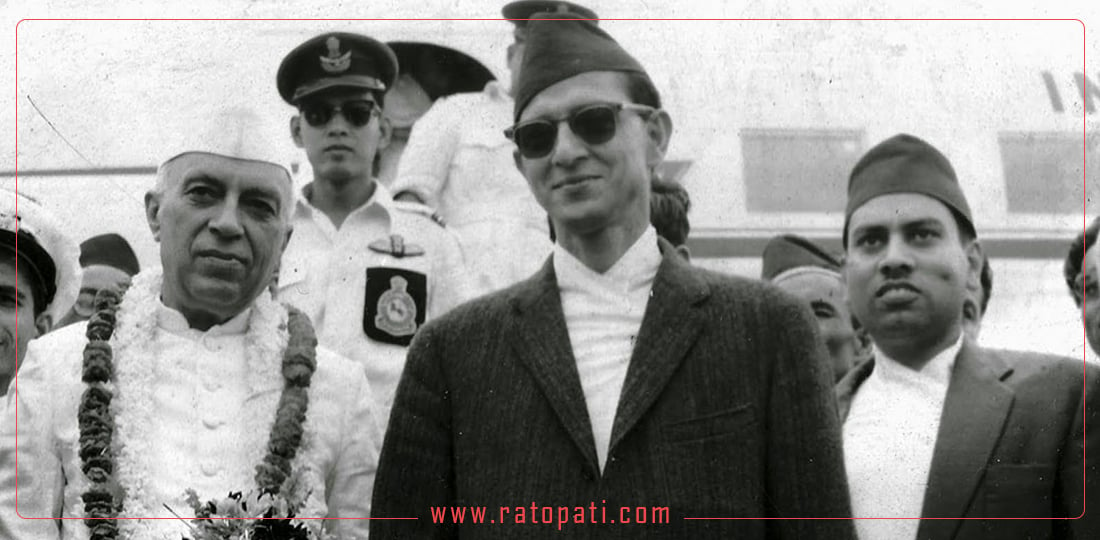
You made the documentary 'Traitorous Politician' about BP and also wrote books. You must have had many interesting experiences. Let's hear about the documentary filmmaking experience – how long did it take, and whom did you meet?
This is very interesting. In fact, I shot the visuals myself for the documentary and captured all the characters on camera. But making the documentary required significant financial support. Initially, the book 'BP's Rebellion' was published, and then the documentary was made. It took us about 6 years to make this documentary. By the time the documentary was ready, some of its characters had already passed away. There was a secretary from the Khanaal family in the palace, whose interview I needed to take. But people from the palace were reluctant to speak.
Later, I reached his house through his neighbor and took the interview. Coincidentally, an event that never happened in my life occurred – the memory chip containing that interview crashed! I had a backup audio, but that audio also got frozen. This is the incident that saddened me the most; I lost that interview. Therefore, journalists must always keep a strong backup. I could have used two or three cameras, but I didn't. However, I am happy to have been able to document a significant period of history.
There is another instance related to BP's return to Nepal in 2033 BS when the referendum was announced. While leaders today compromise for position and prestige, BP Koirala was offered at that time to remove the monarchy and become the first President of the republic. But he refused.
BP did not become BP for nothing. He questioned, 'If I remove such an established institution on the instigation of a foreigner, just to become President, won't they remove me in a second if I don't follow their word tomorrow? What will be the stability of Nepal then?'
The Parliament Secretariat recently published your two books, 'Various Dimensions of the Advisory Assembly' and 'A Collection of Representative Stories from Nepal's Parliamentary History'. How can we encounter BP in these books?
Both these books mention the Advisory Assembly. The Advisory Assembly was a structure created after 2007 BS to function as a parliament until the Constituent Assembly elections were held in Nepal. Three Advisory Assemblies were formed: in 2008, 2011, and 2015 BS. BP himself was a member of the 2015 and 2008 BS Advisory Assemblies, and he raised many important issues.
However, this book only includes general information about those issues.
My other book, 'Nepali Parliament: From the Buddhist Era to the Advisory Assembly', is under preparation, and it contains detailed information. In it, BP strongly advocated against a proposal passed in the Advisory Assembly regarding holding Constituent Assembly elections. Because it was the King's game at that time. You can see what games were being played to destabilize democracy and how BP tackled them.
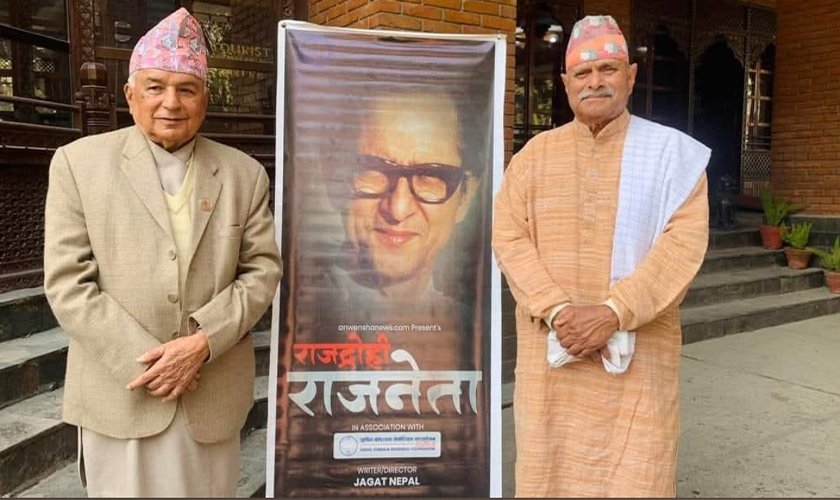
Another instance is connected with the story of BP's 'First Parliament'. If you look at that, you can understand what the situation was like at that time. These two books will be very helpful in understanding how parliament has evolved in Nepal and what the British model of parliamentary practice is.
Are you coming out with any more new books or documentaries on BP?
Not immediately. Right now, my focus is on parliament. I am working on something about the National Panchayat, and then I plan to do more work on parliamentary subjects. However, we do not have a tradition of archiving, and there is a lack of resources. All work has to be done on a personal level. So, I cannot say for sure right now, but the effort is ongoing.
What would you like to say on the occasion of BP's 44th memorial day today?
BP Koirala was an extraordinary personality. He was diagnosed with cancer in 2003 BS. It was only after getting cancer that he felt the need to form a party. Even when his death date was set, he recorded his biography with Ganeshraj Sharma. He never became discouraged; he always moved forward. He had high integrity. He was Prime Minister for only 18 months. Many people have become Prime Ministers in Nepal, but why do all people try to become like BP? Therefore, if we can take inspiration from his contribution and what he gave, and lead Nepali politics towards morality and integrity, that will be the true tribute to him.
This specific news has been automatically translated by AI. As a result, there may be some inaccuracies or language errors.