Remembering Pushpa Lal: A Legacy of Integrity and Resistance
_94pgjayrcn_zoxu53dqil_dyyiejt4dp_StxQHAqYBz.jpg)
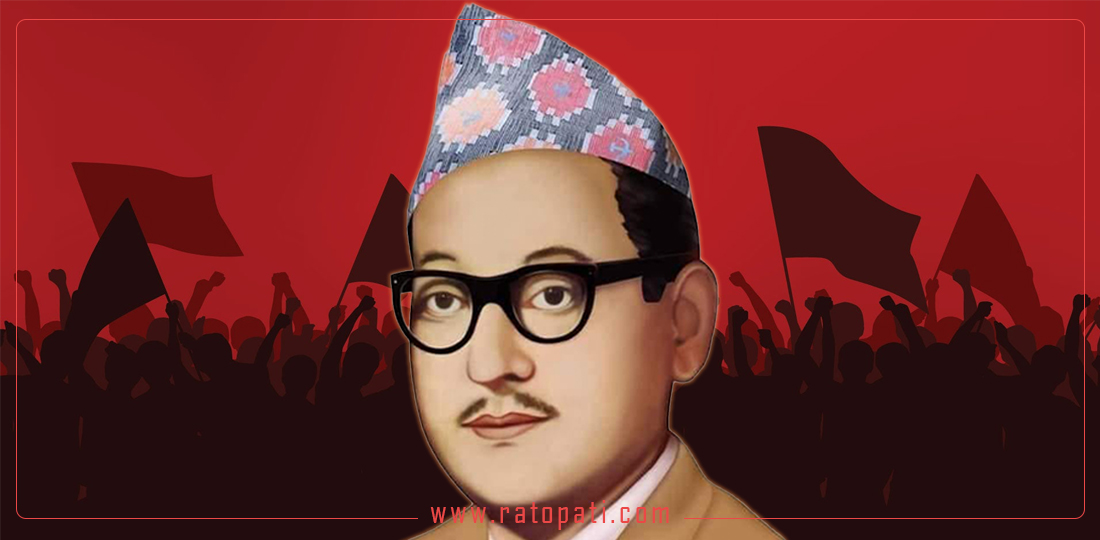
Today is the 48th Pushpa Lal Memorial Day! Generally, in the history of Nepali politics, and especially in the history of the Nepali leftist communist revolutionary movement, the name of the most honest, most revolutionary, and most clean, principled, and ethical political leadership, ideological personality, unwavering warrior, and tireless scholar is – Pushpa Lal.
Therefore, it is no exaggeration to say that the most revered, most exemplary, and most praiseworthy unique personality, the founding General Secretary of the Communist Party of Nepal, Pushpa Lal, is the best and universally accepted leader in the history of the Nepali patriotic and left-democratic movement.
Today, July 7th, the 48th Pushpa Lal Memorial Day, is a historic occasion to heartily remember the sacrifice, penance, sacrifice, and achievements made on the basis of proletarian sentiments, values, lifestyle, customs, and culture adopted by him to contribute to the fields of revolutionary communist thought, politics, organization, and struggle, to internalize them, and to express a firm commitment and strong resolve to implement them.
In this regard, I consider it my heartfelt duty to offer heartfelt tributes and revolutionary greetings to him from the bottom of my heart!
Furthermore, in the current serious, sensitive, and dire situation of increasing, open, and naked foreign interference in the country and the despicable and hateful trend and activities of brokerage, betrayal, and national surrender by the Nepali ruling class, bowing before it, it is necessary to remember, honor, and evaluate Pushpa Lal and his thoughts, sentiments, and actions, and accordingly, to seriously adopt and firmly implement correct, ideological, and relevant thoughts, policies, and programs.
There are some specific contributions of Pushpa Lal for which Nepali patriotic, people's democratic, and revolutionary people, cadres, and leaders remember and honor him. In addition, some of his extraordinary qualities such as unwavering loyalty to principles, strong commitment to policies, deep study of subjects, simplicity in work style, practical honesty, dedication to work, and faith in revolution are memorable and exemplary.
He established and announced the Communist Party of Nepal, expanded, strengthened, reorganized, and revolutionized its organization, and prominently carried out class struggle and political struggle. He formulated political strategies and tactics by meticulously analyzing political forces. In this context, he has made some notable contributions, including pioneering and guiding the path of a united people's movement to fight against the main enemy with all its opposing forces (secondary enemies) forming a front.
It is due to these contributions that Pushpa Lal can be highly evaluated as great, forever memorable, and worthy of respect. Especially among the dangerous tendencies of external interference and national surrenderism and class surrenderism, the most serious, sensitive, and urgently important issue is the increasing imperialist interference and the national surrenderist thinking-tendency and activities of succumbing, bowing, and faltering before it. Therefore, Pushpa Lal's policies, decisions, and directives in this regard are particularly memorable and implementable today. These are mainly:
First, the idea of engaging in an uncompromising, united, and strong struggle for the Nepali people's democratic revolution, recognizing that foreign interference (in his words, mainly Anglo-American imperialism and Indian monopoly capital) and domestic feudal reactionary exploitation and oppression are occurring in Nepal and that this is a serious and complex fundamental problem. In this process, Pushpa Lal meticulously and deeply studied Nepali society and, as Lenin said, made a scientific, objective, and realistic class analysis of the then Nepali society and remained steadfast and tirelessly engaged in making it happen throughout his life. During this period, he tirelessly strived to implement the political line of advancing through the path of a united people's movement according to Nepal's specificities, fighting against the main enemy by forming fronts even with secondary enemies.
Pushpa Lal strongly opposed and resisted the domestic and foreign exploitation, oppression, dictates, high-handedness, and interference during his lifetime. In this context, he strongly opposed the Treaty of Sugauli in 1816, the tripartite agreement between British India and Nepal in 1947, the Gorkha recruitment centers, the Nepal-India Peace and Friendship Treaty of 1950, the notorious tripartite Delhi Agreement of 1951 between the King, the Ranas, and the Nepali Congress, which banned the major anti-Rana movement force, the communist force, under Indian pressure, and all subsequent unequal, disrespectful, humiliating, and unjust treaties between Nepal and India, as well as the so-called
This specific news has been automatically translated by AI. As a result, there may be some inaccuracies or language errors.
_Oyb8PJCrLF.jpg)