The Inevitable End of Monarchy in Nepal

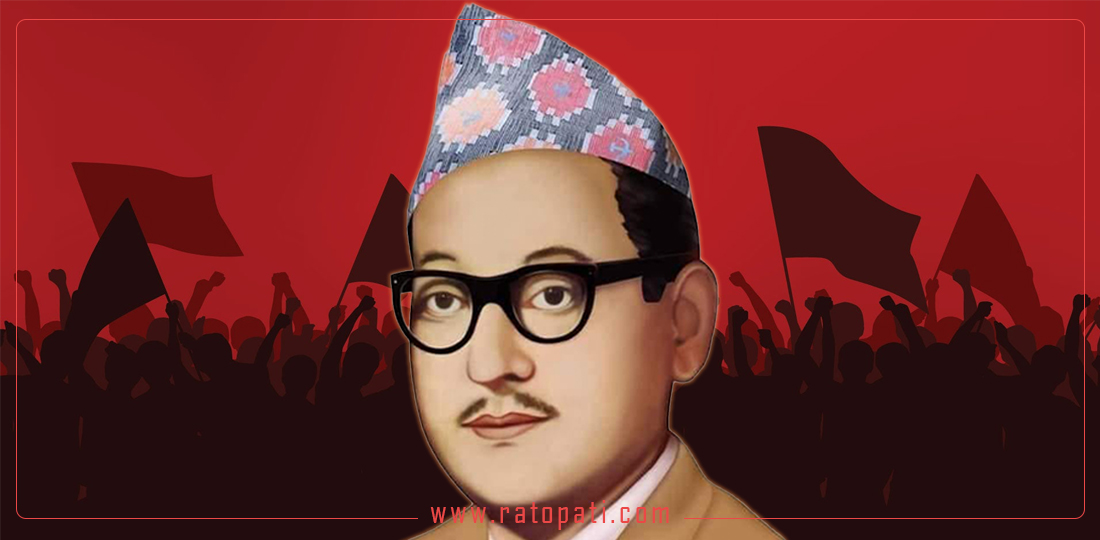
Before delving into the argument and facts that the future of monarchy in Nepal is bleak and its end is inevitable, it is necessary to briefly consider what the political, economic, and social system of Nepal was like during the Rana period.
On one hand, the Rana family, who came to power under the umbrella of British imperialism, and their sycophants, who wiped out all their feudal rivals and even brought the king under their control, seized most of the land in Nepal. Nepal's largest landowners were primarily found in the Terai region. Thus, we see the rise of a powerful landowning class in Nepal. This feudal class also had the right to punish peasants with fines and beatings, and even imprison them for up to 15 days. The peasant community was also rapidly transforming into four class levels - rich, middle, poor, and landless. The poor and landless peasants, especially those from tribal and untouchable communities, were becoming serfs on one hand, and on the other hand, were being forced to seek employment in the British Gurkha regiments and in countries like India and Burma. It is clear that at the same rate at which peasants were being deprived of their land, they were also being forced to leave their country. Thus, the wealth earned by going abroad and toiling with their blood and sweat had to be deposited in the homes of feudal, deceitful, corrupt officials upon reaching their villages and towns. Consequently, the contradiction between the feudal lords and the peasants was increasing.
Since before Christ, Nepal had been a center of landlocked trade in Central Asia. However, this stopped during the Rana period, and Nepal's trade routes shifted to India, and Nepal's landlocked trade and industries gradually fell into the hands of Indian capitalists. This destroyed the foundation for the growth of a national market that had been laid after the unification of Nepal. Due to the lack of roads and difficulties, the existing national market was also shrinking, and Nepal's regional markets were increasingly coming under the control of the Indian market. Furthermore, with the establishment of Indian railway facilities in Nepal's Terai, trade markets and some industries were opened with Indian black capital investment, further integrating Nepal's market with the Indian market. This led to the creation of a comprador capitalist class that favored Indian capital on one hand, and a wave of dissatisfaction arose in the national capitalist class on the other.
Despite being divided into various castes, tribes, and religious communities, class divisions were increasingly growing in Nepal. Regardless of caste, creed, religion, or sect, within Nepali society, one group was transforming into landowners, another into capitalists, a third into peasants (with various levels among peasants), a fourth into educated middle class in cities and markets, and a fifth into the proletariat. Thus, class interests and class consciousness were progressively developing in Nepal. The work of consciously propagating and organizing the interests and consciousness of all classes was mainly being done by the educated community. Therefore, literature representing the interests and consciousness of all also began to be produced. In addition to the literature and culture of the feudal class, literature representing the interests of the capitalist class and the proletariat and landless also began to be produced.
In such a social, economic, and cultural situation, all political power in Nepal was concentrated in the hands of a feudal family, the Ranas – and even then, only in the hands of the 'A' class Ranas, and further, only in the hands of the Prime Minister's family. This ensured the position of the Prime Minister, who had many sons and grandsons, while those with no children or few children had to be ousted from the position of Prime Minister. Such was the nature of Rana autocracy.
Therefore, the king himself, the royal family, the landowning class, the capitalist middle class, the peasants, and the proletariat were all opposed to the autocratic rule of the Ranas. This situation caused Nepal's politics, which had been confined only to the feudal class for ages, to break through the feudal circle during the Rana period, penetrate the capitalist class, and reach the landless proletariat. The direct proof of this is the formation of various political parties, including the Communist Party of Nepal. Thus, Nepal's politics developed with class consciousness.
Leaders of Nepal's capitalist parties began to see a daydream of transforming the monarchy into a constitutional monarchy by flattering the king. Even if the king's intentions were not understood by the leaders of the capitalist class, the king quickly understood their intentions.
After the revolution of 2007 BS, the king also got an opportunity to play an active role in Nepal's politics. During and after the revolution of 2007 BS, a wave of class struggle arose among the peasants for political and civil rights and against feudal exploitation. This wave began to alarm the feudal and capitalist class leaders of the country. It was sought to create a compromise between the traditional and modern powers, contrary to the interests of the common peasant masses. This was not acceptable to the king, who had been freed from the bondage of the Ranas and had taken all military power into his hands. Nepal's royal family began to dream of developing an absolute monarchy. Many cunning schemes were devised for this. Immediately after the revolution of 2007 BS, the royal family, as if revealing their inner self, said among the leaders of the revolution – 'We are victims of history.' Did the leaders of the capitalist class not understand the hidden cunning in this statement, or did they understand it and then start writing articles and spouting speeches? Eventually, they feigned ignorance. Then these leaders of capitalist parties wrote and spoke extensively about 'The Contribution of the Shah Dynasty to Nepal,' with even B.P. Koirala of the Nepali Congress explicitly writing – Nepal's rivers, streams, forests, and jungles may dry up, flowers may wither, but the fame and glory of Nepal's king can never wither.
Leaders of Nepal's capitalist parties began to see a daydream of transforming the monarchy into a constitutional monarchy by flattering the king. Even if the king's intentions were not understood by the leaders of the capitalist class, the king quickly understood their intentions. Understanding their intentions, the king slowly took all military power into his hands and planned to dissolve the liberation army, while on the other hand, he instigated inter-party conflicts to weaken and defame the parties, and to draw opportunistic and feudal elements from each party to his side. He also showed favor to one party after another by offering the temptation of forming a cabinet, thus postponing the elections for the Constituent Assembly. Finally, through the leaders of the parties themselves, he raised the question of how there could be two sovereign institutions in one country – the monarchy and the Constituent Assembly – and instead of Constituent Assembly elections, he demanded parliamentary elections and, under the guise of 'public demand,' conducted parliamentary elections according to the constitution he himself had given.
If the parliamentary system formed in this way had taken root in Nepali politics, it would have curbed the monarchy, and political power would have reached the general public in an organized manner. This would have been detrimental to his own interests and those of the entire landowning and comprador capitalist class. Therefore, claiming that the parliamentary system was a foreign imitation and that party politics could not lead to the country's (i.e., the king's and feudal class's) progress, he dissolved parliament, banned all political parties, and initiated the non-party Panchayat system from 1960. Today, an absolute monarchical system has been re-established in the country.
When viewed relatively, not absolutely, the end of this absolute monarchy is inevitable. This is not the first time that absolute monarchy has been established in Nepal. This has been discussed above. Every time the king succeeded in establishing absolute monarchy in Nepal, it also fell. What is the reason for this? The reason is clear – in absolute monarchy, state power falls into the hands of the king and a small circle around him, and that power is used for personal gain in the name of law and order. Gradually, this autocracy becomes alienated not only from the general public but also from its own class. Then the feudal class also begins to think of ways to curb such autocracy and engages in political struggle for this purpose. Today, this is happening directly in Nepal.
Initially, individuals who were interpreters and architects of the Panchayat system, such as Surya Bahadur Thapa, Vishwabandhu, Rishikesh Shah, etc., have also begun to demand political rights, seeing the need for reforms in the Panchayat system. This is intensifying the conflict between the Panchayat and the administration. Even Tanka Prasad and K.I. Singh, who were openly supportive of the Panchayat system yesterday, have started demanding political rights. Again, the narrow-minded opportunists who tried to make the king a Sukarno and a Sinhanouk are also demanding political rights today. Nepal's absolute monarchy has progressed to such an extent that it does not even accept the surrender of the Suvarna group. Instead, to break the checks and balances appearing on all sides, it is arranging police and army forces in every nook and cranny of the country and spreading a network of spies everywhere. Not content with that, the District or Zonal administrators (not the judiciary) are being given the authority to confiscate all property and impose the death penalty by bringing a bill in the National Panchayat. The saying 'The King's Police Rule' has become commonplace today.
Certainly, the revolution that will now take place in Nepal will not be a revolution to remove one monarchy and establish another, or to establish a constitutional monarchy, but a revolution that will be 'dangerous for the rich or landowners,' and it must be so. The main objective of such a revolution should be to uproot feudal and foreign interests from the soil of Nepal, establish a people's democratic system, and move towards socialism.
Any monarchy that is isolated from the people cannot last, and it is self-evident that 'The King's Police Rule' will also not last. Furthermore, where will the vast sums of money required for the oppressive machinery be obtained? If the aid and loans from foreign governments stop, the entire administrative machinery of the country will collapse. Therefore, it is self-evident that this absolute monarchy cannot protect the freedom and sovereignty of the country.
For ages, our country has been influenced by both our giant neighboring nations, China and India. No one can deny this. Today, monarchy has ended in North China and a socialist democratic system has been established, while in South India, a capitalist democratic system is in place. Can Nepal remain untouched by this influence? Can the feudal authoritarian Panchayat system protect the absolute monarchy by blocking the influence from both north and south? Certainly not. Even those who had the courage and determination to stop it are returning, so its end is inevitable. This is an irrefutable truth. Furthermore, looking at the world today, the days of monarchy are numbered. Monarchy remains in only 20 countries today – most of them constitutional monarchies. Recently, absolute monarchies in Afghanistan and Ethiopia collapsed. Some absolute monarchies in Iran and the Arab world, which are themselves owners of oil wealth, are facing fierce opposition from their people, while the monarchy of our country, which has to depend on foreign aid even to run its administrative machinery, whose end is not imminent, whose end would be?
Today, all these facts and statistics make it clear that the day of the end of monarchy in Nepal is approaching. This absolute monarchy is the last flicker of Nepal's monarchy. King Mahendra, understanding this, clearly stated – 'In today's era, a large part of the country's population being hungry, naked, and poor will be dangerous not only for the country's peace, security, and freedom but also for the rich or landowners.'
Certainly, the revolution that will now take place in Nepal will not be a revolution to remove one monarchy and establish another, or to establish a constitutional monarchy, but a revolution that will be 'dangerous for the rich or landowners,' and it must be so. The main objective of such a revolution should be to uproot feudal and foreign interests from the soil of Nepal, establish a people's democratic system, and move towards socialism.
(Reprinted from Pushpalal Selected Writings, Volume 1)
This specific news has been automatically translated by AI. As a result, there may be some inaccuracies or language errors.
_Op5LNdEvfb.jpg)