Tribhuvan University Faces Challenges, Requires Transformative Reforms


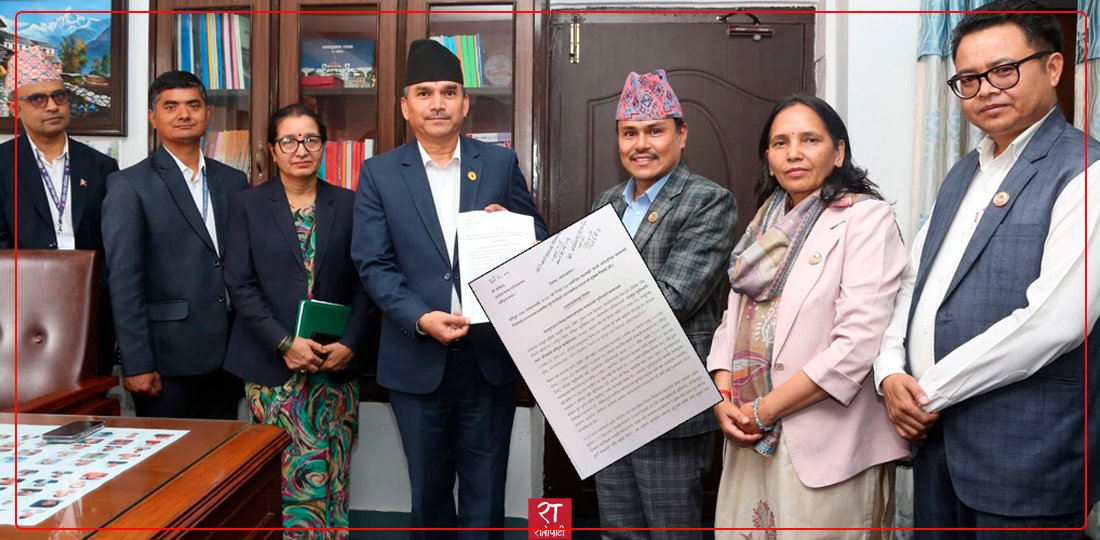
Following the abolition of political appointments made by past governments through ordinances, the government has simultaneously filled leadership positions in more than half a dozen universities. Minister of Education Sasmita Pokharel, who is also the co-chancellor of Tribhuvan University, congratulated the newly appointed vice-chancellors of seven universities by posting a group photo on Facebook on the day of their appointment, writing, 'Lets build our universities together'. The government's simultaneous appointment of current vice-chancellors is widely understood to be with the expectation of rapid transformation of universities that have lost their track and are deteriorating due to politicization. While respecting the different perspectives on the steps that the current university leadership should take for transformation, this article attempts to discuss our perspective. Tribhuvan University is the backbone of higher education in Nepal. Established in 2016 BS, this university today leads the education of 64 constituent campuses and more than one thousand affiliated campuses across the country, providing higher education to approximately five lakh students. However, in the last two decades, the university has been facing various challenges due to the decline in educational quality, weak research status, administrative complexities, lack of good governance and transparency, weak management, political interference, and lack of long-term strategic vision. Simple administrative reforms alone cannot improve this situation. Learning from the experiences of top universities in developed countries, institutional, policy, and structural reforms have become imperative. Transparency in Leadership Selection The world's top universities select their leadership through open competition, based on merit, research achievements, managerial capacity, clear vision, and professional thinking. However, the selection of leadership in Tribhuvan University is still not free from allegations of political influence and power-sharing. Therefore, open applications, independent search committees, public presentations, and merit-based evaluation systems must be mandatorily included in the selection procedure. If the procedure implemented by Prof. Dr. Kesharjung Baral, when he was the vice-chancellor, is continued for the positions within the university, the various bodies of the university will certainly get capable leadership. Balance Between Teaching and Research The identity of excellent universities is determined not only by good teaching but also by quality research. In Tribhuvan University, teacher evaluation is still focused on teaching, attendance, and workload. Institutional arrangements must be made for each teacher for annual minimum research publications, research grants, study leave, and expansion of research laboratories. The development of a research culture is possible only by linking promotion and performance evaluation with research achievements. Research by researchers should be made useful for innovation, entrepreneurship development, problem-solving, and improving the policies, plans, and programs of state agencies. For this, the research-oriented institutions currently operating under TU should be merged to form a powerful Research, Development, and Innovation (RDI) department, and RDI cells should be created in campuses to advance research, development, and innovation. Curriculum Reform and Industry Collaboration Globally, universities regularly update their curricula and implement them by incorporating suggestions from industry, employers, alumni, and researchers. However, many curricula in TU have not kept pace with the times. Tribhuvan University should restructure the subject committees, faculties, and academic councils formed in each faculty and subject, and establish curriculum innovation cells in each faculty, campus, and department to incorporate contemporary topics such as project-based learning, internships, digital skills, AI, and entrepreneurship development in collaboration with industry. Educational programs that meet the demands of time and market should be developed and implemented. The Curriculum Development Center should be freed from the task of equivalence and engaged in the work of curriculum revision and updating. Digital Administration and Integrated MIS System An integrated digital system has become indispensable to make university administration fast, transparent, and accountable. Problems of paper-based processes, delays in service delivery, and record management still exist in Tribhuvan University. All administrative services, including admissions, examinations, results, finance, staff management, and leave, need to be operated through an integrated Management Information System (MIS) and transformed into a 'One Digital Platform Service System'. Academic Freedom and End of Political Interference A university is a free and autonomous institution for knowledge production. Political interference in selection, appointment, transfer, promotion, examination, research, teaching, and curriculum development weakens the credibility of the university. Therefore, clear policies on academic autonomy, independent selection committees, assurance of departmental authority, and a code of conduct regarding political neutrality should be implemented. It should be ensured that university decisions are made based on academic standards. The environment for practically implementing the recently announced code of conduct policy by the government in the university should be created. Professional Development of Teachers and Staff The basis of university quality is skilled teachers and capable staff. Regular training after appointment, modern teaching methods, information technology, research writing, study opportunities, career development, participation in international conferences, and leadership development programs should be made mandatory. Similarly, regular capacity development programs related to digital administration, financial management, and information systems should be conducted for employees. For this, the university should establish a Staff College, similar to a separate Human Resource Development Department, and conduct capacity and skill development training, and workshops through it. Student-Centric Services and Participation The student should be at the center of the university. Tribhuvan University should restructure the Center for Student Welfare and Sports and create a Student Support Department. Furthermore, student support cells should be established in all campuses and departments, student support focal heads should be appointed, and through career counseling, mental and health counseling, grievance hearing, academic mentorship, e-siksha platform, and student participation, skill-sharing clubs should be developed. Through this, infrastructure for sports activities under course curriculum and extracurricular activities should be built, and physical and sports activities should be conducted regularly. Financial Self-reliance and Resource Diversification Policies for sustainable financial management should be formulated to make the university, which is highly dependent on government grants, financially self-reliant in the long run. Procedures related to the use and leasing of university land, buildings, and other fixed assets should be formulated and implemented in a timely manner. Additional income should be increased through former students, the private sector, research projects, international donors, consulting services, online and digital service programs, and entrepreneurship and innovation businesses. A separate Asset Management and Resource Mobilization Unit should be established at the center to create a sustainable strategy for making the university financially self-reliant. Cost savings should be achieved by identifying and merging or dissolving various unnecessary duplicated bodies and branches within the university, stopping payments from TU for sending center chiefs and observers to constituent and affiliated campuses for conducting examinations, and cutting other operational expenses. University-Industry Collaboration and Innovation University research, development, and innovation should be linked with society and the economy. For this, collaboration between universities and industries is equally necessary. For this, a separate department can be established, and a Business Incubation and Innovation Department can be created at the center to promote joint research, internships, startups, and entrepreneurship with industry. In addition, entrepreneurship development cells and incubation labs should be operated in each department and campus to collaborate with the private sector, federal, provincial, and local governments for entrepreneurship and innovation. This will help make students entrepreneurial and job-oriented, and the university a partner in knowledge-based economic development. Quality Assurance and International Recognition The university should regularly conduct self-assessments, external reviews, and identify and implement measures to meet the criteria for international recognition. Annual quality reports, student satisfaction surveys, teacher-employee performance evaluations, and academic audits should be regularly conducted in all faculties, campuses, and departments. A standard should be implemented requiring all central departments and campuses to obtain Quality Assurance and Accreditation (QAA) from the University Grants Commission within at least three years. Emphasis should be placed on enhancing international recognition and world-class quality indicators. Affiliated campuses with fewer than one hundred students should be merged or closed within one year. Collaboration should be sought with top universities in international higher education rankings. Restructuring of TU and Decentralization of Services Most of TU's services are currently centralized. Now, the university should be restructured using one of the three models mentioned in TU Vision 2030 and initiate a transformation campaign. Students still have to go to the central body for services related to TU examinations, even though they are from remote areas. Services obtained after coming from far away are not immediately available, and young service recipients who cannot wait for more than a week return with a heavy burden of complaints, which tarnishes the image of the entire university. As a result of not being able to provide timely and efficient services, the younger generation is migrating abroad for studies. The current leadership needs to create a mechanism to deliver every service to the doorstep through decentralization and win the trust of the youth in educational quality. The Way Forward The transformation of Tribhuvan University is not something that can be achieved by the will of one person or a single administrative decision. It is possible only through visionary leadership, clear policies, institutional good governance, academic autonomy, research-oriented work culture, digital transformation, financial self-reliance, and the shared commitment of all university stakeholders. The reform plan perspectives presented here are not just a list of problems, but ideas that can be partners in the vision of establishing Tribhuvan University as a competitive, research-oriented, innovative, and reliable university of the 21st century, and practical roadmaps to enhance its dignity. If these reforms can be implemented institutionally with strong will, effective execution, and continuous monitoring, Tribhuvan University can once again lead national higher education and secure its place among the best universities in South Asia. In the current situation of new leadership, the university should not be operated by patching up the status quo, but by implementing long-term thinking and strategic reform plans to transform TU in line with the aspirations of the new generation. (Lamichhane is the Campus Chief of Tribhuvan Multiple Campus, Tehrathum, and Trital is the Chief of Administration at the Central Department of Psychology, TU.)
This specific news has been automatically translated by AI. As a result, there may be some inaccuracies or language errors.

_ke6hmvuewe_XLPTtgxmKE.jpg)