
Judicial Council Faces Scrutiny Over Delayed Investigations into Judges' Conduct

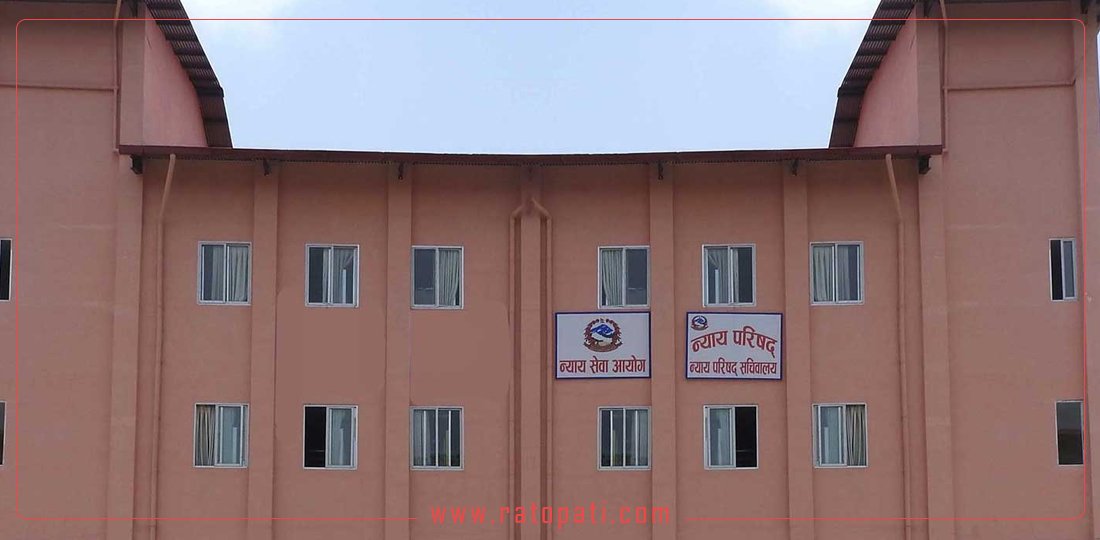
Kathmandu. The investigation process to be carried out by the Judicial Council on the purification within the judiciary and the conduct of judges has itself come under serious question. The issue of investigation of high court judges, which started during the tenure of former Chief Justice Prakashman Singh Raut and for which reports have already been submitted, is still unresolved. Even by the tenure of the current Chief Justice Manojkumar Sharma, the cases of complaints against judges, which should have been quickly resolved and concluded, remain pending for a 'decision'. Although investigations into serious allegations against high and district court judges have been completed, the system of punishment and reward within the judiciary appears ineffective due to the inability of the council to convene meetings or the lack of promptness shown by the leadership. The investigation report against Janakpur High Court judges Khusiprasad Tharu and Arjun Maharjan, who acquitted Nepali Congress leader Mohammad Aftab Alam in a murder case, has been pending at the council for over a year. According to sources, although the committee led by Supreme Court Justice Binod Sharma recommended that they be 'warned', the council has not yet formalized this into a decision. Alam, who was acquitted of murder, has died. However, the council has not yet reached a conclusion regarding the judges summoned to the Judicial Council in that case. This delay and lack of transparency by the Judicial Council has created a situation where the court itself is now being dragged into a case against the council. Reports prepared during the tenure of former Chief Justice Raut are being 'filed away' or left undecided during the tenure of the current Chief Justice Sharma, mocking the judiciary's purification campaign. Advocate Prem Singh Dhami went to the Supreme Court after his complaint against four judges of Lalitpur and Patan (Pushparaj Koirala, Krishnaram Koirala, Chandramani Gyawali, and Tikaram Acharya) received no hearing for seven months. However, after the Supreme Court refused to register his writ, Advocate Dhami stated that he stopped pursuing it, believing he would not get justice. 'According to the Judicial Council Act, the preliminary investigation of a complaint should be completed within three months, but here, even notices are not given for months,' Dhami says, 'The council does not make a decision, and the court says this is not our jurisdiction, go to the council. Where should I go now?' he questions. Sections 10, 11, and 12 of the Judicial Council Act 2073 give the council the authority to dismiss judges for lack of work efficiency, misconduct, and malicious acts. However, reports prepared during the tenure of former Chief Justice Raut are being 'filed away' or left undecided during the tenure of the current Chief Justice Sharma, mocking the judiciary's purification campaign. Kuber Pandey, the information officer at the Judicial Council, states that there are about 200 complaints on record and under investigation. 'The investigation process for complaints against judges is ongoing,' he said, 'A decision is yet to be made on the complaints against the high court judges.' Chief Justice Manojkumar Sharma faces the challenge of making immediate decisions on these stalled files to protect the judiciary's reputation. Previously, when Sapana Pradhan Malla, in her capacity as acting Chief Justice, chaired the Judicial Council, she decided to expedite the investigation of complaints against judges. The Judicial Council meeting was to be held once a week to meticulously investigate complaints against each judge and reach a decision. Although Manojkumar Sharma was on the first list to become Chief Justice, the Constitutional Council recommended his name. After being approved by the parliamentary hearing and appointed Chief Justice, Sharma has presided over three Judicial Council meetings. However, the meetings chaired by Chief Justice Sharma focused on the transfer of judges. They have not shown interest in the investigation of judges. The delay in making timely decisions on serious complaints against judges is causing injustice to innocent judges on one hand, and on the other hand, it is increasing the risk of culprits going unpunished and judicial anarchy escalating. Chief Justice Manojkumar Sharma faces the challenge of making immediate decisions on these stalled files to protect the judiciary's reputation. Previously, when Sapana Pradhan Malla, in her capacity as acting Chief Justice, chaired the Judicial Council, she decided to expedite the investigation of complaints against judges. It was stated that the council meeting would be held once a week to meticulously investigate complaints against each judge and reach a decision. Although Manojkumar Sharma was on the first list to become Chief Justice, the Constitutional Council recommended his name. After being approved by the parliamentary hearing and appointed Chief Justice, Sharma has presided over three Judicial Council meetings. However, the meetings chaired by Chief Justice Sharma focused on the transfer of judges. They have not shown interest in the investigation of judges.
This specific news has been automatically translated by AI. As a result, there may be some inaccuracies or language errors.

_DaDVqJhrUo.jpg)



_AJWOp7WUAt.jpg)