Spain Wins FIFA World Cup 2026 After Defeating Argentina in Final

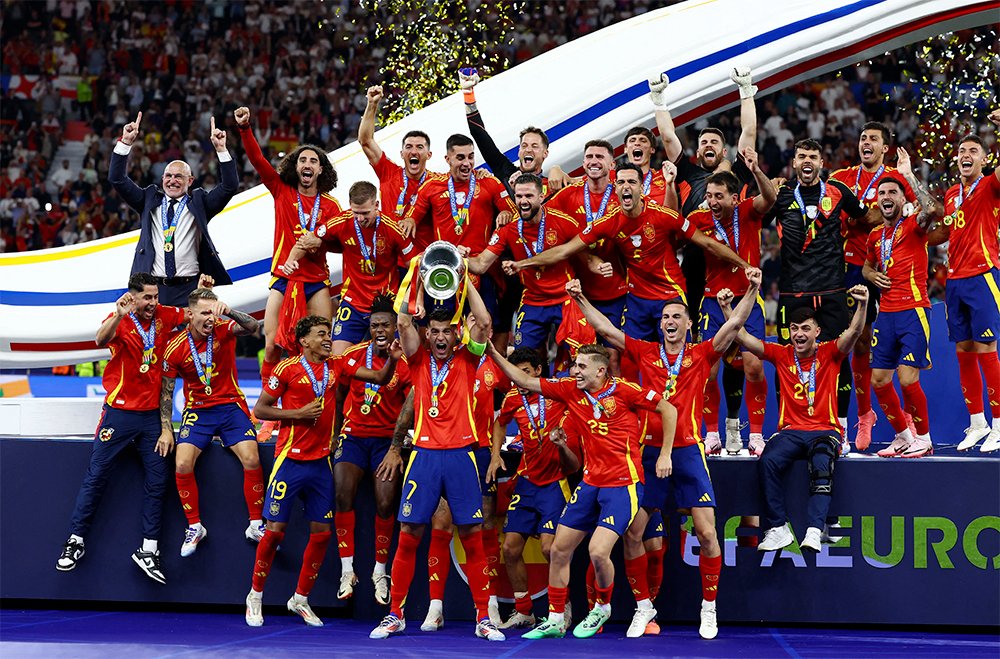
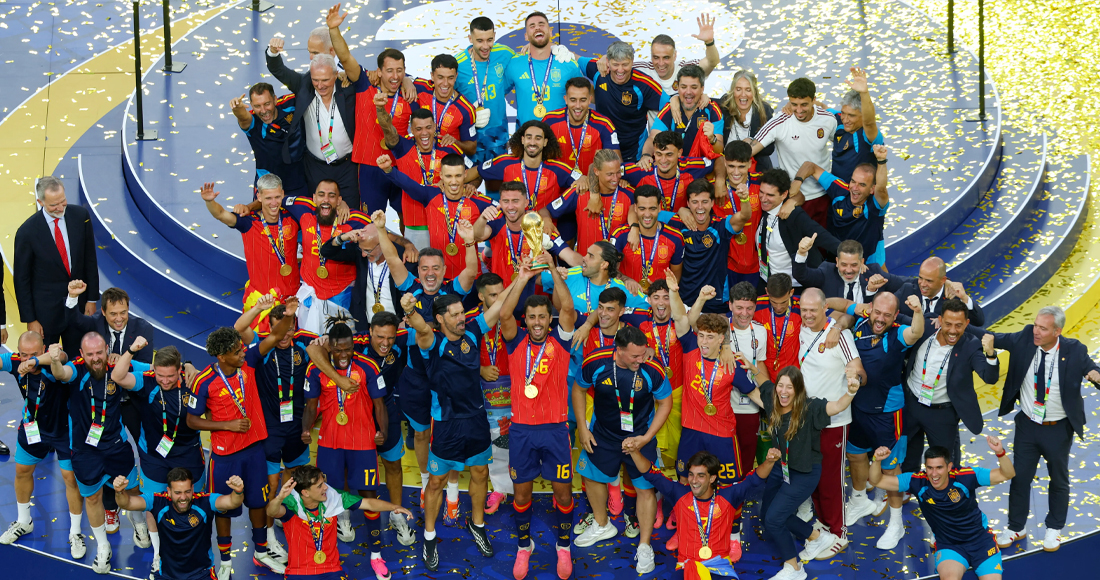
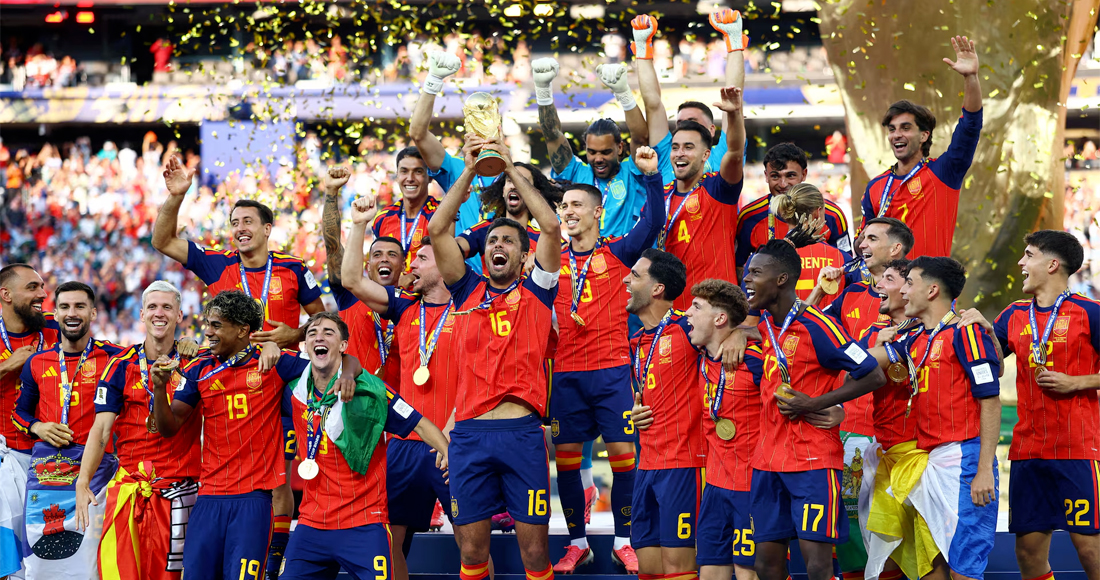
The FIFA World Cup 2026, played in the United States, Mexico, and Canada, concluded on Sunday in New Jersey. In a final that went into extra time, Spain defeated Argentina, who were reduced to 10 players, by a score of 1-0 to win the championship. In what was considered one of the most disappointing finals of the World Cup, substitute Ferran Torres scored the decisive goal. Spain's victory became easier after Argentina's Enzo Fernandez received a second yellow card in the final minute of regular time and was sent off.
The atmosphere remained tense even after the game ended. Argentina's midfielder Leandro Paredes displayed aggressive behavior towards the Spanish players. Spain, who won the title with disciplined defense and excellent midfield performance, was hailed by many as the 'protector of beautiful football.' Now, let's see who emerged as the biggest winners and most disappointing figures of this World Cup.
Winner: Erling Haaland
Norway's star forward Erling Haaland was physically exhausted after losing 2-1 to England in the quarterfinals. But he felt pride within, as he had led his country to historic success in the World Cup. Norway captured everyone's attention in America. Haaland and his fans became sensations on social media. After the tournament, Haaland said, 'My popularity has increased significantly. It's still hard to process everything. I can never forget this tournament where I scored seven goals.'
He scored seven goals in five games, including two goals in the historic 2-1 victory over five-time world champion Brazil.
Haaland added, 'Playing in such a tournament is special in itself. I used to watch the World Cup on television, and now I am playing in it myself. The enthusiasm and unity spread across Norway have deeply moved me. This tournament has changed me not only as a player but also as a person.'
Loser: Neymar
'I tried, I tried a lot. But now it's all over.'
These words from Brazil's star Neymar after losing to Norway in the Round of 16 announced the end of his international career. What a coincidence! He started his journey with Brazil in 2010 in this very New Jersey, and it ended here as well.
However, his final match repeated a familiar weakness of his career. He only wasted time by getting into an unnecessary dispute with Norway's goalkeeper Ørjan Nyland. Neymar was blessed with extraordinary talent. Some even considered his natural ability comparable to Lionel Messi's. When he played with Messi at Barcelona, he seemed destined to become the world's best player in the future. But that dream did not come true.
The reason was singular: despite his talent, he never became as disciplined and professional as Messi. Injuries weakened him in his twenties. Therefore, while a 39-year-old Messi shone by scoring eight goals in another World Cup, Neymar's international journey ended with unfulfilled potential at the age of 34.
In reality, his peak had ended long ago. He achieved many accomplishments but never showcased his full potential. If he had been more disciplined, his place in football history could have been much higher.
Winner: Kylian Mbappé
Many, including former England captain Wayne Rooney, argued that Kylian Mbappé's Golden Boot was not justified because goals scored after France was eliminated were included in the count. But rules are rules. Therefore, Mbappé became the first player in World Cup history to be the top scorer (Golden Boot winner) in two different editions.
An even greater achievement was that with his two goals in the third-place match, he snatched the record for the all-time leading World Cup scorer from Lionel Messi. Achieving this at just 27 years of age is extraordinary in itself.
Considering his age, it is highly likely that this record will extend much further in the future and possibly remain unbroken for decades.
Loser: Julian Nagelsmann
Germany's problems are not limited to the coach. The team has not won any knockout match since defeating Argentina in the 2014 World Cup final. This time, Germany was disappointed again after losing to Paraguay in the Round of 32.
Now, a big responsibility rests on the shoulders of the new coach, Jürgen Klopp. However, Klopp is expected to perform better than his predecessor, Julian Nagelsmann. Nagelsmann's reputation has been severely damaged after Germany's poor performance in the World Cup.
He is only 38 years old and has long been known as a talented strategist. However, his work at both Bayern Munich and Germany has not lived up to that image. Germany defeated Curaçao in the opening match and was also a victim of a controversial VAR decision in extra time against Paraguay. But overall, the team's play was highly predictable, slow, and lacked creativity.
Although Kai Havertz refused to blame the coach, most held Nagelsmann responsible. Therefore, his resignation after the tournament was not a surprise to many.
Winner: Lamine Yamal
Spain's coach Luis de la Fuente said after the Round of 32 match against Austria, 'The World Cup has yet to see the best of Lamine Yamal.' In fact, due to injury, Yamal could not perform at his best. He scored only one goal in eight games and provided no assists.
However, the scene after the final became one of the most emotional moments in world football. After Spain defeated Argentina 1-0, Yamal hugged Lionel Messi to console him. The famous picture of Messi bathing Yamal as a child has been circulating for years.
That scene symbolically conveyed the transfer of leadership from one generation to another. Of course, Yamal still has a long way to go to reach Messi's achievements. But at just 19 years of age, he has already won both the European Championship and the World Cup.
Coach De la Fuente said, 'This success will make him more mature. He prioritized the team's interests over personal ones. That's why he is an extremely important player for our team. In my opinion, he played an excellent World Cup.'
Loser: Christian Pulisic
After losing 3-0 to Belgium in the Round of 16, US captain Christian Pulisic stated that the positive aspect was that he could rest for some time due to injury. Rest was necessary for Pulisic, who has been plagued by injuries throughout his career. But fans did not want to hear such comments after one of the most disappointing losses in American football history.
Landon Donovan, a great player in American football, publicly criticized him. Donovan said, 'I would have been dragged off the field from a knockout game of a World Cup happening on home soil. I would have been angry at the doctors and left the field.'
He accused Pulisic of failing to show the expected leadership in big games. According to Donovan, Pulisic, who performs well in ordinary games, has repeatedly faltered in crucial moments. After the World Cup, many questions were raised about Pulisic's leadership and commitment rather than his playing ability.
Winner: Iran
Iran was eliminated in the group stage. But despite that, the team earned sympathy and respect worldwide. Throughout the tournament, the Iranian team faced unusual political and administrative obstacles. According to coach Amir Ghalenoei, they became the 'most victimized team in World Cup history.' Due to travel bans and strict security measures, the team arrived at the competition venue very late before the first two games, which seriously affected their preparation.
Captain Mehdi Taremi said after the first game, 'Everything is happening like a disaster for us.' Despite such difficult circumstances, Iran narrowly missed out on reaching the Round of 32. A decisive goal in injury time against Egypt was disallowed due to a very marginal offside.
Ghalenoei urged FIFA after the tournament to ensure that such situations do not happen again. Although Iran's journey in the World Cup was short, the patience and courage shown by the team both on and off the field made them the moral winners in the eyes of many supporters.
Loser: VAR Victims
Video Assistant Referee (VAR) was once again at the center of controversy in this World Cup. The biggest example was the Round of 32 match between Croatia and Portugal. Josko Gvardiol's equalizing goal in injury time was disallowed by VAR, showing an extremely marginal offside.
Croatia's coach Zlatko Dalić said, 'The referee's performance was extremely poor. VAR has destroyed the spirit of football.' He added, 'We have gone too far with the use of VAR. It has destroyed the joy and emotional thrill of the game.'
Many teams, including Germany, Egypt, and Norway, also had to pay the price for controversial VAR decisions in this World Cup.
Loser: Senegal
Senegal's World Cup journey became a story of own goals. The team, which had a 2-0 lead against Belgium in the Round of 32, conceded two goals in the final four minutes. After the game went into extra time, Lamine Camara gave away an unnecessary penalty, which Belgium converted into a goal, sending Senegal out of the tournament.
Midfielder Habib Diallo said emotionally after the defeat, 'We are very disappointed. But a game is played for 90 minutes. We have to blame ourselves, not anyone else, for today's loss.' Off the field, the team was also plagued by bonus disputes, disagreements between the coach and the football federation, and other internal problems. Therefore, their elimination from the tournament was not unexpected for many.
Winner: Morocco
Among the teams proving the strength of African football, Morocco was the most impressive. Nine out of ten qualified African teams reached the Round of 32. Among them, Morocco was the only team to reach the quarterfinals.
Many believe that if top scorer Ismael Saibari had been fit, the result of the quarterfinal against France might have been different. Coach Mohammed Ouhabi remained optimistic after the loss, saying, 'We are disappointed. But if we continue on this path, our future will be bright.'
He added, 'We do not just represent Morocco. We represent the hopes of millions of people in Africa and the Arab world.' Ouhabi, who had done excellent work with the youth teams, had only taken charge of the senior team a few months ago. With Morocco co-hosting the 2030 World Cup, the dream of becoming Africa's first World Cup winner in the future no longer seems impossible.
Loser: Asian Football
This World Cup also exposed the weak state of Asian football. Out of the nine teams qualified from Asia, only Japan and Australia managed to pass the group stage. But both teams were eliminated in the Round of 32.
In North America, Asian teams won only three out of 29 games played. Iraq, Jordan, Qatar, Saudi Arabia, and Uzbekistan all finished at the bottom of their groups.
Uzbekistan's coach Fabio Cannavaro said, 'Except for Japan, Australia, and possibly Iran, all Asian teams need to improve a lot.'
The President of the Asian Football Confederation (AFC), Salman bin Ibrahim Al Khalifa, also admitted that more work needs to be done to compete with the top nations in world football.
Winner: Thomas Tuchel
The third-place playoff match in the World Cup is often not given much importance. The thrilling 10-goal match between France and England reignited the debate on whether goals and assists in such matches should be included in official statistics.
But for England's coach Thomas Tuchel, this victory was very significant. He had faced severe criticism for his overly defensive strategy against Argentina in the semi-final. Therefore, defeating France in Miami to secure third place was a relief for him.
Tuchel did not celebrate much after the match. Instead, he specifically highlighted the fact that England had won its first World Cup medal since 1966. Third place also made it easier for the English Football Association (FA) to justify their decision to extend his contract as coach for another two years. However, many analysts believed that he should have been removed from his post due to his strategic shortcomings against Argentina in the semi-final.
Speaking to the BBC, former player Danny Murphy said, 'Tuchel will save his job, but in my opinion, he didn't deserve it. England missed out on reaching the World Cup final due to his strategic mistakes.'
Loser: Didier Deschamps
The international journey of France's great coach Didier Deschamps did not end on a happy note. Kylian Mbappé wrote in his farewell message, 'People didn't always appreciate your greatness. But time and history will judge your contribution.'
Perhaps Mbappé is right. In the future, history will remember Deschamps as a World Cup-winning coach. But the opinion of many analysts is different. Even when France won the World Cup in 2018, there was a feeling that the team could have played even better given the talent they possessed. Even after that, despite having one of the strongest teams in the world, France failed to achieve the expected success in the European Championship and the World Cup.
Before this World Cup, Deschamps had indicated a move towards a more attacking style. But at crucial moments, the old defensive mindset resurfaced against Spain. In the semi-final in Dallas, Spain completely controlled France. The team, with the world's best attack, could not create significant chances.
Mbappé had said that the players let the coach down. But in the understanding of many, Deschamps himself let France down. The team, considered the strongest contender to win the World Cup, ultimately finished in fourth place.
Winner: Lionel Messi
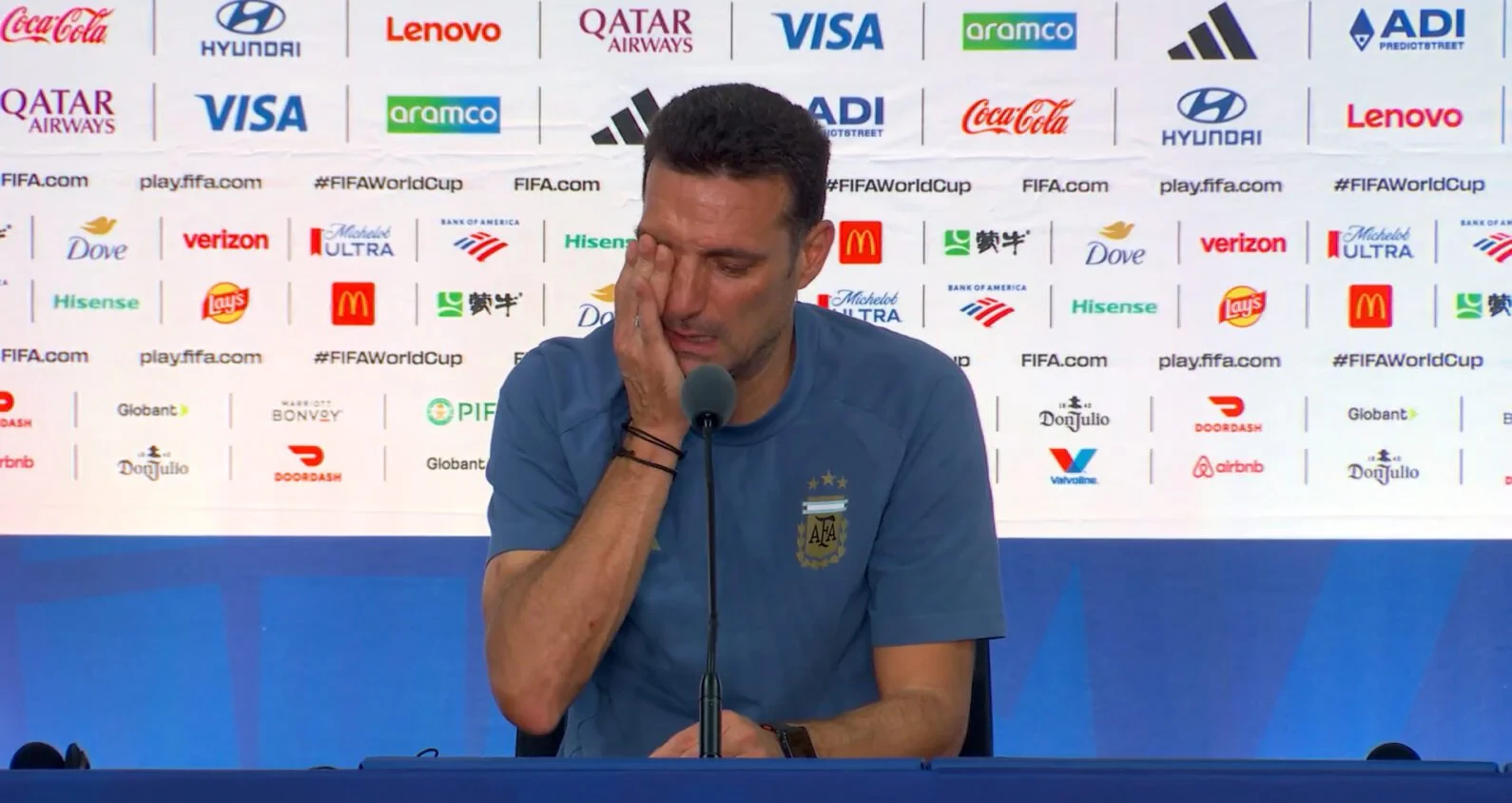
The final match of the World Cup ended in tears for Messi. In what was likely his last game for the national team, Argentina lost 1-0. He touched the ball only 55 times in the final. The team's performance was also the weakest of the tournament.
But this does not make Messi's World Cup a failure. Instead, he performed an even greater miracle this time than in Qatar 2022. At 39 years old, he scored eight goals, provided four assists, and won both the Silver Ball and the Silver Boot.
He led a mediocre Argentinian team to the World Cup final for the third time through his individual brilliance. His magical performance against England in the semi-final proved once again why he is the greatest player in world football.
Speaking to the BBC, Wayne Rooney said, 'This World Cup has put an end to the debate about whether Messi is the greatest footballer in history.'
Loser: Marcelo Bielsa
Uruguay's coach Marcelo Bielsa said a few months ago, 'I am a poisonous person. Those who work with me ultimately suffer.' His words proved true after the World Cup. Uruguay was eliminated in the group stage. The team could not win a single match. The team, ranked in the top 20 by FIFA, should have defeated teams like Saudi Arabia and Cape Verde. But after drawing with both, they lost to Spain, ending Uruguay's journey.
Problems within the team were evident even before the tournament began. Although Bielsa has always been considered a talented coach, his harsh nature has often been accused of damaging relationships with players and management.
After the tournament, he emotionally admitted, 'If anyone asks how my tenure will be remembered, I would say - I am not leaving Uruguayan football with anything.' That admission was painful, but for many, it was also the truth.
Winner: Jude Bellingham
Jude Bellingham looked very disappointed when England lost to Argentina in the semi-final. It was not easy for him to accept that Lionel Messi, nearly twice his age, was still playing at a higher level. But overall, this World Cup was extremely successful for Bellingham. Before the World Cup, there was a debate about whether he should be a starter or not. Some even argued that he should be excluded from the squad due to his impulsive nature.
But throughout the tournament, he played a decisive role against Croatia, Panama, Mexico, and Norway. He scored an excellent individual goal in the third-place match against France, giving England a victory. With seven goals, he became the highest-scoring English player in a single World Cup.
Many believe that in a few years, the England team will be built around him. He may not be Messi, but the possibility of him becoming the best player in world football after Messi is strong.
Loser: Jesse Marsch
Canada reached the knockout stage of the World Cup for the first time in its history. They defeated Qatar 6-0, reached the Round of 16 by scoring in injury time against South Africa, and excited the entire country. But after the tournament ended, the scene everyone remembered was coach Jesse Marsch's press conference.
After losing 3-0 to Morocco, he said, 'I think our team is better than them.' Even though Morocco was clearly the superior team in the match. While it is natural to be proud of one's team, such an expression made many uncomfortable. Critics argued that Marsch unnecessarily disrespected the superior opponent, damaging his own image.
Winner: Spain's Defense
The biggest reason for Spain becoming world champions was not just their attack, but also their incredible defense. Golden Ball winner Rodri played the role of a shield in front of the defense. Coach Luis de la Fuente made the bold decision to field Fabián Ruiz by benching Pedri, which proved completely successful.
Although it was a story of collective success, four players deserved special praise. They were: Pedro Porro, Aymeric Laporte, Marc Cucurella, and the 19-year-old Pau Cubarsí. All four performed exceptionally throughout the tournament.
Spain conceded only one goal in eight games. Goalkeeper Unai Simón also had to make only 10 saves throughout the tournament. Such defensive dominance is considered extremely rare in World Cup history.
Loser: Scotland
Scotland's supporters were among the most enthusiastic fans at the World Cup. But the team itself became one of the weakest in the tournament. Apart from one win against Haiti, Scotland could not achieve much. They only managed seven shots on target in three group stage matches.
Former international player Craig Burley said, 'Even if Scotland reached the next round, it would not be an achievement worth celebrating. That would only be due to the tournament format.' Steve Nicol added, 'The World Cup should be a competition for the best teams. Artificial advancement of weaker teams diminishes the value of the competition.'
Winner: Cape Verde
Not England, France, Argentina, or Spain, but the most beautiful story of this World Cup belonged to Cape Verde. The small island nation almost stunned Argentina in the Round of 32. A goalless draw with Spain, a draw with Saudi Arabia, and reaching the knockout stage were historic in themselves.
Players like the 40-year-old unemployed goalkeeper Vozinha and Dublin-born defender Pico Lopes made the impossible possible. Coach Bubista said, 'This World Cup has once again proven that nothing is impossible.'
Loser: Cristiano Ronaldo
After scoring two goals against Uzbekistan, Cristiano Ronaldo shouted at the camera, 'I'm back! I'm back!' But the reality was different. The 41-year-old Ronaldo is no longer the player he used to be. He appeared less mobile on the field for Portugal. Many felt he was more like a 'static statue' than an active player.
The biggest criticism was directed at coach Roberto Martínez. He was accused of hindering the team's development by not giving Ronaldo a respectable send-off from international football in a timely manner. Ronaldo stated that his legacy would not be affected, but according to critics, the problem was not failing to win the title, but rather him becoming an obstacle in the path of a talented Portuguese team.
Winner: Hossam Hassan
Egypt's coach Hossam Hassan used the World Cup not just as a football competition, but as a platform for humanity. Speaking about the violence in Gaza, he said, 'If anyone in the world does not feel the pain of the Palestinian people, that person is not truly human.' He urged players and media worldwide to spread messages of peace and humanity through football. His message was, 'Let the Palestinians live, let them live their own lives.'
Loser: FIFA's Credibility
The 2026 World Cup raised serious questions about FIFA's credibility. Travel bans, political interference, changes in the tournament format, referee controversies, and decisions regarding the hosts all cast doubt on the fairness of the competition. When journalists raised questions, they were told to 'focus on football,' but the very nature of football had been altered. This tournament was not just a World Cup, but also a test of FIFA's credibility. And in that, the organization failed.
Winner: Gaza and Palestine
Spain's World Cup victory has also been interpreted by some observers in a political context beyond football. During the ongoing war in Gaza, the Spanish government recognized the state of Palestine and urged for a ceasefire, humanitarian aid, and compliance with international humanitarian law. Some Spanish players and football personalities also expressed solidarity with the affected citizens in Gaza through public statements. For this reason, the entire Palestine supported countries like Spain and Egypt.
On the other hand, there have been past public messages from Israeli Prime Minister Benjamin Netanyahu expressing admiration for Lionel Messi and Argentina, and the sports and diplomatic relations between Israel and Argentina are considered close. Based on this, some social media users interpreted the final as a political symbol, portraying Spain's victory as a symbolic defeat of Netanyahu's choices. In difficult circumstances, the people of Gaza rejoiced, even if for a moment, when a country that spoke up for its people lifted the World Cup.
This specific news has been automatically translated by AI. As a result, there may be some inaccuracies or language errors.