Thousands of Youths Protest in Delhi Demanding Educational Reforms and Resignation of Union Minister

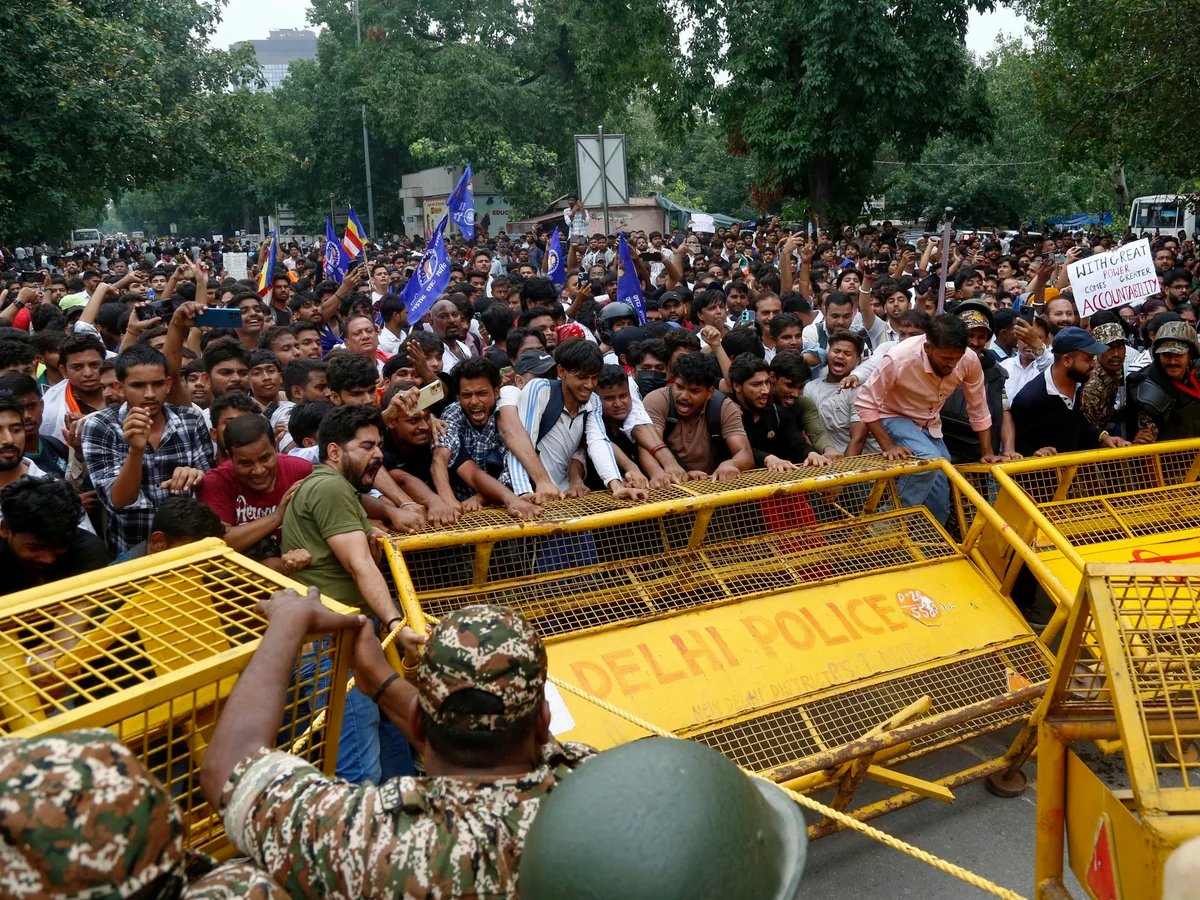
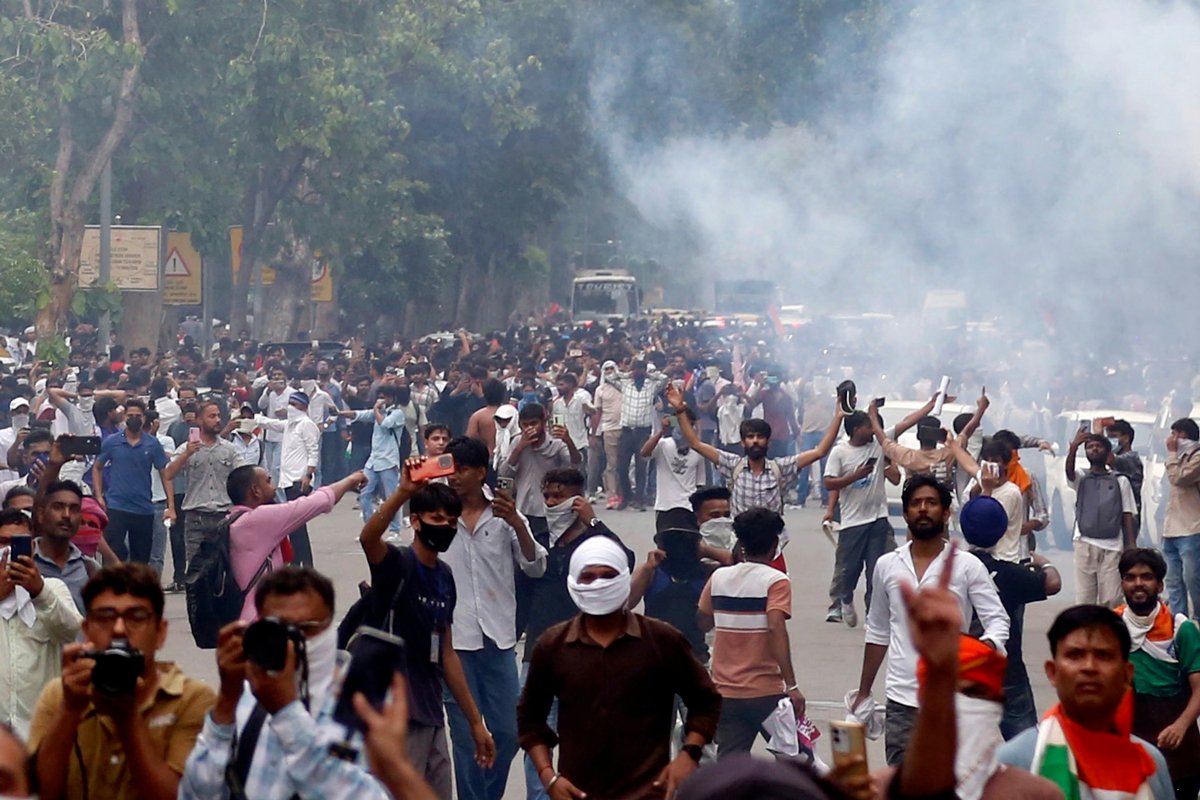
New Delhi. On Monday, the heart of the country's capital, Delhi, remained restless throughout the day. Whether it was Connaught Place (CP), Janpath, or Jantar-Mantar, crowds of thousands of youths were seen everywhere.
Metro stations and roads were closed in many places, yet overcoming all difficulties, youths were striving to reach Jantar-Mantar since early Monday morning.
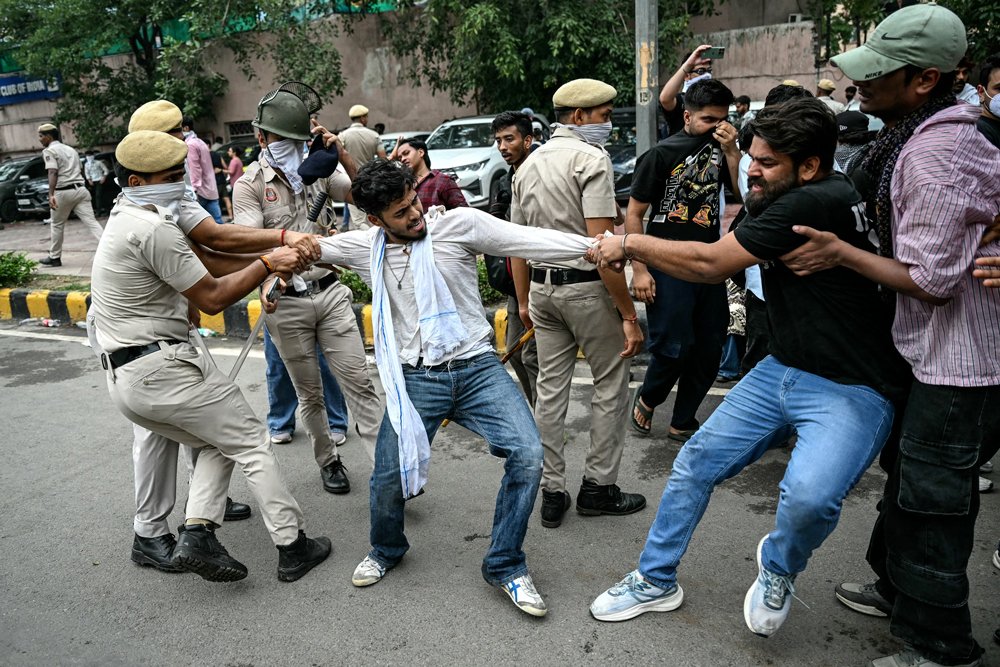
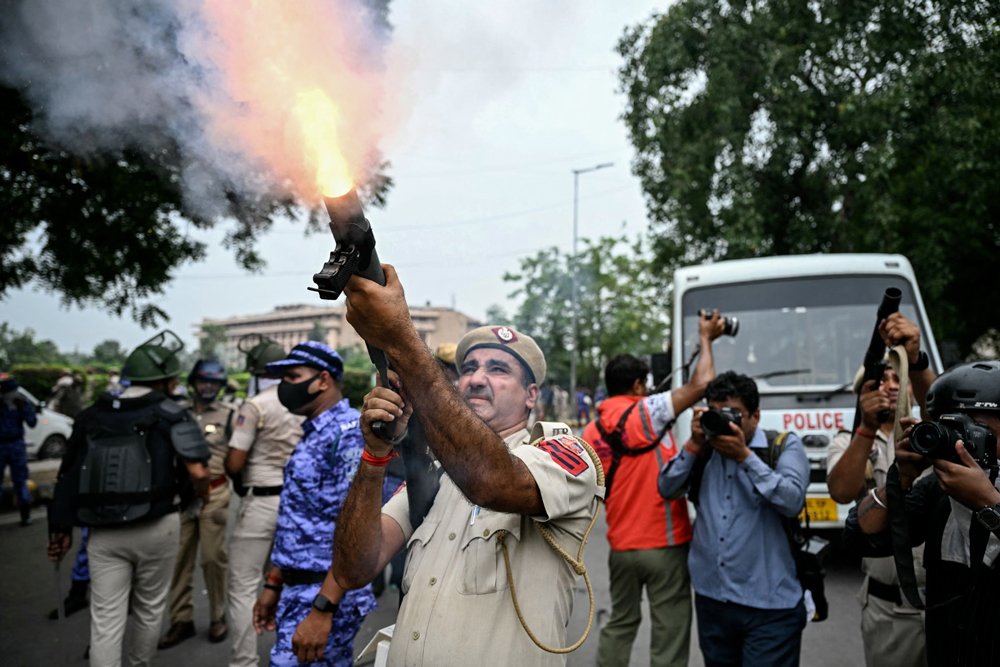
Despite the presence of police with batons and the use of tear gas, these youths remained at Jantar-Mantar from morning until late evening.
For nearly a month, a protest has been ongoing at Delhi's Jantar-Mantar, led by the Cockroach Janata Party (CJP), demanding reforms in the education system and the resignation of Union Education Minister Dharmendra Pradhan.
The question of how strong this Cockroach Janata Party, which has garnered millions of followers on social media in just a few days, is on the ground has been repeatedly raised.
However, on Monday, the answer was found. A large number of college-going students and those preparing for exams took to the streets, sending a message to the government that it is not possible to remain silent on their issues for long.
According to independent journalist Smita Sharma, who has been closely observing this protest for the past month, these students have conveyed to the central government that the problem is not just with the education system, but the government cannot ignore other issues like inflation and unemployment.
- Youths are not just fighting for themselves
In fact, the Cockroach Janata Party had called for a parliamentary march on Monday, demanding the resignation of Union Minister Dharmendra Pradhan. It was due to this call that a large number of youths took to the streets of Delhi.
Amidst initial clashes, the CJP claimed that the government had called them for talks. Meanwhile, Union Minister JP Nadda stated that a proposal for talks had come from the protesters.
Union Health Minister JP Nadda wrote on X, posting a picture of the meeting, 'For the first time this morning, a proposal came from the protesters to talk to the government, and our talks have been ongoing since 11:50 AM.'
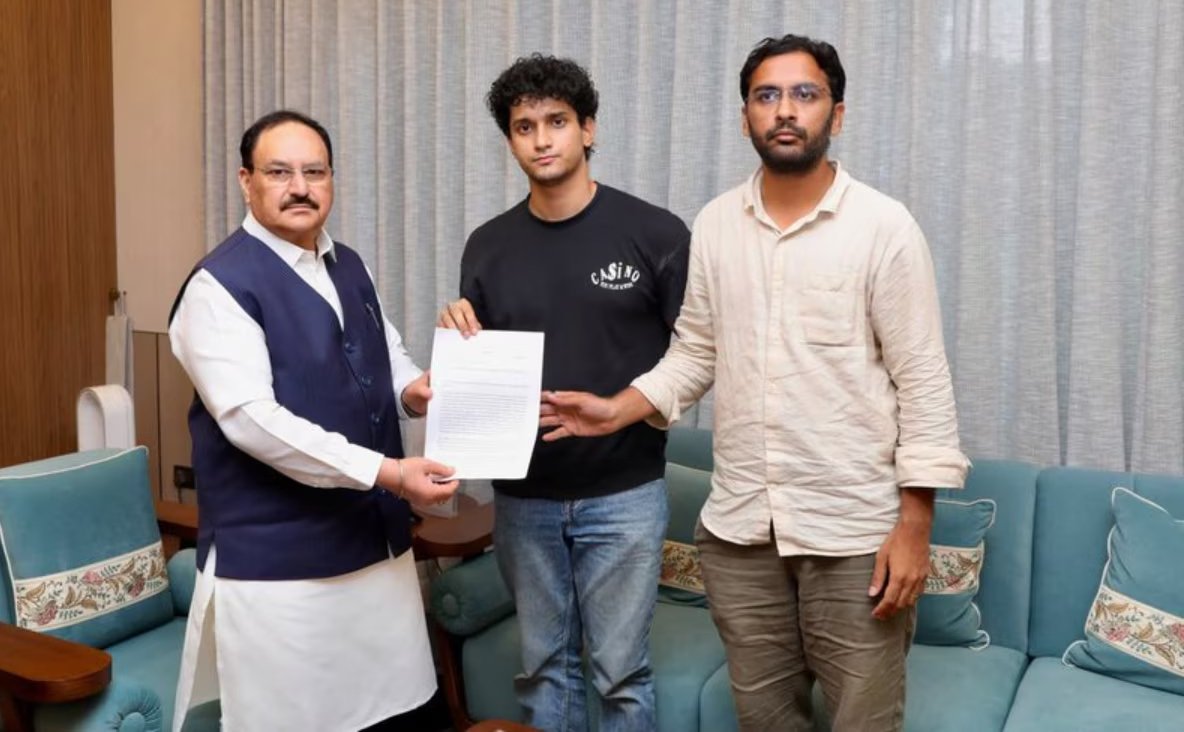
He further wrote, 'The meeting was held in a cordial atmosphere. First, a detailed verbal discussion was held with the delegation, and then they submitted a written memorandum to me at 4 PM. I have requested all protesters to end their dharna and cooperate with the administration to restore normalcy.'
However, despite such a large protest by the youth, the central government has not yet accepted the main demand of the CJP. But in the meantime, the question arises: what was the achievement of the youths coming to the streets?
Social activist Yogendra Yadav, who is supporting the protest, said on Monday at Jantar-Mantar, 'The new generation I have seen at Jantar-Mantar today has strengthened my belief. These youths are not just fighting for themselves. They are fighting for an education system that is just, for an economy that provides employment, and for a political system that is accountable to the people.'
- A warning bell?
Taking this point forward, journalist Smita Sharma claimed that the biggest aspect of Monday's protest was that no one had predicted such a large number of youths coming to the streets.
Sharma also views Monday's protest as a leaderless movement. She said, 'The internet was down. CJP leaders were unable to get their message across. Metro stations were closed. It was not easy to convey the message. The protest was about education, but the issue escalated to inflation, unemployment, and vote rigging. This was discussed by students from class 12 to college students, which is very unusual in itself.'
Regarding how much the challenges will increase for the government in the coming days due to this protest, Smita Sharma said, 'If the government does not take any message from this protest, it will be a big mistake. Because the youth have made it clear that they were ready for a parliamentary march. Even if the CJP stopped them from the parliamentary march, the crowd of thousands at Jantar-Mantar would have marched to Parliament.'
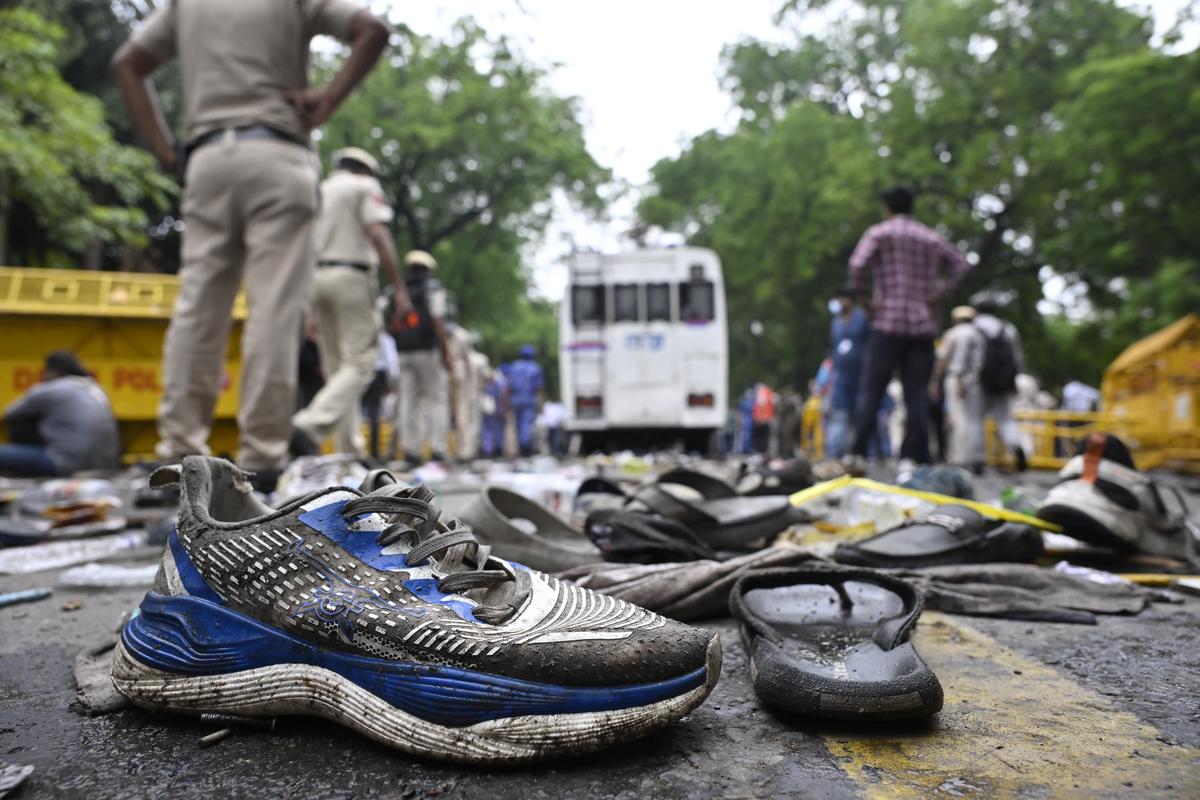
She added, 'They were lathi-charged. Despite that, they were facing it. This is a serious message for the government that there is a frustration, which if not heard, can burst like a balloon today, and can burst again in the coming days.'
Senior journalist Hemant Atri agrees with Sharma's views. According to him, this youth protest is going to become a headache for the Modi government in the coming days.
He said, 'The achievement of this protest is that the Modi government has been taking the people of this country for granted so far, and that illusion has been broken. It's not that people came and went away quietly. They showed that democracy is strong in this country, its roots are deep. The government cannot weaken it.'
'For any country, youths play a very important and decisive role not only in the present but also in the future. Whether it is electing a government or changing a government.'
'This is a warning bell for the government. They cannot ignore the public for a long time. The government must establish accountability, otherwise, the public has not forgotten to come to the streets. The impact of this will be seen in the long term. We have not received our democracy as a handout; we have achieved it. And what was seen on the streets of Delhi is the power of our democracy.'
Atri says, 'The public is returning to the core issues, and the youth coming forward in this manner is a big warning bell for the government. It must improve its functioning.'
This specific news has been automatically translated by AI. As a result, there may be some inaccuracies or language errors.