Nagdhunga-Sisnekhola Tunnel to Operate by July with Modern Toll System

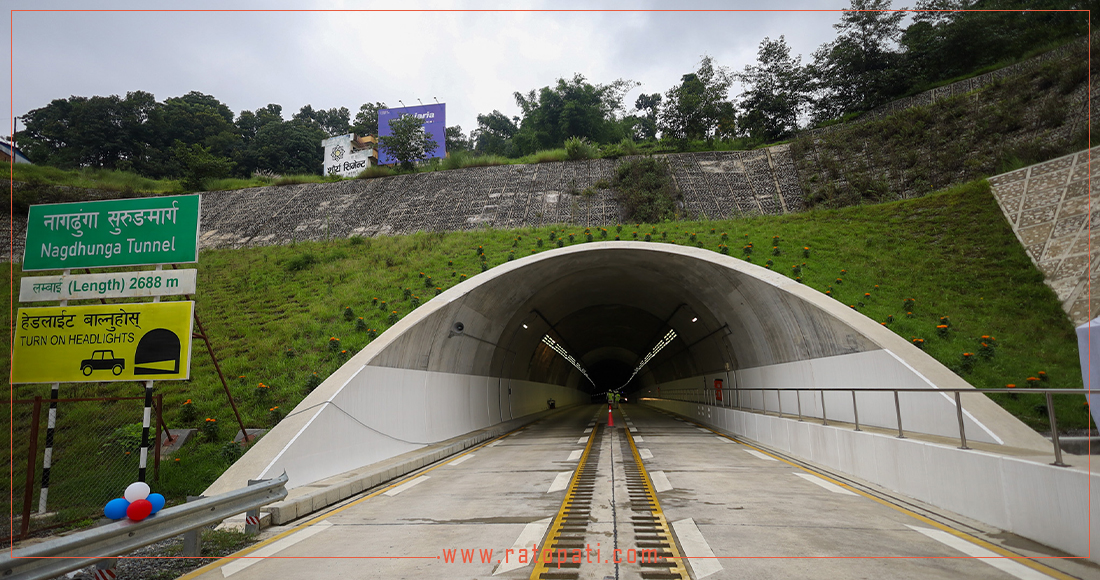
Kathmandu. The construction work of the Nagdhunga-Sisnekhola tunnel, connecting Kathmandu and Dhading, is nearing completion and is preparing to be operational within July. This tunnel is being prepared for operation by implementing a modern 'toll' system. The Nepal Rastra Bank's Payment Systems Department has already granted permission to commercial banks to issue RFID (Radio Frequency Identification) chip-based prepaid tags or cards for this purpose. This is an entirely new and modern practice for Nepal's transportation and financial sectors. Preparations are underway to collect tunnel usage fees through cash, digital, and automation systems. Technology similar to India's successful Fastag is being implemented in Nepal for the first time, with RFID gates already installed. According to this technology, a small chip or tag will be installed on the vehicle's windshield, which is linked to the vehicle owner's prepaid account. As the vehicle approaches the toll gate, sensors and cameras there will automatically identify the chip, deduct the prescribed fee from the account, and the gate will open automatically. This automation system will be a new experience for Nepal. Under this project, two tunnels have been constructed. An auxiliary emergency tunnel (evacuation tunnel) 2,557 meters long for emergency rescue and a main tunnel 2,688 meters long and 9.5 meters wide with three lanes for vehicle movement have been constructed. Of the three lanes in the main tunnel, two lanes are 3.5-3.5 meters wide and one lane is 2.5 meters wide. Two lanes are allocated for entering Kathmandu and one lane for exiting. Seven cross passages (entry gates) have been constructed in the emergency tunnel built parallel to the main tunnel. This emergency tunnel has been constructed parallel to the main tunnel to immediately rescue passengers in case of accidental accidents or vehicle breakdowns while vehicles are moving in the main tunnel. Advanced security technology has also been installed inside the tunnel. All security arrangements, including CCTV cameras, fans, fire hydrants, and alarms, have been made. The emergency tunnel, built parallel to the main tunnel at a distance of 20 meters to the left, is 4.5 meters wide and 5 meters high. Cross passages are constructed at intervals of 300 to 350 meters to connect this emergency tunnel with the main tunnel. According to the tunnel operation directive, pedestrians, two-wheelers, three-wheelers, and non-motorized vehicles are prohibited from entering the tunnel. Similarly, vehicles with dimensions exceeding 18 meters in length, 2.5 meters in width, and 4.75 meters in height, and those carrying loads exceeding the government-specified load capacity, will not be allowed to use the tunnel. Additionally, vehicles carrying kerosene, diesel, petrol, gas, explosives, weapons (except those of security agencies), substances that can adversely affect health, foul-smelling or rotten goods, and other materials prohibited by law are also prohibited from entering the tunnel.
This specific news has been automatically translated by AI. As a result, there may be some inaccuracies or language errors.

_g99Ybvsyzc.jpg)
_xOu7dGKiBV.jpg)