
Government Amends Public Procurement Act to Ensure Quality Infrastructure Development

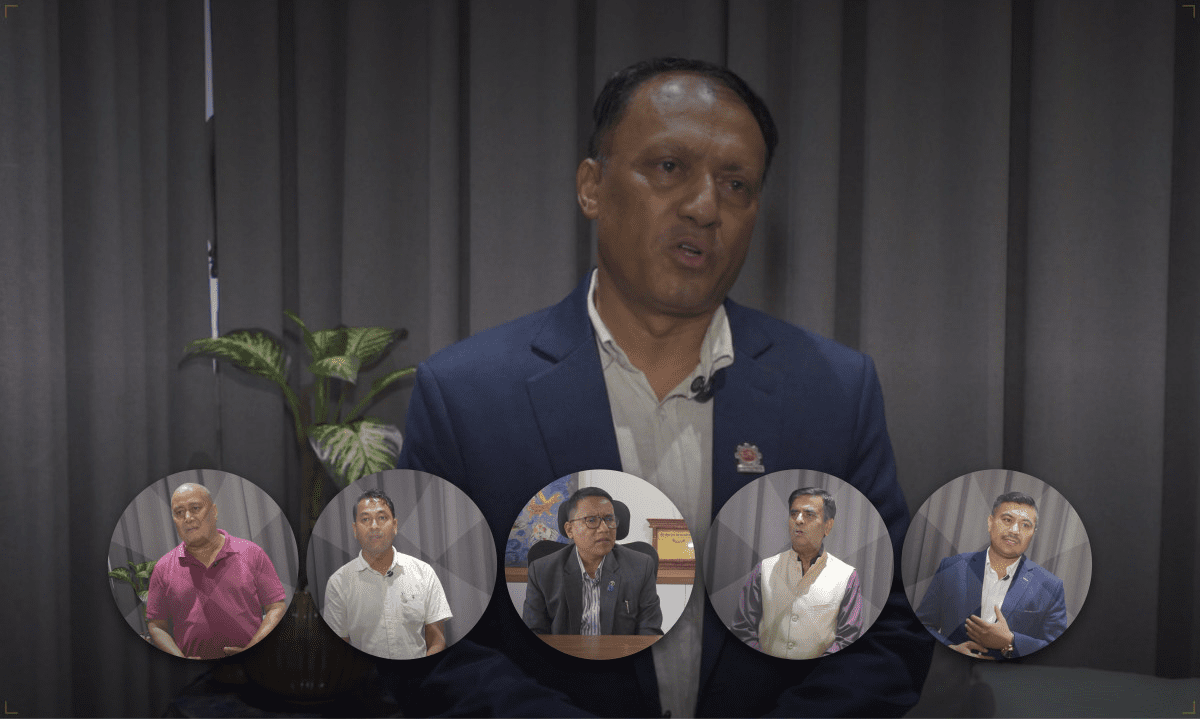
Kathmandu. The government has amended the Public Procurement Act, 2063, for the second time with the objective of completing infrastructure development in a quality manner within the stipulated time. Construction entrepreneurs have taken this amendment as a historic reform in the infrastructure development sector.
According to entrepreneurs, this amendment will end the competition of excessively low rates (low bidding) that has been prevailing for years. Construction entrepreneurs claim that this will increase quality competition and also end the tendency of projects remaining stalled for a long time. The new legal provision has enthused construction entrepreneurs.
Average Bidding System Prioritized
According to Sahadev Khadka, Vice-President of the Federation of Contractors' Associations of Nepal, the amended provision has prioritized the average bidding system. This will end the tendency of bidding at excessively low rates. It has now been arranged that bids more than 30 percent below the estimated cost will not be evaluated. This will generally result in contracts being awarded competitively within a range of 10 to 15 percent.
Recalling past practices, Khadka said, 'In the past, many construction entrepreneurs were ruined due to the race to take contracts at extremely low prices.' Mentioning that the tendency to bid at excessively low rates increased due to unnecessary and unhealthy competition to secure work, he added, 'This amendment has introduced the system of average bidding; now, bids more than 30 percent below the estimated cost will not even be evaluated, so the contract will be limited to competition within 30 percent.' Khadka analyzes that looking at the average of all bids, contracts will generally be awarded at only 5 to 15 percent below the estimated cost. He states that this will not only provide relief to construction entrepreneurs but also be beneficial for the state. 'If work is taken at a fair rate and completed on time rather than taking contracts by reducing the price excessively, the quality results expected by the state will also be achieved,' he said.
Decentralization of Variation Authority
The new amendment has also decentralized the authority related to variation orders. Accordingly, variations up to 5 percent can be approved by the project chief, up to 10 percent by a deputy secretary or division chief, and up to 15 percent by a first-class officer. Authority above this will rest with the departmental chief. This arrangement is expected to end the old problem of files getting stuck and accelerate project implementation.
Khadka stated that previously there were many legal and administrative hassles in approving both positive and negative variations. He informed that while files requiring contract finalization used to get stuck in the department for a long time, the authority for approving variations has now been decentralized. Mentioning that this arrangement will provide great relief to construction entrepreneurs across the country, he said, 'Now, whether it is a positive variation, a negative variation, or the process required to finalize the contract—all these matters can be easily resolved at the project or division level.'
Environment for Contractors Not to Suffer Losses
Former President Ramesh Sharma also called the average bidding system the most significant achievement of the amendment. He stated that this amendment will discourage low bidding, which has been causing losses to construction entrepreneurs for years. Sharma claimed that the amendment has created an environment where construction entrepreneurs who complete work on time can work with profits.
Sharma believes that low bidding has harmed Nepali construction entrepreneurs the most. 'Now, those who get contracts at only 10 to 15 percent below the average will be awarded,' he said. 'We include 10 to 15 percent overhead and profit in every contract; now, I don't see any construction entrepreneur who completes work on time suffering losses.'
Considering this as a major and 'drastic' change, he also shared his past experience. He mentioned that when he was the president, he proposed to award contracts to the second lowest bidder, but the Ministry of Finance at that time viewed it as a matter that would cause loss to the government. 'The argument of the Ministry of Finance and the ministers at that time was that awarding the contract to the second lowest bidder instead of the lowest bidder would cause significant financial loss to the government due to the price difference,' he added. 'But the fact that they now agree on this matter means the government has shown some courage.'
Hope for Revival of Stalled Projects
Shivahari Ghimire, General Secretary of the Federation, said that the amendment has addressed the demands that the construction sector has been raising for a long time. He stated that projects that were stalled and became sick due to low bidding will now become operational.
'The Public Procurement Act that we have been struggling for a long time has been brought by this government,' Ghimire said. 'This is truly very positive, and the average bidding system introduced in it is very important.' Pointing to the fact that construction work has not been able to progress effectively for a long time due to low bidding, he added, 'Now construction work will become dynamic, construction work will move forward, and our stalled projects will no longer be stalled.'
Claim of Establishing a New Work Culture
Mangal Bahadur Shahi, Policy Vice-President of the Federation, stated that the Public Procurement Act has created the most obstacles in Nepal's infrastructure development, and the latest amendment will establish a new work culture in the construction sector. He said that the construction sector and entrepreneurs are enthusiastic after the twelfth amendment (second amendment according to entrepreneurs) to the Public Procurement Act.
Shahi said, 'This will establish a good practice; we are completely enthusiastic about the amendment to the Public Procurement Act.' He expressed confidence that projects will now be completed on time and the general public will benefit directly.
Similarly, Shambhu Thakur, Vice-President of the Federation, claimed that this amendment will have a positive impact not only on the construction sector but on the entire economy. He stated that with the end of low bidding, the government, construction entrepreneurs, the supply chain, and consumers will all benefit.
Construction entrepreneur Rajkumar Budhathoki also expressed confidence that construction work will be completed on time and quality will improve as an environment will be created for executing contracts at fair rates after the amendment.
Both the government and stakeholders have expectations that this amendment to the Public Procurement Act will provide a permanent solution to old problems such as projects remaining stalled for a long time and requiring repeated extensions.
This specific news has been automatically translated by AI. As a result, there may be some inaccuracies or language errors.






_g99Ybvsyzc.jpg)