Month Names Derived From Nakshatras, Shravan Month Revered for Lord Shiva

The names of Nepali months are based on nakshatras. Twelve nakshatras out of 27 have been chosen for the names of the 12 months. In the Hindu lunisolar calendar, the name of the month is determined based on the nakshatra in which the moon is located on the full moon day. Based on this, all 12 months of the year have their own characteristics, and the months have been named according to those characteristics.
Followers of Eastern philosophy consider the month of Shravan to be a holy month. The month of Shravan is also called the month of Mahadev. The full moon of the month of Shravan falls on the Shravan nakshatra. The lord of Shravan nakshatra is the moon, and the moon adorns the forehead of Lord Shiva. When the sun enters Cancer from Gemini and the month of Shravan begins, the sun enters the southern solstice.
During this time, the sun's heat decreases and the days begin to shorten. It is an astrological belief that when the sun enters Cancer, it rains, which pleases Shiva.
In the month of Shravan, worship and fasting of Mahadev are performed. It is believed that Mahadev himself comes to earth during this month, so societies with Eastern traditions engage in special worship. It is believed that it is easier to please Mahadev in the month of Shravan through special worship than in other months. In this month, worship of Mahadev is performed and wishes are made.
It is believed that worshipping Mahadev and fasting throughout this month is fruitful. The reason why the month of Shravan is most dear to Mahadev is the heavy rainfall during this month, which provides coolness to Mahadev's poisonous hot body. Nature itself performs Rudrabhishek in this month. According to the Shiva Purana, Mahadev himself is water. Therefore, due to it being the month of monsoon, Shravan is considered the month of Mahadev.
On Saune Sombar (Mondays in Shravan), women, especially, wear green clothes, bangles, and mehndi, while men worship, chant, and meditate to worship Mahadev and fast. Using green color in the month of Shravan is considered an integration with nature. As it rains sufficiently in Shravan, plants get new life. Therefore, green clothes, bangles, mehndi, etc., are used to become green. It is a religious belief that doing so pleases Mahadev and fulfills desires.
On Mondays, there is a crowd of devotees from early morning at Mahadev temples like Kumbheshwor, Santaneshwor, Tileshwor, Rameshwor, Kaleshwor, and Maharudreshwor in Lalitpur. According to astrology, Monday is considered the lord of Mahadev, hence Mahadev is worshipped on Mondays. The glory of Saune Sombar is also mentioned in the Puranas. It is a tradition to fast on this day, praying for the good health, long life, and various wishes for oneself and family. This year, Mondays in Shravan fall on the 4th, 11th, 18th, and 25th.
Mahadev is worshipped as the destroyer and benefactor of creation. Mahadev is found in both formless (Shivalinga) and formed (human/yogi) states. According to the scriptures, Mahadev has five forms:
- Shivalinga (Formless form): The most important and widespread form of Shiva is the Shivalinga. It represents the creation of the universe and the formless supreme being.
- Yogi or Sadhu (Formed form): Mahadev is depicted as a yogi or ascetic in meditation, wearing a tiger skin, with matted hair, a snake around his neck, and a third eye.
- Bholenath form: This is Mahadev's kind and easily pleased form by devotees.
- Nataraj form: Mahadev's Nataraj form is found as the god of Tandava dance. This form represents the rhythm of the universe and the dynamism of creation.
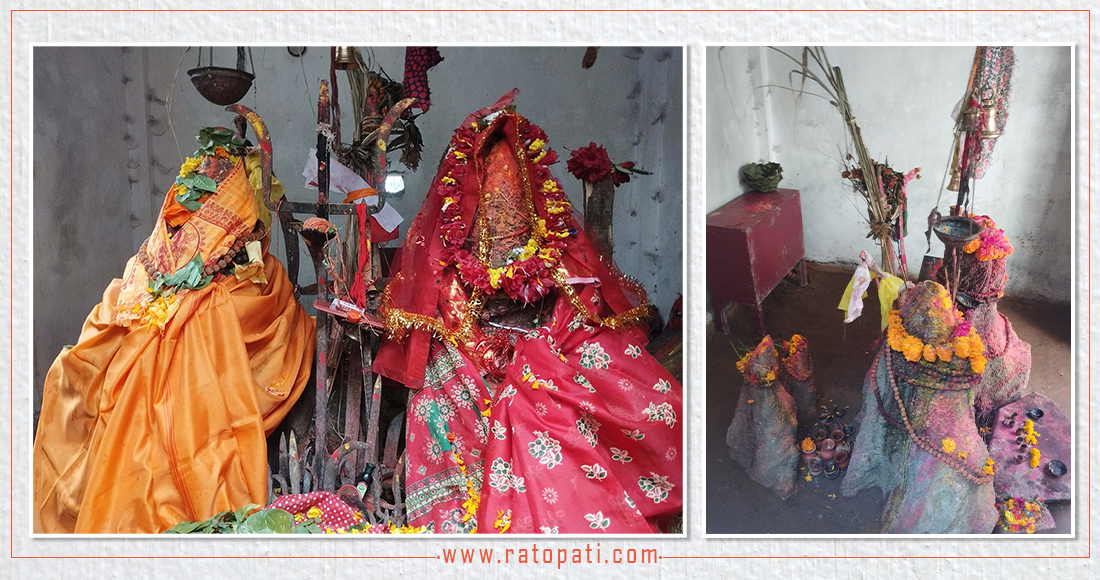
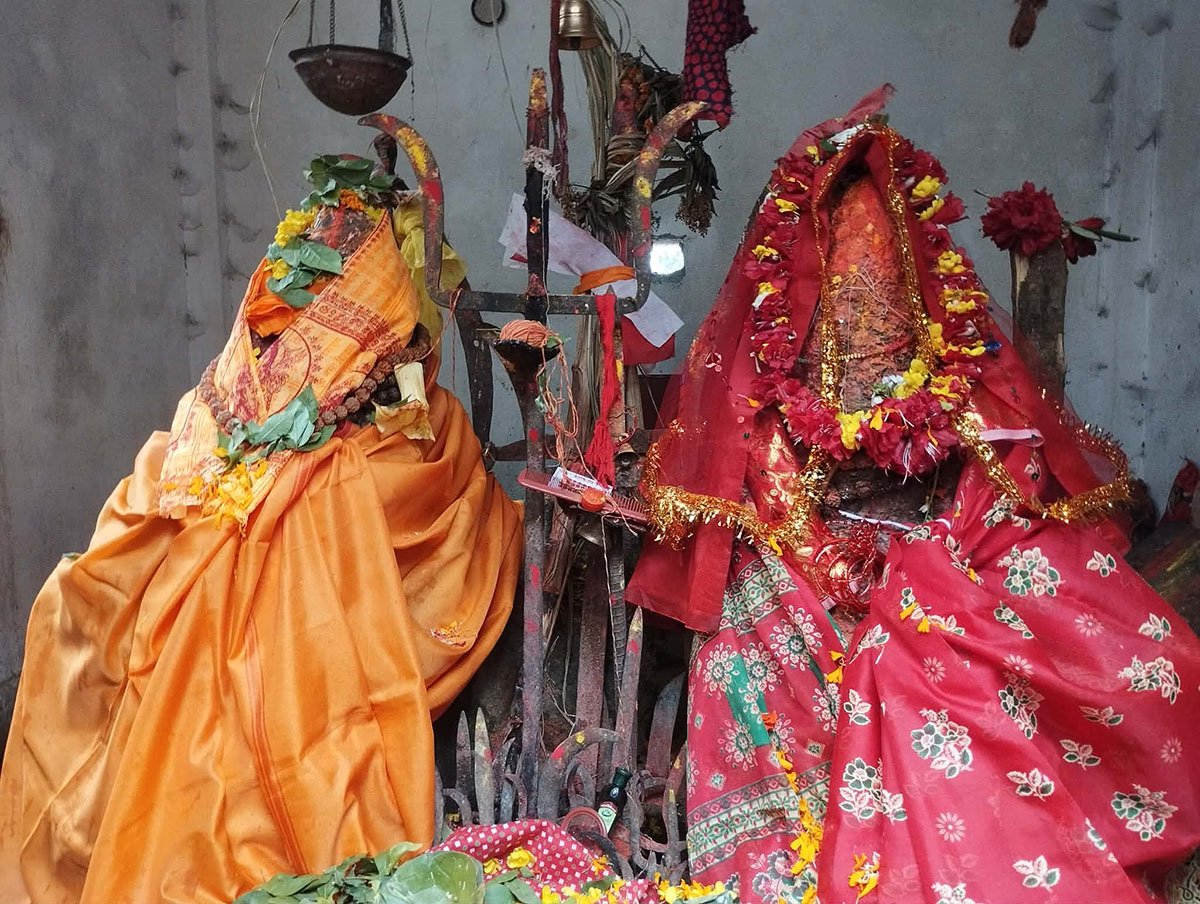
- Rudra form: This is Mahadev's fierce, destructive, or angry form, which appears to destroy evil. (It is believed that Mahadev in this form resides in the Maharudreshwor temple in Majhkhand.)
Mahadev
Mahadev is a Vedic deity. Mahadev is invoked by various names. The 108 names of Mahadev have special significance. These names are recited during Rudrabhishek, Shiva Puja, and chanting. Similarly, the 'Shiva Sahasranama' mentions 1,000 names of Mahadev, among which Shiva is one. Shiva means welfare. It is believed that if worshipped properly, he becomes pleased and fulfills desires.
The tradition of worshipping Shiva is believed to have been ongoing since the Vedic period. Mahadev is worshipped in the form of Rudra in the Vedas. Various descriptions of Rudra are found in the 16th chapter of the Shukla Yajurveda. Shiva is worshipped as the bestower of happiness, destroyer of sins, and benefactor of devotees. In the Puranic texts, Brahma is considered the god of creation, Vishnu of preservation, and Shiva of destruction. Shiva is called the god of all gods, i.e., 'Devadhidev Mahadev'.
- Maharudreshwar
In one kalpa, Devadhidev Mahadev assumed a fierce form in Majhkhand. Therefore, Mahadev here is known by the name Raudreshwor, or Rudreshwor. It is found in scriptures that Daksha Prajapati performed many sacrifices in his kalpa. Among those sacrifices, the sacrifice performed in the holy land of Majhkhand is considered important. There is ample evidence of the great sacrificial site of Daksha Prajapati described in the scriptures at the Maharudreshwor temple and its surroundings in Majhkhand.
After Sati Devi could not bear the insult of her father Daksha Prajapati and immolated herself in the sacrificial fire, Mahadev himself appeared here and assumed a fierce form. The scriptures state that he destroyed the sacrifice and beheaded Daksha. After that, Mahadev, enraged, carried the dead body of Sati Devi from the sacrificial fire and roamed the earth. There are factual grounds, including site remnants and scriptural evidence, that this is that very place.
In Majhkhand, the pair of Shiva and Parvati are together with stone slabs, along with the stone slabs of the Shiva Panchayatana, on a single slab. There are three stone slabs in front of the pair of slabs and three behind. Religious guru Chandi Poudel states that finding natural stone slabs of Shiva, Parvati, Ganesha, Surya, and Vishnu in one place is rare. It is due to this historical and mythological uniqueness that the Maharudreshwor temple is gaining attention. The presence of historical sites like Gaurikunda, Rishikhal, Bhadrakali Cave, Bhairavasthan, and Devistan around Maharudreshwor further illustrates this. Poudel states that the evidence described in the scriptures is present here, which allows us to say that Maharudreshwor is the sacrificial site of Daksha Prajapati.
- Rudri in Shravan
In Nepali society, there is a tradition of performing Rudri in the month of Shravan. Rudri means performing Abhishek on the Shivalinga by reciting the Shatarudriya Vedic mantra. Rudrabhishek is performed by Brahmins, especially on Mondays in Shravan, or on any other day in Shravan if Monday is not available. The method of worshipping Mahadev while praising Mahadev is known as Rudri in Eastern philosophy.
In Rudri, Shiva is Abhishek with water while chanting Vedic mantras. It is believed that those who desire the four things—Dharma, Artha, Kama, and Moksha—please God through Rudri recitation. It is believed that all desires are fulfilled because Rudra is pleased. It is believed that performing Rudri recitation with different items fulfills different desires. The word 'Rudra' means one who destroys or removes sorrow. Therefore, it is believed that reciting Rudri and performing puja destroys the physical, mental, and worldly sorrows of people.
- How to reach Maharudreshwor?
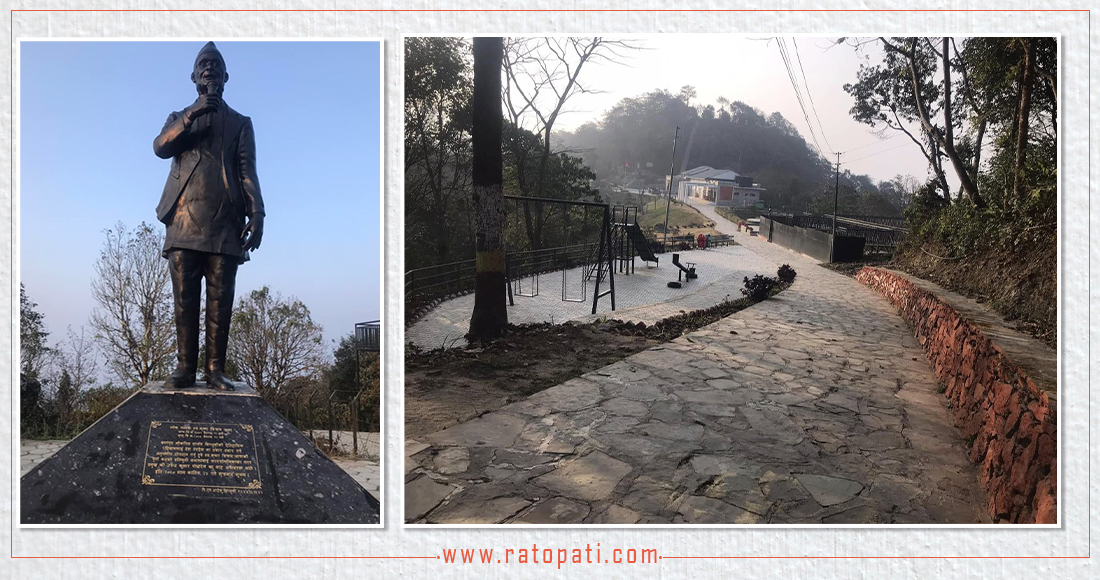
Majhkhand is a beautiful and scenic village in Lalitpur district. It is also the destination of the under-construction Chapeli-Majhkhand cable car, located next to the Kathmandu-Hetauda short route, Kanti Lokpath. Majhkhand is a popular tourist destination for nature, culture, and adventure tourism. The Maharudreshwor temple is located in Majhkhand, which falls under Bagmati Rural Municipality.
To reach here now, one has to go to Chapeli via Kanti Lokpath. After traveling 28 kilometers on Kanti Lokpath from Satdobato, one reaches Chapeli. From Chapeli Bazaar, leaving the road towards Hetauda, one takes a left turn on a connecting road to reach Bhattedanda. From Bhattedanda, there is a route to Majhkhand via Ikudol and Sanuchila, and another route to Majhkhand via Kalban and Baseri from Bhattedanda itself. For those with their own vehicles, it is faster to go via Kalban and Baseri to Majhkhand.
A bus travels daily between Majhkhand and Chapagaun and from Chapagaun to Majhkhand, providing transportation services. This bus travels via Ikudol and Sanuchila. After traveling 12 km on a dirt road from Chapeli, one reaches the Maharudreshwor temple.
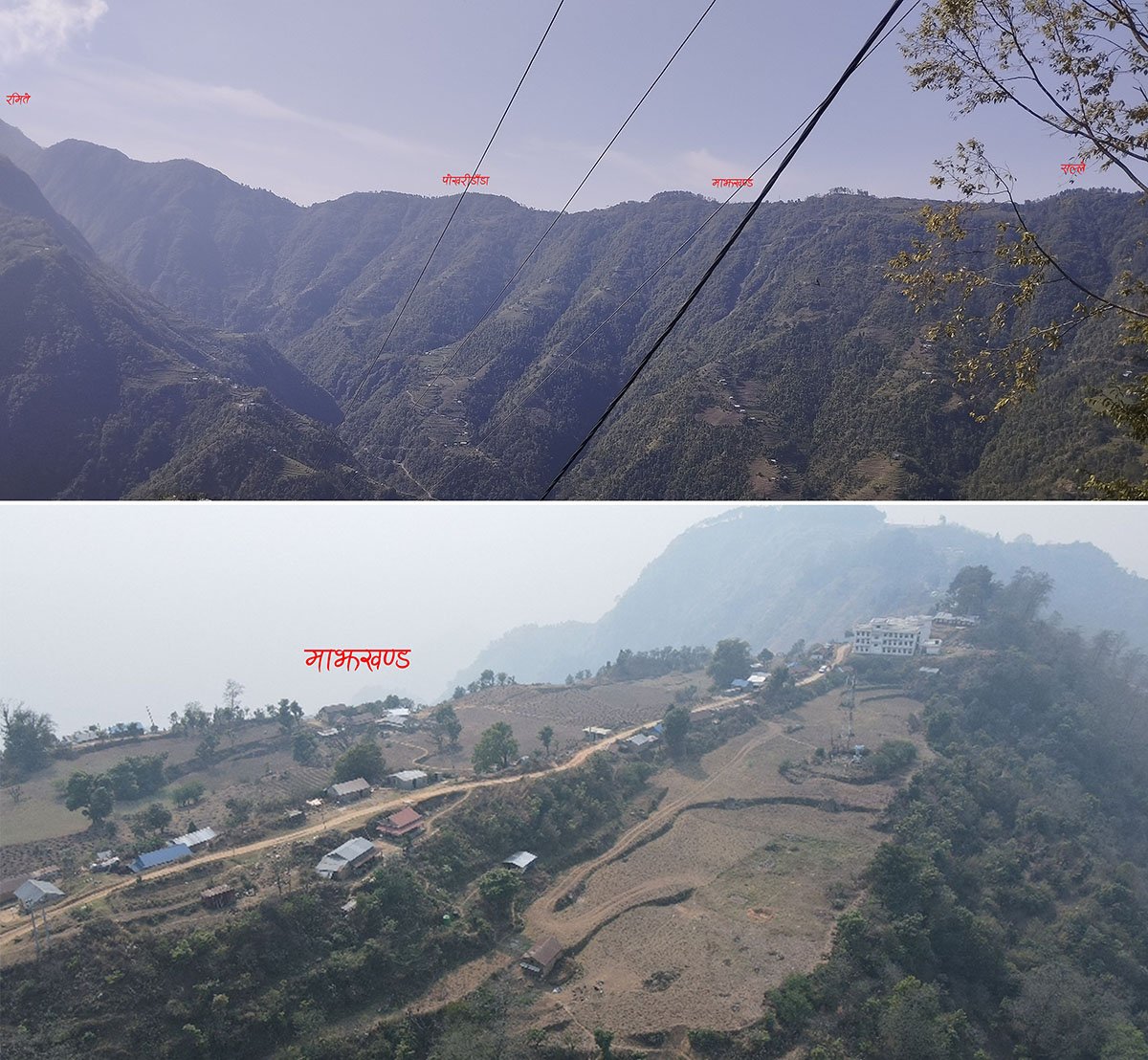
Across Chapeli lies Majhkhand, a vast, flat plateau. The high plateau here is divided into three parts. The first part is Pokharidanda, where the Maharudreshwor temple is located. The second part is Majhkhand, where the Buddhist Vihar is located. The second part has been designated as the upper station for the Chapeli-Majhkhand cable car. The third part is Salle, where hotels and a monastery are being prepared for construction.
The importance of Maharudreshwor has further increased due to the ongoing construction of a European standard cable car in Majhkhand. Along with this, the glory, myths, and origin stories of the temple are being explored, and the number of devotees is also increasing, according to locals. From here, a 4 km trek leads to 'Ramite Chuchuro', from where one can view the Sagarmatha mountain range, the Kathmandu Valley, the Terai-Madhesh, and the Raxaul region from a single point.
Overall, Majhkhand is a suitable destination for experiencing nature and village life, located at a close distance from Kathmandu.
This specific news has been automatically translated by AI. As a result, there may be some inaccuracies or language errors.

_18aawmzmsd_sTzy83VQGv.jpg)