Nepal's Economy Faces Challenges in FY 2082/83 Amidst Policy Instability and Low Capital Expenditure

The fiscal year 2082/083 remained a year of mixed hope and uncertainty for the Nepali economy. Nepal's economy is currently at a complex juncture due to recent policy instability, low capital expenditure, and declining investor morale.
Looking back at fiscal year 2082/083, it has once again exposed the structural weaknesses of the Nepali economy. There is a significant gap between the goals set by the government and the ground realities.
Recent data indicates a sluggish economy, but with proper policy reforms and implementation, there are still some rays of hope for the future.
Low Capital Expenditure and Setback in Economic Growth Target
The fiscal year 2082/083 was the weakest in terms of economic implementation. Although the government set a target of 6 percent economic growth, development expenditure (capital expenditure) was limited to just 46 percent.
The government had set a target of 6 percent economic growth, but it could not achieve this goal. This data shows that even though the government has a budget, its spending capacity and mechanism are extremely weak. Due to unspent development budgets, money did not flow into the market, and economic activity remained sluggish.
This fiscal year, economic growth has been limited to 3.85 percent. According to the National Statistics Office, the size of the economy is estimated to reach 66 kharba in this fiscal year. In the last fiscal year, the economy grew by 4.61 percent, reaching a size of 61 kharba and 7 arba. The main reason for this is the extreme apathy in capital expenditure.
Capital expenditure this year was limited to approximately 46.79 percent of the allocated budget. This is an extremely low level of expenditure in Nepal's budget history. Capital expenditure is the engine of development. As long as the government cannot spend the money allocated for development, the private sector will not dare to invest. Setting a growth target of 6 percent and having only 46 percent development expenditure confirms the inefficiency of the government mechanism.
Banking Sector: Sufficient Liquidity but Low Credit Flow
Currently, there is no shortage of money in Nepal's banks. A sum of 15 kharba and 60 arba rupees (excess liquidity) is piled up in banks and financial institutions, available for lending. Due to low credit demand and increasing remittances, deposits have surged, leading to a continuous increase in lendable funds in banks and financial institutions throughout all months of the current year.
Factors such as sluggish market demand, slow economic activity, industries operating at only 42 percent capacity utilization, and a stock market that has not been able to pick up have led to a surplus of lendable capital in banks and financial institutions. Although liquidity has been high for the past three years, the volume of liquidity is much greater this year.
According to Nepal Rastra Bank's data, total deposits in banks and financial institutions during the same period were 82 kharba and 67 arba. The credit-deposit ratio (CD ratio) during this period is 71.29 percent.
The money in banks is not being invested in the market. While the target for credit expansion was set at 12 percent, credit expansion this year has been limited to just 6.5 percent.
Deposits are accumulating in banks. Interest rates have fallen to historic lows, yet traders and businessmen are hesitant to take loans. The morale of traders is low. Due to uncertainty about the future, no one wants to make new investments. When there is no investment environment, the money piled up in banks cannot contribute to the productive sector.
Economic Review of a Decade: A Disappointing Picture
Nepal's economic condition has been deteriorating over the last 10 years. The size of the budget has reached 33 percent of GDP, but its productive expenditure is only an average of 26 percent.
In the past 5 years, the revenue growth rate was 14 to 15 percent, but in the last 5 years, it has decreased to 8 percent. This decline in revenue collection has created a situation where it is difficult even to meet the government's daily administrative expenses.
The share of current expenditure (administrative expenditure) in the total budget has reached 66 percent, while capital expenditure has shrunk to an average of 19 percent. The structural health of the economy appears to have worsened this year.
66 percent of the total budget was spent on employee salaries, allowances, and administrative work (current expenditure). With only 19 percent spent on development, the economy appears to be consumption-oriented only and has failed in capital formation.
Looking at all the data, Nepal is trapped in a web of unproductive expenditure. The government's contribution to capital formation has decreased from 39 percent to 28 percent, which is considered fatal for the country's long-term development.
Private Sector Contraction and Investment Destination
The private sector has also been reducing investment recently. The private sector's share in capital formation has decreased from 20 percent to 14 percent. Nepal has not been able to become an investment destination. Neither domestic investors feel secure, nor have we been able to attract foreign investors.
There is a huge difference between the facilities provided by neighboring countries India and China for foreign investment and Nepal's policy hassles. As long as Nepal is not developed as a secure investment destination, economic activities cannot gain momentum.
Impact of Political Instability and Social Movements
The fiscal year 2082/083 also saw significant upheaval in the political sphere. The series of government changes and the movement of the Gen Z youth generation directly impacted the economy.
Economic agendas were overshadowed due to political transitions and movements. The pressure of election expenses and the tendency to divert funds from the development budget to other sectors further negatively impacted capital expenditure.
Inflation and External Impact
For the upcoming year, the government has set a target of 7 percent economic growth and claims to keep inflation within the range of 5.5 to 6 percent, but it will be difficult to achieve this target if the government's activities to stimulate the economy do not work.
Wars happening internationally (like oil and food crises) will directly impact Nepal's market. We have no control over the prices of oil and food. Due to the untimely monsoon, agricultural production has been affected, which will certainly lead to an increase in market prices. In such a situation, keeping inflation under control will be a major challenge for the government and the central bank.
Suggestions for Reform and the Way Forward
To bring the economy in the right direction in the current fiscal year (2083/084), the government needs to take some concrete steps. First and foremost, the government needs to strictly enforce capital expenditure. The government must fully implement the capital expenditure of 4 kharba and 32 arba allocated in the budget. Only if the government spends will the confidence of the private sector increase.
Similarly, policy reform needs to be the first priority. Extensive amendments to laws and regulations are necessary to attract investors. The economy cannot run without taking the private sector into confidence.
We must increase domestic investment to build capital and encourage foreign investment. Diplomatic and policy initiatives must be taken to make Nepal an investment destination. Unless better facilities are provided than India and China, the possibility of foreign investment coming in remains low.
Likewise, to shift the import-oriented economy to a production-oriented economy, emphasis must be placed on production. Only by emphasizing production can the government move towards prosperity. So far, we are dependent on imports. Instead of relying solely on remittances, we must focus on modernizing domestic production and the agricultural sector to increase exports.
The fiscal year 2082/083 remained a 'wait and see' situation for the Nepali economy. Although the past years have been disappointing, the new budget and policies have raised hopes for 7 percent growth, but this should not remain on paper.
Political stability, effective implementation of capital expenditure, and increased private sector morale are the way out now. Otherwise, the sluggishness of the economy could push the country further into an economic crisis.
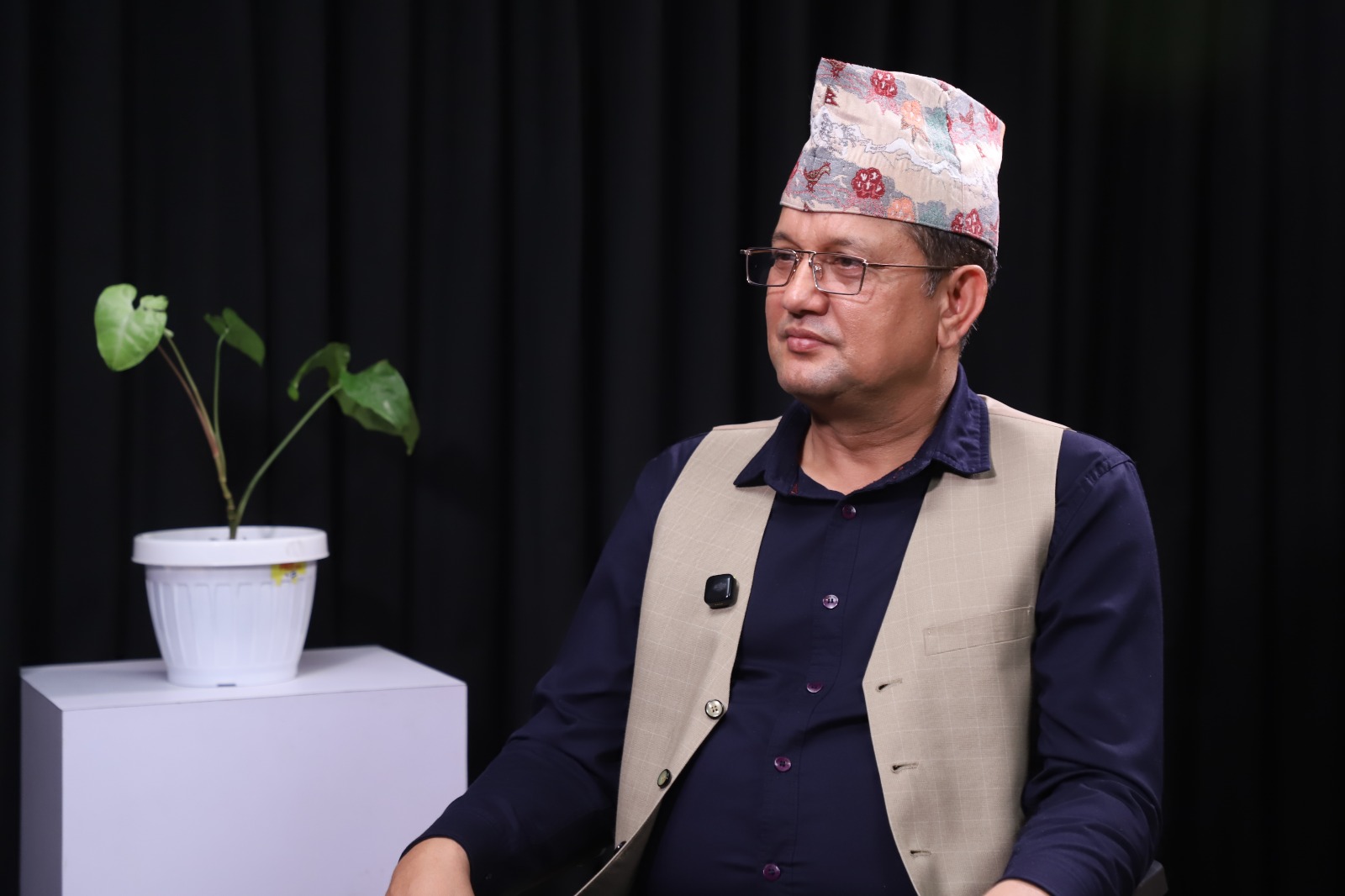
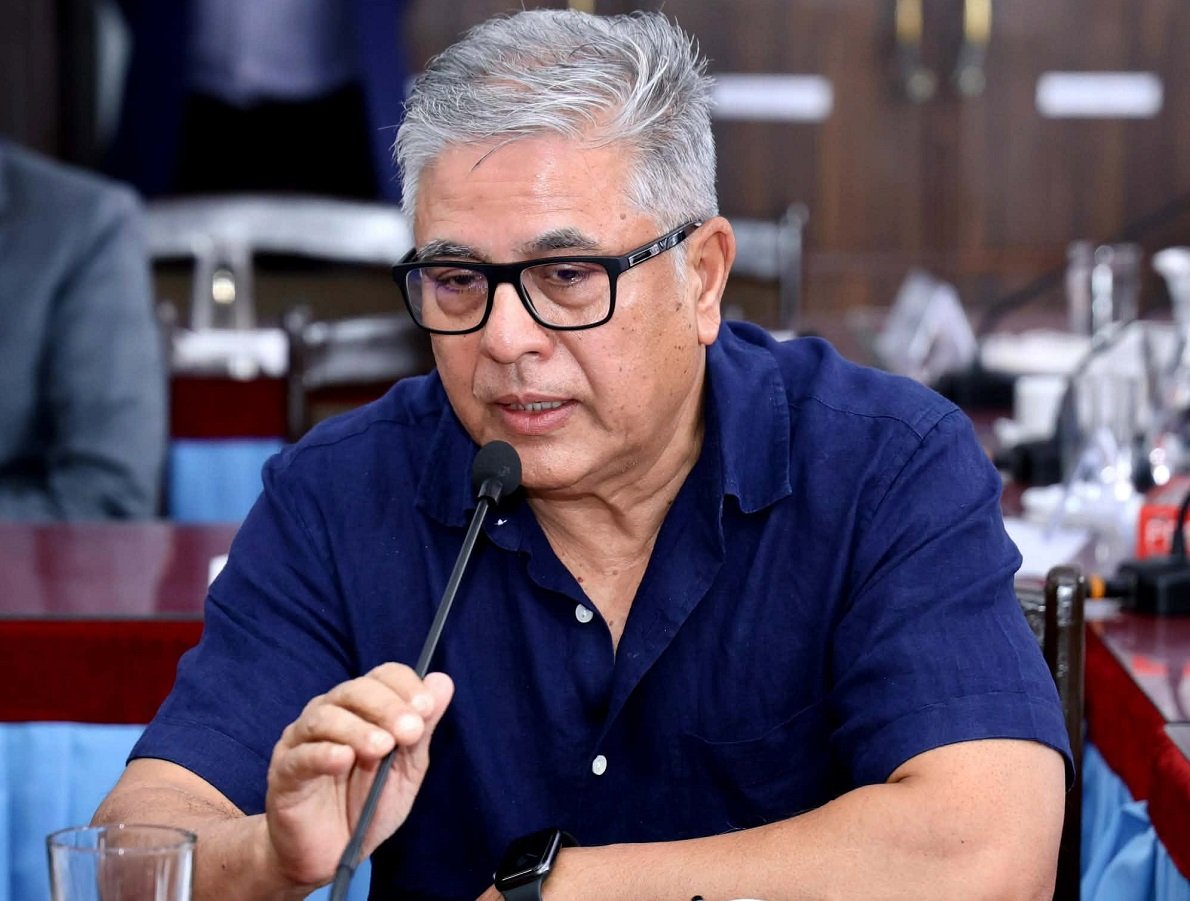
(Based on an interview with former Governor of Nepal Rastra Bank, Dr. Chiranjib Nepal)
This specific news has been automatically translated by AI. As a result, there may be some inaccuracies or language errors.