Nepal Rastra Bank Eases Policies for Hydropower Development

Kathmandu. Nepal Rastra Bank has stated that it has made policy flexibility and concessional arrangements for the development of hydropower and energy infrastructure.
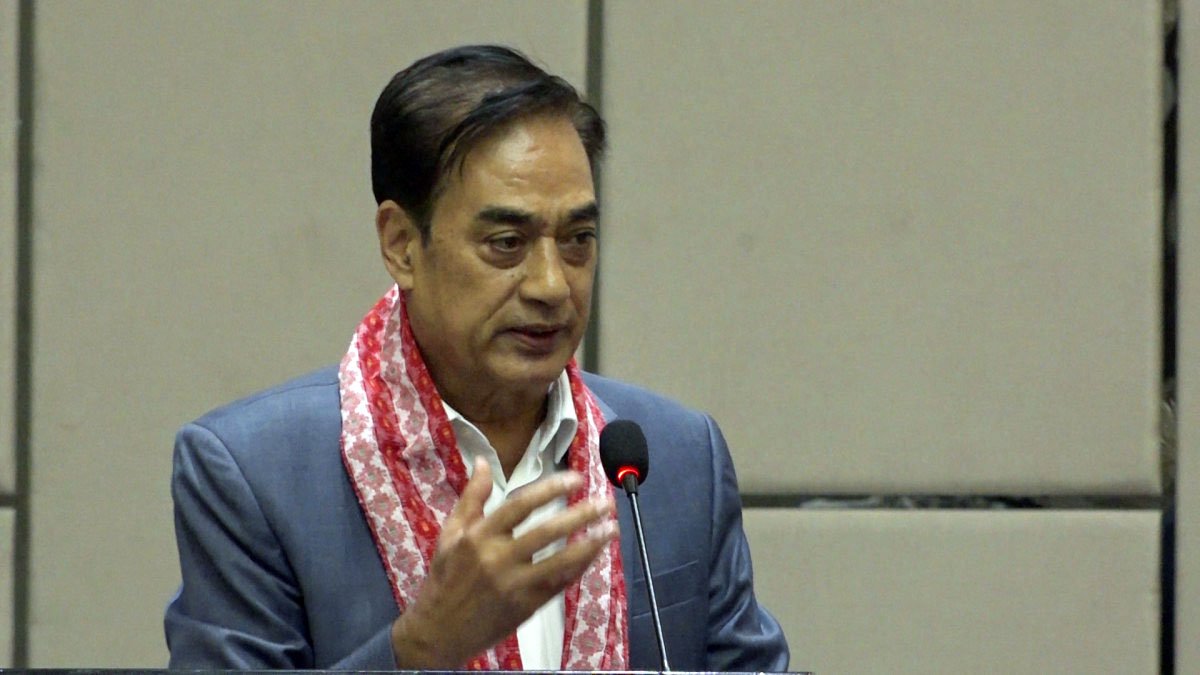
Spokesperson of the National Bank, Gurupasad Poudel, gave information about this during a program organized by the Nepal Economic Journalists Association (NEFEJ) on the topic of 'Challenges of Electricity Infrastructure Construction and the Way Forward'.
According to Spokesperson Poudel, currently, loans (outstanding loans) of approximately 500 billion rupees have been disbursed in the energy sector, including 'A', 'B', and 'C' class banks and financial institutions, and infrastructure development banks. Stating that banks have a total loan disbursement capacity of 60 kharba rupees, he said that there is still space to invest up to 900 billion rupees according to the prescribed limit of 10 to 15 percent in the energy sector.
- Single Customer Loan Limit and Energy Bond Arrangement
The National Bank has made special arrangements in the single obligor limit for infrastructure development related to electricity generation, transmission, and distribution. While banks are allowed to lend only 25 percent of their primary capital in other sectors, arrangements have been made to invest up to 50 percent in infrastructure such as energy and transmission lines, said Spokesperson Poudel.
Similarly, there is a policy arrangement for banks to issue energy bonds to mobilize financial resources in the electricity sector, and other banks can invest in such bonds. So far, commercial banks and development banks have invested approximately 10 to 11 billion rupees in energy bonds. Through the monetary policy of the current fiscal year, an environment has been created to raise resources by issuing dedicated bonds for large projects (e.g., Budhigandaki) which are priorities of the government.
- Loan Classification and Loan Loss Provision Concessions
During the construction period (grace period) of hydropower projects, banks have been given a simple arrangement to set aside only 1 percent of the loan loss provision. The National Bank believes that this will help reduce the cost of banks and encourage investment.
A facility has also been provided to capitalize interest within the grace period for projects above 50 megawatts.
Regarding loan classification, the National Bank has also adopted flexibility, informed Spokesperson Poudel. He said, 'Nepal Rastra Bank has made some special arrangements to facilitate investment in the hydropower sector. In other sectors, if even one installment of a loan is not paid, the entire loan has to be classified as a risky category. However, in the case of hydropower projects, only the unpaid installment is placed in the relevant risk category.'
The National Bank believes that this arrangement will create a more conducive environment for investment by banks and financial institutions. According to the Independent Power Producers' Association of Nepal (IPPAN), financial commitments of approximately 870 billion rupees have been made from banks and financial institutions in the hydropower sector. According to current data, loans from commercial banks, development banks, finance companies, and infrastructure development banks in the hydropower sector are around 500 billion rupees. The remaining portion is estimated to be in the form of non-fund commitments.
- Green Finance Taxonomy and the Way Forward
Currently, the total loan investment of banks and financial institutions is around 60 kharba rupees. If even a small portion of it is mobilized in additional infrastructure sectors, there is still significant investment potential in the hydropower sector. The National Bank has made arrangements in the monetary policy of the current fiscal year to further facilitate investment in the infrastructure sector, which will provide an important basis for expanding private investment in hydropower and other infrastructure sectors in the coming days.
Spokesperson Poudel emphasized the need to move towards the concept of 'Financial Resource Mix' rather than relying solely on bank loans for the development of the energy sector. He said, 'The National Bank has brought Green Finance Taxonomy for this very purpose. This will create a basis for issuing international-level green bonds and attracting climate funds to Nepal.'
This specific news has been automatically translated by AI. As a result, there may be some inaccuracies or language errors.