Government equations in seven provinces likely to change

Pokhara. Discussions are ongoing about the change of government equations in all seven provinces as the alliance between the Nepali Congress and CPN-UML is on the verge of collapse. Its impact has also started to be seen in Gandaki.
Leaders of both parties are engaged in internal strategies to gather the necessary numbers to form a government in their favor. The political developments that started in the Far-Western Province have reached the Gandaki Province through other provinces.
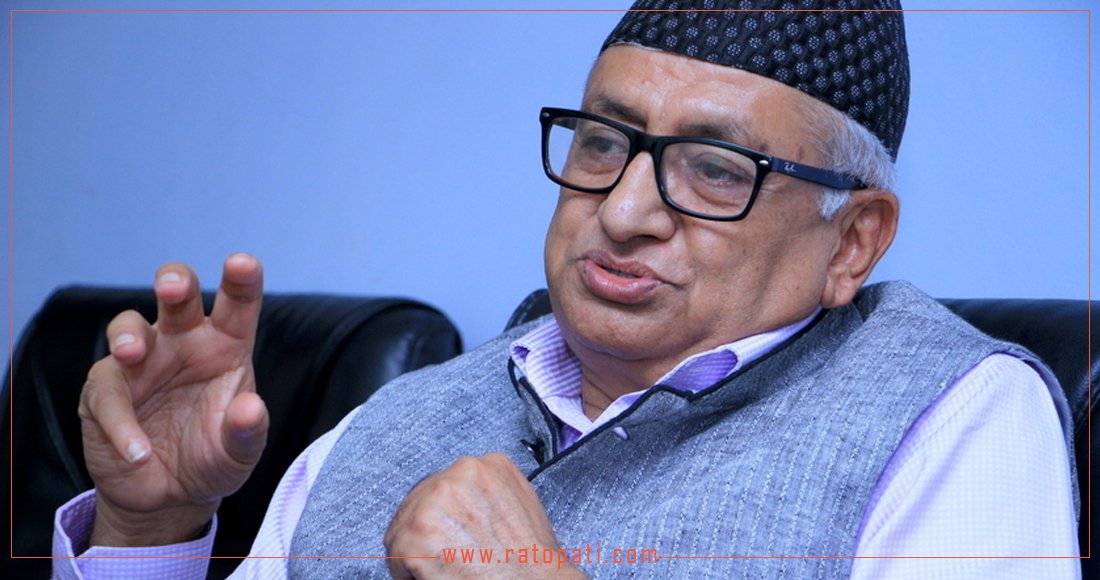
In this context, RatoPati has interviewed Pancharam Gurung, leader of the Rastriya Prajatantra Party (RPP) parliamentary party in Gandaki Province, on the effectiveness of federalism, new government equations, and the role of the current government. Here is the edited excerpt of the conversation:
The ripples of the change in government equations starting from the Far-West are also likely to reach Gandaki. As the leader of the RPP, which has a presence in Gandaki, how do you assess this situation?
We have been saying from the beginning that such political complexities and problems would arise. This situation has actually been created due to the tendency of saying one thing and doing another, which is causing us trouble. We have been saying that such complexities will arise, they need to be improved and taken forward, and the constitution needs to be amended and revised. This has now been proven by facts.
This game was happening yesterday, it is happening today, and it seems such complexities will continue in the future. This makes it difficult to achieve the objective for which this system was brought.
You raised the issue of constitutional amendment and federalism implementation. This will be advanced by the House of Representatives and the federal government. In the case of Gandaki, how should the RPP provide a way out to resolve this situation?
We are of the view that the RPP should not be seen as a party that fishes in troubled waters. We must move forward according to our thinking to resolve the country's political deadlock and reduce the financial burden of federalism.
If we had only looked at our party's self-interest in the past, we could have participated in the government change game much earlier, but since the constitution itself has shown these complexities, we must now find a way out. Even while participating in the province, we are serious about how to reduce the financial burden and make it result-oriented.
The alliance between Congress and UML is on the verge of breaking. In Gandaki Province, the RPP appears to be the decisive force. In the past, the government was formed under Congress leadership with the support of the RPP, and you yourself were in the cabinet. If a similar situation arises again, what will be your role?
First of all, since we are in a party system, we follow the decisions and directives of the party. Whatever decision or directive comes from the central leadership regarding the province, we will take our steps accordingly. We also have some suggestions to give, which we will send to the center. I think the party will not make a decision against our sentiments. Rather than going into power, we will play a role in bringing the remaining term to a conclusion without controversy.
It has been about 24-25 hours since the new situation developed. Has the discussion on this matter started within the party?
To be clear, a concrete discussion has not yet taken place on this matter. Some issues have come up at the working committee level in a general way, but a formal meeting is yet to be held. We will likely meet and discuss this matter within today or tomorrow and reach the necessary conclusions.
Given the way the situation is developing, it seems that federalism itself will be questioned. What is your reaction?
We have been saying from the past that federalism has been turned into a pot for sharing. In reality, this is not its core purpose. However, in our country, it has been made a means of sharing, which is unfortunate. We have repeatedly said that this game of sharing will have a fatal impact on the country, which has now been proven.
If political parties do not take this seriously, the country will face further crisis in the future. Therefore, instead of leading it to conflict, all parties should work together through cooperation and coordination to find a way out. Only by abandoning the tendency of one trying to destroy the other and through the coordination of all can the country find a true way out.
Regarding Gandaki Province itself, have you had any discussions or conversations with leaders or MPs from the ruling party Nepali Congress and the cooperating UML during this period?
There has been no formal discussion, but yesterday, due to personal engagements, I was out of contact for some time, and some party friends and leaders called. I couldn't talk at that time, but now I will try to contact them and understand the situation.
If you have to reach a decision tomorrow, what suggestions will you give to the central leadership, and what kind of government do you want to see in Gandaki Province?
I have been saying from the past that we should move forward with the idea of making Gandaki Province a model province, not just for rotation and self-interest in power.
We have not been able to do anything particularly remarkable after coming to the provincial assembly. While small projects or drinking water taps might have been distributed, work of long-term significance has not been done. Therefore, the provincial government should do at least one exemplary work, so that the public can feel the positive aspects of federalism. We are positive about working with any party for such cooperation.
Is the current cabinet in Gandaki Province balanced, or do you think a new cabinet will work more effectively?
If one wants to work, it's not enough to change the actors; the intention to work must be clean. If the intention is clean, work will be done regardless of who comes. As far as the current cabinet is concerned, I have no dissatisfaction with it. All members of the current council of ministers are capable and efficient, and they have come with an objective.
Therefore, it cannot be called weak, and I have no dissatisfaction with the current cabinet. Only if work is not done will there be a need to change the cabinet, but the current cabinet is working.
This specific news has been automatically translated by AI. As a result, there may be some inaccuracies or language errors.