Congress Renaissance Question Part 3

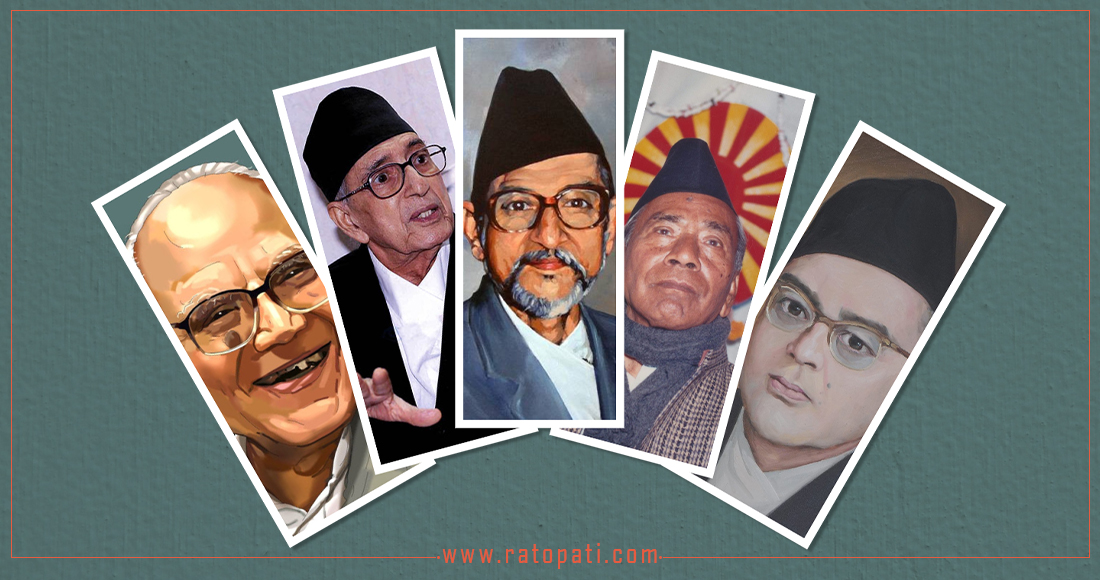
If history is made only a subject of remembrance, it gradually becomes limited to a museum. But if the ideals of history can be translated into present practice, it builds the future. The Nepali Congress's greatest asset is not just its office, flag, or election symbol; its most invaluable asset are those personalities who dedicated their personal happiness, comfort, property, position, and sometimes even their lives for the nation's interest.
They considered politics not a ladder to power, but a penance for public service. If the Nepali Congress wants to start a journey of renaissance today, it must first turn towards the ideals of its founders and elders, because no strategy can sustain an organization detached from its ideology in the long run.
In this context, the first personality to be remembered is – BP Koirala. He was not just a politician; he was also a philosopher, litterateur, democratic thinker, and a visionary national leader. He did not limit democracy only to the electoral process. For him, democracy meant respect for citizens, freedom of thought, social justice, economic equality, and the protection of human dignity.

The democratic socialism he espoused is still a very relevant concept for Nepali politics today. It seeks a balance between individual freedom and social responsibility. His idea that development is not just the prosperity of a few individuals, but the expansion of opportunities for all sections of society, appears even more meaningful in today's Nepal.
Ideological competition can occur, but there should be no division in commitment to the nation.
The most inspiring aspect of BP's political life is his policy of national reconciliation. Upon returning to the country after a long exile, he did not worry about personal safety or political gain. He said – "Nationality is greater than any party, and dialogue, consensus, and reconciliation are necessary for national interest." He viewed his political rivals as co-travelers in nation-building. His perspective was courageous in the political circumstances of that time and remains equally relevant today. Amidst the growing polarization within society, politics, and parties, BP's message resonates even more deeply.
Ideological competition can occur, but there should be no division in commitment to the nation. The strength of democracy lies not in eliminating opponents, but in the ability to transform disagreement into consensus through dialogue. BP also gave another important lesson – moral courage in politics. Not abandoning principles even after losing power, accepting jail and exile, continuously struggling for the rights of the people, and not losing hope in difficult circumstances were the characteristics of his life. Today, the need for morality, patience, and long-term thinking in politics has increased even more. If the culture of prioritizing national interest over immediate gain is not re-established, democracy risks being limited only to a process.
Similarly, Subarna Shamsher is an unparalleled symbol of sacrifice in Nepali political history. He came from a wealthy family, but was ready to sacrifice all his financial resources, social prestige, and personal comfort for democracy. He made property not a personal luxury, but a basis for the national movement. When questions arise today about financial interests, personal gain, and competition for positions in politics, Subarna Shamsher's life stands as a mirror. The lesson he taught is clear – property should be a means of national service, not an end. Without sacrifice, politics becomes mere business; only politics with sacrifice becomes public service.
The life of Krishna Prasad Bhattarai is an unparalleled example of simplicity, honesty, and public morality. He never used power as a means to gain facilities.
Another great hero of the democratic movement, Ganeshman Singh, elevated politics to a moral height. The greatest characteristic of his personality was his dedication to the nation over the desire for power. After the success of the 1990 People's Movement, he had the opportunity to hold the highest executive position, but he prioritized the democratic process and institutional arrangements over personal ambition. Such examples are rare in history, where the leader of a successful movement chose principles over power. Ganeshman Singh's conduct defined moral leadership in politics. Today, when politics is criticized for becoming power-centric, his life reminds us – a leader's stature is measured not by his position, but by his sacrifice and character.
The life of Krishna Prasad Bhattarai is an unparalleled example of simplicity, honesty, and public morality. He never used power as a means to gain facilities. A simple lifestyle, transparent behavior, and a clean public image gave him a special place in the hearts of the Nepali people. Today, when people are experiencing a crisis of faith in politics, Krishna Prasad Bhattarai's life poses an important question – is leadership credibility built only by speeches or by personal conduct? The answer is clear. The people's trust is won not by declarations, but by lifestyle. Honesty is not an election slogan; it is the permanent foundation of leadership.
Girija Prasad Koirala's contribution holds special significance in modern Nepali history. When the country was going through violent conflict, political instability, and deep mistrust, he chose the path of dialogue, consensus, and peaceful resolution. His role in preparing the ground for the peace process, democratic transformation, and constitution-making will always be remembered in history. His ability to prioritize national interest even when making difficult decisions showed that visionary leadership must look at future needs rather than immediate criticism. Leadership is evaluated not only by contemporary popularity but also by its long-term impact on history.
The culture that leadership displays, that is what cadres learn. The behavior that cadres exhibit, that is what the people experience. Therefore, party transformation begins not with a manifesto, but with the character of the leadership.
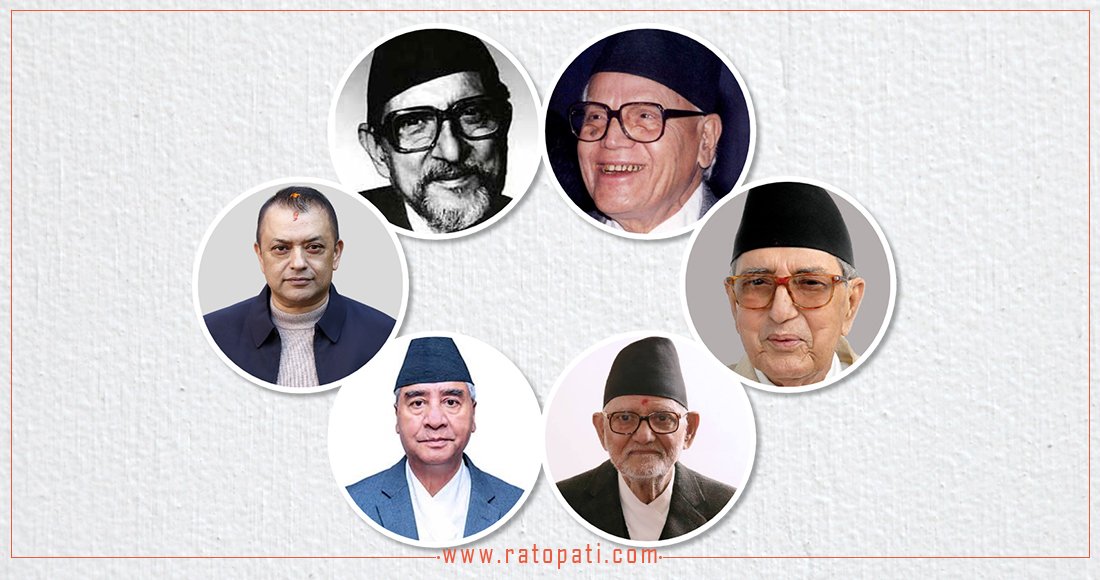
Looking deeply into the lives of these five great personalities, a common thread becomes clear. They had different natures, different styles, different ways of making decisions, but their fundamental philosophy was the same. For them, the nation was greater than personal interest, democracy was greater than power, and service was greater than position. This shared value made the Nepali Congress not just a political party, but a school of democratic movement.
Regrettably, many have felt that with time, personality worship, factional competition, attraction to power, and the tendency for immediate gain have increased in politics. When individuals are prioritized over ideology, groups over organizations, and immediate equations over long-term goals, public trust weakens. This is why many cadres within the Congress are questioning today – are we walking on the path shown by the founders? This question is not for criticism; it is for self-reflection, because no institution can become strong without self-reflection.
Nepali society has changed. Today's youth have grown up in an era of information, technology, and global competition. They do not just want to hear about historical contributions; they want to see the practice of those ideals in the present as well. They are looking for transparency, merit, opportunity, accountability, and results. If the Congress can transform BP's ideology, Subarna Shamsher's sacrifice, Ganeshman's morality, Krishna Prasad's simplicity, and Girija Prasad's culture of national consensus into today's working style, the new generation will see history not just in books, but also in practice.
Our scriptures also give this teaching. 'Yad yad acharati shreshthah tad tad evetaro janah' – meaning, what the best person practices, that is followed by others, this message from the Shrimad Bhagavad Gita is even more applicable in politics. The culture that leadership displays, that is what cadres learn. The behavior that cadres exhibit, that is what the people experience. Therefore, party transformation begins not with a manifesto, but with the character of the leadership.
Today, the Nepali Congress is once again being called by its own history. That history reminds us of sacrifice, not position. It calls for unity, not factions. It teaches the lesson of national duty, not self-interest. If the party can translate the ideas of its elders from mere anniversary and memorial ceremonies into policy, organization, and practice, the foundation for renaissance will be automatically built. History has shown the way; the only question now is – is the current generation ready to walk on that path?
(To be continued...)
This specific news has been automatically translated by AI. As a result, there may be some inaccuracies or language errors.
_drOmyPMDMX.jpg)