Nepali Congress Faces Test of Public Trust Amidst Democratic Challenges
Nepal is not just on a journey of political change; it is undergoing a difficult test of faith, accountability, and national character. More than a decade and a half has passed since the establishment of the federal democratic republic. Years have passed since the constitution was promulgated. The major goals of political change have been institutionalized.
However, the change in the daily lives of the people has not been felt as expected. Democracy has given freedom of expression, the right to vote, and opened the door to inclusive representation, but the reality of thousands of youths having to bid farewell from the airport every month in search of employment still persists.
Farmers are seeking fair prices for their produce. Small entrepreneurs are struggling with economic uncertainty. The expectation for improvement in education, health, and public services remains strong. For these reasons, questions are increasing among the public – has political change delivered the expected standard of living? Why have not all been able to equally feel the fruits of democracy?
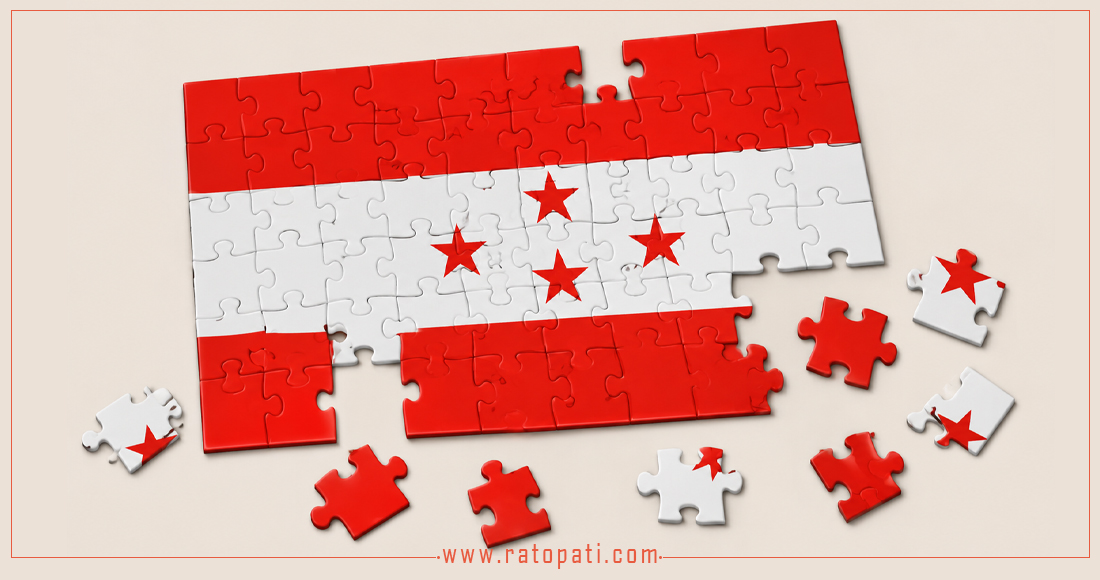
Such questions are not only directed at the government; they are also aimed at the parties that led the democratic movement. Among them is the Nepali Congress, a party that carries the greatest historical responsibility. With a history of over seven decades, this party is no ordinary political organization.
The public respects past contributions, but builds future hope from present actions.
Its every chapter contains struggle, sacrifice, imprisonment, exile, people's movements, and national consensus. And, an indomitable faith in democracy. For this reason, the Nepali Congress is seen not just as a party, but as an important pillar of Nepal's democratic consciousness.
However, history also teaches a harsh truth – an institution that only revels in its glory and does not listen to the voice of the times gradually drifts away from public trust. History grants respect, but the responsibility for the future is determined by present actions. This is the biggest test for the Nepali Congress today. Past great achievements do not automatically cover up present weaknesses.
The public respects past contributions, but builds future hope from present actions.
Today, many questions are arising within the Congress itself. Many old cadres feel neglected. Youth see more disappointment than opportunity. The feeling that personality-centric competition has taken precedence over ideological debate is increasing. Complaints are heard that the energy of activism has weakened at many levels of the organization.
If such dissatisfactions can be heard not as accusations from enemies, but as voices of self-reflection arising from within one's own house, then the door to renaissance can open. Similarly, there is growing disillusionment among the general public towards old political parties. This does not mean disillusionment with democracy; rather, it is the public's expectation that democracy should be made more effective.
The public wants change, but change does not mean just new faces; it also means new values, new work styles, transparency, good governance, and accountability. In a democracy, public patience is not unlimited. When the gap between hope and results widens, dissatisfaction also increases. Therefore, the path to regaining public trust is possible only through self-reflection, reform, and service.
The glory of history is not just for remembrance, but for inspiration to correct the present. Nepal's democracy today cannot be secured by legal provisions alone.
In this context, the role of the Nepali Congress is even more special. This is because this party has given direction to Nepal's democratic history. From the revolution of 2007 BS to the first elected government of 2015 BS, from the struggle against the Panchayat system to the People's Movement of 2046 BS, from the peace process to constitution-making, Congress has a history of standing at the forefront at every decisive juncture.
This history still gives it a great moral responsibility today. The glory of history is not just for remembrance, but for inspiration to correct the present. Nepal's democracy today cannot be secured by legal provisions alone. For democracy to be institutionalized, internal democracy of political parties, ethical leadership, accountability to the public, and commitment to national interest are equally necessary.
If democratic parties themselves become weak, divided, or lose public trust, the institutions of democracy also begin to weaken. World history has shown many such examples. Therefore, the renaissance of the Nepali Congress is not just a matter of interest for one party; it is also a matter deeply connected with Nepal's democratic future.
What is needed today is not to find fault, but to find direction. It is to develop a mindset of how to make the nation win, not who to defeat.
The Nepali Congress still has the historic opportunity to reawaken all these. But opportunity does not wait forever.
Victory of a faction may provide temporary gain, but victory of ideology gives direction to the nation for generations. Position may provide respect for a few years, but sacrifice and service grant immortality in history. This is the lesson that the founding generation of the Nepali Congress gave through their lives. Today, time is repeating the same question.
Is the Congress ready to build the future by drawing strength from its history? Can it accept its weaknesses and regain public trust? Can it rise above personality-centric competition and focus on ideology, organization, and the nation? If the answer to this is 'yes', then the renaissance of the Nepali Congress can become not just a possibility, but a national necessity.
Because, ultimately, the existence of any political party is not determined solely by its office, flag, or electoral success. Its real strength is determined by the trust of the people, the dedication of its cadres, the morality of its leadership, and its loyalty to the nation.
The Nepali Congress still has the historic opportunity to reawaken all these. But opportunity does not wait forever. History provides opportunities, but the responsibility to utilize them rests on the shoulders of the present generation.
To be continued...
(Dr. Shobhakar Parajuli has prepared a series of articles in five parts on the challenges facing Nepali democracy and the historic responsibility entrusted to the Nepali Congress by history. His articles will be published in RatoPati alternately. This is the first part by Parajuli. – Editor)
This specific news has been automatically translated by AI. As a result, there may be some inaccuracies or language errors.